English
 Türkçe

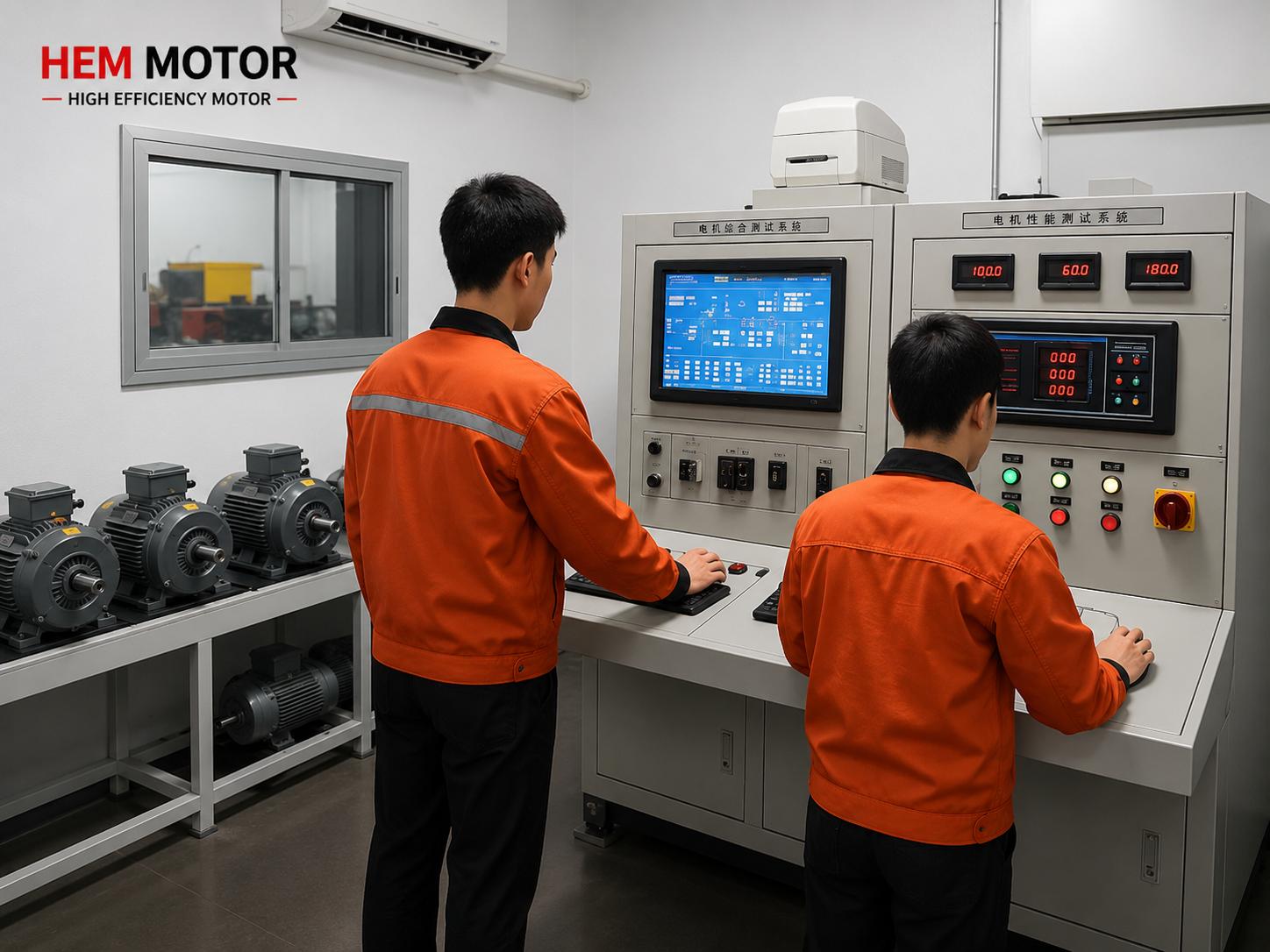

The purpose of investing in a high-efficiency motor is to permanently lower the energy bill. But when you run this motor with a variable frequency drive (VFD), the drive introduces additional electrical effects on both the grid (input) side and the motor (output) side. On the input side, harmonics and power-quality problems; on the output side, a high rate of voltage change (dV/dt) and wave reflections stress the motor. If you do not select the right filter, you can give back the efficiency you gained in the motor through transformer losses, power-quality penalties and early motor failures. In this article we cover filter selection in an efficient motor + VFD system: on the input side the line reactor, passive harmonic filter and active harmonic filter (AHF); and on the output side the difference between a dV/dt filter and a sine filter. The goal is not to lose your real energy savings to power-quality and motor-reliability problems.
Why Does a VFD Need a Filter? Input vs Output Side
A frequency drive first converts the fixed-frequency voltage it takes from the grid into DC, then uses IGBT switching to produce a variable-frequency voltage for the motor. These two conversions create two distinct problems:
- Input (grid) side: The diode bridge draws pulsed current; this generates harmonics on the grid and degrades power quality. The solution is input-side filters (line reactor, passive filter, AHF).
- Output (motor) side: IGBT switching produces a pulsed voltage with very steep edges (high dV/dt). On long motor cables these pulses can reflect and double the voltage peaks at the motor terminals; this stresses the insulation and the bearings. The solution is output-side filters (dV/dt filter, sine filter).
We covered the input-side harmonic topic in depth, in the context of THD and standard limits (IEEE 519, IEC 61000), in a separate article. You can read about the effect of harmonics on efficiency in efficient motors in our article on harmonics and power quality effect on efficiency in high-efficiency motors.
Input Side: Harmonic Mitigation Filters
Line Reactor
This is the simplest and most cost-effective input filter. An inductance connected in series at the drive input lowers the peak of the current pulse and smooths the waveform. A typical 3%-5% impedance line reactor reduces current harmonics (THDi) from an unmitigated level of around 80% to the 35%-45% band. It also protects the drive against grid transient overvoltages and sudden voltage surges. It is often sufficient at small/medium power on a strong grid; but on its own it may not meet standard limits in every scenario.
Passive Harmonic Filter
This is a reactor + capacitor combination tuned to specific harmonic orders (usually the 5th). It typically pulls THDi down to the 8%-12% band. It works well at constant load; if the load varies a lot its performance can drop. Its cost is higher than a line reactor and lower than an AHF.
Active Harmonic Filter (AHF)
This is a power-electronics device that measures the distorted current drawn from the grid in real time and injects a compensating current exactly in anti-phase. It reduces THDi below 5%, often to around 3%. It works independently of load variation, can compensate several drives on the same bus from a single point, and can also handle reactive compensation if desired. It is the highest-performance but most expensive input solution.
| Input filter | Typical THDi result | Relative cost | When suitable |
|---|---|---|---|
| Line reactor (3%-5%) | 35% - 45% | Low | Small/medium power, strong grid |
| Passive harmonic filter | 8% - 12% | Medium | Constant load, medium power |
| Active harmonic filter (AHF) | < 5% (≈3%) | High | Multiple drives, critical/weak grid |
Output Side: The Difference Between a dV/dt Filter and a Sine Filter
The IGBT switching at the drive output produces voltage pulses that rise very fast (high dV/dt). As the cable between the motor and the drive gets longer, these pulses reflect at the end of the line and can raise the voltage peaks at the motor terminals to almost twice the DC-bus voltage. This "reflected wave" phenomenon wears the motor insulation, causes partial discharges and over time leads to winding failure. In addition, high-frequency common-mode voltages trigger bearing currents, causing electro-erosion (fluting) damage in the bearings. Two types of output filter solve these problems to different degrees:
- dV/dt filter: Slows the rise rate (dV/dt) of the voltage pulse and limits the peak voltage. It does not make the waveform a full sine, but it noticeably reduces the stress on the insulation. It is an economical solution for medium-length cables and to protect motor insulation.
- Sine (sine wave) filter: Makes the output voltage close to a true sine wave. It minimises dV/dt, removes the peak voltage, and reduces motor noise and extra heating. It is preferred on very long cables, with standard motors (not designed for drives) and where low noise is required. It is the most comprehensive but most expensive output solution.
Output Filter Comparison
| Feature | dV/dt filter | Sine filter |
|---|---|---|
| dV/dt limiting | Partial | Very high (near sine) |
| Peak voltage protection | Good | Very good |
| Motor extra heating | Reduces | Minimises |
| Motor noise | Partly reduces | Noticeably reduces |
| Suitable cable length | Medium | Very long |
| Relative cost | Medium | High |
We covered the motor-side common-mode, shielded cable and bearing-current topics in a VFD system in detail in our article on grounding and EMC in VFD systems.
Protecting Real Energy Savings: A Holistic View
The real goal of an efficient motor + VFD investment is energy savings. But a lack of filtering threatens this goal from two directions:
- Input side (harmonics): Without a filter, harmonics heat transformers and cables extra, lower the power factor and create the risk of a utility penalty. This is a "hidden" cost that eats into the efficiency gained in the motor.
- Output side (dV/dt): Without a filter, the motor insulation and bearings wear early; the cost of failure and downtime can far exceed the savings.
That is why the right framing should be thought of holistically as "efficient motor + drive + appropriate input and output filter". We covered the real gain of pump-fan savings with a VFD under the affinity law in our article on VFD pump and fan energy savings; and the high-efficiency motor + frequency drive combination in our article on high-efficiency motor + frequency drive.
Reflected Wave and Cable Length
The most important determinant of the need for an output filter is the cable length between the drive and the motor. Because the rise time of the IGBT pulse is very short, the cable behaves like a "transmission line" and the pulse reflects at the end of the line. When the cable length exceeds a certain critical value, the reflected wave and the incoming wave superimpose and raise the voltage peak at the motor terminals to almost twice the DC-bus voltage. This phenomenon is more pronounced in modern high-switching-speed IGBT drives, because the steeper the pulse rises, the shorter the critical cable length.
The practical result is this: if the cable is short (generally below a few tens of metres) and the motor has drive-rated insulation, an additional output filter is often not needed. If the cable is of medium length a dV/dt filter is recommended, and if it is very long a sine filter is recommended. It is not correct to choose an output filter without knowing the cable length; therefore the motor-drive distance must be noted during the site survey.
Bearing Current and Motor Insulation: The Protective Role of the Filter
The high-frequency common-mode voltage produced by the VFD creates a voltage on the motor shaft. When this voltage reaches a level that breaks through the bearing oil film, small sparks (EDM - electrical discharge) form pits in the bearing rings and balls; over time this turns into the damage known as "fluting" and the bearing fails early. Output filters (especially the sine filter) soften the waveform and reduce both the insulation stress and the common-mode bearing current. Additional measures against bearing current include insulated bearings, a shaft grounding brush and correct grounding of the shielded cable. We detailed this holistic approach in our article on grounding and EMC in VFD systems.
What Information Is Needed for Filter Selection?
- Drive power and the total drive power connected to the same bus,
- The supply transformer power and short-circuit power (is the grid weak or strong?),
- Does the utility enforce THD/power-quality limits?
- The cable length between motor and drive (critical for the output filter),
- Whether the motor has drive-rated insulation,
- Whether there is a low-noise requirement.
For a basic starting point on when a frequency drive is needed and how to choose one, our guide on using a VFD with an asynchronous motor also helps.
Frequently Asked Questions
Should I choose a line reactor or an AHF?
It depends on the drive power, the strength of the grid and the target THD level. At small/medium power on a strong grid, a line reactor is often sufficient and the most economical solution. But if there are many drives on the same bus, if the grid is weak, or if the utility enforces limits, an AHF is needed; an AHF reduces THDi below 5% and compensates multiple drives from a single point. The right choice is determined by the short-circuit power and measured THD.
How do I decide between a dV/dt filter and a sine filter?
The decisive factors are cable length, motor insulation quality and noise expectation. On medium-length cables and with motors that have drive-rated insulation, a dV/dt filter is usually sufficient and economical. On very long cables, with standard motors (not optimised for drives), or where motor noise must be low, a sine filter is preferred. The sine filter provides the most comprehensive protection but costs more.
Does adding a filter reduce energy savings?
Filters have a small loss of their own, but this loss is very small compared with the costs the filter prevents. The input filter prevents extra transformer/cable losses and power-factor penalties; the output filter prevents motor failure and downtime cost. So filters clearly protect the savings and lower the total cost of ownership; when correctly sized, they improve the payback of the investment.
Contact Us for Stock and Fast Delivery
At HEM Motor we treat high-efficiency motors, compatible frequency drives and both input (line reactor, passive/active harmonic filter) and output (dV/dt, sine filter) side solutions as a holistic package. Based on the drive power, grid power, cable length and target power-quality level, we can determine the right filter combination together and protect your real energy savings from both a power-quality and a motor-reliability standpoint. To get a quote with manufacturer stock advantage and fast delivery, contact us and let us evaluate your project from an engineering standpoint.