English
 Türkçe

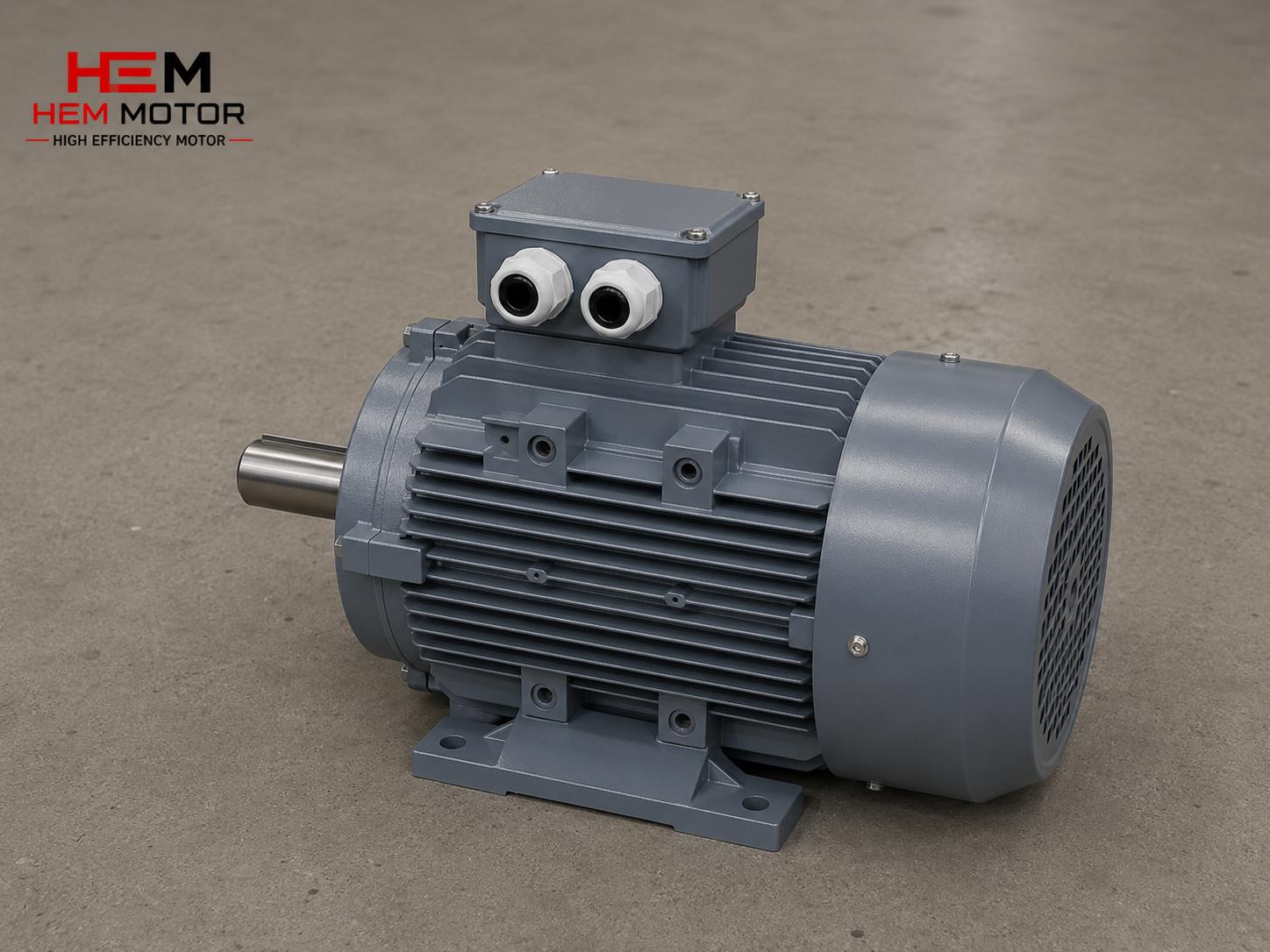

In some applications an electric motor must be stopped very quickly; coasting (leaving the motor to spin down on its own) takes too long and is unacceptable for the process. One of the powerful methods that comes into play in these situations is reverse-current braking, internationally known as plugging. In this method, two phases of the motor are swapped to reverse the direction of rotation; while the motor is still rotating forward, the stator field rotates in the opposite direction, so a strong reverse torque (braking torque) is created and the motor stops very quickly. However, this rapid stopping comes at a cost: very high current and excessive heating. In this article we cover in detail how reverse-current braking works, why it draws such high current, the role of the plugging relay and zero-speed switch, motor selection and derating in applications with frequent plugging, and alternative braking methods such as dynamic / DC injection braking. The goal is to help you select the right method and the right motor for your rapid-stop requirement.
How Does Reverse-Current Braking (Plugging) Work?
In a three-phase asynchronous motor, the direction of rotation is reversed by swapping two phases. Normally this is done after the motor has stopped. In plugging, however, two phases are suddenly swapped while the motor is still rotating forward. At this moment the stator magnetic field begins to rotate in the opposite direction, but the rotor is still rotating in the old direction. The relative speed (slip) between the rotor and the stator field nearly doubles; this produces a strong reverse torque opposing the forward rotation of the motor. As a result, the motor decelerates rapidly and stops. If the circuit is not broken exactly at zero speed, the motor will start rotating in the reverse direction; this is why stopping at zero speed is critical.
The fundamental characteristics of plugging are:
- Very fast stop: Since the braking torque is high, the stopping time is much shorter than coasting.
- Very high current: Since the slip is nearly 2, the current drawn can be even higher than the starting current; it can reach 5–8 times the rated current.
- Intense heating: During braking, most of the rotor's kinetic energy turns into heat inside the motor.
- Need to cut off at zero speed: If the circuit is not broken the moment the motor stops, it starts rotating in reverse.
Plugging is simple and fast but strains the motor a lot thermally. Therefore it must be carefully evaluated in which application it is suitable.
The High Current and Excessive Heating Problem
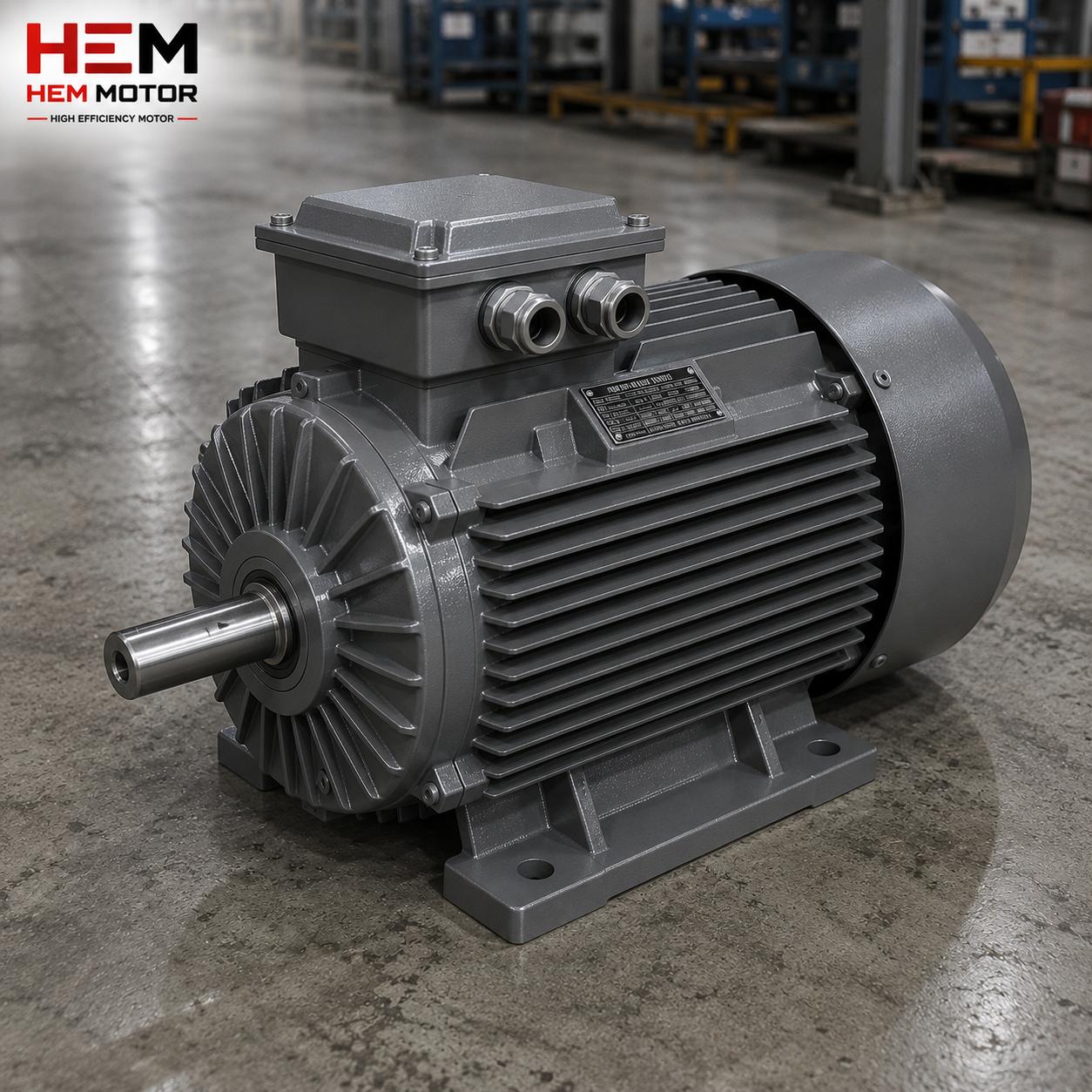
The biggest disadvantage of plugging is the thermal load. In a normal start, some energy turns into heat as the motor reaches rated speed from standstill. In plugging the situation is much more severe: since the motor is braked while rotating at full speed, both the rotor's kinetic energy and the additional energy drawn from the grid turn into heat inside the motor. Therefore the heat generated by one plugging operation can reach roughly three times that of a normal start. Frequently repeated plugging rapidly heats the motor winding and rotor; it pushes the limits of the insulation class and shortens life.
The table below compares the basic features of plugging with other braking methods:
| Method | Stopping Speed | Current/Heat Load | Additional Hardware | Typical Use |
|---|---|---|---|---|
| Coasting | Very slow | None | None | When speed does not matter |
| Plugging (reverse current) | Very fast | Very high | Plugging relay, contactor | Emergency/very fast stop |
| DC injection (dynamic) | Fast | Medium | DC source, control | Controlled stopping |
| Braking with a drive | Adjustable | Low-medium | Drive + brake resistor | Precise speed control |
| Mechanical brake | Fast | Low in motor | Brake motor/lining | Holding + stopping |
As can be seen, plugging is one of the methods that provides the fastest stop, but it is the most demanding in terms of current and heat load. Therefore how many times per hour the plugging will be repeated is at the centre of motor selection.
Plugging Relay and Zero-Speed Switch
The most critical control element in a plugging application is the device that detects the moment the motor stops completely and breaks the circuit. Otherwise the motor starts rotating in reverse, which is undesirable and can be dangerous in most applications. Two types of device are used for this purpose:
- Plugging relay (reverse-current braking relay): By sensing the speed or direction of rotation of the motor shaft, it opens the braking contactor when the motor approaches zero speed. It usually works on the centrifugal principle or with electronic speed sensing.
- Zero-speed switch: A device connected to the shaft that gives a signal when the shaft has fully stopped. This signal breaks the control circuit and prevents reverse rotation.
Plugging cannot be done safely without these devices. The control circuit must be designed to open the braking contactor exactly at zero speed. In addition, overcurrent protection and thermal protection (motor thermistor) must be present in the circuit; because the high current drawn during plugging must not falsely trip the protection elements but must protect the motor in a genuine overheating.
Motor Selection and Derating for Frequent Plugging
If plugging is repeated frequently in an application (for example several times per minute), a standard motor cannot handle this thermal load. In this case special care and usually a derating (power reduction) is required in motor selection. The basic approaches are:
- Motor suited to the duty type: Applications with frequent braking fall into intermittent duty types such as S4, S5; the motor must be selected for this duty type and the number of cycles per hour.
- High inertia must be considered: The greater the inertia of the load to be braked, the more heat each plugging produces; the motor must be able to cool this energy.
- Derating: The same frame motor is run below the power it delivers in continuous duty to leave a thermal margin; or a one-step-larger motor is selected.
- Cooling reinforcement: An external forced cooling fan keeps the motor cooled even during stops.
- High insulation class: Class H insulation and thermal protection increase resistance to repeated heat shocks.
In applications requiring frequent plugging, a correct selection cannot be made without information about the number of cycles per hour and the load inertia. Therefore the braking frequency and load profile of the application must be clearly stated before purchase.
Alternative Braking Methods
Plugging is not always the best solution. Depending on the need, more controlled and less demanding alternatives can be preferred:
- DC injection (dynamic braking): Direct current is applied to the stator while the motor is being stopped; this creates a fixed magnetic field and produces braking torque in the rotor. It creates lower current and heat load than plugging, and there is no risk of reverse rotation. It is common for controlled and repeatable stopping.
- Braking with a drive (frequency inverter): The drive decelerates the motor in a controlled manner; the resulting energy is converted into heat in a brake resistor or fed back to the grid regeneratively. It is the most precise and adjustable method.
- Mechanical brake (brake motor): An electromagnetic brake integrated on the shaft provides both stopping and holding in the stopped position. It is common in cranes, elevators and conveyors.
The correct method choice depends on the stopping speed requirement, braking frequency, control precision and budget. Plugging stands out for very fast and infrequent stopping, DC injection or a drive for controlled and frequent stopping, and a mechanical brake for applications requiring holding.
Typical Application Areas of Plugging
The advantage of reverse-current braking is that it provides very fast stopping with only a contactor and relay, without requiring any additional power electronics. This simplicity still makes plugging preferable in certain applications. In machine tools, especially older lathes and milling machines, plugging is used when the spindle needs to be stopped very quickly. In conveyor lines, fast stopping is important at points requiring an emergency stop to prevent the product from sliding off. In some presses and forming machines, plugging comes into play when the moving part must stop instantly for safety. In crane and lifting applications, plugging is not used alone but together with a mechanical brake for holding.
However, even in these applications the frequency of plugging is critical. A standard motor is usually sufficient on a machine that plugs infrequently (for example a few times per shift). In contrast, on a line that stops several times per minute, the motor's thermal capacity is quickly exceeded and a special selection is required. Therefore, when deciding on plugging, the question "how quickly must it stop" must be answered as much as "how many times per hour must it stop". The two questions together determine both the method choice and the motor sizing.
Another point to watch with plugging is the stress it applies to the mechanical system. The sudden reverse torque creates a high shock load on mechanical elements such as couplings, gears, belts and shafts. Therefore, in systems using plugging, the mechanical transmission elements must also be selected to suit this shock load; otherwise, even if the motor withstands it, the transmission elements may fatigue prematurely. The comfort of fast stopping comes back as a cost if mechanical strength is ignored.
Thermal Protection and Monitoring During Plugging
The biggest risk in motors that plug frequently is invisible cumulative heating. Even if the motor looks normal from the outside, the winding temperature rises a little with each braking, and if it is braked again without sufficient cooling, the temperature rises to a dangerous level. Therefore thermal protection is indispensable in plugging applications. PTC thermistors or PT100 sensors embedded in the winding monitor the real winding temperature and stop the motor in case of overheating. A classic thermal overload relay may not provide full protection against the short high-current pulses of plugging; therefore direct temperature monitoring is more reliable.
- PTC thermistor: Its resistance rises sharply at a certain threshold temperature and trips the protection relay; it is a cheap and common solution.
- PT100 sensor: Provides continuous and precise temperature measurement; allows the temperature trend to be monitored.
- Current monitoring: Abnormal situations can be detected by monitoring the current pulse during plugging.
- Cycle counter: Monitoring the number of pluggings per hour shows whether the motor's design limit is being exceeded.
Correct thermal protection and monitoring significantly extends the life of a motor that plugs frequently. Monitoring data also provides valuable information for maintenance planning; for example, a rise in winding temperature over time can be a sign of a cooling problem or a load increase. Therefore, in plugging applications, the protection and monitoring infrastructure must be taken as seriously as the motor selection.
Frequently Asked Questions
Why does plugging draw such high current?
Because when two phases are swapped, the stator field rotates in the opposite direction and the relative speed (slip) between the rotor and the field nearly doubles. High slip means high current; this current can be even higher than the starting current and can reach 5–8 times the rated current.
Why is derating needed on a motor that plugs frequently?
Each plugging operation produces much more heat than a normal start. When repeated frequently, this heat exceeds the motor's cooling capacity. Therefore the motor must be selected to suit the duty type and, if necessary, a thermal margin must be left by reducing the power (derating) or selecting a one-step-larger motor.
When should DC injection be preferred instead of plugging?
DC injection (dynamic braking) is preferred when a controlled, repeatable and lower-thermal-load stop is desired. It may not be as fast as plugging but it creates less current and heat, has no risk of reverse rotation, and strains the motor less for frequent stopping.
Related Articles
- Asynchronous motor braking: DC dynamic stopping
- Electric motor regenerative braking and brake resistor
- Asynchronous motor starts per hour limit and heating
- Motor duty type S7-S8-S9 braked variable load selection
- Asynchronous motor starting current (LRA) reduction
Request a Quote for Manufacturer Stock and Fast Delivery
Get in touch with us to select the right braking method for your application that requires rapid stopping, and the right motor to withstand this load. Plugging, DC injection, drive braking or a mechanical brake — which is suitable for you? Share your application's stopping speed requirement, braking frequency (cycles per hour) and load inertia; let the HEM Motor expert team prepare a quote with the right duty type, derating and cooling options for you. A correctly selected motor runs with a long life and reliably despite frequent braking.