English
 Türkçe

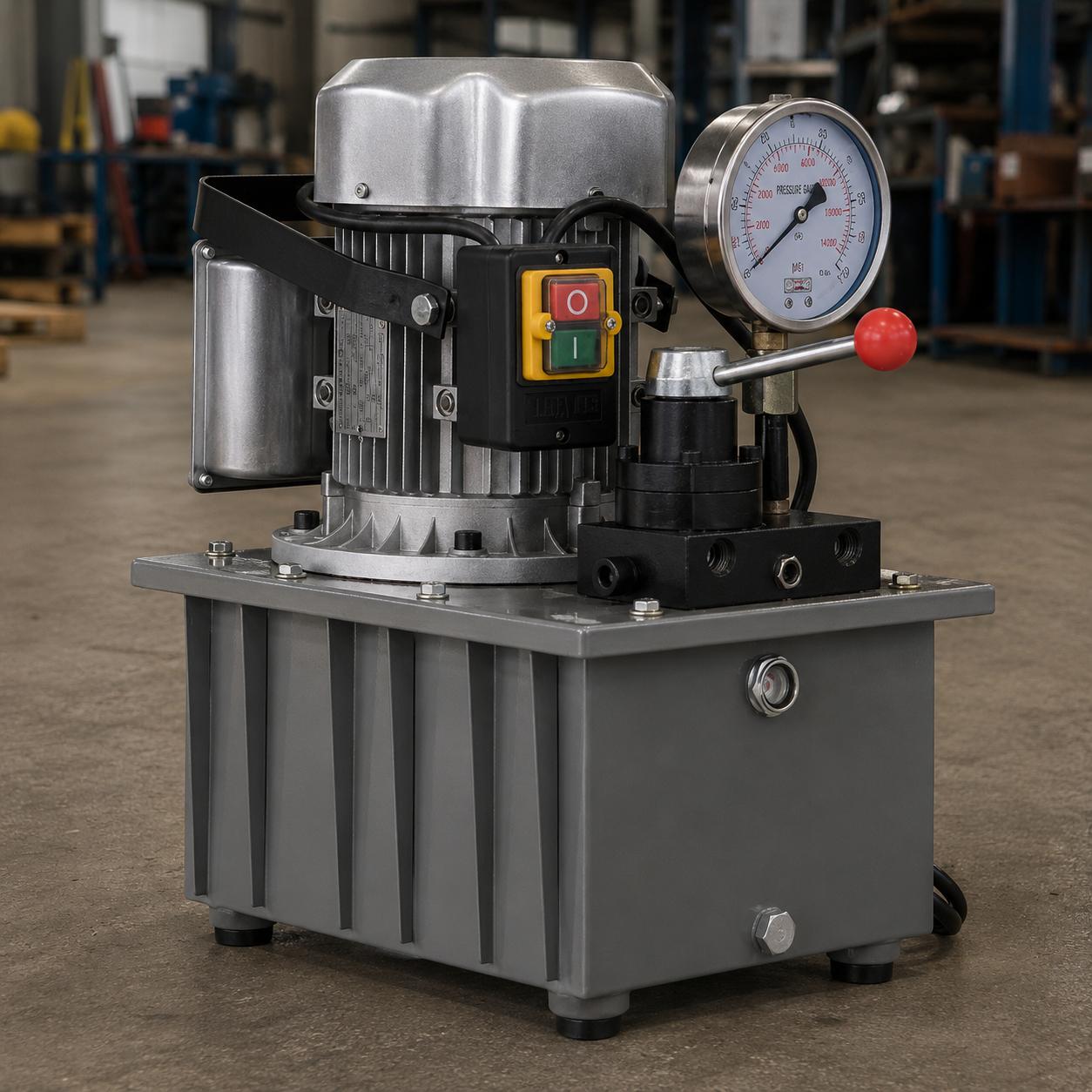

Most modern crushers adjust the crushing gap (CSS – Closed Side Setting) hydraulically. Changing the jaw gap in jaw crushers, and the gap between the mantle and concave in cone crushers, hydraulically is used to keep the product size precise, compensate for wear and protect against uncrushable objects (tramp iron) entering the system. The heart that generates the power for this hydraulic system is the CSS adjustment hydraulic unit (HPU) motor. If the HPU motor is selected incorrectly, the adjustment is slow and weak, overload protection cannot react quickly enough, and in a continuously running system the motor overheats and fails. As an electric motor manufacturer and supplier, the most common request from crushing-screening plant builders and field maintenance teams is: "Supply the right motor that will turn the hydraulic unit's pump smoothly and withstand continuous duty." This guide covers the technical and procurement criteria to consider when selecting a crusher CSS hydraulic unit motor.
When selecting an HPU motor, current electric motor prices matter, but so does the motor being of suitable power for the pressure and flow the hydraulic pump requires and designed for continuous duty; because an undersized motor slows the adjustment system and causes downtime.
The CSS Hydraulic Unit and the Motor's Role
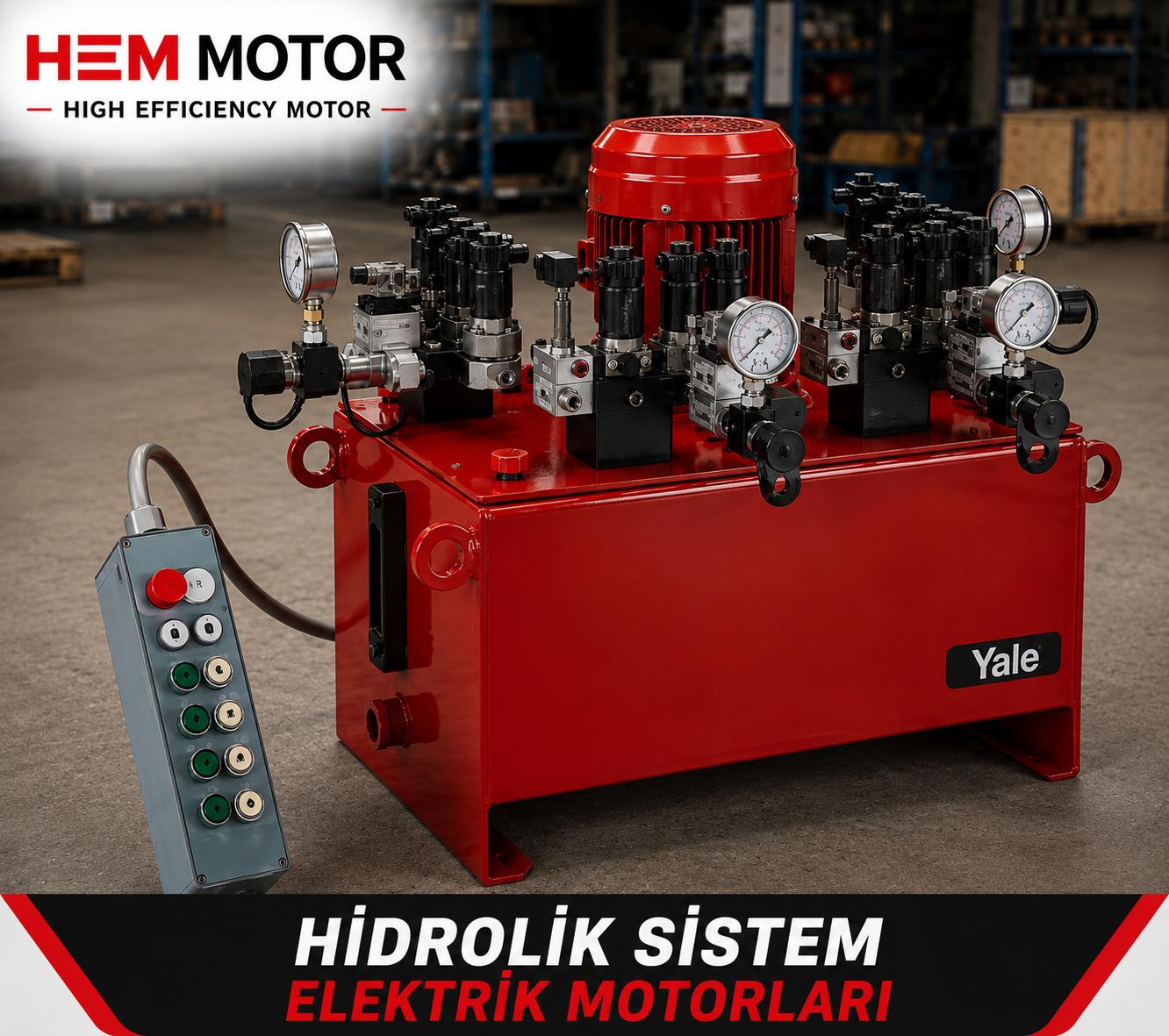
A hydraulic power unit (HPU) consists of a hydraulic pump turned by an electric motor, a tank, valves and cylinders. The electric motor turns the pump, pressurizing the hydraulic oil; this pressure is transmitted to the crusher's adjustment cylinders to change the CSS. The HPU motor's main functions in the crusher:
- CSS adjustment: Precisely opening and closing the jaw or mantle gap.
- Wear compensation: Readjusting the gap as the crusher jaw/manganese parts wear, keeping the product size constant.
- Overload protection: When an uncrushable object (such as a metal piece) enters the system, allowing the hydraulic cylinder to retract and protect the crusher.
- Clearing jams: Rapidly enlarging the gap to clear a clogged crusher.
All of these functions depend on the motor turning the pump with sufficient power and continuity.
Correct Power (kW) Selection: Pressure and Flow Balance
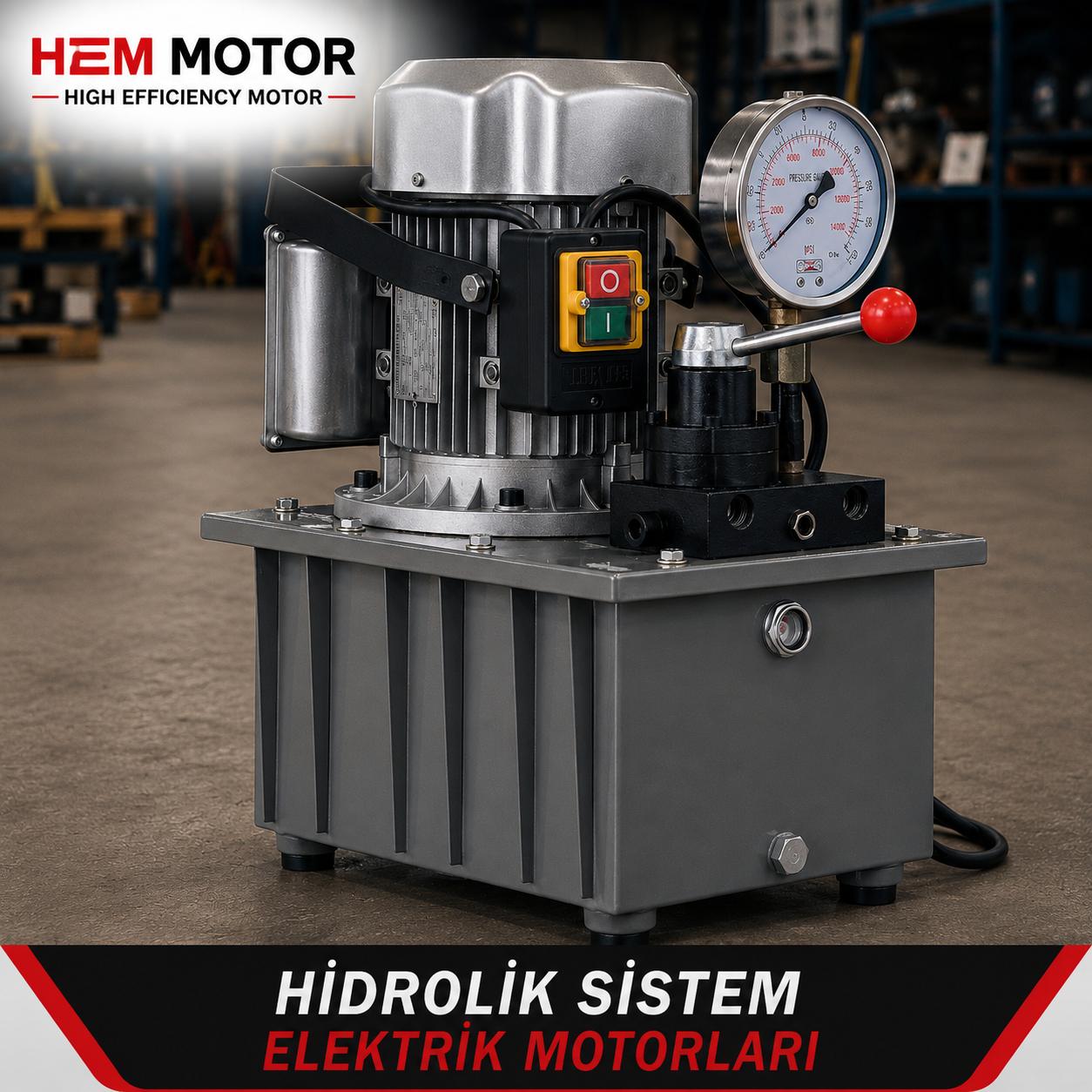
The HPU motor's power is determined by the hydraulic pump's working pressure and flow. Hydraulic power depends on the product of pressure (bar) and flow (l/min). For adjustment systems operating at high pressure, the motor must produce sufficient torque. Points to watch in selection:
- Pump type and efficiency: Gear, vane and piston pumps have different efficiencies; motor power should be selected according to the pump's actual draw.
- Instantaneous peak loads: Pressure rises suddenly during overload protection and jam clearing; the motor must handle these peak torques.
- Power margin: When the hydraulic system is cold, the oil is more viscous and the pump draws more power; so a reasonable power margin must be left.
As with the crusher main drive motor, correct kW selection is critical in auxiliary systems too; you can review the differences between jaw/impact/cone crushers in crusher motor kW selection in our crusher motor kW selection (jaw, impact, cone) article.
Duty Type and Heating: Is the HPU S1 or Intermittent?
The HPU motor's duty profile varies by system. In some systems the pump runs continuously and an accumulator holds the pressure; in others the motor only engages and stops at adjustment moments (frequent start-stop). Both cases require a different motor characteristic:
Continuously Running HPU
If the pump turns continuously, the motor must be selected for continuous duty (S1); class F insulation, IP55 protection and good cooling are essential. As the oil heats up the system is thermally stressed; so temperature protection (PTC/PT100) is recommended.
Frequent Start-Stop HPU
If the motor frequently engages and stops, each start generates heat. In this case the motor must be suitable for a high starting frequency (intermittent duty such as S3/S4). Since frequent starting stresses the winding and bearings, sizing the motor for this operation is important.
Resistance to Harsh Field Conditions
A crusher site is full of dust, vibration, shock and temperature fluctuations. The HPU motor must withstand these conditions:
- Cast iron body: Provides high mechanical resistance against shock and vibration.
- IP55 and above protection: Higher IP classes can be requested where needed in heavily dusty environments.
- Reinforced bearings: Important for bearing life in a vibrating environment.
- F/H insulation: Extends winding life in hot, continuously running systems.
For dust sealing and field resistance in crusher motors, our dust sealing and IP65/IP66 protection in crusher motors article offers further detail. For the motor selection of a similar auxiliary system, the lubrication unit (HPU), see our crusher lubrication unit (HPU) motor selection article.
Mounting Type and Connection to the Pump
The HPU motor is selected in a suitable mounting type according to how it connects to the hydraulic pump. In hydraulic power units, the connection between the pump and the motor requires care for sealing and axial alignment:
- B5 (large flange): Common in compact units where the pump is mounted directly to the motor flange; motor and pump form a single group.
- B35 (foot + flange): Preferred in units that must both sit on the tank/chassis by feet and connect to the pump by flange.
- B3 (foot-mounted): Used in applications where the pump connects via a separate coupling and the motor sits on a chassis.
When replacing, the existing unit's mounting type, frame size, shaft diameter and flange dimensions must match exactly; otherwise the pump alignment is disrupted and vibration, leakage or early bearing failure arise. We covered the B5 versus B14 flange difference and the correct selection criteria in our B5 vs B14 motor mounting type selection article, and shaft diameter and key compatibility in our motor shaft diameter and key dimensions article. The correct mounting type selection protects both the pump's and the motor's life.
Correct Supply and Product Group
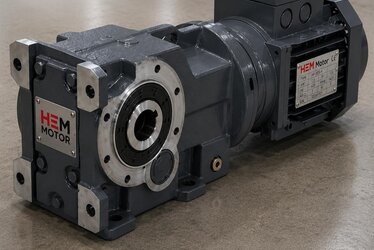
The right product group for a CSS hydraulic unit motor is hydraulic unit electric motors and durable stone crushing screening plant motors with 100% copper windings, class F insulation, IP55 protection, suitable for continuous and intermittent duty. They can be supplied with aluminum or cast iron body options according to the application load. Information to share before quoting: the kW and speed the pump requires, voltage, mounting type (B3/B5/B35), frame size, shaft diameter, duty type (continuous/intermittent, starting frequency), and required protection and insulation class. As a manufacturer and supplier, both fast delivery from stock and supply with options suited to field conditions are provided. For overload protection and starting, our starting a crusher motor article provides complementary information.
The Speed of Starting and Overload Protection
One of the most critical tasks of the CSS hydraulic unit is overload protection: when an uncrushable object enters the system, the hydraulic cylinder must retract rapidly to protect the crusher. This speed depends on the pump running at sufficient flow, and therefore on the motor's power. If the motor is undersized, protection reacts slowly and the crusher can be damaged. Points to watch for starting:
- Low-power HPU motors: Usually run with direct-on-line (DOL) starting; the starting current does not greatly affect the plant's other loads.
- Frequent start-stop: If the motor engages and stops at adjustment moments, the starting current is repeated; here soft starting or correct contactor selection protects bearing and winding life.
- Accumulator systems: If an accumulator holds the pressure, the motor engages less often; this reduces the motor's thermal load.
We covered crusher starting methods for the main crusher motor specifically in our starting a crusher motor: soft starter, star-delta article; the same principles apply to the auxiliary HPU motor too.
The HPU Motor's Relationship With Other Auxiliary Motors in the Plant
In a crushing-screening plant the main crusher motor does not run alone; the CSS hydraulic unit, the lubrication unit, the feeder, the screen and the conveyor motors form an ecosystem. All these motors should be planned in a coordinated way:
- CSS hydraulic unit motor: The subject of this article; turns the pump for adjustment and overload protection.
- Lubrication unit (lube HPU) motor: Provides oil circulation in cone crushers; requires continuous duty. You can find details in our crusher lubrication unit (HPU) motor selection article.
- Screen, feeder and conveyor motors: These motors beyond the main crusher also determine the plant's capacity; our screen and feeder motors in a crushing-screening plant article covers this group.
Sourcing all these motors from the same supply, with compatible efficiency class and durability features, both eases spare-parts management and reduces downtime risk.
Downtime Cost and Keeping a Spare Motor
When the CSS hydraulic unit stops, the crusher cannot adjust; this can spoil the product size or stop the plant entirely. So the HPU motor, despite being low-power, is one of the plant's critical components. Keeping a spare HPU motor in stock prevents hours of waiting during a failure. We covered reducing the cost of motor failure and downtime in a crusher plant in our motor failure and downtime cost in a crusher plant article. As a manufacturer and supplier, fast delivery of critical auxiliary motors from stock significantly shortens field downtime.
Frequently Asked Questions
Should I select the HPU motor at the same power as the main crusher motor?
No. The HPU motor is an auxiliary system independent of the crusher's main drive motor, and its power is determined by the hydraulic pump's pressure-flow need. It is usually of much lower power than the main crusher motor. What matters is that it can turn the pump with sufficient torque and handle the peak loads during overload protection. The correct power should be calculated from the pump data.
My HPU motor frequently engages and stops; is a normal motor suitable?
Frequent start-stop thermally stresses the motor; each start generates extra heat. You need a motor suitable for this operation, with intermittent duty (such as S3/S4) capability and sized for a high starting frequency. A standard continuous-duty motor can overheat constantly under this profile. If you state your operating profile (how many starts per hour), we can select the right motor together.
The motor strains when the hydraulic oil is cold; what is the cause?
Cold oil is more viscous; the pump draws more power to pump it. So a reasonable power margin must be left in motor selection. In very cold climates, using an oil heater or oil of suitable viscosity also reduces the load. If the motor constantly strains on cold start, the power selection and power margin should be reassessed.