English
 Türkçe

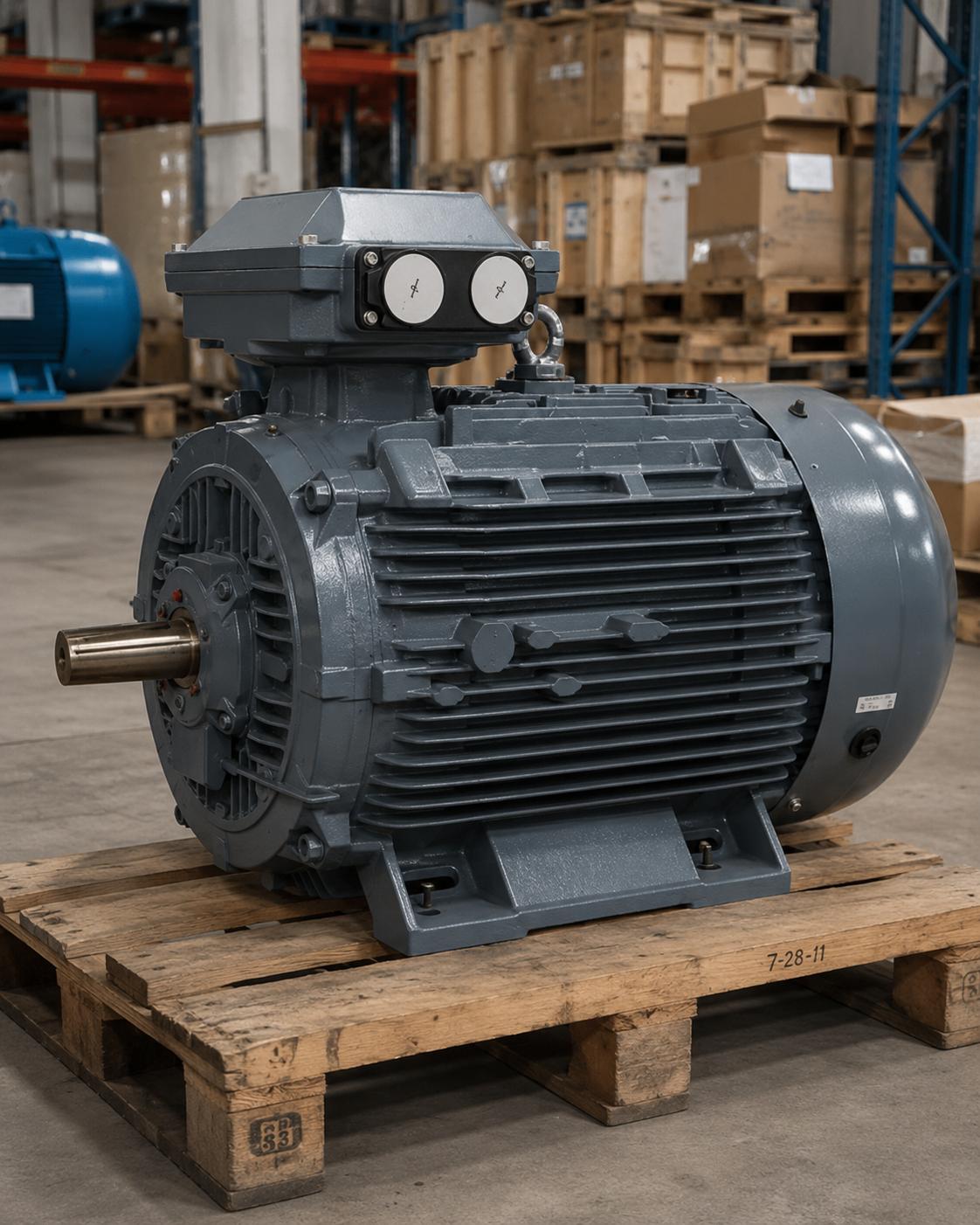

The rotor of an asynchronous electric motor does not stay in the same axial position when stationary and when running. The small back-and-forth movement the rotor can make along the shaft axis is called axial end-float; the equilibrium point to which it is pulled by the motor magnetic field is called the magnetic center. These two concepts directly affect bearing load, vibration and bearing life in coupled mounting, belt-pulley drives and especially vertical-shaft pump applications. Mounting done without any regard for end-float and magnetic center most often returns within a few months as bearing noise, heating and premature failure. In this guide we examine the end-float and magnetic center concepts, the axial clearance that must be left in the coupling and correct mounting, from a manufacturer and seller point of view.
What Is Axial End-Float?
In a standard asynchronous motor the rotor is supported between two bearings with a certain freedom. In most motors one of the two bearings is fixed (located) while the other is left free in the axial direction. This freedom is deliberately designed to allow the shaft to expand and contract with temperature changes and to accommodate mounting tolerances. The total movement the rotor can make along this free direction is called end-float. Without end-float, the shaft expanding as the motor heats up would force the bearings and create excessive axial load.
Correctly understanding end-float is critical in mounting for these reasons:
- In a coupled connection, if some axial clearance is not left between the motor shaft and the machine shaft, the motor own axial movement forces the coupling and the opposite bearing.
- The rotor may rest at one end due to gravity or coupling thrust when stopped, and is pulled to the magnetic center when running. This transition creates an axial force if there is insufficient clearance in the coupling.
- In vertical-shaft motors the rotor weight rests on a single bearing; end-float and bearing selection must be planned to carry this load.
Our content on shaft radial and axial load limit details the relationship between coupling thrust and bearing life.
Why Does the Magnetic Center Form?
When an asynchronous motor is energized, the stator and rotor lamination stacks try to align magnetically. The rotor is pulled axially so as to coincide with the magnetic center of the stator. This is the position of lowest reluctance (magnetic resistance) and the rotor naturally finds equilibrium at this point. This axial position where the rotor sits while running is the magnetic center.
The Effect of the Magnetic Center on Mounting
When the motor is stopped the rotor may not be at the magnetic center; it may have shifted axially due to the coupling, gravity or the position given during mounting. When the motor runs the rotor moves toward the magnetic center. If the coupling is tightly connected so as to prevent the rotor from going to the magnetic center:
- The rotor cannot reach the magnetic center and presses on the opposite side with a continuous axial force.
- This force rests on both the motor bearing and the machine bearing, shortening the life of both.
- If the rotor oscillates around the magnetic center, axial vibration and noise appear.
For this reason, most motors have a mark on the body showing the magnetic center or a reference on the shaft; correct mounting must allow the rotor to sit freely at the magnetic center while running.
How Is Axial Clearance Set in the Coupling?
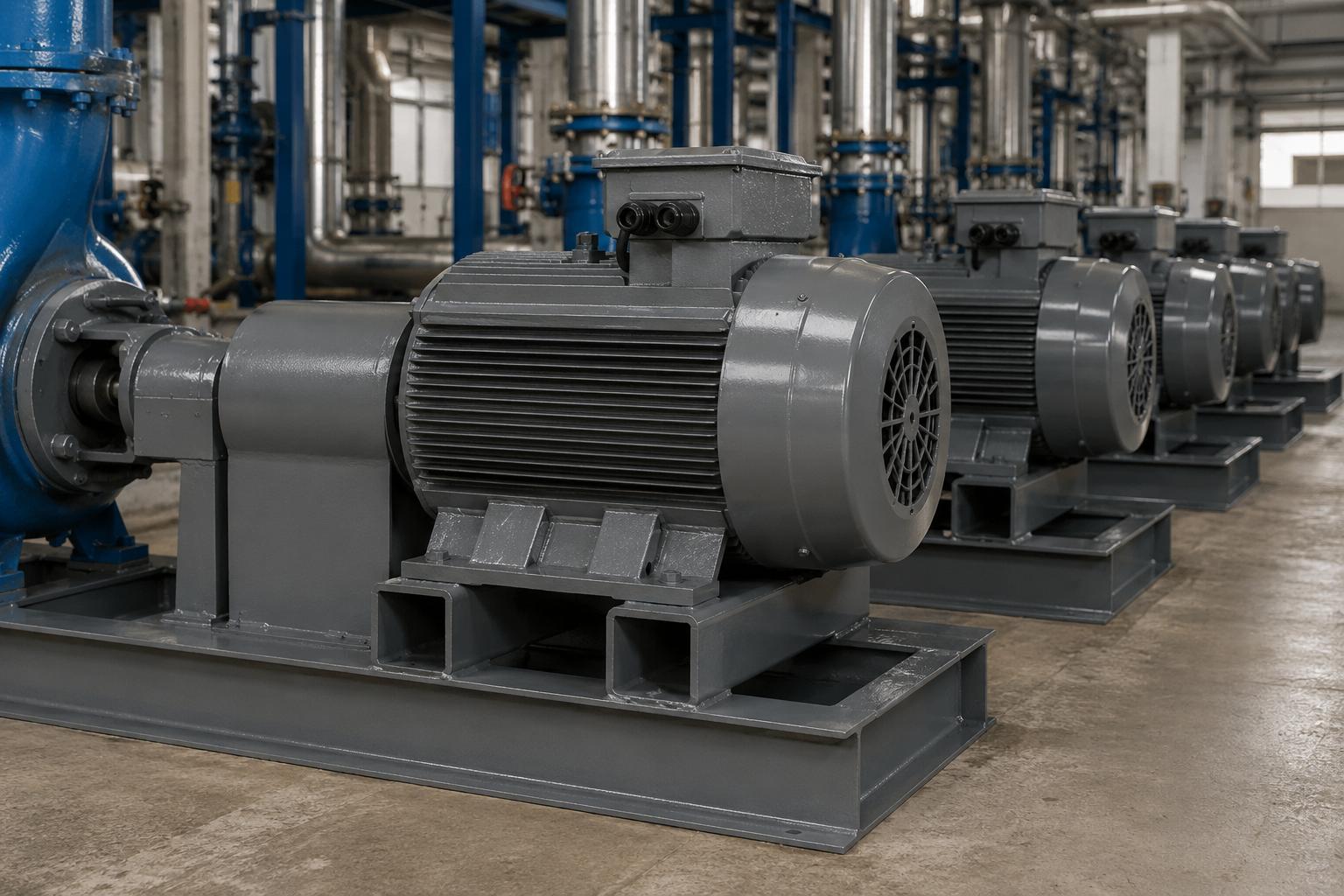
The most common mistake in coupled mounting is connecting the motor and machine shafts to each other by squeezing them without leaving axial clearance. In correct mounting, the flexible coupling is installed with a clearance that allows both the motor and the machine to move axially. This clearance is set according to the mounting distance (DBSE - distance between shaft ends) specified by the coupling manufacturer. The correct approach is:
- Axial clearance allowing the rotor to move to the magnetic center when the motor is energized must always be left in the coupling.
- The axial misalignment tolerance of the flexible coupling should be chosen larger than the motor end-float value; otherwise the coupling transfers the axial load to the bearing.
- Using a rigid coupling causes the two shafts to lock axially; in this case the bearings of the motor and machine must share the axial load and alignment must be done much more precisely.
The choice between flexible and rigid coupling is at the center of axial clearance management. Our flexible versus rigid coupling selection and shaft alignment guide clarifies this decision according to the application.
The Relationship of Bearing Load, Vibration and Bearing Life
When end-float and magnetic center are not managed correctly, the resulting axial force rests directly on the bearings. In asynchronous motors there is usually a fixed (load-carrying) bearing on one side and a free bearing on the other. The fixed bearing is normally selected to carry only the radial load and a limited axial load. Continuous axial thrust from the coupling forces this bearing beyond its design limits and creates these results:
- Excessive pressure on the bearing balls and rolling surfaces; early fatigue and wear.
- Temperature rise in the bearing; shortened grease life and insufficient lubrication.
- Axial vibration; noise and unbalance on both the motor and machine sides.
In vertical-shaft pumps the situation is more sensitive; since the rotor weight already creates axial load, the magnetic center and bearing selection must be planned together. In such applications an angular contact bearing or special bearing arrangement may be required. For oil seal and correct ordering in vertical mounting, our content on vertical-mounted motor selection (V1/V5 shaft down) offers complementary information.
Practical Rules for Correct Mounting
The steps to follow in mounting to prevent problems caused by end-float and magnetic center are clear:
- Before running the motor, push the rotor axially by hand to feel the amount of end-float; this provides a reference point during mounting.
- Set the coupling mounting distance according to the coupling manufacturer DBSE value; allow the motor to move to the magnetic center.
- Check shaft alignment (axial, angular and radial) with a laser or dial gauge; eliminate any soft foot.
- Run the motor briefly unloaded and observe the axial position and vibration; make sure the rotor sits freely at the magnetic center.
Our guide on soft foot and shaft runout addresses a frequently overlooked point in the alignment process. For the current product range and electric motor prices, you can contact us with your application details; as a manufacturer and seller we can supply motors with the correct bearing option (for example a C3-clearance bearing for hot environments).
Axial Position and Load Distribution in Belt-Pulley Drives
In addition to coupled systems, belt-pulley drives also require attention regarding end-float and magnetic center. In a belt-pulley connection a radial load rests on the motor shaft; however, if the axial position of the pulley on the shaft is wrong, the belt runs out of line and friction increases. More importantly, when the motor moves to the magnetic center, the pulley also shifts axially with the rotor, which can disturb its alignment with the opposite pulley. Therefore, in belt-pulley systems pulleys should be aligned while the rotor is at the magnetic center; alignment done with the motor stopped can be misleading.
Points to consider for correct mounting in belt-pulley applications:
- Pulley alignment should, if possible, be checked after the motor is pulled to the magnetic center (following a brief run).
- Excessive belt tension increases the radial load and forces the fixed bearing; the radial load limit specified by the manufacturer must not be exceeded.
- The pulley should be positioned against the shaft shoulder, and the key and clamping element should be tightened correctly to prevent axial slip.
The effect of the radial load on the shaft on bearing life should be evaluated together with the coupling thrust; our shaft load limit content offers practical limit values on this topic.
Bearing and Option Selection at the Ordering Stage
In applications where axial load is high, the motor may need to be ordered not with standard bearings but with an application-specific bearing option. The information the buyer should state at the ordering stage prevents bearing problems from the start:
- Mounting position: Horizontal (B3/B5) or vertical (V1/V5/V3/V6)? In vertical mounting the axial load direction changes.
- Drive type: Directly coupled, belt-pulley, or flanged to a gearbox?
- Axial/radial load: If continuous loads such as pump thrust or belt tension are known, a suitable bearing and arrangement can be selected.
- Ambient temperature: Since shaft expansion increases in a hot environment, a C3-clearance bearing may be needed.
For correct bearings in hot environments and drive operation, our C3 bearing clearance and hot-environment bearing arrangement guide helps with option selection. As a manufacturer and seller, when you send this information we can prepare the motor with the bearing and mounting option most suitable for the application; this both eases assembly and lowers the risk of early bearing failure.
Frequently Asked Questions
Is axial end-float a sign of failure?
No, end-float is a normal design feature of standard asynchronous motors. The rotor having some axial freedom is intentional, to allow the shaft to expand with temperature and to accommodate mounting tolerances. The problem is when this freedom is blocked by the coupling or when axial load above the bearing capacity is created.
What is the magnetic center mark for?
The magnetic center mark shows the axial position where the rotor will sit while the motor is running. In mounting the coupling must be set to allow the rotor to go freely to this position. The mark provides a reference point to confirm that the correct axial clearance has been left.
Why is axial load more critical in a vertical-shaft motor?
In vertical-shaft mounting the weight of the rotor and the connected pump parts rests directly on the lower bearing, creating a continuous axial load. If the magnetic center and bearing selection are not planned to carry this load, the bearing fails early. Therefore, in vertical-shaft applications the bearing option must be clarified at the ordering stage.