English
 Türkçe

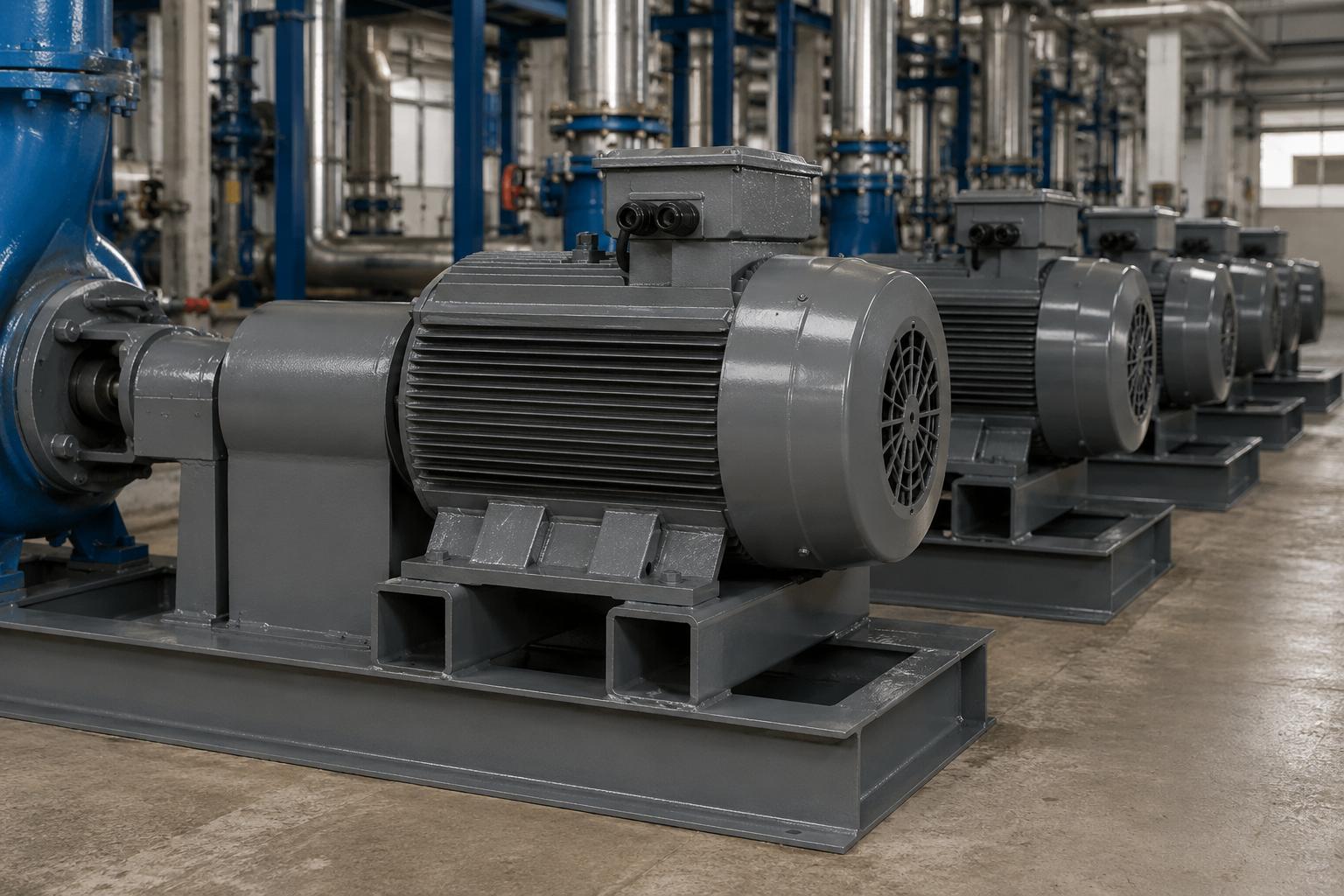

Yeast production and fermentation plants present unique challenges for electric motor selection, different from an ordinary food factory. In the bioreactors (fermenters) that form the heart of these plants, living microorganisms are cultivated under specific temperature, oxygen and mixing conditions; the continuity of these conditions directly determines production success. If the agitator stops for a moment, oxygen transfer is disrupted or the cooling pump stumbles, an entire fermentation batch can be lost. That is why electric motor selection in yeast and fermentation plants is not just a power calculation; it is an engineering decision where continuous duty, hygiene, reliability and correct power matching are considered together. In this guide we address the plant's critical motors, from bioreactor agitators to cooling and air blowers, and offer a practical framework for correct power and reliable supply.
At HEM Motor, the most important reality we see working with food and bioprocess plants is that here a motor's value lies less in being "cheap" than in "not causing downtime." The cost of a lost batch is far above the cost of a motor; so the right motor is the most reliable, continuously operable one. In yeast and similar bioprocesses the survival window of microorganisms is narrow; even a brief disruption of mixing, aeration or cooling can spoil the batch irreversibly. Motor selection is therefore not a cost item but a direct part of production safety.
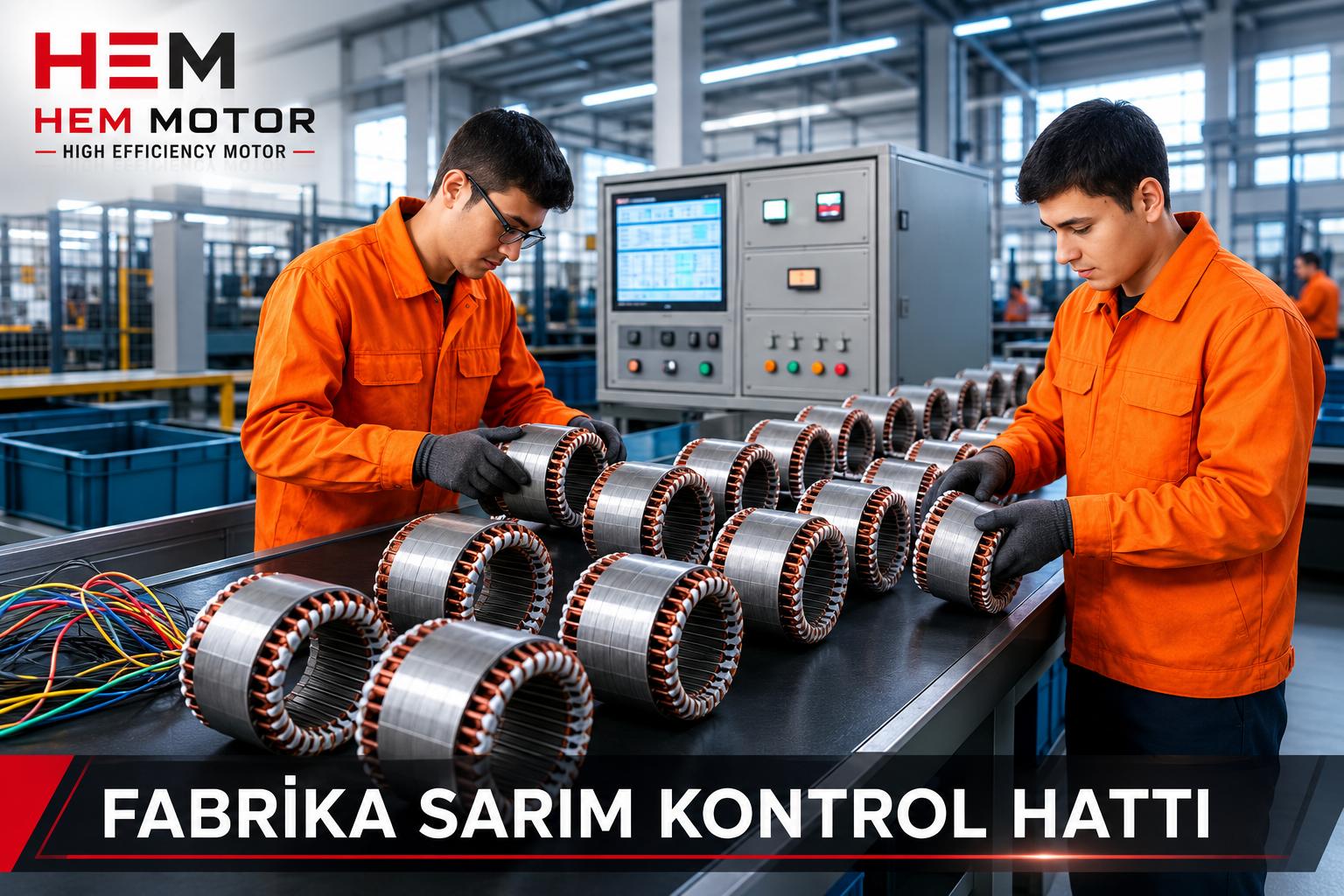
The Bioreactor Agitator Motor
The heart of fermentation is the agitator. It keeps the tank contents homogeneous, distributes oxygen through the liquid and balances temperature. This motor is usually combined with a gearbox, because the agitator demands high torque but turns at low speed. The main features sought in an agitator motor are:
- Continuous duty (S1): Since fermentation batches can last days, the motor must be suited to uninterrupted operation.
- High starting torque: In a dense, viscous medium the agitator starts turning with high initial torque.
- Low vibration: Vibration adversely affects both the product and the mechanical connections.
- Cast iron frame: Preferred for high mechanical strength and stable thermal behaviour.
Since the agitator usually runs with a gearbox, the motor and gearbox must be selected correctly together. Tank volume, content viscosity and the desired mixing speed are the key parameters that determine both motor power and gear ratio, so sharing this information before procurement speeds up the right selection. We cover the gain of using an efficient motor with a gearbox and the correct match in our article on using an IE4 motor with a gearbox. For torque class selection on high-torque loads like agitators, our article on asynchronous motor torque classes and starting torque also guides you.
The Air Blower and Aeration Motor
In aerobic fermentation the microorganisms must be continuously supplied with oxygen; this is done with air blowers. The blower motor usually runs at high speed and continuously; if aeration stops, yeast growth halts. So reliability and efficiency are critical in the blower motor. Because the air flow varies with process needs, running the blower with a frequency drive both sharpens oxygen control and saves energy. As with pumps and fans, the saving achieved by adjusting speed is significant by the affinity law. Moreover, the blower's soft start with a frequency drive reduces sudden pressure surges and mechanical stress in the air line, extending equipment life too. Our article on the affinity law in pumps and fans with a VFD shows the applicable gain. For correct motor selection in blower and aspiration applications, our article on aspirator and fan motor selection is complementary.
Cooling and Circulation Pump Motors
During fermentation the microorganisms produce heat; to keep this heat under control, cooling jackets and heat exchangers come into play. The motors of the circulation pumps that move the cooling water also work in continuous duty, and stopping them disrupts temperature control. In these pumps, IE3/IE4 efficient motors provide both reliability and energy savings. To select the pump motor to suit the existing system, our article on centrifugal pump motor selection guides you, and for boiler room and circulation lines our article on boiler room and circulation pump motors.
Transfer, Filling and Auxiliary Line Motors
In a fermentation plant not only the bioreactor but also many auxiliary lines that feed it and process the product run with motors. Raw material (molasses, sugar solution, nutrient medium) transfer pumps, post-harvest centrifuge and separator drives, filter presses, dryer and packaging line motors are the main ones. Each of these motors has a different duty type and power need. For example, transfer pumps run intermittently while separator motors must turn at high speed and stay balanced. To manage this variety correctly, each line should be evaluated separately and motors selected by application. To map motors by application in an industrial plant, our article on electric motor types and a purchase map offers a holistic starting point.
Hygiene, Washdown and IP Protection Class
Because yeast and fermentation plants fall under food production, equipment is washed and disinfected regularly. This requires the motors to be resistant to water and moisture. Standard IP55 protection guards against dust and low-pressure water jets; however, in areas with intensive washdown, higher protection classes (IP65/IP66) may be requested. The right IP class prevents motor damage during washing and extends its life. To select the right IP class by application, our article on IP protection class selection in electric motors, and for hygiene-focused selection in a food plant our article on food factory electric motors and hygiene provide a clear decision framework.
Corrosion and Resistance to Humid Environments
In fermentation plants the environment is constantly humid; steam, washing water and condensation can cause corrosion on motor surfaces. The cast iron frame, with suitable paint and coating, provides corrosion protection; however, in open or very humid areas additional measures may be needed. The sealing of the motor's terminal box, the correct selection of cable glands and oil seals that block moisture-steam ingress are critical for the motor's long life in this environment. To plan corrosion protection and open/humid environment use, our article on corrosion protection in cast iron motors, and for the relationship of the terminal box and cable connection with IP protection our article on motor terminal box and cable connection offer practical suggestions.
Continuous Duty and Reliability
Fermentation batches cannot be stopped once started; so the plant's critical motors must be designed for continuous duty (S1), with quality bearings and a high insulation class (Class F). The most common problem in continuous operation is overheating; therefore monitoring the winding temperature with a PT100 or PTC thermistor provides both protection and early warning. Our article on motor winding temperature monitoring offers an applicable framework.
Why Is Spare Motor Stock Important?
When a critical agitator or blower motor fails, being able to bring a replacement motor to site quickly prevents production loss. So keeping spare motors for the most critical powers and speeds in yeast plants is wise risk management. To plan which powers to keep in stock, our article on a critical spare motor list and stock planning guides you.
Starting Methods and Electrical Protection
On motors that start with high torque in a dense medium, like the bioreactor agitator, direct-on-line starting draws a high inrush current. This can cause both grid voltage dips and mechanical shock. Starting methods such as star-delta or soft starter soften the start, protecting both the motor and the process. In applications using a frequency drive, starting is already soft and also provides speed control. To choose the right starting method, our article on star-delta or soft starter clarifies the decision.
Energy Cost and the Return on Efficiency Investment
Yeast and fermentation plants are high energy consumers because agitators, blowers and pumps run uninterrupted in batches lasting days. This accelerates the return on switching to efficient motors: the more hours a motor runs per year, the bigger the saving from moving to a higher-efficiency motor. On continuously running critical motors, moving to IE4 or, where suitable, an IE5 synchronous reluctance motor provides a marked reduction in the energy bill. To evaluate the investment decision by operating hours and load profile, our article on investment payback scenarios for efficient motors offers a conceptual decision matrix. To calculate total cost of ownership (TCO) correctly, our article on TCO calculation in high-efficiency motors guides you.
The Right Power and Procurement Approach
When selecting motors in a yeast and fermentation plant, we recommend the following steps:
- Separate the applications: Agitator, blower, cooling pump and transfer pumps each demand different power, speed and duty type.
- Verify the duty type: Select continuously running motors for S1 duty; intermittently running ones may have a different duty type.
- Define hygiene and IP class: Choose IP55 or higher protection according to washdown intensity.
- Evaluate the efficiency class: On continuously running motors, IE3/IE4 efficiency significantly lowers the energy cost.
- Plan spares: Plan redundancy for fast replacement from stock on critical motors.
To select the agitator, blower and pump motors of your yeast and fermentation plant correctly for continuous duty, hygiene and efficiency and source them with fast delivery from stock, and for current electric motor prices, get in touch with us. For our efficient-motor range see our high-efficiency electric motors page, and for pump motors our pump electric motors page.
Frequently Asked Questions
What type of motor is suitable for a bioreactor agitator?
The agitator demands high torque and turns at low speed; so a motor designed for continuous duty (S1), with high starting torque and low vibration, usually combined with a gearbox, is selected. A cast iron frame is preferred because it provides mechanical strength and stable thermal behaviour. Matching the motor and gearbox correctly together is essential for homogeneous, reliable agitator operation.
Which IP protection class is needed for motors in a fermentation plant?
Standard IP55 protection is sufficient against dust and low-pressure water jets; however, in areas with intensive washdown and disinfection, higher protection classes such as IP65 or IP66 may be requested. The right choice depends on washdown intensity and the motor's location. Selecting a washdown-resistant motor for hygienic production matters for both product safety and motor life.
Does it make sense to run the blower motor with a frequency drive?
Yes. The aeration need varies across the different stages of fermentation; running the blower with a frequency drive sharpens oxygen control and saves energy by reducing speed. On variable-torque loads like fans and blowers, the energy gain from reducing speed is significant by the affinity law. This is an approach that improves both process quality and operating cost.