English
 Türkçe

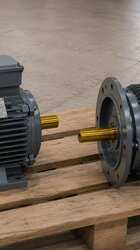
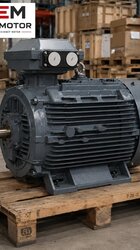
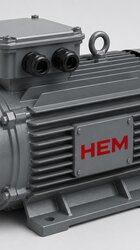
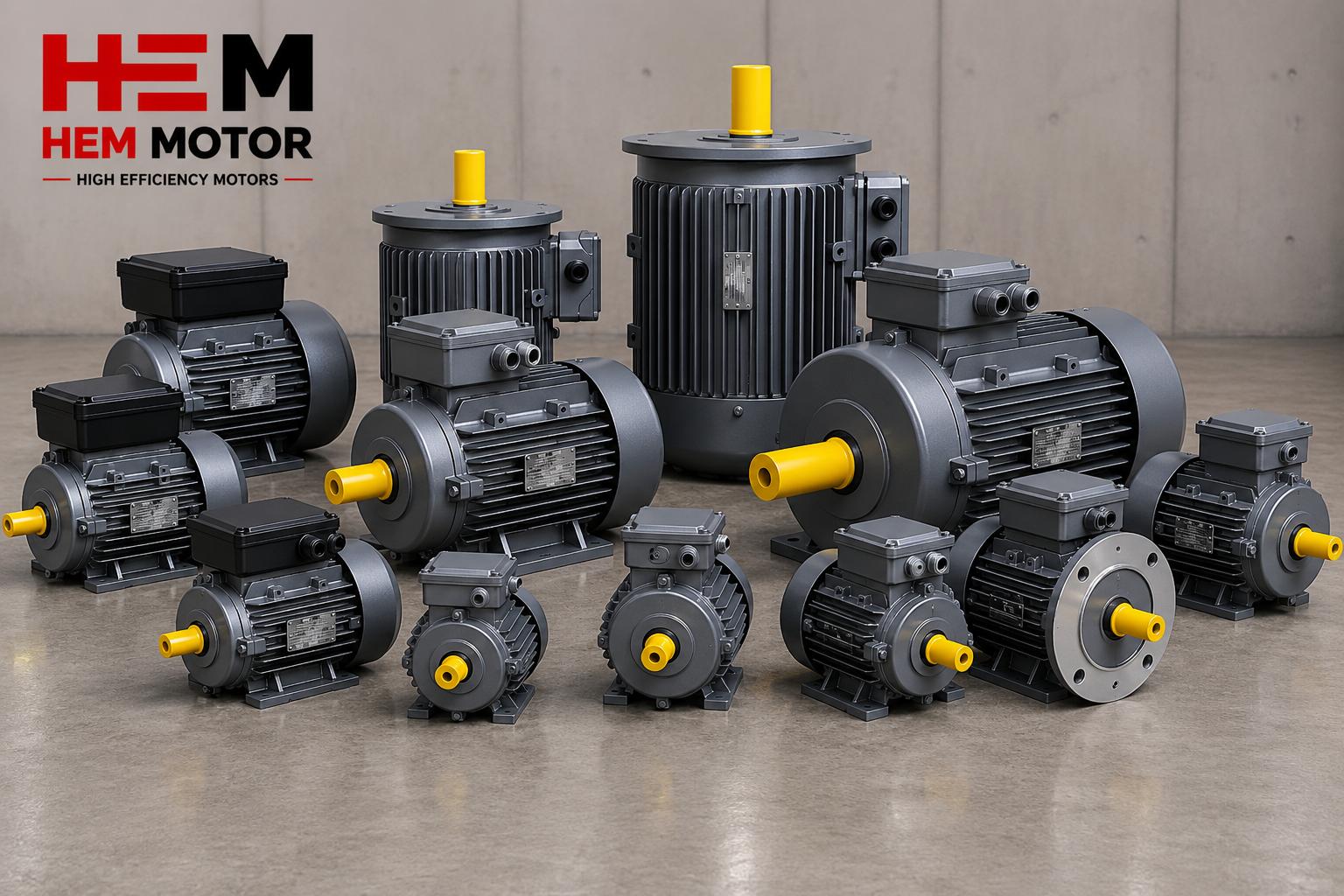

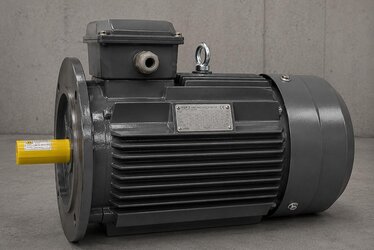
When it comes to selecting a motor for a facility, we are often confronted with catalogues full of options, and at first glance this variety can feel overwhelming. Yet the overwhelming majority of motors used in industry belong to a single family: the three-phase squirrel-cage asynchronous motor. From pumps to fans, from conveyors to crushers, from compressors to crane drives, this motor type sits at the heart of countless applications. Therefore the road to the right model is far shorter than it appears, provided the decision process is built on the right axes. In this article we look at motor types from a buyer's perspective and offer a five-step buying map that takes you from a need to a clear motor specification.
In modern industry the decision is usually shaped around an IE3 or IE4 efficiency class. Under the pressure of regulation and energy costs, old standard-efficiency motors have largely fallen off the shortlist. For this reason, the answer to "which motor should I buy" is in most cases the answer to "at what power, at what speed, and in which efficiency class do I need an asynchronous motor". By the time you finish this article, you will have a complete motor specification ready to hand directly to your supplier.
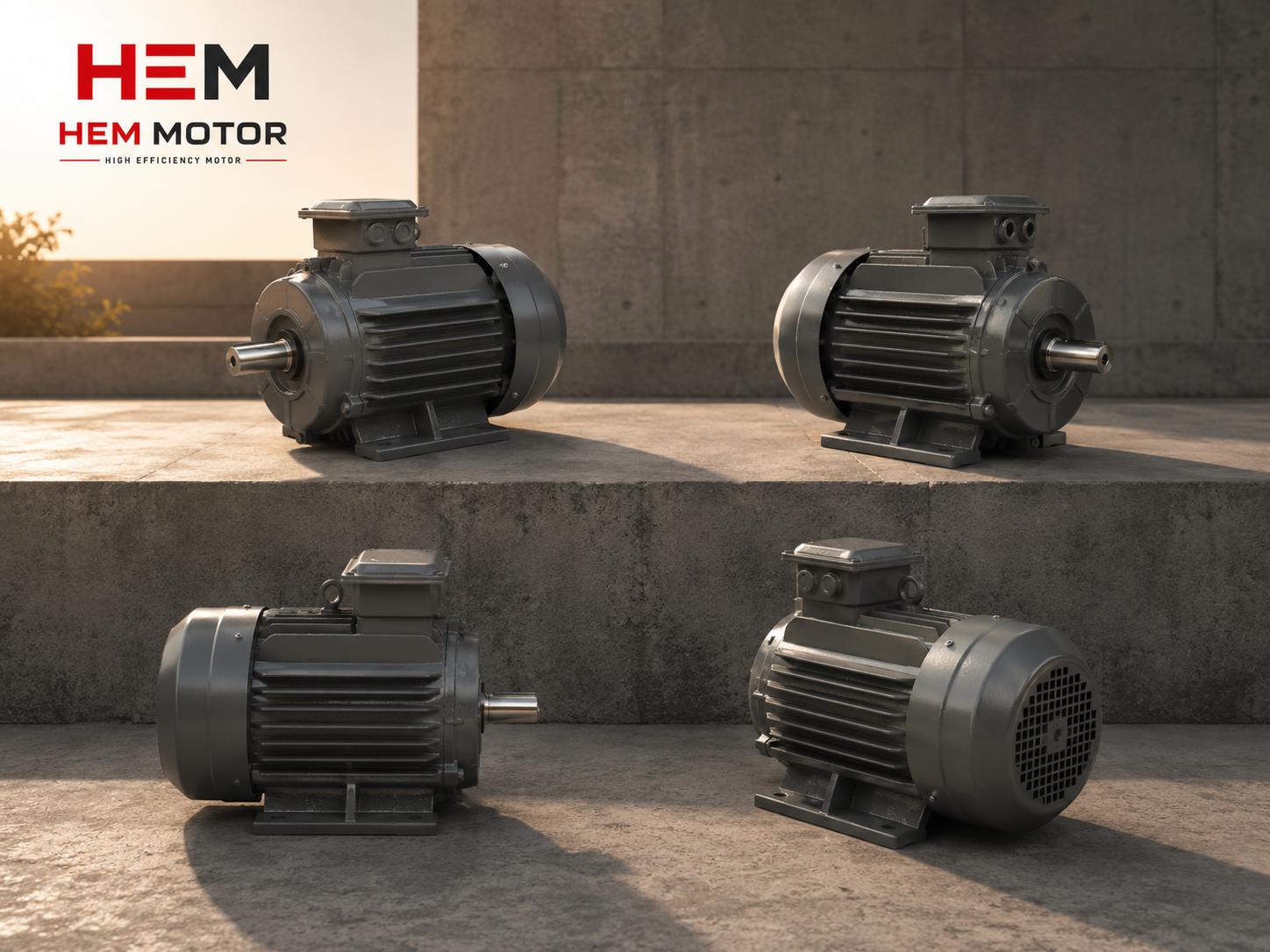
Motor Types from a Buyer's View: Five Axes
In engineering literature, motors are classified by many criteria. But for someone making a purchasing decision, only five of these axes are truly decisive. Once you define a motor along these five axes, all that remains is the choice of brand and lead time. These axes are phase, speed, power, efficiency and frame.
1. Phase: Single-Phase or Three-Phase?
The first distinction is the supply type. While single-phase motors are used at low powers and in domestic applications, the backbone of industry is built on three-phase motors. Three-phase supply offers higher power density, smoother torque and higher efficiency. For nearly all industrial applications above roughly 2.2 kW, three-phase is the choice. If your facility has a 380-400 V three-phase supply, your decision will almost certainly point to three-phase.
2. Speed: Pole Count and Synchronous Speed
The second axis is the motor's speed, and this is determined directly by the number of poles. On a 50 Hz grid, a 2-pole motor turns at roughly 3000 rpm, a 4-pole at roughly 1500 rpm, a 6-pole at roughly 1000 rpm and an 8-pole at roughly 750 rpm synchronous speed. Under load these values drop by the amount of slip. Speed is chosen according to the speed and torque required by the driven machine. High-speed pumps pair with 2-pole motors, while conveyors and geared drives usually pair with 4-pole motors. Correct pole selection is covered in detail in our asynchronous motor pole selection guide.
3. Power: kW and Rated Values
The third axis is power, expressed in kilowatts (kW). Power defines the mechanical output the motor can deliver at the shaft. Correct sizing is critical: an oversized motor penalises you both in upfront cost and in efficiency loss at low load factors, while an undersized motor means overheating and early failure. The standard power steps (0.75 - 1.1 - 1.5 - 2.2 - 3 - 4 - 5.5 - 7.5 - 11 - 15 - 18.5 - 22 - 30 - 37 - 45 - 55 - 75 - 90 - 110 kW...) form the stock logic of suppliers, and sticking to these steps dramatically shortens lead time.
4. Efficiency: The IE Class
The fourth axis is efficiency. The IE (International Efficiency) classes indicate how efficiently a motor converts energy into mechanical work. IE1 and IE2 can no longer be placed on the market in many power ranges; today the standard is IE3 (premium efficiency), with the upper choices being IE4 (super premium) and IE5 (ultra premium) motors. In high-running-hour applications, a higher efficiency class pays for itself quickly on the energy bill. For the regulatory dimension of efficiency selection, see our article on the IE3 and IE4 efficiency mandate.
5. Frame: Frame Size and Mounting
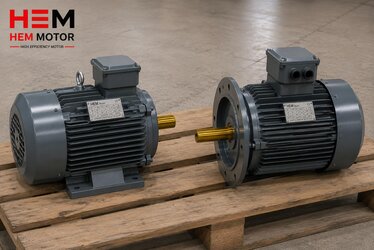
The fifth and final axis is the frame. The IEC frame size standardises the motor's physical dimensions, shaft diameter and mounting holes. Frame sizes such as 80, 90, 100, 112, 132, 160, 180, 200, 225, 250, 280 and 315 pair with specific power and speed combinations. The mounting type is also defined here: foot-mounted (B3), flange-mounted (B5/B14) or foot-and-flange (B35) options describe how the motor attaches to the machine. A cast iron frame provides durability in heavy industry and harsh environments like crushing and screening, while an aluminium frame offers light weight and lower cost.
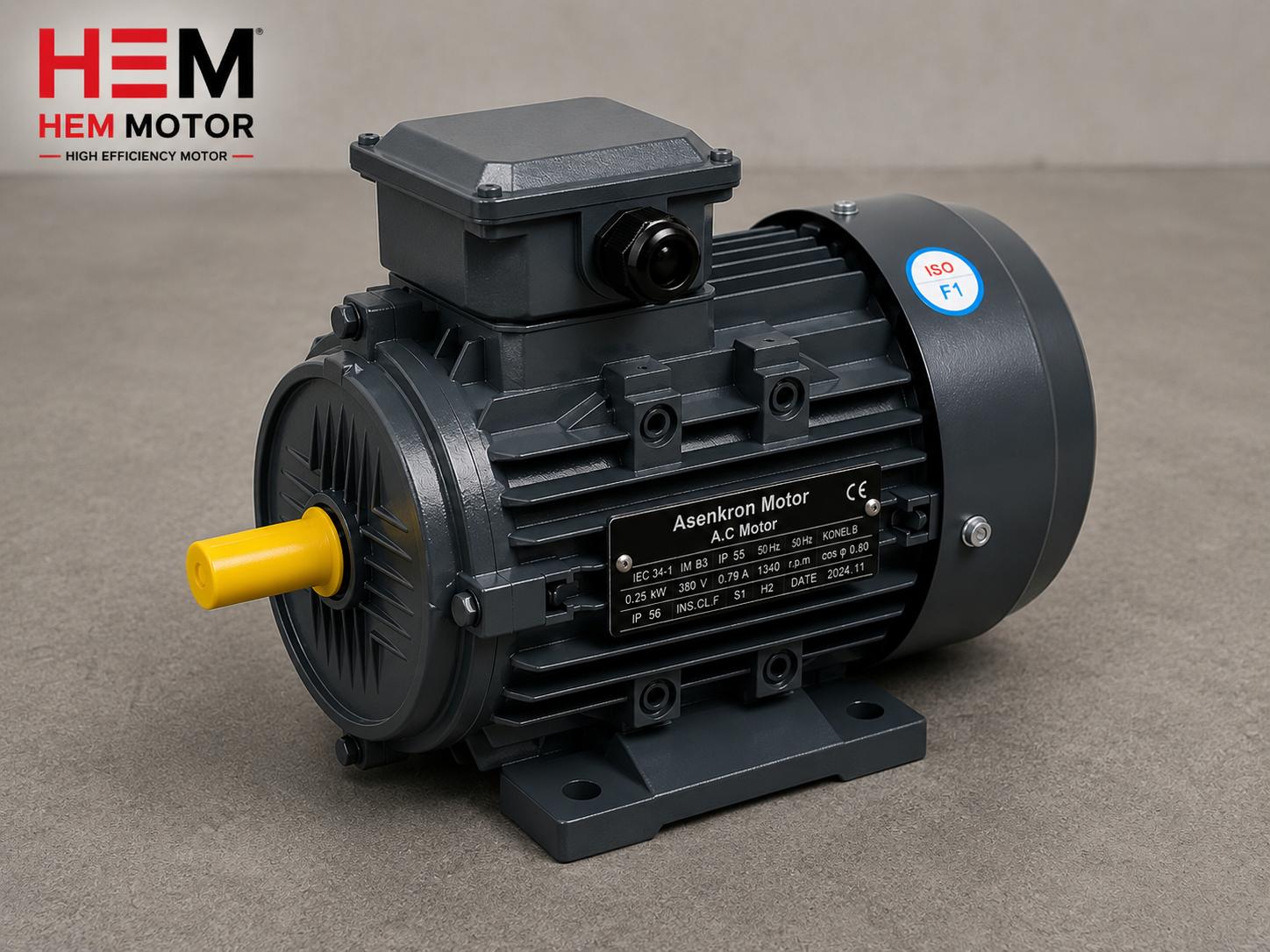
From Need to the Right Model: A Five-Step Buying Map
When we turn the five axes above into a decision flow, a practical map emerges that takes you from a need to a clear motor specification. Apply these steps in order and the request you hand to your supplier will be complete, eliminating the risk of a wrong delivery.
Step 1: Define the Application and Load
First, clarify what the motor will drive. Is it a pump, a fan, a conveyor, a crusher? The character of the load (constant torque, variable torque, high starting torque) directly affects motor selection. The power and speed written on the driven machine's nameplate is your starting point.
- Constant torque loads: Conveyor, crusher, crane - starting torque is high.
- Variable torque loads: Centrifugal pump and fan - power demand drops rapidly as speed falls.
- Intermittent loads: Press, elevator - frequent starting and stopping.
Step 2: Determine Power and Speed
In the second step, lock in the kW power and speed the application requires. If you are replacing an existing motor, the old motor's nameplate is the most reliable source. For a new installation, base it on the values provided by the machine manufacturer. Rounding to a standard power step here increases the chance of delivery from stock.
Step 3: Choose the Efficiency Class
In the third step, consider your annual running hours. In a 24/7 application, the savings of IE4 or IE5 quickly cover the price difference. For a low-running, standby motor, IE3 is the balanced choice. The efficiency decision is made not on price alone, but on total cost of ownership.
Step 4: Clarify Frame and Mounting Details
In the fourth step, specify the mounting type (B3, B5, B35), frame size, shaft diameter and protection class (IP55 is standard). For a motor that will connect to a gearbox, the flange type is critical. These details ensure the motor seats onto the machine without trouble.
Step 5: Confirm Stock and Lead Time
In the final step, find out whether the motor you have specified is in stock and what its lead time is. A large share of industrial motor demand arises from emergency failure replacement; in that case even the most accurate specification means nothing if it is not in stock. Our same-day delivery options minimise downtime cost. To browse our broad product range, you can visit our homepage.
Practical Tips for Fast Selection from Stock
After applying the five-step map, there are a few practical points that speed up the purchasing process. These save time and reduce the risk of a wrong delivery.
- Photograph the existing motor's nameplate; power, speed, voltage, frame and efficiency class all appear in a single shot.
- Stick to standard power steps; intermediate values mean custom production and long lead times.
- Always confirm mounting type and shaft dimensions; flange mismatch is the source of most wrong deliveries.
- Keep spare motor stock for critical lines; downtime cost far exceeds the motor price.
- Evaluate the efficiency class as operating savings, not just an investment.
How a Correct Motor Specification Benefits Operations
A well-defined motor request brings not only the right product but also a predictable supply process. A specification that is clear across all five axes - phase, speed, power, efficiency and frame - matches the supplier's stock directly, which both shortens lead time and makes pricing transparent. A poorly defined request, by contrast, means unnecessary back-and-forth, mistaken shipments and prolonged downtime.
Especially in facilities where many motors operate together, adopting a disciplined motor specification standard delivers serious long-term advantages. Keeping the entire motor fleet at the same efficiency class and compatible frame standards simplifies spare parts management and streamlines the maintenance strategy. Our guide to the most requested power-speed combinations helps you see which models are ready and waiting.
Frequently Asked Questions (FAQ)
What is the most common motor type in industry?
The overwhelming majority of motors used in industry are three-phase squirrel-cage asynchronous motors. Thanks to their simple construction, low maintenance needs, high durability and affordable cost, they are preferred across a wide application range from pumps to fans and from conveyors to crushers. The decision is usually shaped within this family around an IE3 or IE4 efficiency class.
Should I buy IE3 or IE4?
The decisive criterion for this choice is annual running hours. In an application running 24/7 or at very high hours, the energy savings from an IE4 (or even IE5) motor amortise the price difference within a few years. For intermittently running, low-hour or standby motors, IE3 is usually the balanced and economical choice. The decision should be made on total cost of ownership, not on the price tag.
What information should I give my supplier to order the right motor?
For a complete request, provide information on all five axes: phase type (usually three-phase), power (kW), speed or pole count, efficiency class (IE3/IE4) and frame details (frame size, mounting type B3/B5/B35, shaft diameter, protection class). If you are replacing an existing motor, a photo of the old nameplate presents all of this information in a single frame and is the most reliable source.