English
 Türkçe

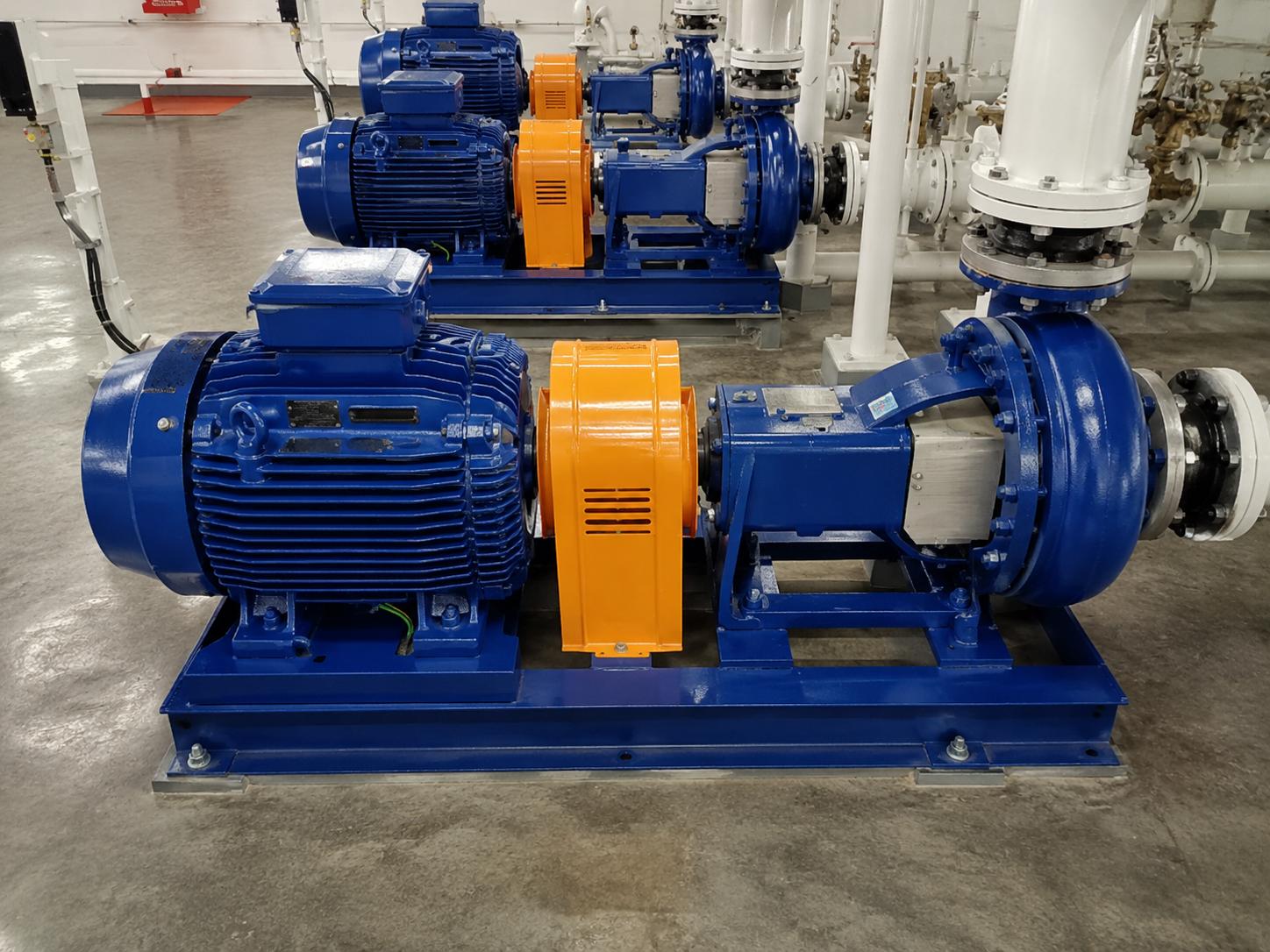

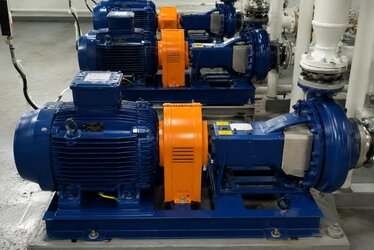
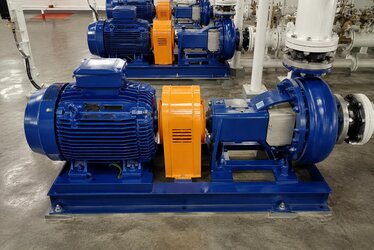
Thermal oil systems are closed-loop plants that transfer heat to a process through a liquid heat carrier (hot oil) instead of steam. Widely used in textiles, wood-based panels, food processing, asphalt, chemicals and corrugated board, these systems have at their heart a thermal oil circulation pump and the electric motor that drives it. The pump motor keeps the hot oil moving continuously, carrying heat from the boiler to the consumers and back. The moment this motor stops, the oil sitting in the pipework overheats, cracks and the safety of the whole system is jeopardised. For this reason, selecting a hot oil circulation pump motor is a far more demanding engineering decision than choosing an ordinary pump motor. In this guide we walk through how to determine the correct power, the correct frame and the correct procurement decision along three axes: high temperature, continuous duty and sealing.
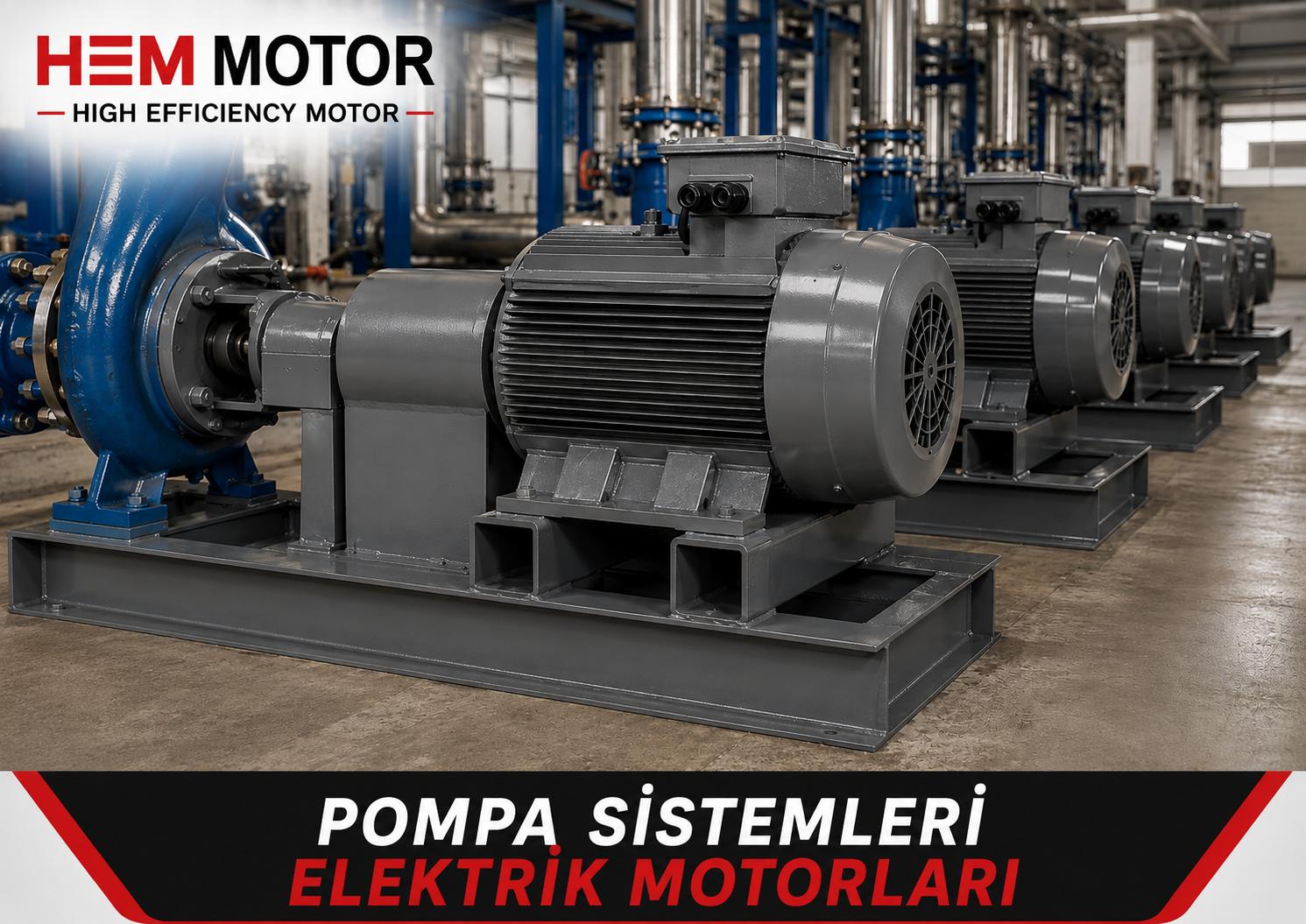
What Sets a Thermal Oil Circulation Pump Motor Apart?
An ordinary water pump motor handles a fluid that is at room temperature, has low viscosity and is non-abrasive. A thermal oil circulation pump, by contrast, drives a heat transfer fluid whose temperature can reach the 250 to 300 degrees Celsius band and whose viscosity changes dramatically with temperature. This differentiates motor selection on three core fronts: thermal load, continuous-duty profile and sealing. As the motor transmits power to this demanding fluid through a coupling or close-coupled connection, its own frame is affected both by ambient heat and by heat conducted from the pump body.
Therefore, in a thermal oil application the motor is not merely a component that supplies the required hydraulic power; it is a continuous-duty (S1) electric motor expected to run fault-free for decades in a high-temperature environment. Without the correct selection, insulation life shortens, bearing grease degrades early and unplanned stoppages begin.
Another important difference is that the operating environment is an enclosed, often cramped, boiler room. In such spaces the ambient temperature rises and cooling the motor becomes harder. A standard motor delivers its rated power at the reference ambient temperature stated on its nameplate; however, when the ambient temperature exceeds this reference, the power the motor can carry decreases. For this reason, when selecting a motor for a thermal oil application, not only the pump shaft power but also the real ambient temperature of the boiler room must be taken into account, and power derating applied where necessary. Otherwise, a motor chosen by trusting the nameplate value runs constantly at its limit in the field and wears out early.
Viscosity Behaviour of the Heat Transfer Oil and Power Calculation
The most critical characteristic of thermal oil is that its viscosity is extremely temperature-dependent. When the system is cold (for example during first commissioning or on a winter morning) the oil is thick and resistant; once it reaches operating temperature it flows freely. For the pump motor this means it must have enough starting torque to move the cold, resistant oil at first start. If the cold-start scenario is ignored and the motor is sized only for the hot operating point, the motor struggles at cold start, draws high current and the thermal protection trips repeatedly.
For this reason, the pump manufacturer's stated cold-start power and hot-operating power should be evaluated separately. The motor should be chosen in a power class that comfortably covers the cold-start point, while continuous operation should sit below the motor's rated power, that is, in a comfortable load region.
Continuous Duty (S1) and Efficiency Class: Why IE3/IE4?
Thermal oil plants are typically multi-shift facilities, often running 24/7. The circulation pump does not stop as long as the boiler is running. This means the motor turns for thousands of hours a year. This operating profile has two consequences. First, the motor must absolutely be of S1 continuous-duty type, with Class F insulation and IP55 protection. Second, because energy consumption becomes enormous, the efficiency class directly determines the operating cost.
Our catalogue range, spanning 0.25 kW to 355 kW with 100% copper windings and cast iron frames, includes IE3 and IE4 motors designed for continuous operation. In an application that runs most of the year, such as a circulation pump, an IE4 Super Premium efficiency motor creates a significant difference in the annual energy bill compared with an IE2 or inefficient motor. Our guide on the payback period of switching to IE4 contains calculation examples showing how quickly an efficiency investment pays off in continuous-duty applications.
The Role of the Cast Iron Frame at High Temperature
In a high-temperature environment, the motor's ability to dissipate the heat it generates and to cool down becomes critical. A cast iron frame offers higher mechanical strength and better thermal mass than aluminium; it damps vibration and maintains dimensional stability under prolonged thermal load. In applications combining high temperature and continuous duty, such as a thermal oil pump, choosing a cast iron frame motor is almost mandatory. An aluminium frame, with its light and compact advantage, is suited to milder, intermittent applications.
Sealing and Coupling: What to Watch on the Motor Side
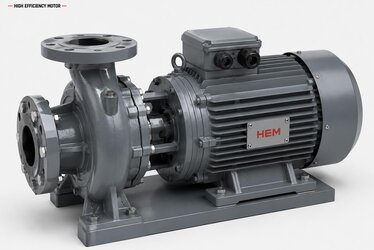
Sealing matters in two directions in a thermal oil system. On one hand, escaping hot oil creates a fire and safety risk; on the other, the motor side must be protected from heat and possible leakage coming through the pump's gland or mechanical seal. The correct decision here is usually to run the driving motor with a coupling and lantern arrangement that thermally separates it from the pump. A close-coupled flanged connection offers compactness but carries the risk of forming a thermal bridge.
- Mechanical seal compatibility: The seal type recommended by the pump manufacturer must be compatible with the motor shaft diameter and the coupling selection.
- Bearing and grease selection: In a high-temperature environment, high-temperature grease and, where needed, C3-clearance bearings are preferred over standard grease.
- Mounting type: Horizontal pumps use B3 foot-mounted or B35 foot-and-flange; vertical lines use flanged (B5) mounting. Our guide on B5 vs B14 flange mounting selection is decisive for correct ordering.
- Thermal and PTC protection: A winding thermistor (PTC) for over-temperature protection is strongly recommended on continuous-duty high-temperature motors.
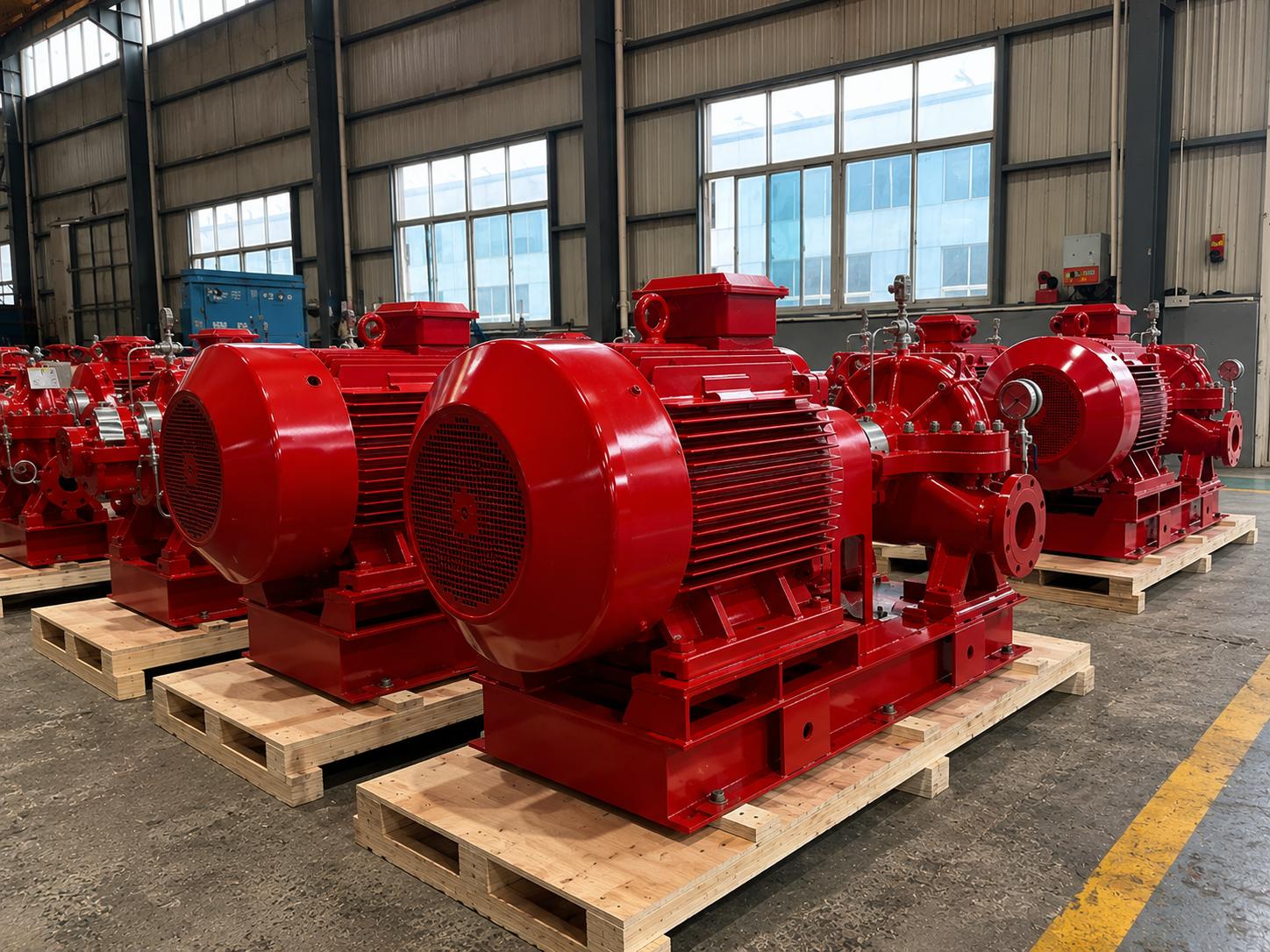
A Step-by-Step Method for Correct Power Selection
Determining the motor power correctly for a thermal oil circulation pump is the foundation of preventing unplanned stoppages. The logical sequence to follow is as follows:
- Operating point from the pump curve: Obtain the shaft power at the operating point from the pump manufacturer based on flow and head.
- Cold-start check: Verify the starting power taking the oil viscosity at the lowest system temperature into account.
- Power safety margin: Rather than continuously stressing the full rated power, choose a power class that operates in a comfortable load region during continuous duty.
- Speed selection: Circulation pumps mostly run at 1500 rpm (4-pole); 3000 rpm is considered for compact pumps requiring high head. Speed must be chosen according to the pump curve.
- Frame size verification: Ensure that the IEC frame size at the selected power and speed is compatible with the existing pump connection.
At each of these steps, the existing motor's nameplate data is invaluable for correct replacement. When a motor fails in a continuous-duty plant, applying nameplate-based one-to-one motor matching dramatically shortens downtime.
Operation with a Speed/Frequency Drive (VFD)
In some modern thermal oil plants the circulation flow is adjusted with a frequency drive according to the process. On VFD-driven motors, because the shaft-mounted cooling fan loses efficiency at low speeds in the constant-torque region, forced (external) cooling or a frame size up is considered when needed. In drive applications it is important to choose a motor with high insulation strength and windings suited to this use. Shaft grounding and bearing-current measures become relevant at higher powers.
Commissioning and First Start Considerations
Even if the thermal oil circulation pump motor is selected correctly, a faulty commissioning can shorten the motor's life. Before the first start, the direction of rotation must absolutely be checked; the pump turning in the wrong direction both impairs hydraulic performance and can strain the mechanical seal. Bringing the oil gradually up to operating temperature when the system is first heated prevents sudden thermal shocks and protects both the pump and the motor. The sealing of the motor's terminal box, the integrity of gaskets in the high-temperature environment and the temperature rating of the cable glands must all be checked.
In coupled systems, the coupling balance and axial misalignment must be carefully adjusted. Axial misalignment, combined with expansion under high temperature, prematurely fatigues the bearings and leads to increased vibration. For this reason, performing laser alignment during commissioning is a good investment for long life. Recording vibration and temperature measurements as reference values at first start lays the foundation for predictive maintenance later. For a general checklist, you can use our motor commissioning and first-start checklist guide.
Maintenance, Grease and Bearing Monitoring
In a motor operating in a high-temperature environment, grease life is shorter than in a motor at room temperature. Therefore, lubrication intervals should be planned not according to the manufacturer's default recommendation but taking the actual ambient temperature into account. Using high-temperature grease and, where needed, a re-greasable bearing arrangement makes maintenance easier. Periodic monitoring of bearing temperature and vibration level allows a possible failure to be caught before it turns into unplanned downtime. In a continuous-duty circulation pump motor, a small increase in vibration is often the first sign of bearing fatigue.
Stock, Lead Time and Spare Motor Planning
In a plant with a thermal oil system, a circulation pump motor stoppage can mean the stoppage of the entire production line. For this reason, keeping a spare motor for critical powers is a serious operational advantage. Our critical spare motor stock planning guide offers a practical roadmap on which powers should be kept in stock. As HEM Motor, we provide fast delivery from stock and one-to-one replacement motors across a wide power and speed range. For current electric motor prices and model recommendations suited to continuous-duty applications, simply share your requirements (pump brand, flow, head, system temperature, existing motor nameplate) with our technical team.
Frequently Asked Questions
What speed should a thermal oil circulation pump motor be?
Most thermal oil circulation pumps are designed to run with a 1500 rpm (4-pole) motor; this speed provides both balanced flow and lower vibration and noise. For compact pumps requiring high head, 3000 rpm (2-pole) may be preferred. The correct speed must be determined according to the pump manufacturer's curve and operating point, which is why the pump nameplate and curve information should be shared before ordering.
Which insulation and protection class is needed for a motor in a high-temperature environment?
For continuous-duty circulation pump motors operating in high-temperature environments, at least Class F insulation and IP55 protection are recommended. If the ambient temperature is high, a power derating calculation should be performed, and where necessary a higher power class or high-temperature-grease bearings should be preferred. Over-temperature protection via a winding thermistor (PTC) is strongly advised.
My existing circulation pump motor has failed; how do I source the same one?
The fastest and most error-free path is to share the power (kW), speed (rpm), frame size, mounting type (B3/B5/B35) and shaft diameter from the existing motor's nameplate. With this information a one-to-one replacement motor is selected and downtime in continuous-duty plants is minimised. As HEM Motor, we provide fast delivery and equivalent motor supply thanks to our wide range and stock advantage.