English
 Türkçe


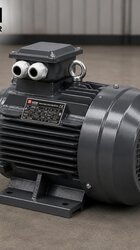
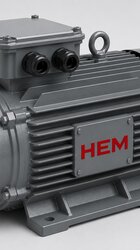
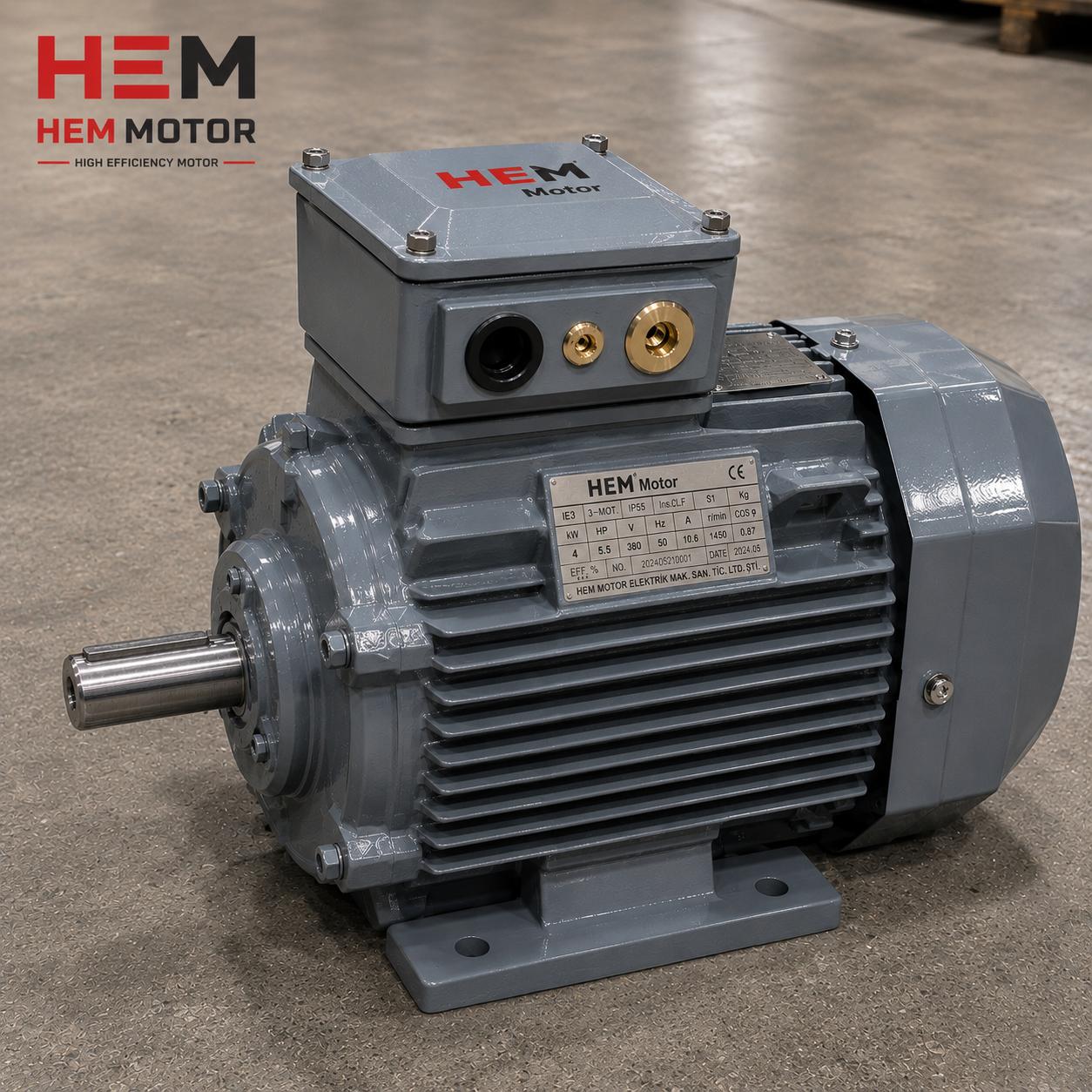

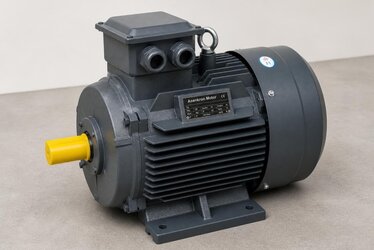
The most insidious cost in a business is the one that never appears as a separate line on the invoice. An old electric motor loses money for years even while running silently and without ever failing, because the extra energy it draws dissolves into the total electricity bill and never shows up under a heading like "old motor efficiency loss". This invisibility is a hidden tax most businesses pay for years without noticing. In this article we calculate the real efficiency loss of an early-2000s IE1 or IE2 class motor through a concrete 22 kW example, and show step by step how quickly replacing it with an IE4 Super Premium motor pays back using your own electricity price.
Our aim is to go beyond the abstract advice "buy an efficient motor"; to make the old motor's real consumption measurable and to base the replacement decision on a solid payback calculation.
Why Does an Old Motor Lose Money Even Without Failing?
Most of an electric motor's lifetime cost comes not from its purchase price but from the energy it consumes over the years. In a high-running-hours motor, the cost of the electricity it uses in the first year often exceeds the motor's purchase price. So a few-point efficiency gap between two motors turns into a huge cost difference over the years. When an old motor is kept because it "still runs", it actually pays a silent extra electricity bill every day.
Because this loss does not appear as a separate line on the bill, it goes unnoticed for years. The business sees the motor running and thinks "if it turns, why replace it". Yet that motor draws noticeably more energy than a modern IE4 equivalent while doing the same work.
The Old Motor's Real Efficiency Is Below Its Nameplate
The efficiency value on the nameplate of a motor built in the early 2000s belongs to the motor's first day. But as the years pass, and especially as the motor is rewound several times, the real efficiency drops below even the nameplate value. Each rewind distorts the winding geometry and insulation somewhat; thermal damage builds up in the lamination stack. As a result, a motor produced in the IE1 or IE2 class years ago may today be running at an efficiency even lower than what its nameplate states.
- Each rewind lowers efficiency a little further.
- Worn bearings increase friction losses.
- Thermal fatigue in the lamination stack raises magnetic losses.
- Ageing insulation increases leakage currents and heating.
Real Consumption Calculation with a 22 kW Example
Suppose your plant has a 22 kW early-2000s IE1 class motor running 16 hours a day, roughly 6,000 hours a year. Its efficiency has dropped below the nameplate value over years and rewinds. A modern IE4 motor doing the same job runs at a few points higher efficiency. This efficiency gap is reflected directly in the real electrical power the motor draws from the grid.
To run the calculation with your own data, follow these steps: use the motor's shaft power (22 kW), its efficiency, annual running hours and your own electricity unit price. The difference between the electrical power drawn by the old motor and by the IE4 motor, multiplied by annual running hours, gives the annual energy saving (kWh). Multiply this saving by your electricity unit price to find the annual monetary gain.
The payback period is then simple: divide the IE4 motor's purchase cost by the annual monetary gain you calculated to see in how many years the investment pays for itself. In high-running-hours applications this period is often far shorter than expected.
Factors That Determine the Payback Period
The payback period is not the same for every business; three core variables decide it:
- Annual running hours: the more the motor runs, the faster the efficiency gap earns money. Payback is shortest at three-shift plants.
- Load factor: if the motor runs near its rated power, the saving is more pronounced.
- Electricity unit price: the more expensive electricity is, the greater the efficient motor's advantage.
When you substitute these three variables with your own data, you can run the payback calculation in minutes. The result often shows that keeping the old motor because it "runs" is actually an expensive decision.
What to Watch When Deciding to Replace
When you decide to switch to IE4, it matters that the new motor fits the existing machine mechanically, one to one. Thanks to the IEC standard, frame size, foot holes and shaft dimensions are independent of efficiency class; so in most cases the IE4 motor seats directly in place of the old one. When you act on correct nameplate information, the switch usually requires no machine change and fits into a planned maintenance window.
Frequently Asked Questions
My old motor still runs, should I replace it anyway?
Running does not mean economical. In a high-running-hours application, the extra energy the old motor consumes can exceed the cost of a new IE4 motor within a few years. When you run a payback calculation with your own data, you will often see that replacement is profitable.
The 22 kW example doesn't match my motor; how do I adapt the calculation?
The calculation logic is the same for any power. Substitute your own motor's power, annual running hours, load factor and electricity unit price and follow the same steps. Multiply the difference in electrical power drawn by the old and new motors by annual hours and unit price to find the annual gain, then calculate the payback period.
Will an IE4 motor fit directly in place of my old motor?
In most cases, yes. The IEC standard keeps frame size, foot holes and shaft dimensions independent of efficiency class. When you provide the old motor's nameplate and frame data, an exactly fitting IE4 equivalent can be supplied quickly from stock, and the swap fits into a planned maintenance window.