English
 Türkçe

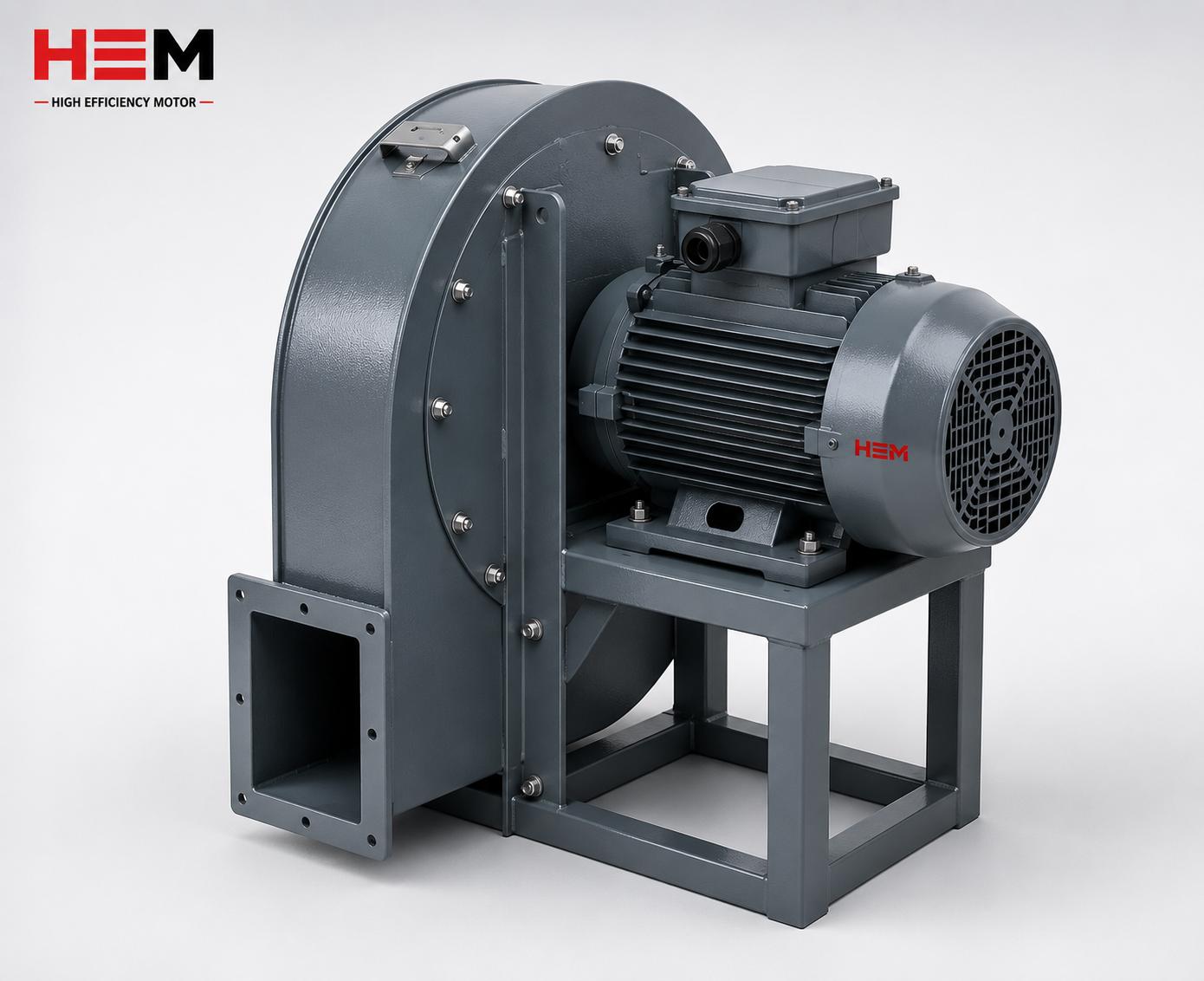

Fog cannon dust suppression systems are critical equipment used across quarries, crushing plants, scrap yards, mine stockpiles and excavation sites to capture airborne dust and bring it down to the ground. These fog cannons combine a high-speed axial fan, which generates a powerful air stream, with a row of fine nozzles that break water into micron-sized droplets. Two main motors determine the system's performance: the fan motor that throws the air far, and the pump motor that supplies the high pressure required at the nozzles. Selecting these two motors at the correct power, the correct speed and the correct protection class directly affects both dust suppression efficiency and the field service life of the system. In this guide we examine fan and pump motor selection for fog cannon dust suppression applications across airflow, pressure and outdoor IP protection, and explain the technical points to watch during purchasing.
The Motor's Role in a Fog Cannon System: Why Two Separate Motors?
The heart of a fog cannon system is two independent drive groups. The fan motor creates the air stream that carries the generated water mist a certain distance through the air. The pump motor pushes water to the nozzles at sufficient pressure to achieve atomization, that is, breaking the water into very small droplets. The smaller the droplet, the higher its chance of attaching to a dust particle and pulling it down. This is precisely why both motors must be selected according to their own task; a mistake in one cannot be compensated by the other.
The fan motor usually demands a high air flow rate and is therefore a continuous-duty (S1) motor running at 1500 RPM (4-pole) or, in some compact models, 3000 RPM (2-pole). The pump motor drives a high-pressure piston or multi-stage centrifugal pump, so its torque and pressure characteristics are different. Considering that both motors operate outdoors, inside the water mist and in dusty air, protection class selection is at least as important as power selection.
Fan Motor: Air Flow and Throw Distance
The dust suppression range of a fog cannon is directly proportional to the air flow rate and air velocity produced by the fan. Larger diameter fans cover wider areas but require higher power motors. When selecting the fan motor, not only the rated power but also the inertia of the fan and its starting behaviour must be evaluated; a large axial fan imposes a high acceleration load on the motor during start-up. The fan motor's starting torque and thermal capacity must therefore match the run-up time of the fan.
Speed selection is critical in fan applications. 1500 RPM motors are preferred in larger-diameter, quieter and more balanced fans, while 3000 RPM motors are used in more compact, high-speed fan housings. To review the correct power-speed matching in fan and blower applications in detail, see our centrifugal and axial fan motor selection guide.
Pump Motor: High Pressure and Atomization
The main factor determining droplet size in a fog cannon is the water outlet pressure at the nozzle. Higher pressure means finer mist and better dust capture. The pump used to provide this pressure, whether multi-stage centrifugal or piston type, is designed to operate continuously at a stable, high pressure. The pump motor must carry this load in continuous duty (S1) and run without overheating or efficiency loss.
In pump motor selection, flow rate and head are evaluated together; the same motor power gives different results at different flow-pressure points. To correctly calculate pump motor power from flow and pressure, our centrifugal pump motor selection by flow and head content offers a comprehensive starting point.
Airflow and Pressure: Sizing the System Correctly
The performance of a misting system depends on a balance between the air flow rate on the fan side and the water flow and pressure on the pump side. When a very powerful fan is paired with an under-pressured pump, the droplets produced are not fine enough and dust suppression efficiency drops. Conversely, a very high-pressure pump paired with a weak fan produces fine mist that cannot be carried far enough and ends up only wetting the immediate surroundings.
When establishing this balance, the following key parameters must be considered together:
- Air flow rate: The amount of air the fan moves per unit time; determines range and coverage area.
- Water flow rate: The total water consumed by the nozzles; determines pump capacity.
- Operating pressure: The most critical variable determining atomization quality at the nozzle.
- Number and arrangement of nozzles: Affects total water flow and pressure drop.
- Speed selection: 1500 or 3000 RPM for fan and pump; chosen by application type.
Correct sizing leaves the motor neither overloaded nor oversized. An oversized motor means unnecessary investment and low partial-load efficiency; an undersized motor runs in continuous overcurrent and fails early. To get information on the most suitable motor for your facility's conditions and current electric motor prices, you can contact our product team.
Outdoor Conditions and IP Protection Class
Fog cannon systems by definition work in the open air, inside water mist and usually in dusty environments. This means that the IP protection class is not negotiable in motor selection. Standard industrial motors are produced in IP55 protection class; this class covers dust protection and resistance to water jets from all directions and is suitable for the majority of fog cannon applications. However, if the motor remains directly inside the mist cloud, works in a salty humid coastal environment, or is exposed to wash-down cleaning, a higher IP56, IP65 or IP66 class motor should be requested.
Why Choose a Cast Iron Body?
For a motor working outdoors and exposed to vibration and the moisture-dust cycle, a cast iron body offers advantages in both mechanical strength and heat dissipation. A cast iron body is more impact-resistant than aluminium and provides protection against knocks that can occur during truck transport and installation, especially in field conditions. F-class insulation protects the winding life under high ambient temperature and continuous load. You can find the effect of insulation and body selection on service life for outdoor motors in our article on motor insulation class and cast iron body in hot and dusty environments.
Cooling and Water Drainage
Fog cannon motors are often mounted on inclined or moving platforms. In this case, drain plugs must be correctly positioned to discharge condensation water that may enter the motor. In addition, the motor's self-cooling depends on periodic cleaning of cooling fins clogged by outdoor dust. For the IP protection and cooling requirements of outdoor fan motors, our content on cooling tower and chiller fan motors outdoor and IP protection explains the same engineering logic.
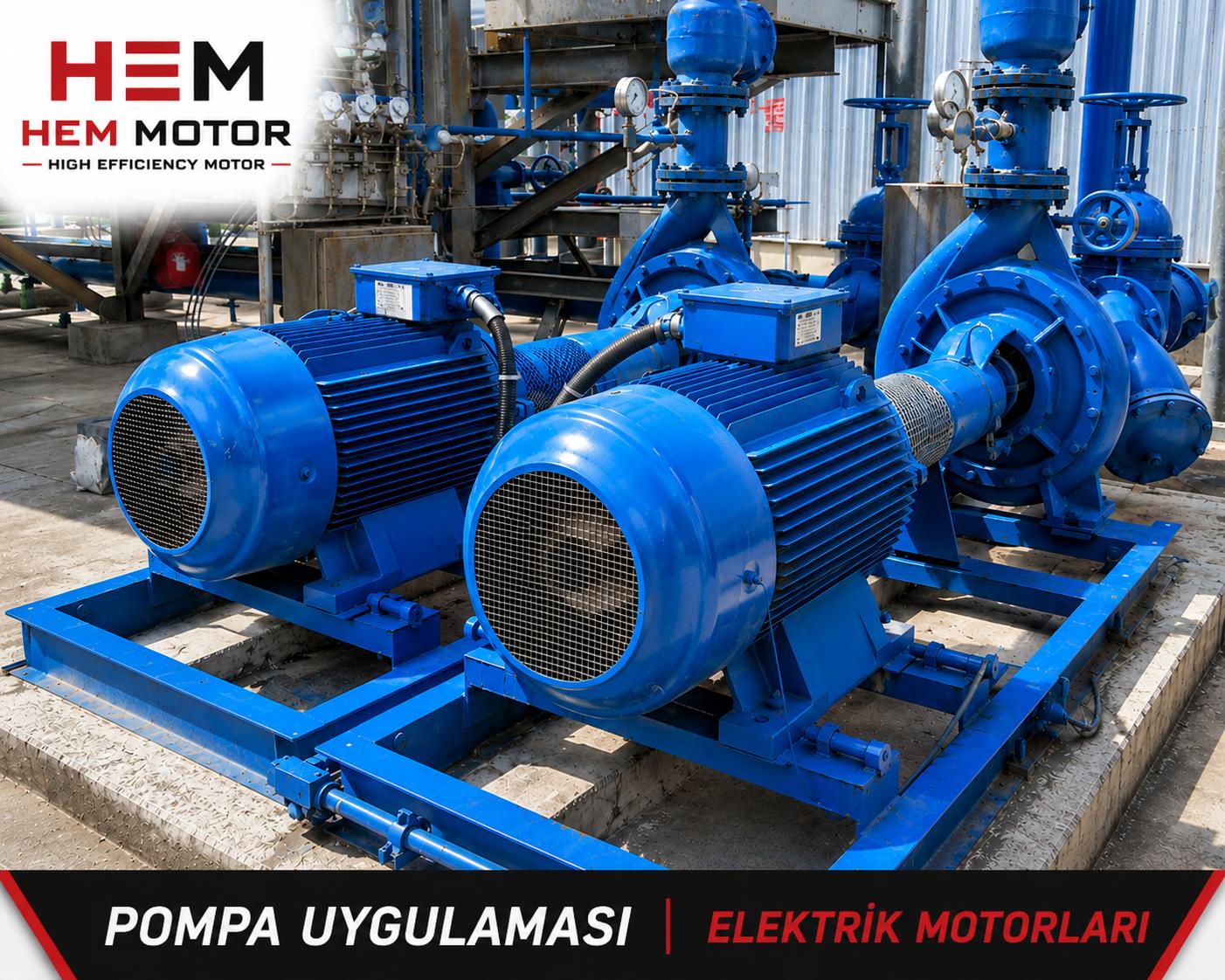
Correct Motor Supply in Dust-Heavy Environments
Fog cannon systems usually work together with aspiration and dust collection systems. In a quarry or crushing-screening plant, it is common practice to suppress airborne dust with a fog cannon while also collecting point dust sources with a blower. The selection logic for dust collection fan motors largely overlaps with that of the fog cannon fan motor; in both, continuous load, high protection class and durable bearing design take priority. For motor selection on the aspiration side, our guide on fan motor selection in aspirator and dust collection systems is a complementary resource.
Continuous Duty (S1) and Duty Type Verification
Fog cannons often run continuously throughout a shift. This makes it mandatory for both the fan and the pump motor to be of S1 continuous-duty type. A motor designed for intermittent duty heats up faster than expected in continuous operation, shortening insulation life. Verifying the duty type, power and speed information on the motor nameplate before ordering is the simplest way to prevent the wrong motor being delivered.
Fast Replacement from Stock and Spare Motor Plan
In a facility with dust suppression obligations, a fog cannon stoppage often creates risk in terms of environmental regulations and occupational safety. It is therefore wise to keep a spare motor in the most commonly used power and speed combinations. Fast supply in IE3 and IE4 efficiency class, over a wide power range from 0.55 kW to 355 kW, with B3 foot-mounted, B5 and B35 flange-mounted options minimizes field downtime.
Summary: Correct Selection for Misting Motors
When selecting the fan and pump motor for your fog cannon system, prioritize air flow rate and throw distance for the fan, and pressure and atomization quality for the pump. Look for at least IP55 protection in both motors, IP65/IP66 where required for outdoor use, a cast iron body, F-class insulation and S1 continuous duty. Determine the speed as 1500 or 3000 RPM according to the fan and pump housing. Correctly sized, correctly protected and quickly supplied motors secure both dust suppression efficiency and the field life of the system.
Frequently Asked Questions
How many poles should a fog cannon fan motor have?
It depends on the diameter of the fan housing and the desired air flow rate. For large-diameter fans that cover a wide area and are expected to run quietly, 4-pole (1500 RPM) motors are preferred. For more compact models requiring high air velocity, 2-pole (3000 RPM) motors can be used. What matters is that the motor matches the inertia and starting load of the fan and can comfortably run in continuous duty.
Which IP protection class is sufficient for a misting pump motor?
IP55 protection is sufficient for the majority of standard applications; this class protects against dust and water jets. However, if the motor remains directly inside the mist cloud, works in a salty humid coastal environment, or is washed with pressurized water, IP65 or IP66 protection class should be requested. A cast iron body and F-class insulation also increase outdoor durability.
Should I order the fan and pump motor together?
For balanced system operation, the fan and pump motor must be sized compatibly in terms of flow and pressure, so it is best to plan them together. When replacing a single motor in an existing system, accurately transferring the old motor's nameplate information (power, speed, mounting type, IP class) is sufficient to supply a fully compatible replacement motor.