English
 Türkçe

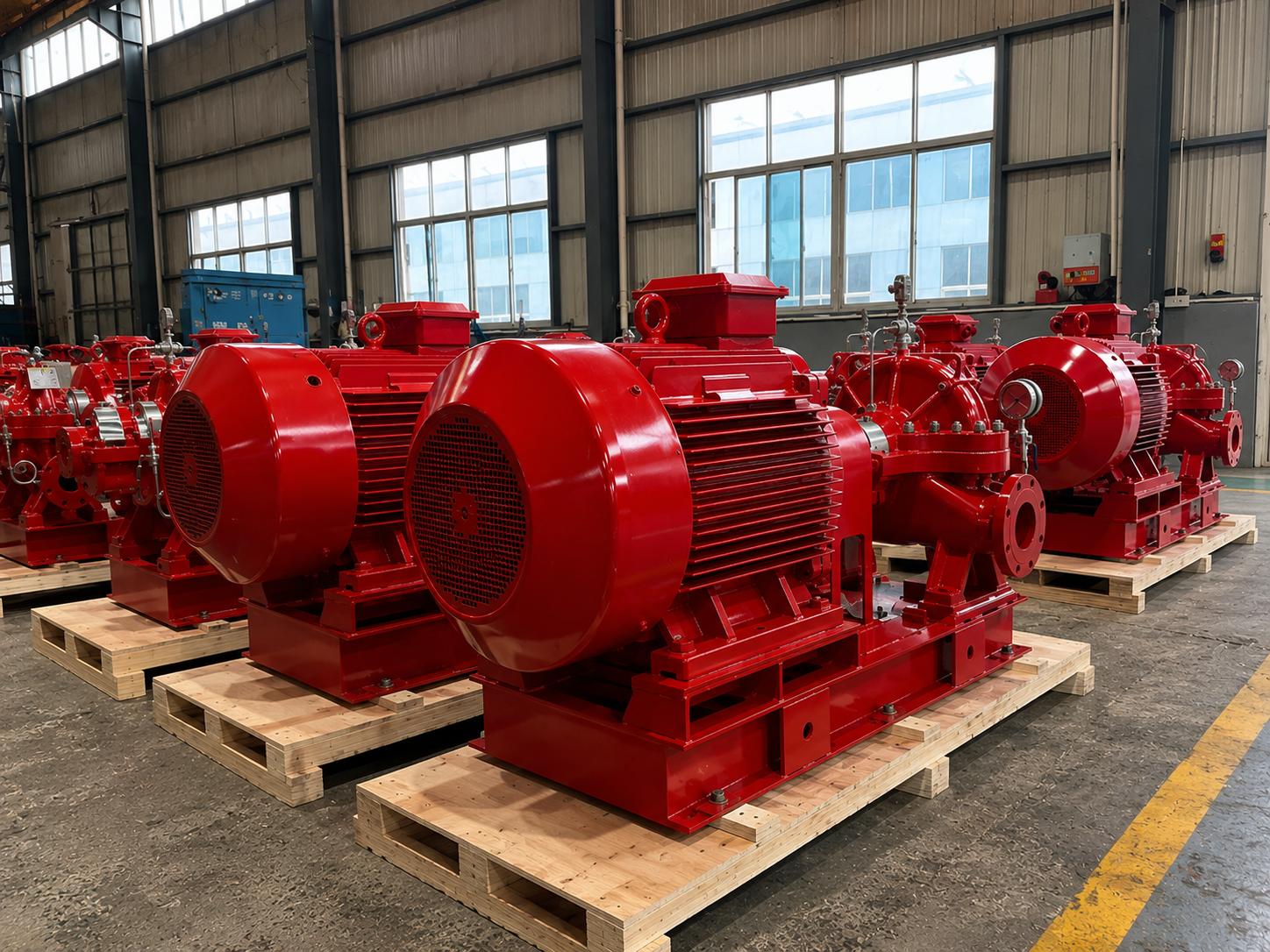

In building heating systems, boiler rooms, solar thermal installations, district heating networks and industrial process loops, the circulation pump motor that quietly and continuously moves water is often out of sight, yet it directly shapes performance. In recent years the standout solution for these duties has been the wet-rotor (canned) motor. With its sealless design, the elimination of shaft-sealing trouble and near-silent operation, wet-rotor circulation motors are preferred across a wide field, from comfort heating to demanding industrial processes. Sourcing the correct power and the correct construction from stock, with manufacturer assurance, is a critical decision that determines both the initial investment and the annual energy cost.
In this guide we examine the working principle of the wet-rotor motor, its advantages and limits compared with the dry-rotor (mechanically sealed) design, the points to watch for quiet operation, how to select the right power for your circulation line, and what to check during commissioning and maintenance. Our aim is to help you ask the right questions during purchasing and place an error-free order. A poorly chosen circulation motor shows up as noise, high energy use, frequent faults and unnecessary downtime. The right choice means years of trouble-free, quiet and economical running.
What Is a Wet-Rotor (Canned) Motor?
As the name suggests, the wet-rotor motor is a design in which the rotor turns inside the pumped fluid (usually water or a water-glycol mix). The stator windings are completely isolated from the fluid by a thin stainless steel sleeve (the can), while the rotor turns inside this sleeve on water-lubricated sleeve bearings. As a result there is no rotating shaft seal (mechanical seal or gland) between the motor shaft and the pump casing. The fluid fills the motor cavity and serves both cooling and lubrication duties.
This sealless construction removes the most common failure source of conventional pumps: shaft-seal leakage. The fluid itself both cools the rotor and lubricates the sleeve bearings. Consequently, periodic burdens such as lubrication, seal replacement and leak checks are largely eliminated. These features make wet-rotor solutions the natural choice for circulation pump and low-pressure, high-flow recirculation applications.
Working Principle and Components
The main elements of a wet-rotor motor are: the stator windings isolated from the fluid, the thin can (split tube) separating stator and rotor, the cage rotor turning inside the fluid, the water-lubricated ceramic or graphite sleeve bearings, and the shaft. The external fan and fan cowl of standard air-cooled motors are absent here; cooling is provided entirely by the circulating fluid. This makes the construction both compact and quiet.
Advantages of the Sealless Design
- No leakage worries: Without a rotating seal, there is no water dripping onto the floor, no seal wear and no associated downtime.
- Quiet running: Because the rotor turns inside the fluid, there is no air-cooling fan and no associated aerodynamic noise; this is a major benefit in comfort heating.
- Maintenance ease: Water-lubricated bearings need no separate greasing, reducing the operating workload in the boiler room.
- Compact build: Motor and pump are integrated in a single body, saving space in the installation.
- Low vibration: A balanced rotor turning inside the fluid reduces vibration and the associated fatigue.
Wet-Rotor or Dry-Rotor (Sealed)?
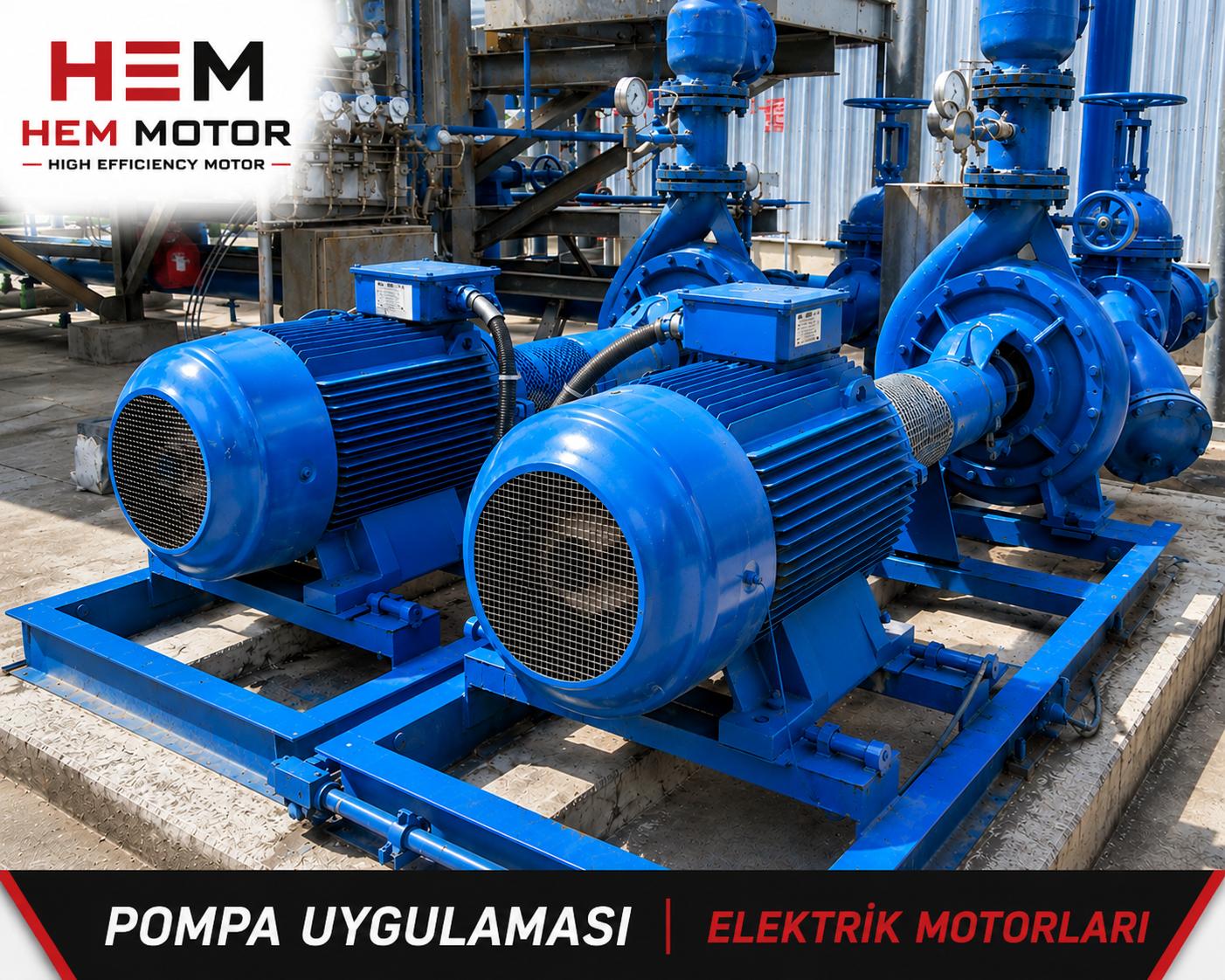
Not every application suits a wet-rotor solution. To decide correctly you must know the limits of both constructions. Dry-rotor pumps use a standard asynchronous electric motor; the motor turns in air, separated from the fluid by a shaft seal. This construction is superior in applications requiring high pressure and high power, allows the motor to be serviced independently and tolerates abrasive or dirty fluids better.
When Does a Wet Rotor Make Sense?
- Low and medium power circulation lines (heating, cooling, recirculation).
- Continuous, long-duration operation in buildings, hotels and hospitals where quietness and low maintenance are priorities.
- Closed-loop systems where the pumped fluid is clean, non-abrasive water or water-glycol.
- Comfort applications and occupied spaces where noise is critical.
When Is a Dry Rotor / Standard Motor Preferred?
- Process pumps requiring high pressure, high flow and high power.
- Open-loop systems pumping abrasive, particle-laden or dirty fluids.
- Cases where the motor must be independently replaceable/serviceable; here an IP55-protected, class-F insulated cast-iron pump motor is more suitable.
- Special processes at high temperature where fluid must not pass through the motor.
At this point, for power and speed selection we suggest reviewing the most-searched power-speed combinations in our IE3 electric motor stock guide. For dry-rotor options with direct flanged coupling to the pump, B5 flanged electric motors are the most common choice.
Choosing for Quiet Operation
The wet-rotor motor's greatest strength is its quietness, but preserving it requires attention to a few details. Quiet running is achieved through correct speed selection, the correct hydraulic duty point and vibration-free mounting. Noise comes from three sources: the motor itself, the hydraulic noise of the fluid, and structural vibration transmitted to the installation. Correct selection and mounting minimise all three.
Effect of Speed and Pole Count on Noise
Circulation applications generally favour low and medium speeds. High-speed (2-pole, 3000 rpm) solutions are more compact but can increase hydraulic noise. A 4-pole (1500 rpm) or multi-speed option can deliver the same flow more quietly. When weighing the speed-power relationship, our power and speed options content is a practical reference.
Hydraulic Duty Point
- Run the pump in the efficient region of its curve; excessive throttling causes both noise and energy loss.
- In variable-flow systems, speed control (frequency inverter) improves both quietness and savings.
- Pressurise the system correctly to avoid air pockets and cavitation; cavitation is noisy and damaging.
- Size pipe diameters and minimise elbows; high flow velocity causes both noise and pressure loss.
Mounting and Vibration Isolation
Mounting the motor firmly and squarely, using anti-vibration pads where needed, and fitting flexible connections (compensators) in the pipework markedly reduces structural noise. For the technical background on quietness, see our guide on sound power (Lw) and sound pressure (Lp) in motors.
How Do I Select the Right Power?
For a circulation pump motor, the correct power is determined by the required flow (m³/h) and head (mWC). Oversizing means both unnecessary investment and low-efficiency operation; undersizing means failing to deliver the required flow. The correct power is found at the duty point where the system resistance curve intersects the pump curve.
- Flow and head: Define the system resistance curve and the desired duty point.
- Continuous duty: Circulation lines are mostly S1 continuous duty; the motor must suit this duty type.
- Efficiency class: In continuously running systems, a high-efficiency motor markedly reduces the annual energy bill.
- Spare and replacement: A motor available from stock in standard IEC dimensions enables fast future replacement.
- Fluid temperature: On hot lines, insulation class and sealing must be chosen accordingly.
The Hidden Cost of Oversizing
In many plants the pump motor is chosen larger than necessary out of caution. Yet an oversized motor running against a throttling valve continuously wastes energy and increases noise and wear. A correctly sized motor pays back far more than its purchase price through annual energy savings. For this reason, power should be selected from real flow and pressure data, not from guesswork.
Commissioning and Maintenance
The life of a correctly chosen motor is extended by correct commissioning and regular maintenance. Although wet-rotor motors are very favourable in maintenance terms, some basic checks must not be skipped.
- Before first start: Vent the system; a wet-rotor motor run dry will damage its sleeve bearings.
- Rotation direction: On three-phase models check the rotation direction; the wrong direction reduces flow.
- Insulation check: Measure insulation resistance before commissioning motors that have been in storage.
- Periodic checks: Regularly monitor system pressure, air separator and expansion tank.
On backup stock and commissioning of long-stored motors, our guide on electric motor storage and moisture-bearing protection is important for operational safety. For efficient motor alternatives you can review our electric motors for booster systems product group, and contact us for current electric motor prices.
Efficiency Class and Energy Cost
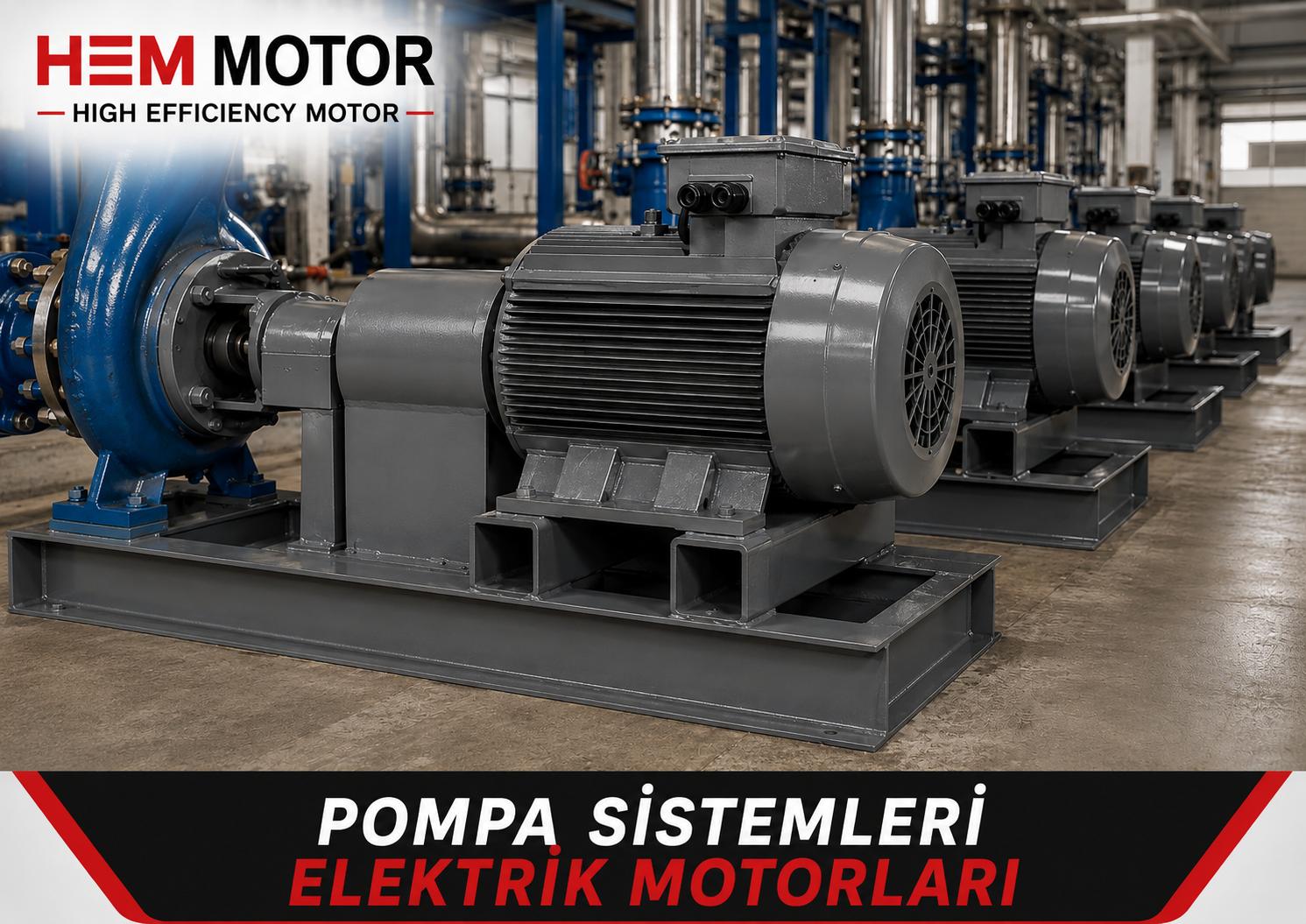
Circulation motors run for most of the year, often without interruption. Therefore the motor's efficiency class determines a far larger item than the purchase price, namely the annual energy cost. A low-efficiency motor may look cheap at purchase but returns the difference on the electricity bill within months. In dry-rotor pump applications, choosing a high-efficiency (IE3 and above) asynchronous electric motor is one of the fastest-payback decisions on continuously running lines.
Fixed Speed or Variable Speed?
Flow demand on circulation lines varies through the day; especially in heating systems the load drops with outdoor temperature. In such systems, variable-speed solutions driven by a frequency inverter cut unnecessary pumping, lowering both energy use and noise. On simple lines that run at constant load and constant flow, a fixed-speed, correctly sized motor is sufficient. Which is appropriate should be decided by looking at the system load profile.
- Variable load: Speed control with a frequency inverter is the most economical solution long term.
- Constant load: A correctly sized fixed-speed motor is simple and reliable.
- High efficiency: In both scenarios, choosing a high efficiency class delivers annual savings.
Checklist for an Error-Free Order
An error-free order starts with correct information. When requesting a quotation for a circulation pump motor, clearly providing the information below lets us quickly identify the most suitable solution and removes the risk of the wrong product arriving.
- Fluid type and temperature: Clean water, water-glycol or process fluid; operating temperature.
- Flow and head: The desired duty point (m³/h and mWC).
- Duty type: Continuous (S1) or intermittent; daily running hours.
- Mounting and connection: The flange and frame dimensions in the existing installation (critical for replacement).
- Supply: Single-phase or three-phase; voltage and frequency.
- Special requirements: Quietness priority, efficiency class, IP protection and ambient conditions.
When you provide this information, whether a quiet wet-rotor circulation solution or a powerful dry-rotor pump motor, we recommend the most suitable product for your application together with its stock availability.
Supply, Stock and Manufacturer Assurance
Selecting the right motor is as important as supplying it on time and with assurance. When circulation stops in a boiler room, heating and cooling affect the whole building; therefore quickly replaceable motors in standard frame sizes available from stock are critical for operational continuity. Manufacturer assurance means correct nameplate values, traceable quality and pre-order technical consultancy. When you send your request together with flow, head, fluid type and mounting form, we can quickly identify the most suitable motor for your application and prepare a quotation. Clarifying stock availability and lead time in advance, for both wet-rotor circulation solutions and dry-rotor pump motors, keeps your project on schedule.
Frequently Asked Questions
Does a wet-rotor motor need seal replacement?
No. Wet-rotor (canned) motors have no rotating shaft seal, so there is no such thing as seal replacement. The rotor turns inside the fluid and the sleeve bearings are water-lubricated; this eliminates the most common leakage and seal failure from the outset. This markedly lowers operating cost and downtime risk.
Should I use a wet rotor in every circulation application?
No. Wet-rotor solutions are ideal for clean-fluid, low-to-medium power circulation lines where quietness is a priority. If there is high pressure, high power or abrasive/dirty fluid, a dry-rotor standard pump motor is more suitable. Share your application with us and we will determine the right construction together and recommend the most suitable solution from stock.
What speed is best for quiet operation?
Generally low and medium speeds (for example 4-pole solutions) deliver the same flow more quietly. In variable-flow systems, speed control with a frequency inverter lowers both noise and energy consumption. We evaluate speed and pole options together with stock availability and offer a recommendation tailored to your needs.