English
 Türkçe

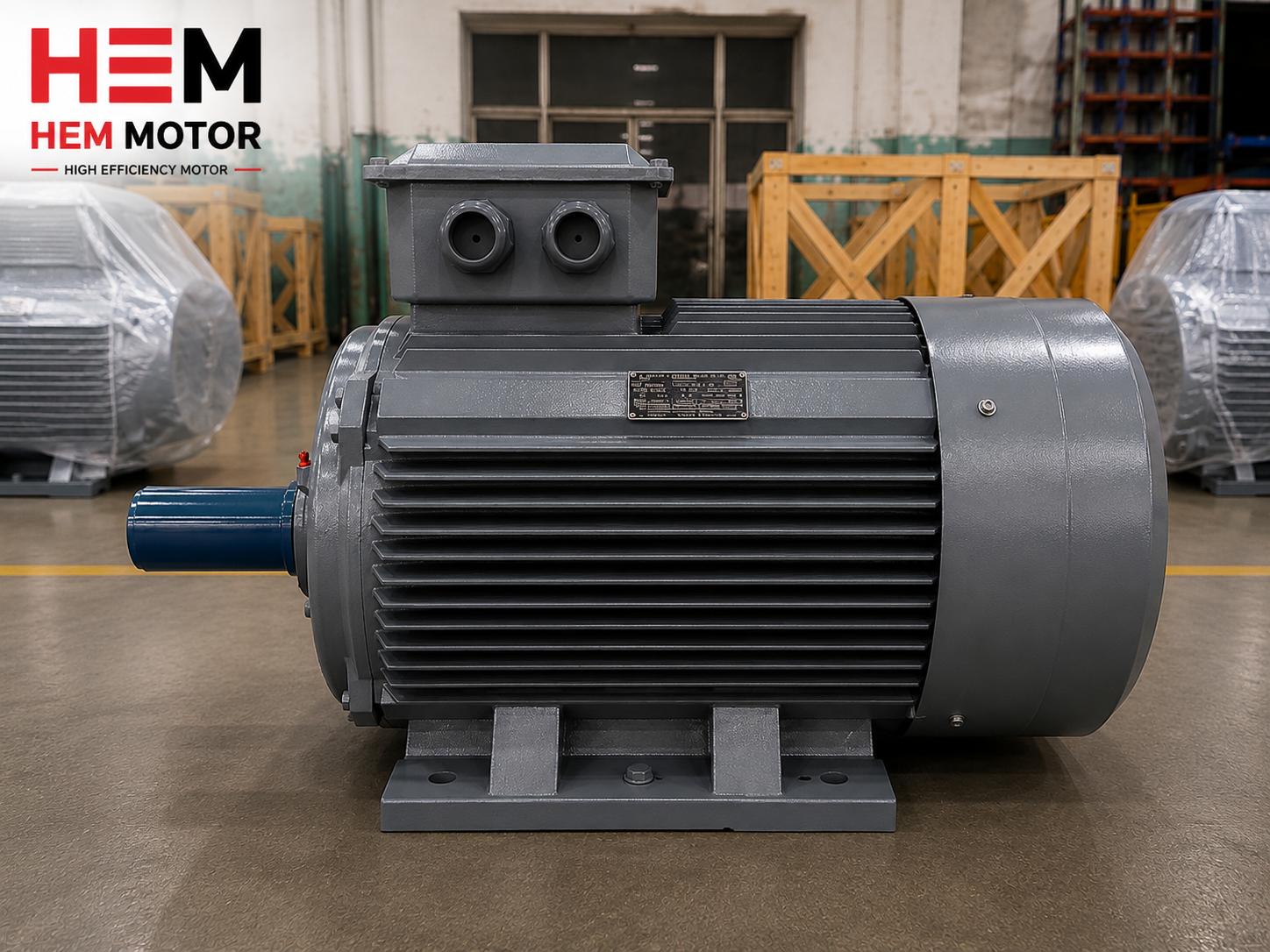

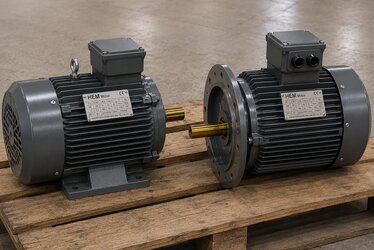
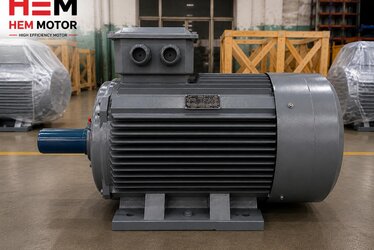
When you see "3600 rpm" on an electric motor's nameplate, that motor is most likely a 2-pole high-speed motor designed for a 60 Hz grid. Because the grid in Turkey is 50 Hz, domestic production is mostly discussed in terms of 3000 rpm; however, 3600 rpm 60 Hz motors come into play in export projects, the US market, marine installations and shipments to countries with 60 Hz grids. Correctly establishing the relationship between frequency, pole count and speed is critical both for ordering the right motor and for preventing a wrong shipment.
As HEM Motor, when we supply motors to exporting facilities and overseas projects, we address the frequency-speed-power relationship, certification and mechanical compatibility together. In this article we explain how a 3600 rpm 60 Hz 2-pole motor works, the speed-power relationship, and what you need to know for correct supply. You can review our export and high-power range and current electric motor prices on our product pages.
The Relationship Between Frequency, Pole Count and Speed
The synchronous speed of an asynchronous motor is determined by the grid frequency and the pole count. As the pole count rises, speed falls; as frequency rises, speed increases. A 2-pole motor is the highest-speed class.
- 50 Hz, 2-pole: Synchronous speed is 3000 rpm; the actual speed is slightly below this due to slip.
- 60 Hz, 2-pole: Synchronous speed is 3600 rpm; the same motor runs about 20% faster at 60 Hz.
- Slip effect: Under load, the actual speed stays slightly below the synchronous speed; this difference is called "slip".
We detail the speed and slip relationship in our slip and actual speed in asynchronous motors: why 1440 rpm instead of 1500 article, and the effect of rated voltage and the 50/60 Hz difference on speed-power-torque in our motor rated voltage and the 50/60 Hz difference article.
The Effect of 60 Hz on Power and Torque
Running a motor at 60 Hz instead of 50 Hz does not just increase speed; it also changes the power and torque balance. Because the same motor runs faster at 60 Hz, the output power can rise in a constant-torque application; however, the relationship between magnetic flux, voltage and frequency also affects this change.
- Speed increase: At 60 Hz the motor runs about 20% faster; this is very important for loads like pumps and fans where power demand rises with speed.
- Power scaling: In pumps and fans, power demand rises with the cube of speed; at 60 Hz the same pump can draw significantly more power than at 50 Hz.
- Voltage compatibility: Voltage levels can differ on 60 Hz grids; the motor's multi-voltage/frequency compatibility must be checked.
You can review the effect of efficiency class and IEC-NEMA matching on speed-power in export in our high-efficiency motor 60 Hz export: efficiency class, IEC-NEMA matching article, and multi-voltage and 50/60 Hz compatibility in our multi-voltage and 50/60 Hz frequency compatibility in IE3 motors article.
Mechanical Challenges in High-Speed Motors
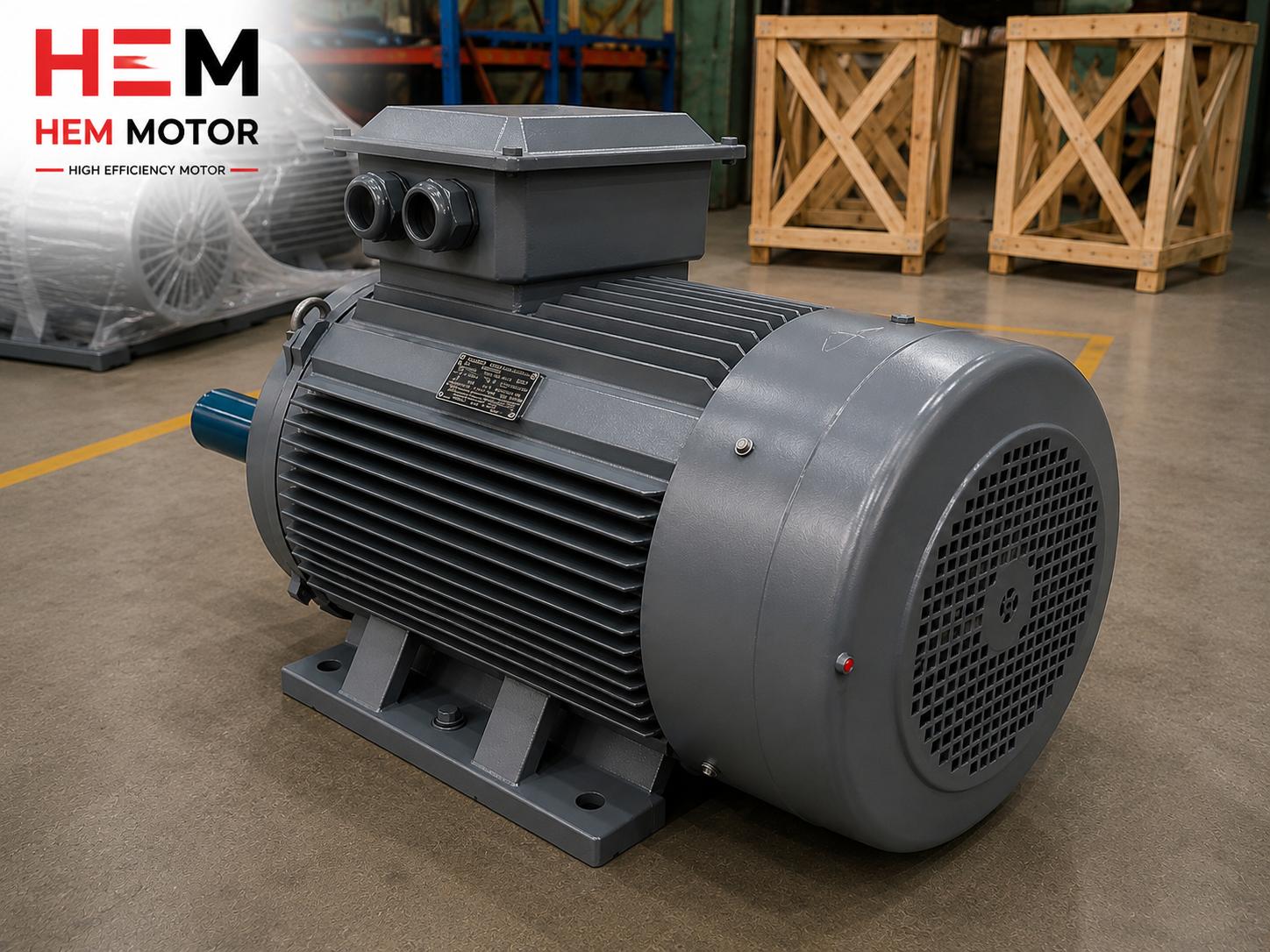
3600 rpm is the highest standard speed for asynchronous motors. A motor spinning at this speed faces more mechanical challenges than its lower-speed counterpart. High speed increases bearing load, vibration sensitivity and balancing requirements.
- Bearing life: High speed fatigues the bearing more; quality bearings and correct lubrication determine life.
- Vibration and balance: At high speed even small imbalances cause large vibration; precise balancing is required.
- Noise: 2-pole motors generally run louder; this should be considered where quiet operation is needed.
We explain low-noise motor selection in our noise and vibration in electric motors: low-noise motor selection article, and bearing type and life in our bearing type and life in asynchronous motors article.
Should You Choose 2-Pole or 4-Pole?
High speed is not always an advantage. A 2-pole (high-speed) or 4-pole (medium-speed) motor is selected according to the speed the application requires. For high-speed applications like pumps and fans, 2-pole is preferred; for conveyors, mixers and geared drives, lower-speed motors are preferred.
- 2-pole (high speed): High-pressure pump, compressor and high-speed fan applications.
- 4-pole (medium speed): General industry, conveyor and balanced pump applications; runs quieter and more smoothly.
- Efficiency difference: Pole count also affects motor efficiency and power factor.
We address 2/4 pole selection in our asynchronous motor buying guide: which pole count for which job article, and power selection on an IE4 2-pole 3000 rpm motor in our IE4 2-pole 3000 rpm motor: correct power selection in pumps and fans article.
Export and Certification
60 Hz motors are mostly used in export projects or shipments to countries with 60 Hz grids. In this case, not only the motor's frequency compatibility but also the documents the target market requires are important. A motor shipped with the wrong document can cause problems at customs or on site.
- Document compatibility: Documents such as CE, EAC and similar must be provided according to the target market.
- Voltage/frequency nameplate: Multi-voltage and frequency-compatible motors make it easier to use the same model in different countries.
- Mechanical standard: Differences between IEC and NEMA frame-mounting standards must be clarified at the order stage.
We cover the 60 Hz certified motor supply program for exporting facilities in detail in our 60 Hz certified motor supply program for exporters and overseas projects article, and the supply process to neighboring countries in our electric motor supply from Turkey to neighboring countries article.
Starting and Starting Current
2-pole high-speed motors draw high current at startup, especially at large powers. The starting time can lengthen when lifting inertial loads such as pumps and compressors. At large powers, a soft starter or star-delta is preferred over direct-on-line starting to reduce the grid impact.
- Soft starter: Smooths the starting current and mechanical shock; preferred for high-speed motors.
- Star-delta: Economical; however, the transition shock and correct winding connection require attention.
- Voltage tolerance: Grid fluctuations can affect starting; the motor's voltage tolerance must be checked.
We address the star-delta versus soft-starter comparison in our starting AC asynchronous motors: star-delta or soft starter article.
Supply and Lead-Time Plan
60 Hz 3600 rpm motors are a different product group from 50 Hz standard stock; therefore the lead time and stock plan must be made in advance. As HEM Motor, in export and overseas projects we determine the correct frequency-speed-power combination according to the requirement of the existing motor or machine, and offer certified, fast-shipment options. You can review our high-efficiency motor range on our three-phase electric motors page, and general-purpose motors on our general-purpose industrial motors page.
Replacing the Existing Motor Like-for-Like
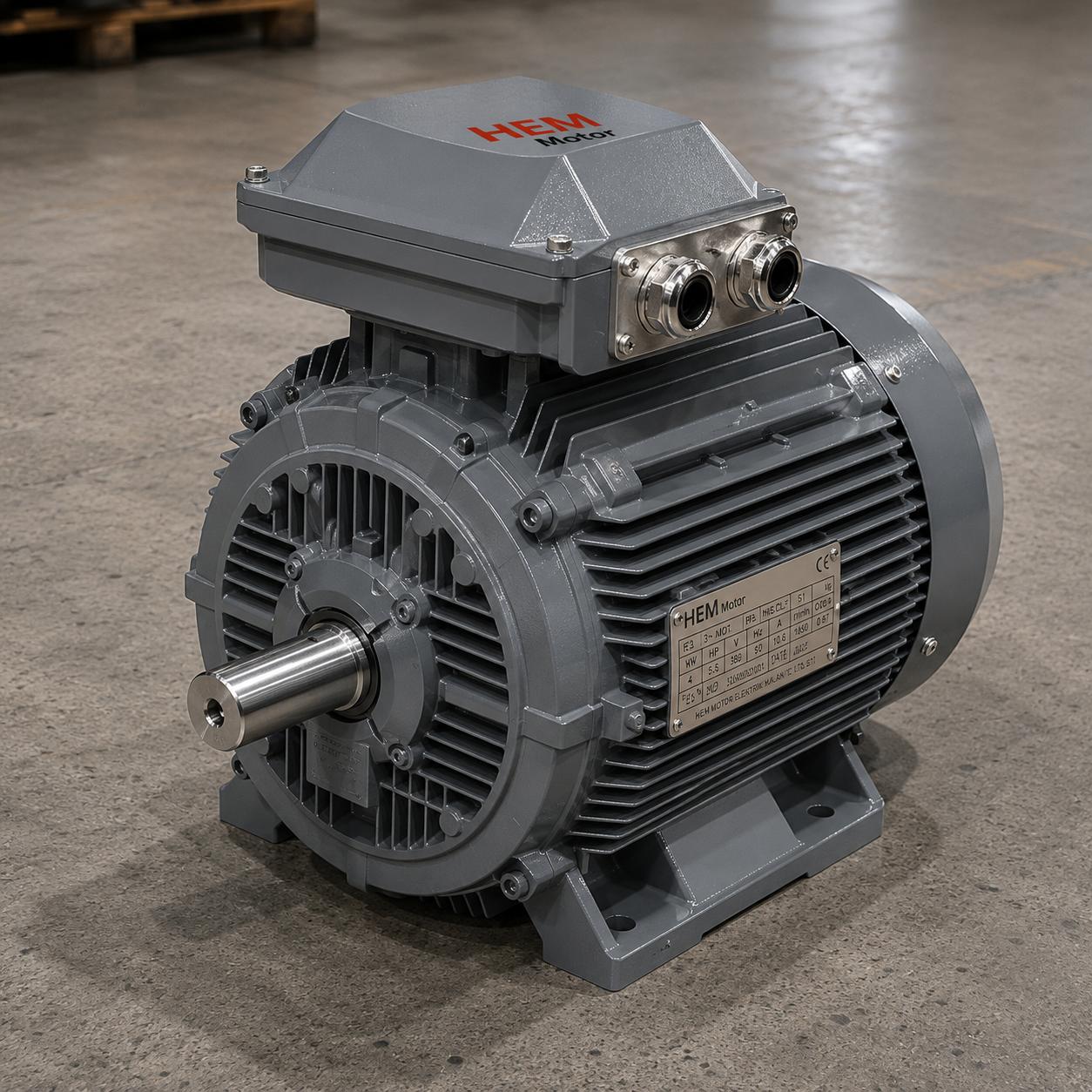
When a 60 Hz motor fails, a motor with exactly the same frequency-speed-power values must be sourced. A motor at the wrong frequency runs the machine at the wrong speed. The basic information to read from the nameplate is:
- Frequency (Hz), power (kW/HP) and speed (rpm).
- Frame size (IEC/NEMA frame), mounting type and shaft diameter.
- Voltage, current and connection (star/delta).
- Protection class (IP), insulation class and efficiency class.
We explain like-for-like equivalent selection from the nameplate step by step in our avoid the wrong motor delivery: like-for-like matching by nameplate before ordering article.
Frequently Asked Questions
Does a 3600 rpm motor run on a 50 Hz grid?
The value of 3600 rpm is the synchronous speed of a 2-pole motor on a 60 Hz grid. If the same motor is connected to 50 Hz, it runs at about 3000 rpm, meaning it runs slower and its power-torque balance changes. In applications like pumps and fans this speed difference significantly affects the output power. The motor should therefore be selected to suit the frequency of the grid where it will run, or it should be verified as multi-frequency compatible.
Why should a 60 Hz motor be planned separately for export?
60 Hz motors are a different product group from 50 Hz standard stock, and the target market's document requirements (such as CE, EAC) can vary. Lead time, stock and certification must therefore be planned in advance. The wrong frequency or missing documents cause problems both on site and at customs; a correct supply plan eliminates this risk.
What should I watch for in a high-speed (2-pole) motor?
High speed increases bearing load, vibration sensitivity and noise. Quality bearings, precise balancing and correct lubrication are therefore important. In environments requiring quiet operation, a lower-speed pole count can be considered instead of 2-pole; the speed the application requires determines this decision.