English
 Türkçe

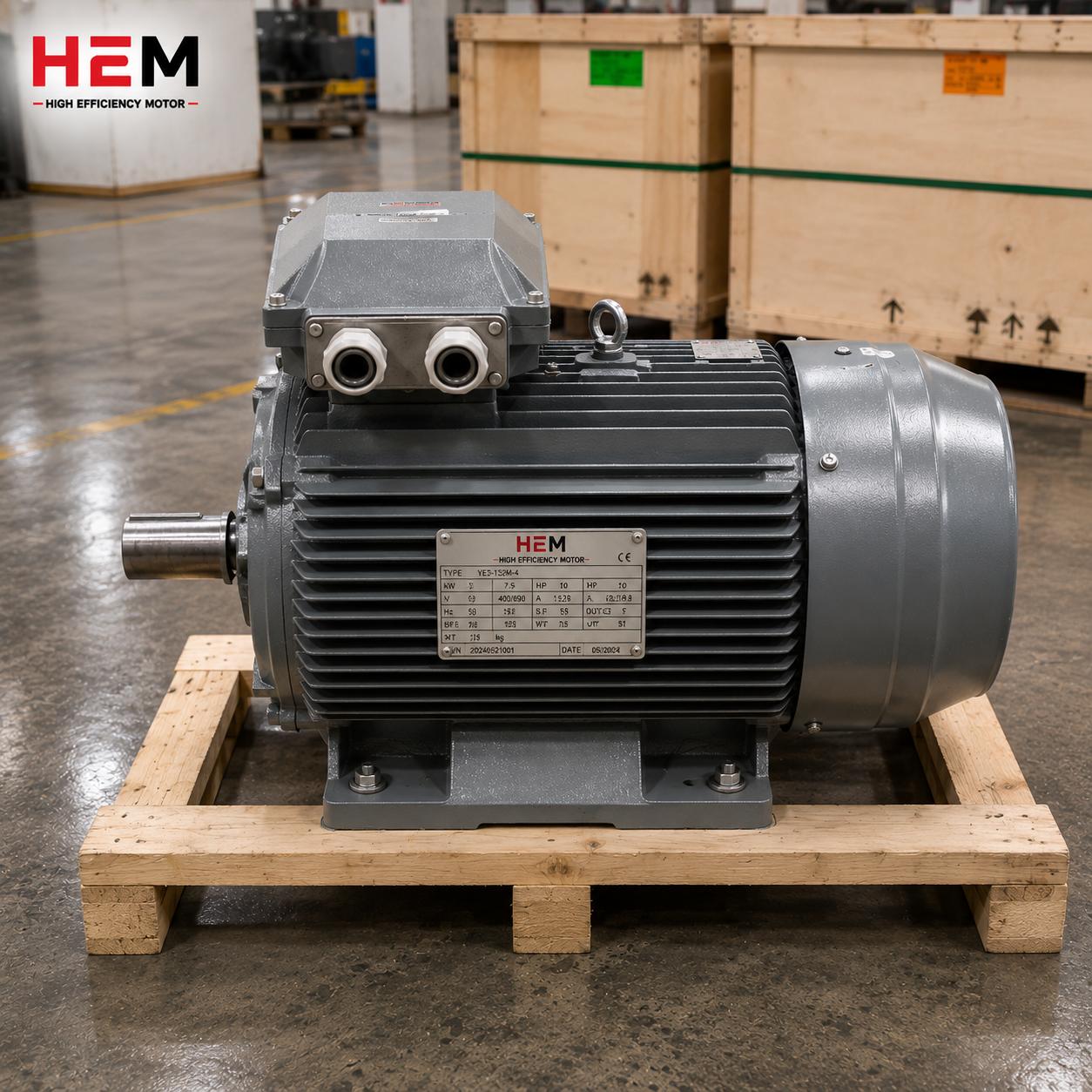

In applications such as large cement mills, main fans, high-flow pumps, compressor stations and mine mills, a single motor can now represent a significant portion of a facility's electricity budget on its own. Selecting a 1000 kW and above-megawatt electric motor departs entirely from the "take it off the shelf, install it, run it" logic of small powers. At this power level, the motor is the result of an engineering and supply process in which pole count, speed, voltage class, cooling method, starting strategy and project lead time are planned together. The cost of a wrong decision is not just the energy bill, but months-long delivery delays and plant downtime.
At HEM Motor, in supplying high-power motors we first evaluate the application's load profile, then the electrical infrastructure, and finally the logistical realities. In this article we explain the effect of the 2/4-pole choice on speed and torque, why the voltage class is critical, and how a project-based supply plan is built. For power-speed combinations and current electric motor prices, you can proceed from our product pages.
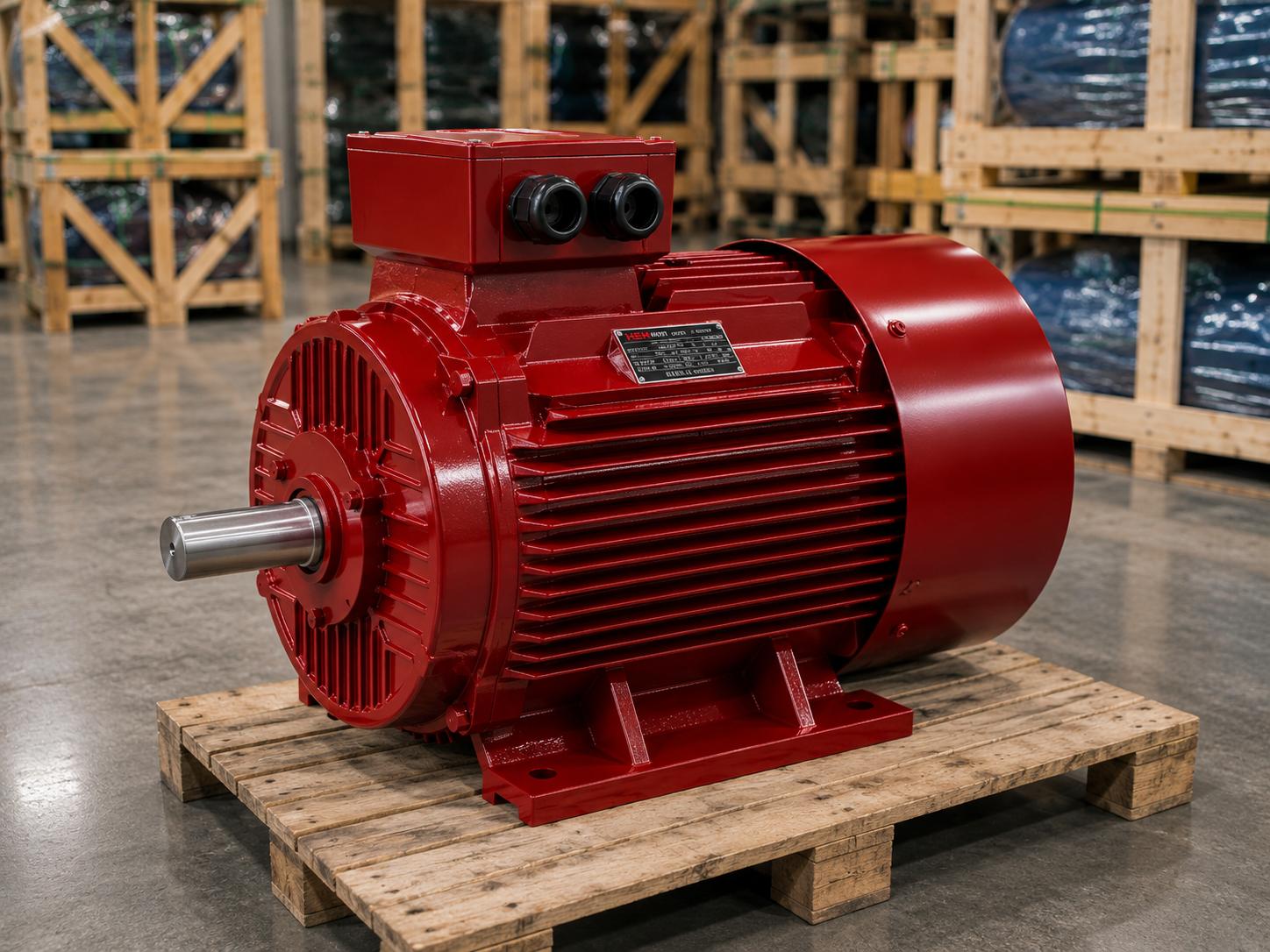
Why Everything Changes in the Megawatt Class
At small powers, motor selection is largely standardized. But once you move into the megawatt class, every parameter becomes an individual engineering decision. Starting current shakes the grid, the motor's inertia determines the time to bring the load up to speed, and the cooling method changes the body design.
Starting Current and Grid Impact
The direct-on-line (DOL) start of a high-power motor draws a current several times its rated value and can cause a serious voltage dip in the grid. For this reason, at these powers a controlled start with a soft starter, liquid resistance starter (LRS) or frequency drive is almost mandatory. We cover the starting logic for high-inertia loads in detail in our article on starting time and inertia (J) in asynchronous motors.
Cooling Method
In megawatt-class motors, the losses can be higher than even the total power of a small motor. To dissipate this heat, a surface-cooled (IC411) design may not be enough; air-to-air (IC611) or air-to-water (IC81W) heat-exchanger cooling may be required. The cooling method directly affects the motor's physical size and installation footprint.
2-Pole or 4-Pole? The Speed-Torque Relationship
Pole count is the most fundamental parameter determining a motor's synchronous speed. 2 poles correspond to roughly 3000 rpm and 4 poles to roughly 1500 rpm synchronous speed. At the same power, a lower-speed motor produces higher torque but is larger and heavier.
- 2-pole (high speed): Suitable for large centrifugal compressors, high-speed pumps and some fans. Provides a more compact body at the same power.
- 4-pole (medium speed): The most common choice for general industry, large pumps and fans; offers a good torque-speed balance.
- 6 poles and above (low speed): Preferred for mills, crushers and heavy loads requiring high torque. Low speed reduces mechanical wear.
We detail the application impact of the pole choice in our article asynchronous motor buying guide: which pole count for which job? For those who want to fine-tune speed with a pulley-belt ratio, the article on motor speed and pulley-belt speed adjustment provides guidance.
Voltage Class: Low Voltage or Medium Voltage?
In the megawatt class, one of the most critical decisions is voltage selection. Above a certain power threshold, running at low voltage (400/690 V) makes cable cross-sections and current impractical.
- 690 V low voltage: At high powers, choosing 690 V instead of 400 V halves the current; cable cross-section and losses are reduced.
- Medium voltage (3.3 / 6.6 / 11 kV): In the upper band of the megawatt class, medium-voltage motors are standard. The current is much lower, but the facility's medium-voltage infrastructure and protection systems are required.
- Grid compatibility: The motor voltage must be selected according to the facility's transformer and distribution infrastructure; this decision is made together with the electrical design.
Project-Based Supply Plan
High-power motors are generally supplied by project order rather than from stock. For this reason, supply must be planned at the start of the project. At HEM Motor, we follow these steps in megawatt-class supply:
- Specification finalization: Written confirmation of power, pole count, voltage, cooling, mounting, shaft end, bearing type and protection class.
- Lead-time plan: Aligning production, testing and transport durations with the project schedule; managing delay risk from the outset.
- Transport and commissioning: Lifting, handling and site-positioning logistics for motors weighing several tons; commissioning support.
- Critical spare: Spare-motor stocking or fast-supply assurance in applications where downtime is very expensive.
For lead-time and logistics details at high power, our article on high-power electric motor supply above 90 kW is complementary. You can review our motor range for industrial applications on the general-purpose industrial motors page.
Moment of Inertia and Starting Time
One of the most overlooked parameters in megawatt-class motors is the moment of inertia (J) of the driven load. A large fan, mill or compressor impeller requires significant energy to reach operating speed from rest. The motor draws high current and heats up during this period. The greater the inertia, the longer the starting time; and a long start thermally stresses the motor winding.
For this reason, in high-power motor selection not only the rated power but also the motor's capacity to accelerate the load within an acceptable time and without overheating must be evaluated. For high-inertia loads, the permitted number of starts and the waiting time between consecutive starts must also be clarified during supply.
- Load inertia: The GD² or J value of the driven machine is an input to the starting calculation.
- Starting method: For high-inertia loads, a soft starter or liquid resistance starter limits the starting current and heating.
- Start frequency: How many times per hour the motor can start is limited by thermal capacity; frequent starts require special evaluation.
Bearings, Shaft and Mechanical Details
In high-power motors, mechanical details become far more critical than in small motors. A heavy rotor and high speed bring the bearing and shaft design to the fore.
- Bearing type: At high power and speed, ball bearings may not suffice; sleeve (oil-film) bearings may be preferred. In VFD systems, insulated bearings may be needed against bearing currents.
- Shaft end and coupling: The shaft end transmitting high torque and the coupling and pulley fit must be calculated carefully. Misalignment causes rapid failure in large motors.
- Axial and radial load: In pump and fan drives, the axial/radial loads on the shaft are inputs to the motor's bearing selection.
- Balance quality: In a large high-speed rotor, balance quality is decisive for vibration and life.
We explain the risk of bearing current and harmonic heating in high-power VFD systems in our article on VFD and harmonic-induced extra heating and bearing current in asynchronous motors.
Efficiency and Total Cost of Ownership
A continuously running megawatt-class motor consumes far more than its purchase price as lifetime energy. For this reason, the efficiency class at high power directly concerns the operating budget. The seemingly small efficiency difference of a high-efficiency (IE3, or IE4 in the appropriate band) motor turns into serious annual savings in the megawatt class.
- Lifetime cost: In a high-power motor, energy makes up the overwhelming majority of total cost; the purchase price is secondary.
- Payback: The annual savings from the efficiency difference cover the additional cost of a higher-efficiency motor in a short time in most applications.
- Power factor: In large motors, power factor and reactive load are a separate item on the facility's energy bill; the right choice reduces the reactive penalty.
High-Power Motor Choices by Application
The selection of megawatt-class motors differs markedly according to the type of driven machine. Each application has its own load profile, starting requirement and environmental conditions. Below we summarize the most common high-power applications and their motor choices.
Large Fans and Aspirators
The main fans of cement factories, the ID/FD fans of thermal power plants and large ventilation systems have high inertia. These fans require a long starting time; the motor's thermal capacity must be selected accordingly and controlled starting applied. In many fan applications a frequency drive is used for flow control; this requires the motor to be drive-compatible.
Large Pumps
High-flow water, wastewater and process pumps are among the common applications of the megawatt class. Considering the pump curve and system resistance, the motor is sized according to the real operating point. In pump motors, the efficiency class is especially important due to continuous operation.
Mills and Crushers
Ball mills, rod mills and large crushers demand high starting torque and continuous heavy duty. In these applications, low-speed (multi-pole) motors and often slip-ring (wound-rotor) or liquid resistance starters are preferred. High inertia is the main factor determining the starting strategy.
Compressors
Large centrifugal and screw compressors are generally driven by high-speed (2-pole) motors. In these applications, balance quality and vibration control come to the fore; at high speed even a small balance error produces large vibration.
We addressed the general selection logic of high-power industrial motors in our article on motor fleet management in three-shift facilities.
Supply and Critical Spare Management
The failure of a megawatt-class motor can cause the facility to reduce load or stop for days or even weeks. This is because these motors are generally not products waiting ready in stock; their production and supply times are long. For this reason, critical spare management is an inseparable part of the high-power motor strategy.
- Critical power identification: The motors that would cause the facility to stop are identified; their redundancy needs are prioritized.
- Spare stock or fast-supply agreement: For the most critical motors, either a physical spare is stocked or a supply agreement with a fast-supply guarantee is made.
- Documentation and traceability: The nameplate data, test reports and connection dimensions of high-power motors are kept on record; an exact equivalent is quickly prepared in case of failure.
- Commissioning support: Planned support is provided for bringing the spare motor to site, aligning it and commissioning it.
We detail how to create a critical spare motor list in our article on a critical spare motor list for facilities, and contracted supply in sectors such as mining in our article on motor supply contracts in mining.
Frequently Asked Questions
Should I choose 2 poles or 4 poles for a motor above 1000 kW?
This depends on the speed and torque required by the driven machine. 2 poles are common in high-speed compressors and pumps, 4 poles in general pump-fan applications; for high-torque loads such as mills, a low-speed motor with 6 or more poles is preferred. At the same power, a lower-speed motor is larger and heavier.
Is low voltage or medium voltage needed in a megawatt-class motor?
As power increases, current at 400 V becomes impractical; therefore 690 V is preferred at high low-voltage levels, and medium voltage (3.3/6.6/11 kV) in the upper power band. The decision is made together with the electrical design according to the facility's transformer and distribution infrastructure and protection systems.
How long does it take to supply a motor at this power, and how should it be planned?
Megawatt-class motors are generally built to project order; therefore lead time must be planned at the start of the project. After the technical specification is finalized, production, testing, transport and commissioning processes are integrated into the project schedule. In critical applications, a spare motor or fast-supply assurance is part of the supply plan.