English
 Türkçe

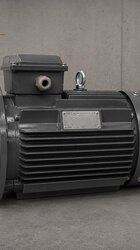
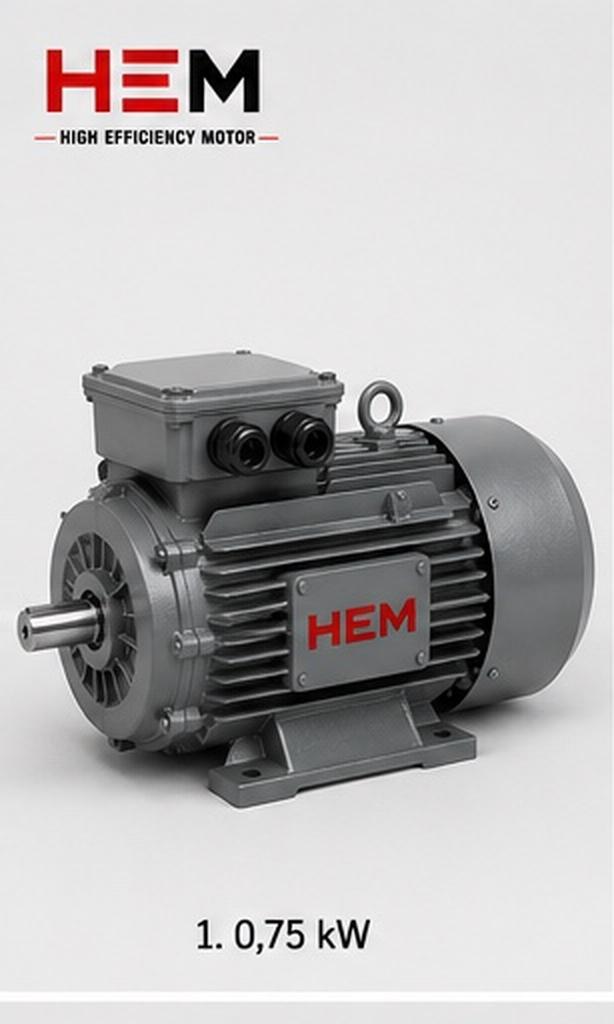

An IE5 synchronous reluctance motor is one of the lowest-loss motors in its class when running under load. But in industry motors do not always run at full load; often they spin idle, sit in standby, or run at partial load for hours. The hidden consumption that appears in these "no-load" minutes can account for a larger-than-expected share of a plant's annual energy bill. Efficiency class labels are given at the full-load point; yet real savings come from selecting the motor according to its actual load profile. In this article we examine where standby and no-load loss comes from in IE5 synchronous reluctance motors, how to manage this hidden consumption in continuously running plants, and why the right motor selection sits at the centre of the purchasing decision.
What Is Standby and No-Load Loss?
Not all the energy a motor draws turns into mechanical work. Items such as iron losses, friction, cooling fan loss and drive losses continue even when the motor carries no load. No-load loss is the power drawn while the motor turns but no load is coupled to the shaft. Standby loss is the small but continuous consumption of the circuit while the motor is stopped but its drive (VFD) waits energised. These values, small on their own, become a concrete cost when multiplied by 24 hours a day and thousands of hours a year.
IE5 synchronous reluctance motors carry no cage or magnet in the rotor; this structure greatly reduces rotor losses and makes the motor clearly superior to its asynchronous counterpart, especially at partial load. So in applications where the load often drops or fluctuates, the advantage of IE5 SynRM appears at partial load more than at full load. Our article on the part-load efficiency curve of IE5 synchronous reluctance motors explains why this point changes the purchasing decision.
Where Do the Loss Items Come From?
- Iron (core) loss: The magnetic cycling loss in the stator laminations; continues regardless of load while the motor turns.
- Mechanical loss: Bearing friction and the cooling fan's work in moving air.
- Drive standby loss: The power the control board and intermediate circuit consume while the VFD waits energised.
- Partial-load loss: The drop in efficiency when the motor runs well below rated power.
Why Does a Synchronous Reluctance Motor Run with a Drive?
Synchronous reluctance motors cannot start themselves connected directly to the mains; they always run with a variable frequency drive (VFD). This means standby loss has two layers: the motor layer and the drive layer. If the drive stays energised even when the motor is stopped, it draws its own standby power. In a plant with many motors, the total consumption of dozens of standing drives cannot be ignored. Our article on why IE5 synchronous reluctance motors do not run without a drive shows the importance of evaluating the motor+drive package together.
The good news: modern drives offer settings to minimise consumption in standby. Drives of motors that will not be used for long can be left completely de-energised; in frequently starting-stopping applications the drive's sleep function can be enabled. Correct parameterisation noticeably lowers hidden consumption.
Saving Opportunities on the Drive Side
- Sleep function: The drive automatically stops the motor when there is no load demand and switches to low consumption.
- Full power isolation: Leaving the drive de-energised during long stops zeroes standby loss.
- Energy optimisation mode: Reduces magnetising current at partial load to lower iron loss.
- Correct drive size: An oversized drive carries proportionally higher standby loss.
Managing Hidden Consumption in Continuous Operation
In continuously running plants the issue is not a single motor but the total behaviour of the motor fleet. Spare motors standing in parallel on a line, equipment spinning idle between shifts, or fans and pumps running unnecessarily when demand drops are the main sources of standby and no-load loss. The first step in managing this consumption is to measure it: you cannot plan savings without knowing how long each motor stays unloaded or idle. Our article on managing idle and no-load running loss in efficient motors offers a practical framework here.
The second step is to select the motor according to its real load profile. In an application where the continuous load stays well below rated power, choosing an oversized motor increases both the investment and the no-load loss. The partial-load superiority of IE5 SynRM gains value exactly here; but the motor power must be sized correctly to real demand.
Practices That Lower Hidden Consumption
- Measure the load profile: Record the motor's full-load, partial-load, idle and standby times.
- Select correct power: A permanently oversized motor means permanent no-load loss.
- Keep spares de-energised: Fully shut down a standby spare together with its drive.
- Stop when demand drops: Use the sleep function on fans and pumps to prevent unnecessary spinning.
Correct IE5 Motor Selection and Supply
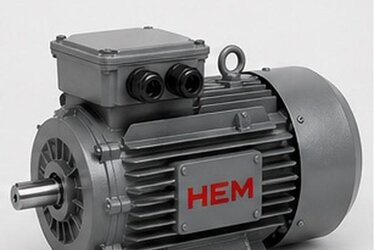
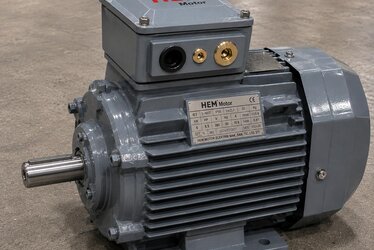
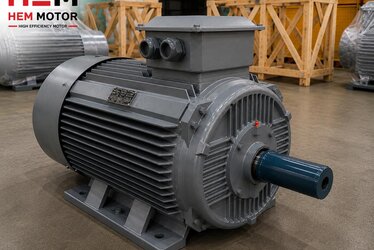
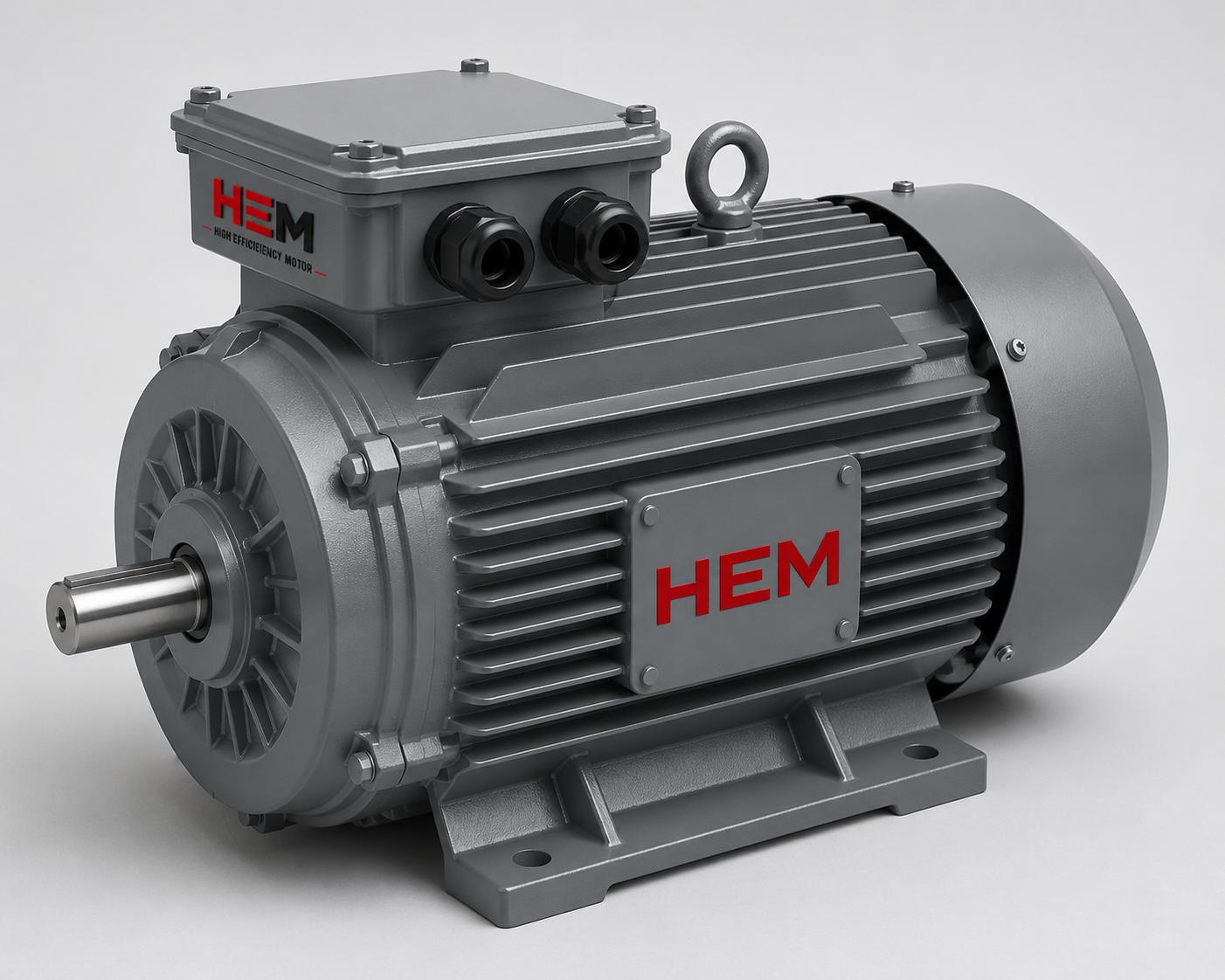
The way to minimise standby and no-load loss is to select the right motor and the right drive together from the start. The HEM Motor range offers IE5 class synchronous reluctance solutions sized to your real load profile; correctly matching power, speed and drive compatibility brings hidden consumption under control from the outset. At the quotation stage, stating the application's load profile (full-load time, idle time, standby time) prevents an oversized motor and ensures the right package is selected. To request a quote with current electric motor prices and stock status, providing this information speeds up the right solution.
To evaluate in which applications switching to IE5 makes sense, our IE5 ultra premium motor transition guide clarifies the decision process. The right choice saves energy not only at full load but at the partial and unloaded points where the motor actually spends most of its time.
Information to State in the Quote
- Load profile: The distribution of full-load, partial-load, idle and standby times.
- Operating regime: 24/7 continuous, shift-based, or frequently starting-stopping.
- Drive requirement: Is there an existing VFD, or is a motor+drive package wanted.
- Real demand power: Not the rated power but the continuous power the application needs.
Iron Loss and the Role of the Cooling Fan
The largest component of no-load loss is usually iron (core) loss. The constant reversal of the magnetic field in the stator laminations produces a loss even when the motor carries no load. In synchronous reluctance motors this loss is kept as low as possible with quality lamination material and optimised magnetic design; but it cannot be eliminated entirely. The drive's energy optimisation mode can reduce iron loss somewhat by lowering the magnetising current at partial load; this is a meaningful source of savings at idle and light load.
The cooling fan loss should not be ignored either. The shaft-mounted fan moves air as long as the motor turns, and this consumes a power that becomes more pronounced as speed rises. Even with no load, the fan keeps running while the motor turns; this is the mechanical component of no-load loss. In a drive-controlled motor, when the speed drops the fan loss also falls; so instead of keeping the motor spinning idle at full speed when there is no demand, stopping it or drawing low speed reduces both iron and fan loss together.
The sum of these two items is the basic power the motor consumes "doing no work". Correct motor design lowers this floor; correct operating practice manages how long this floor stays active. Addressed together, no-load loss can be brought under control far more than expected.
Turning Standby Loss into Annual Cost
The best way to understand why standby and no-load loss matters is to scale it to a year. The power a single motor draws while idle looks small; but in a 24/7 plant it accumulates over thousands of hours a year. In a plant with dozens of motors, this accumulation becomes a silent item paid without ever being noticed. This is precisely why standby loss is not "a negligible small value" but an item that delivers meaningful savings when managed correctly.
The way to make this cost visible is to measure it. Building each motor's load profile (full-load, partial-load, idle, standby times) reveals which motors consume needlessly. Savings efforts made without this data rest on guesswork and often focus on the wrong motor. Correct measurement highlights the motors that stay idle most and stand in standby most; improvement priority is given to these.
Factors Affecting Annual Cost
- Idle time: The total hours the motor turns without load.
- Standby time: The hours the drive waits energised while the motor is stopped.
- Number of motors: Small values grow when summed across the plant.
- Operating regime: Accumulation is far faster in a 24/7 continuous plant.
The Partial-Load Difference Between SynRM and Asynchronous Motors
The strongest point of a synchronous reluctance motor is not full load but partial load. In asynchronous motors the current induced in the rotor produces a continuous loss; as the load falls, this loss grows proportionally and efficiency drops. In the SynRM rotor, because there is no cage, this loss is almost absent; the motor largely holds its efficiency even at points below rated power. This feature turns into a decisive advantage in fan, pump and mixer applications that in real life run mostly at partial load.
This difference directly affects the purchasing decision. If an application runs continuously at full load, the difference between IE4 asynchronous and IE5 SynRM is smaller. But if the load drops or fluctuates often, the partial-load superiority of SynRM creates a large difference in lifetime energy cost. So motor selection should be made according to the application's real load profile, not the label efficiency class.
Frequently Asked Questions
Why does an IE5 motor still draw energy while idle?
While the motor turns, iron loss, bearing friction and cooling fan loss continue regardless of load; this is no-load loss. While the motor is stopped but its drive waits energised, the drive draws a small power; this is standby loss. These items are small on their own but form a meaningful annual cost in a 24/7 plant.
Can an IE5 synchronous reluctance motor run without a drive?
No. Synchronous reluctance motors cannot connect directly to the mains and start themselves; they always run with a variable frequency drive (VFD). For this reason, evaluating the drive as a package when buying the motor is important for both correct operation and managing standby loss.
To reduce no-load loss, should I change the motor or the usage?
Both are addressed together. Selecting the motor at the correct power for the real load profile lowers permanent no-load loss; on the usage side, stopping the motor when there is no demand, keeping spares de-energised and using the drive's sleep function reduce standby loss. The best result comes from combining the right selection with the right operating practice.