English
 Türkçe

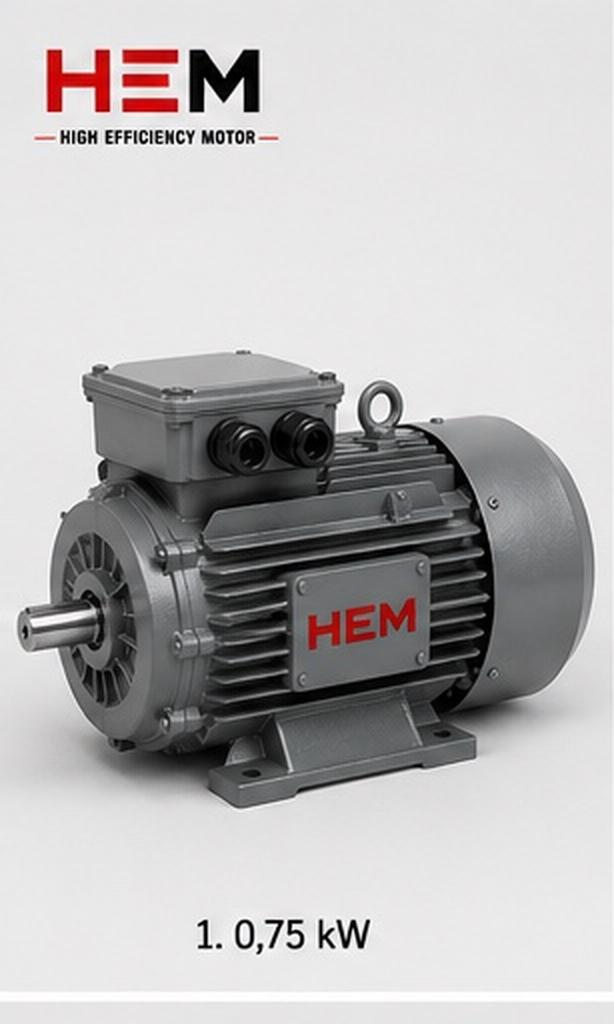

What happens if you try to restart a fan or pump while it is still spinning after a power outage? If the drive applies full voltage without knowing the speed and position of the spinning shaft, a sudden torque collision occurs between the motor and the spinning load; the drive trips on overcurrent, a belt can break, the coupling is stressed and, worst of all, the process stops. The feature that solves exactly this problem is the flying start (catch-on-the-fly) function on IE5 synchronous reluctance (SynRM) motors. It allows the drive to detect the speed and direction of a freely spinning motor and smoothly bring it back under control. In this guide we cover the logic of flying start on IE5 synchronous reluctance motors, safe restarting of spinning fans and pumps, and how to procure the correct motor-drive package.
At HEM Motor, the most critical point we see in high-efficiency motor projects is that IE5 SynRM motors do not run without a drive, so it is not the motor but the motor + drive package that must be selected correctly. Functions like flying start come into play precisely when this package is configured correctly.
What Is Flying Start (Catch-on-the-Fly)?
Flying start is the drive's ability to catch and take control of a motor that is already spinning, instead of assuming it is stopped. Normally, when a motor is stopped the drive accelerates it smoothly from zero speed. But a high-inertia fan or a pump full of a water column can keep spinning freely for minutes after power is cut (or reverse-spin from backflow in a pump). If the drive re-engages during this time and applies full frequency without knowing the actual shaft speed, a large speed difference arises between the magnetic field the motor produces and the spinning rotor, which means a sudden current surge and torque shock.
The flying start function lets the drive first detect the shaft's current speed and direction, then match that speed to take over control smoothly. The motor thus continues running from where it left off, synchronized with the spinning load and without any shock.
Why Is High Inertia So Important?
A load's inertia is its resistance to a change in speed. Large fan blades, water-filled pump impellers and flywheel drives have high inertia, which means they keep spinning for a long time when power is cut. The greater the inertia, the longer the free-spinning time after the motor stops, and the higher the chance that the shaft is still spinning at the moment of restart. A small low-inertia load may stop in seconds, while a large chimney fan can spin for minutes. So the need for flying start is directly related to the size of the load's inertia. This free-spinning time can reach several minutes on some large fans; every restart attempt during that period stays risky without flying start. The first question at the procurement stage, "what will this motor drive and how long does it keep spinning after the load stops?", determines whether the catch function is needed. You can also find starting behaviour and inertia matching for high-inertia loads in our article on starting time and inertia moment.
Why Is Catching Different in a SynRM Motor than in an Asynchronous One?
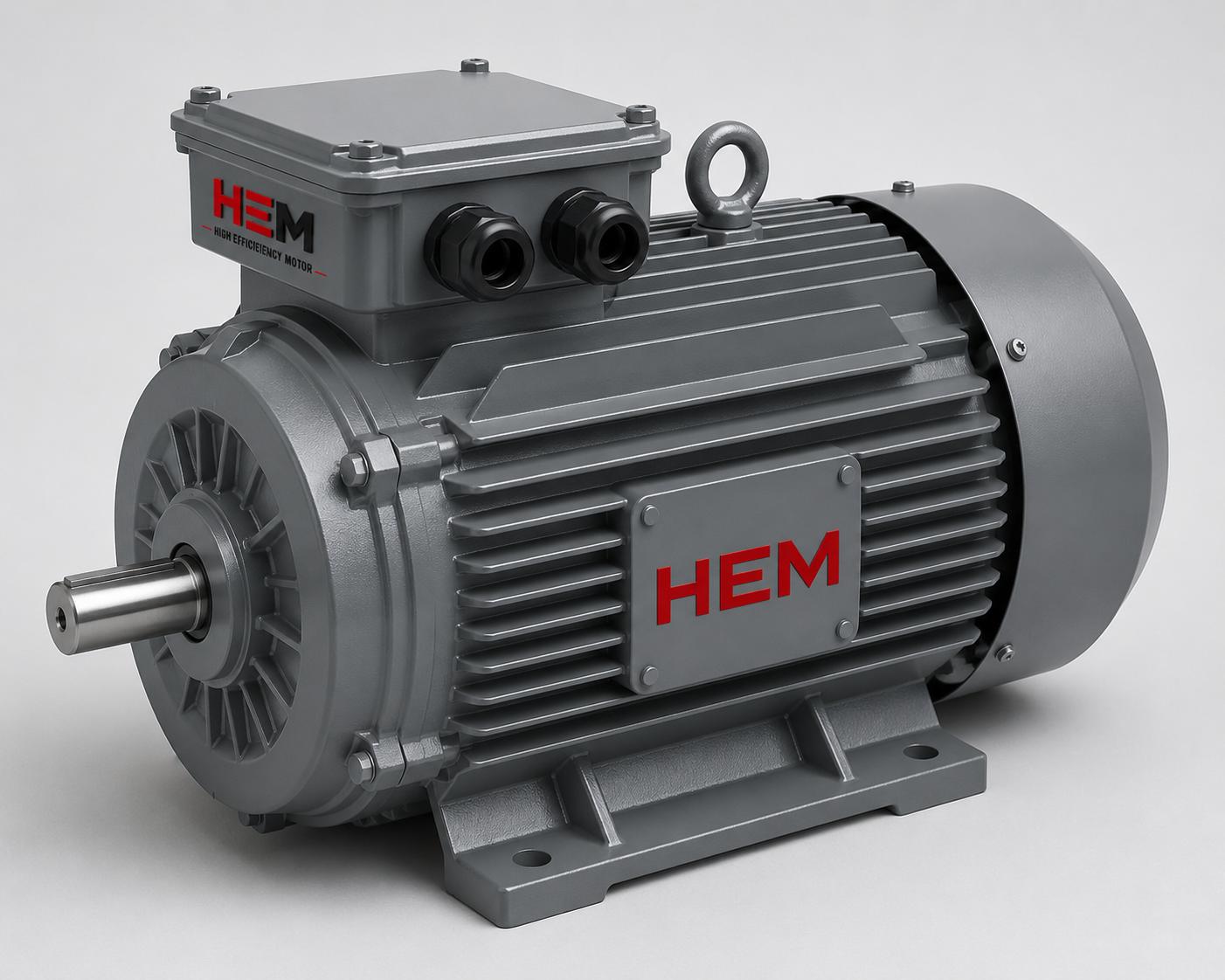
A synchronous reluctance motor works differently from an asynchronous one: there is no cage or magnet in the rotor, and torque arises from the rotor's magnetic resistance (reluctance) difference. This structure makes the motor highly efficient but makes it mandatory for the drive to know the rotor position continuously and accurately. For this reason a SynRM motor does not run without a drive, and flying start requires more advanced position/speed detection than the simple speed estimation in an asynchronous motor. The drive determines the angle of the spinning rotor and takes over control accordingly. To understand why the SynRM motor depends on the drive and the package logic, our article on why the IE5 SynRM motor does not run without a drive is a fundamental starting point.
How Does Flying Start Work Step by Step?
When the drive receives the flying start command, it follows a certain sequence. First it applies a small, controlled test signal to detect whether the rotor is spinning and in which direction. During this detection the drive uses the feedback information (the current and voltage response) the motor produces to calculate the approximate shaft speed. Once speed and direction are determined, the drive matches its output frequency to the current shaft speed; that is, it starts controlling the motor not from zero but from exactly the speed it is at. In the final step the drive brings the motor up to the target running speed with a smooth ramp. The whole process completes in under a second, and the operator often notices no shock or noise.
The correct operation of this process depends on the drive knowing the motor parameters (resistance, inductance values and rotor characteristics). The autotune carried out during commissioning lets the drive recognize the motor and run the catch algorithm correctly. So commissioning the IE5 package is not a simple wiring job but an engineering step requiring parameter identification and testing.
Restarting a Spinning Fan
High-inertia industrial fans keep spinning for a long time after stopping, driven by wind or their own inertia. Chimney fans, cooling towers and large ventilation fans are typical examples. If the system attempts an automatic restart while the fan is still spinning after a short voltage dip, the drive will almost certainly trip without flying start. The external wind may even have turned the fan in the reverse direction; in that case the catch function also detects the direction and safely re-engages the motor. This is a critical feature for process continuity in shopping malls, car parks and industrial ventilation. To require this function when procuring ventilation and fan motors, our article on fan motor supply in HVAC projects is helpful.
Restarting a Spinning Pump and Backflow
The situation is even more delicate with pumps. When a pump stops, the water column in the discharge line can flow back and spin the impeller and motor in reverse. If the drive tries to run the motor forward at full frequency during this time, the reverse-spinning rotor collides with the forward magnetic field, which is a severe shock both electrically and mechanically. Flying start detects the shaft's current speed and direction, first brings the rotation under control and then smoothly steers it to the desired direction. This protects pump and coupling life in systems where the check valve is insufficient or absent. To plan this behaviour in pump motor selection, see our article on centrifugal pump motor selection.
Short Outages, Grid Fluctuations and Automatic Restart
Short voltage dips and millisecond outages are common in industrial facilities. During these events the drive may release the motor to protect itself; then, when voltage returns, the system wants to restart the motor automatically. At that very moment the load is still spinning. Without flying start, every automatic restart is a moment of risk for the drive. With this function the system can continue the process uninterrupted after short outages, which significantly reduces production loss and equipment wear, especially in facilities running around the clock. To manage motor fleet stability in continuously running facilities, our article on motor fleet management in three-shift facilities offers a holistic view.
Sudden Load Changes and Speed Stability
Flying start supports the SynRM motor's stability not only at restart but also during sudden load changes. In an application taking impact loads, the motor speed must remain constant and the torque response must be fast. The torque response and speed stability the SynRM motor shows with the drive are achieved with the correct drive parameters. Our article on torque response under sudden load change in IE5 SynRM motors is complementary here. For correctly setting the drive parameters and the autotune steps, our article on drive parametering in IE5 SynRM motors is an applicable guide.
Geared Drive and Flying Start
SynRM motors are often used with a gearbox in conveyors, agitators or similar drives. In a geared system the spinning load inertia creates the same problem at restart; moreover, the gear backlash is stressed by sudden torque shocks. Flying start provides smooth takeover in geared drives too, protecting the life of the gears and shaft connections. For output speed, drive compatibility and correct package selection, our article on geared drive with an IE5 SynRM motor clarifies the procurement decision.
Preserving IE5 Efficiency and the Operating Gain
An important but not directly visible benefit of flying start is protecting the process from unnecessary full stop-starts. Stopping a motor completely and re-accelerating it wastes both time and energy; bringing a high-inertia fan from zero to full speed requires significant starting energy. Catching the spinning load and continuing from where it left off reduces this starting energy and mechanical wear. Combined with the IE5 synchronous reluctance motor's high efficiency even at part load, this function delivers a visible gain in both energy and maintenance cost. To understand IE5's part-load efficiency advantage, see our article on the efficiency curve and part load of the IE5 SynRM motor.
Procuring the Right Package
When buying an IE5 SynRM motor, what you decide on is actually not a motor but a motor + drive package. For functions like flying start to work, the drive must support this motor and be parametered correctly. Points to watch during procurement:
- Application type: Fan or pump? Load inertia and backflow risk determine the catch need.
- Automatic restart: Does the system restart automatically after an outage? Then flying start is mandatory.
- Backflow / reverse spin: Is there a check valve on the pump? If not, the catch function must also manage direction.
- Drive-motor compatibility: Ensure the drive is compatible with this SynRM motor and supports the function.
- Commissioning: Correct autotune and parameter settings make the function work in the field.
- Cooling: If there is continuous torque at low speed, assess the need for an external cooling fan from the start.
To source the IE5 synchronous reluctance motor + drive package suited to your facility, with the right functions and fast delivery from stock, and for current electric motor prices, get in touch with us. To assess IE5's efficiency difference versus IE4, see our article on the IE5 vs IE4 efficiency difference, and for our efficient-motor range our high-efficiency electric motors page.
Frequently Asked Questions
What happens if I restart a spinning fan without flying start?
If the drive applies full frequency without knowing the shaft's actual speed, the large speed difference between the spinning rotor and the magnetic field creates a sudden current surge and torque shock. This often makes the drive trip on overcurrent, breaks the belt or stresses the coupling. Flying start eliminates this shock and provides a safe restart.
Can a synchronous reluctance motor perform flying start without a drive?
No. A SynRM motor cannot run without a drive at all; it needs a drive that continuously knows the rotor position. Flying start is an advanced function of that drive. So when buying, the motor and drive must be evaluated together as a compatible package.
Is flying start unnecessary if the pump has a check valve?
If the check valve prevents backflow, the reverse-spin risk is reduced, but the valve can fail or may be absent in some systems. The pump may also still be spinning forward after a short outage. So in systems with automatic restart, flying start is a valuable safeguard for safe, shock-free re-engagement independent of the check valve. In practice many facilities use both a check valve and flying start together to secure both the hydraulic and electrical sides, which is a recommended approach on critical water-supply and fire-pump lines.