English
 Türkçe

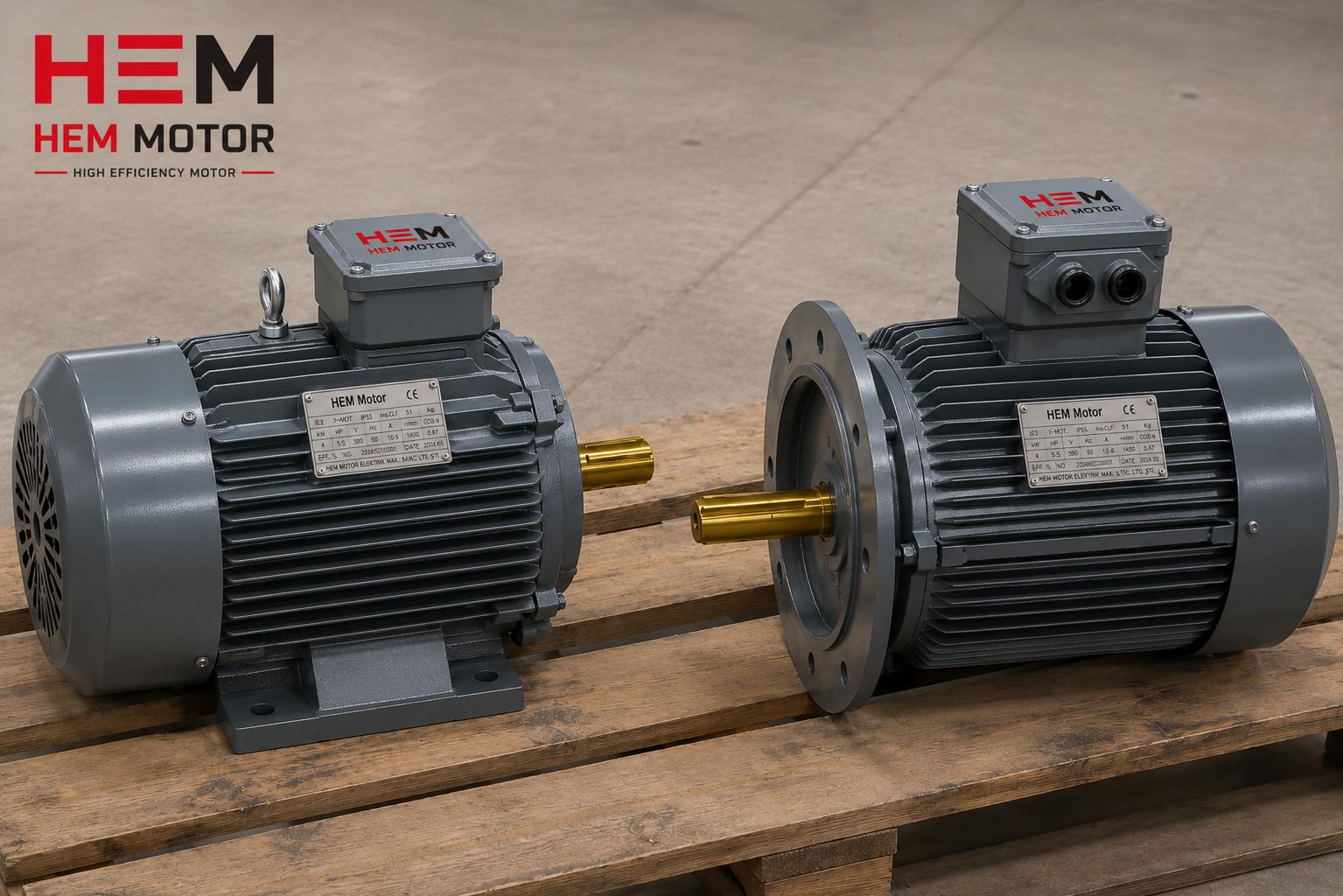

Two of the most common power ratings in industry and machine building are 1.5 kW and 2.2 kW electric motors. Pumps, fans, conveyors, gearbox inputs and countless general-purpose applications use exactly these powers. Driven partly by efficiency regulations, most buyers now request the IE4 super premium class directly at these powers. In this article we cover, with a buying focus, how to make the right purchase of 1.5 and 2.2 kW IE4 motors based on speed (pole number), frame size, mounting type and stock availability.
Why are these two powers so widespread? Because the majority of small and medium machines meet their needs exactly in this band. 1.5 kW is generally used on light-to-medium load pumps, fans and small conveyors; 2.2 kW is used on slightly heavier drives, higher-torque gearbox inputs and larger fans. Both powers are among the motors most worth keeping in stock, because demand is steady and predictable.

Speed and Pole Number in 1.5 and 2.2 kW IE4 Motors
The first step in choosing the right motor is to define the speed (that is, the pole number) alongside the power. The same 1.5 kW power is a completely different motor at different speeds; frame size, torque and price change accordingly.
- 2-pole (≈3000 rpm): High speed, low torque. Suitable for compact pumps, high-pressure applications and some fans. Gives the smallest frame at a given power.
- 4-pole (≈1500 rpm): The most common speed. The vast majority of conveyor, gearbox input, general fan and pump applications run at this speed. The overwhelming share of 1.5 and 2.2 kW purchases are 4-pole.
- 6-pole (≈1000 rpm): Lower speed, higher torque. Preferred where high starting torque or slow rotation is needed; requires a larger frame at the same power.
Practical rule: the actual speed is slightly below the synchronous speed because of slip (for example, a 4-pole motor shows roughly 1440-1455 rpm on the nameplate, not 1500). When ordering, clearly stating both the power and the pole number/speed prevents the wrong motor arriving.
Frame Size: Which Frame Do 1.5 and 2.2 kW Fit?
In IE4 motors the frame size depends on both power and pole number. As a general approach, 4-pole (1500 rpm) 1.5 kW motors are usually around frame 90, while 2.2 kW motors are around frame 90L or 100; 2-pole versions may be one frame smaller and 6-pole versions one frame larger. Because frame size determines the foot hole spacing, shaft diameter, shaft height and flange dimensions, it is critical when replacing an existing motor.
- If you are replacing an existing motor like for like, use the old motor frame code (for example 90L, 100L) and all the nameplate dimensions; power and speed alone are not enough.
- If you are designing a new machine, choose the frame size according to the shaft diameter required by the gearbox or coupling connection.
- IE4 motors are generally produced in the same IEC frame as the old IE2/IE3 motors of the same power, which largely preserves mechanical compatibility.
Shaft Diameter and Key Dimensions
Depending on the frame size, the shaft diameter is also standard; on frame 90 the shaft diameter is usually 24 mm, on frame 100 around 28 mm. In a coupling, pulley or gearbox connection, this diameter and the key dimensions must match. When ordering, stating the shaft diameter and whether the shaft end is standard or special is important to avoid mismatch in the field.
Mounting Type: B3, B5, B14 and B35
At small powers such as 1.5 and 2.2 kW, the mounting type choice determines how the motor connects to the machine:
- B3 (foot-mounted): Sitting on the floor or a base; the most common choice for belt-pulley and coupled applications.
- B5 (large flange): For applications connected directly by flange to a gearbox or pump.
- B14 (small flange): For direct connection to a small flange surface in compact machines; quite common in this power range.
- B35 (foot + flange): For combined applications needing both feet to a chassis and a flange to a machine.
At these powers, the B5 and B14 flanged versions in particular are common at the gearbox input. Choosing the correct flange type is decisive for a trouble-free gearbox or pump connection.

Why IE4? The Meaning of Efficiency at These Powers
In most facilities 1.5 and 2.2 kW motors run continuously (S1); that is, they turn for thousands of hours a year. So despite being small powers, the IE4 super premium efficiency class makes a difference in total energy consumption. Thanks to higher quality copper winding, an optimised lamination stack and a low-loss design, IE4 motors do the same work with fewer losses. Even a small efficiency difference on a continuously running motor turns into meaningful savings over the years.
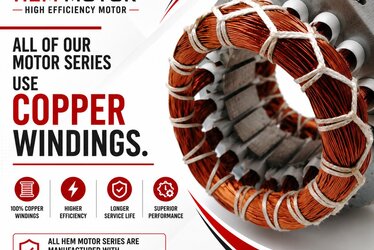
- 100% copper winding: Lower losses and longer life than aluminium winding.
- IP55 protection: Standard protection against dust and water; safe in dusty environments.
- Class F insulation: High temperature resistance, longer winding life.
- Suitable for continuous duty (S1): Designed for uninterrupted operation at full load.
Typical Applications of 1.5 and 2.2 kW Motors
These two powers are perhaps the motors with the widest application range in Turkish industry. To choose the right power and speed combination, it is important to define clearly where the motor will run. The most common applications in practice are:
- Pump applications: 1.5 and 2.2 kW are frequently used on small booster sets, circulation pumps and centrifugal pumps. 2-pole is preferred where high pressure is needed, 4-pole where balanced flow is needed.
- Fans and extractors: These powers are common on radial fans, scroll fans and dust-collection extractors; a significant part of ventilation and HVAC applications falls in this band.
- Conveyors and handling: 4-pole 1.5 and 2.2 kW motors are widely used with a gearbox to drive small and medium conveyor belts.
- Gearbox input: These powers are standard as the input motor of worm and bevel-helical gearboxes; they are compatible with frames such as HEM63 and HEM75.
- Machine building: These powers serve as the main drive motor in packaging machines, woodworking benches and general-purpose machinery.
Such a wide application range explains why 1.5 and 2.2 kW motors are kept continuously in stock. For the buyer, this means both fast supply and easy spare-part backup.
Correct Power Selection: Over- or Under-Sizing
There are two common mistakes when deciding between 1.5 and 2.2 kW. The first is buying a larger motor than needed just to be safe (over-sizing); this makes the motor run at low load and therefore lower efficiency, and means an unnecessary initial investment. The second is running a marginal motor continuously at full load (under-sizing); this causes overheating, early wear and a shortened life.
The correct approach is to calculate the real power need of the load to be driven and choose the nearest standard value, leaving a reasonable power margin (usually a limited margin above the load). If the calculated value falls between 1.5 kW and 2.2 kW and the load is continuous, choosing 2.2 kW eases the motor. If the load is intermittent and light, 1.5 kW is enough. This decision directly affects both the energy cost and the motor life.
Nameplate Information and Correct Ordering
The most reliable way to prevent the wrong motor arriving is to clarify all nameplate information before ordering. For 1.5 and 2.2 kW IE4 motors, the order form should include:
- Power: 1.5 kW or 2.2 kW.
- Speed / pole number: 2, 4 or 6 poles.
- Frame size: for example 90L, 100L.
- Mounting type: B3, B5, B14 or B35.
- Shaft diameter and key dimensions.
- Efficiency class: IE4; an IE3 alternative if needed.
- Protection and insulation class: IP55, Class F.
- Voltage and frequency: 380-400 V / 50 Hz three-phase.
If you are replacing a motor like for like, photographing the existing motor nameplate and sharing all the values greatly simplifies the matching. If the nameplate is unreadable, an equivalent selection can be made from the frame code and physical dimensions.
Stock Availability and Fast Supply
1.5 and 2.2 kW, 4-pole IE4 motors are the most in-demand powers and can therefore usually be delivered from stock. This means not waiting for a long production lead time in case of a breakdown or new machine installation. On critical machines, keeping one or two spare motors of these powers in stock is a smart investment that minimises downtime.
For fast and accurate supply, the power, speed/pole, frame size, mounting type and shaft diameter must be supplied in full at the quotation stage. A motor backed by the manufacturer, with a correct nameplate and dimensions, fits like for like in the field and commissioning is trouble-free. For current electric motor prices and stock availability, you can request a quote from the supply team.
To finalise the efficiency class decision at these powers, see our article on IE3 vs IE4 electric motor investment, and for use at the gearbox input, the worm gear reducer to motor matching guide. To plan which powers to stock, our content on the critical spare motor list and stock planning is useful. You can also reach all our IE4 electric motors articles here.
Does the Difference Between IE4 and IE3 Matter at These Powers?
Even at small powers such as 1.5 and 2.2 kW, the efficiency difference between IE4 and IE3 becomes meaningful depending on the running hours of the motor. On a motor that runs a few hundred hours a year the difference stays limited, but in a facility running three shifts continuously the same motor turns for thousands of hours a year, and even a small efficiency difference accumulates into significant energy savings. So in applications with high running hours, IE4 is usually more advantageous in terms of total cost of ownership despite its higher initial cost.
In contrast, for motors that will be kept as spares or run very rarely, IE3 can be a more economical alternative. When deciding, you should look not only at the purchase price but at the energy the motor will consume over its life. Because the current efficiency regulation also mandates a certain efficiency class in this power band, it is important to confirm which class is required before ordering. The correct efficiency class choice provides both regulatory compliance and a long-term cost advantage together.
Frequently Asked Questions
How do I choose between 1.5 kW and 2.2 kW?
The choice depends on the power required by the load to be driven. For applications such as pumps or fans, the required power is calculated and the nearest standard value (1.5 or 2.2 kW) is chosen with some margin left. If the load is marginal, choosing the next power up, 2.2 kW, instead of running continuously at full load eases the motor and extends its life.
Should I buy 2-pole or 4-pole at these powers?
In most general-purpose applications 4-pole (1500 rpm) is the standard. 2-pole is chosen for compact pumps or fans needing high speed, and 6-pole where high torque or slow rotation is needed. The speed/pole choice should be made according to the needs of the machine to be connected.
Can I replace my IE2/IE3 motor like for like with IE4?
Because 1.5 and 2.2 kW IE4 motors are generally produced in the same IEC frame and mounting dimensions, mechanical compatibility is largely preserved. Still, before replacement, confirming the old motor frame code, shaft diameter and mounting type from the nameplate guarantees a like-for-like fit.