English
 Türkçe

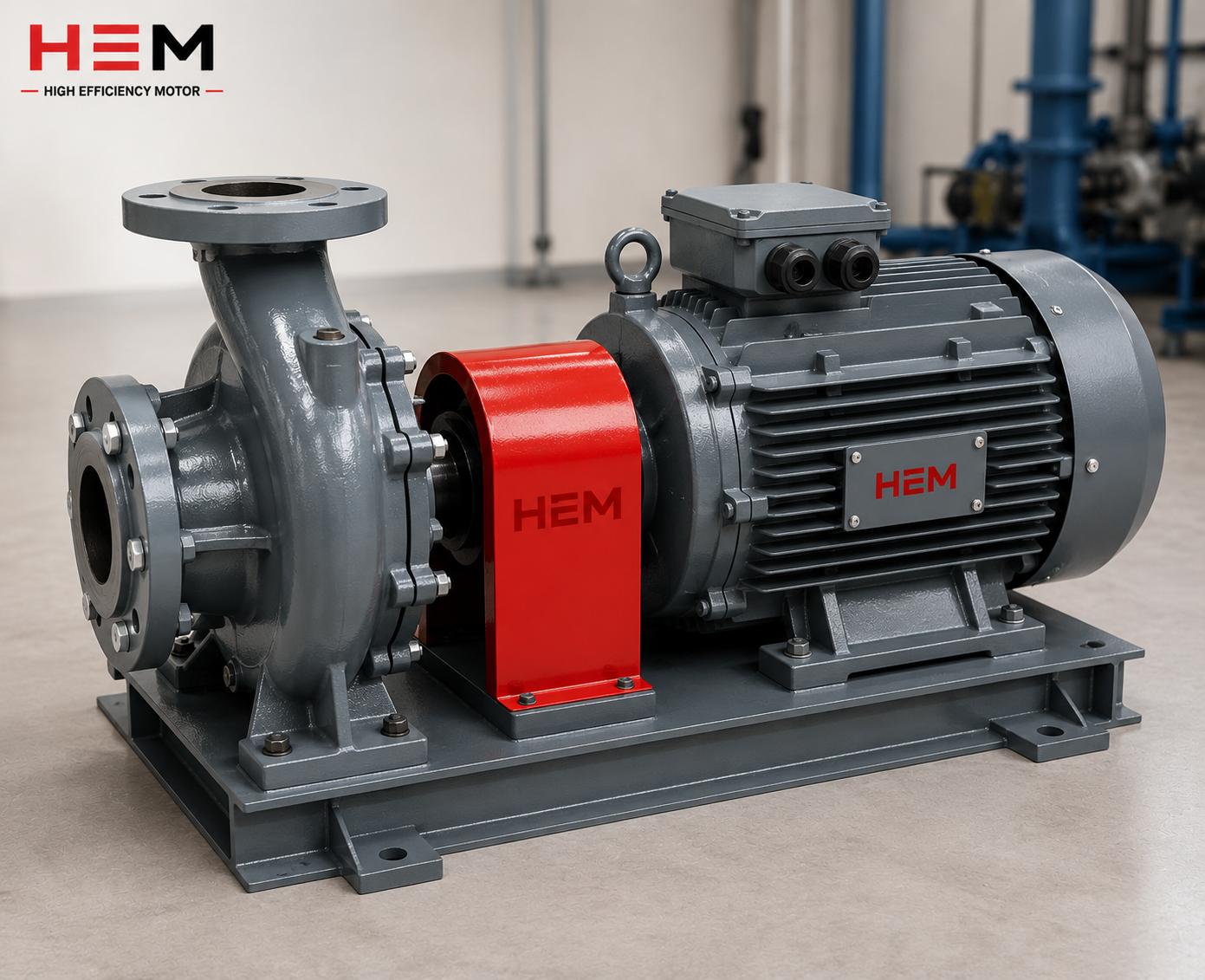

Because electric motors are rotating machines that create air movement, they produce a certain amount of noise. In most industrial environments this noise is within acceptable limits; however, in hospitals, hotels, office buildings, studios, shopping centres, facilities near residential areas and units operating at night, ambient noise limits are much stricter. At this point, motor selection involves not only power and efficiency but also the low-decibel (dB) operation criterion. Using a quiet cooling fan and silencer on an IE3 motor significantly reduces the noise the motor produces, making it possible to both meet legal/acoustic limits and ensure working comfort. In this guide we cover the sources of motor noise, quiet fan and silencer solutions, ambient noise limits and the correct procurement decision.
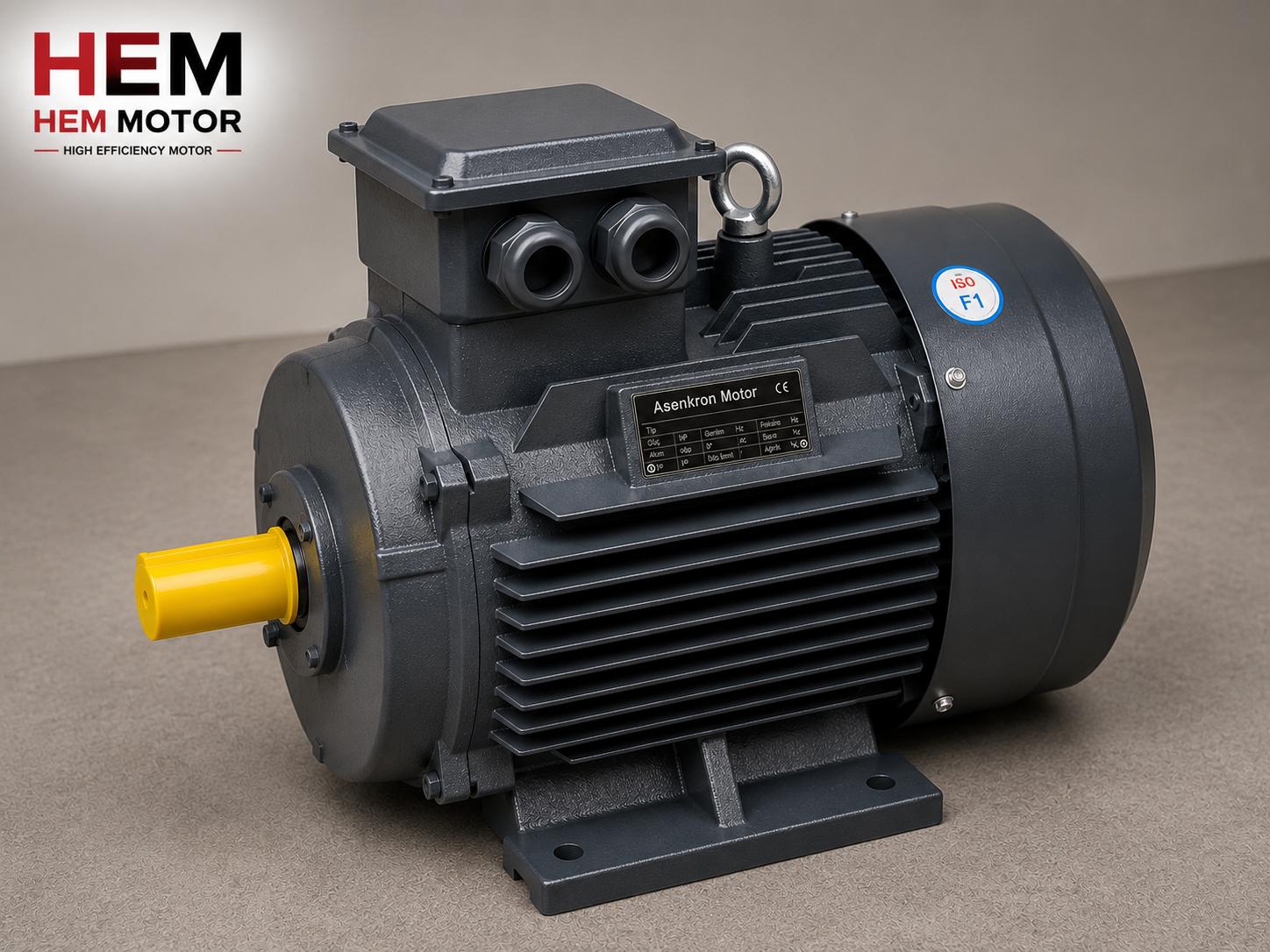
Where Does Noise in an Electric Motor Come From?
Noise in an asynchronous motor comes from three main sources, and distinguishing them is necessary for the correct solution:
- Aerodynamic (fan) noise: Created by the cooling fan at the rear of the motor moving air. It is dominant especially in high-speed (2-pole, 3000 rpm) motors and makes up the largest part of the total noise.
- Magnetic noise: Originates from the electromagnetic forces between the stator and rotor; it relates to design, winding quality and slot geometry.
- Mechanical noise: Originates from bearings, imbalance and vibration; quality bearings and good balancing minimise this source.
In most motors the largest share of noise is aerodynamic fan noise. Therefore the most effective way to reach a low-dB target is to intervene in the cooling fan and air-flow design.
To manage noise correctly it is essential to distinguish these three sources, because the solution for each is different. Aerodynamic noise is addressed with fan design and a silencer; magnetic noise with winding quality, slot geometry and the correct voltage/frequency; and mechanical noise with bearing quality, balancing and careful installation. If a noise target cannot be reached in an application, the dominant source must first be identified; otherwise investment is made in the wrong place. For example, adding a silencer to a motor dominated by magnetic noise provides very little benefit.
The Effect of Speed Selection on Noise
Noise increases strongly with motor speed. In an application doing the same job, a 4-pole (1500 rpm) motor is noticeably quieter than a 2-pole (3000 rpm) motor. Therefore, in noise-critical applications, preferring a lower-speed motor and a suitable transmission ratio where possible is often the cheapest and most effective silencing method. To examine the effect of speed and pole selection on the application more deeply, our asynchronous motor pole selection guide can be reviewed.
Quiet Cooling Fan and Silencer Solutions
A layered approach is followed to reduce motor noise; each layer complements the others:
- Low-noise (quiet) fan: Aerodynamically optimised, swept-blade fans produce less turbulence and lower noise than a standard fan.
- Silenced fan cowl: An acoustic silencer added to the fan cowl absorbs air-discharge noise and lowers the dB level.
- Unidirectional/bidirectional fan selection: In low-speed applications, an external (forced) cooling fan where needed provides cooling independent of the motor's own fan and with controlled noise.
- Vibration damping: A cast iron frame damps vibration better than aluminium; this reduces mechanically originated noise. Choosing a cast iron frame motor provides an additional advantage in noise-sensitive applications.
- Quality bearings and balancing: Low-vibration, 100% copper-wound and well-balanced motors run quieter from the start.
- Acoustic enclosure/barrier: In critical applications targeting very low dB, a sound-insulated enclosure or barrier is added around the motor; in this case, however, the motor's cooling must absolutely be preserved.
Which of these layers are needed depends on the targeted dB level and the application. In most cases the correct speed selection and an optimised fan meet the bulk of the target; a silencer and vibration damping then come in as fine-tuning. What matters is not to impair the motor's cooling while reducing noise. The fan is a critical component that allows the motor to dissipate the heat it generates; if an excessive silencing effort restricts the air flow and heats the motor, efficiency and life decrease. For this reason, silencing and cooling must always be designed together.
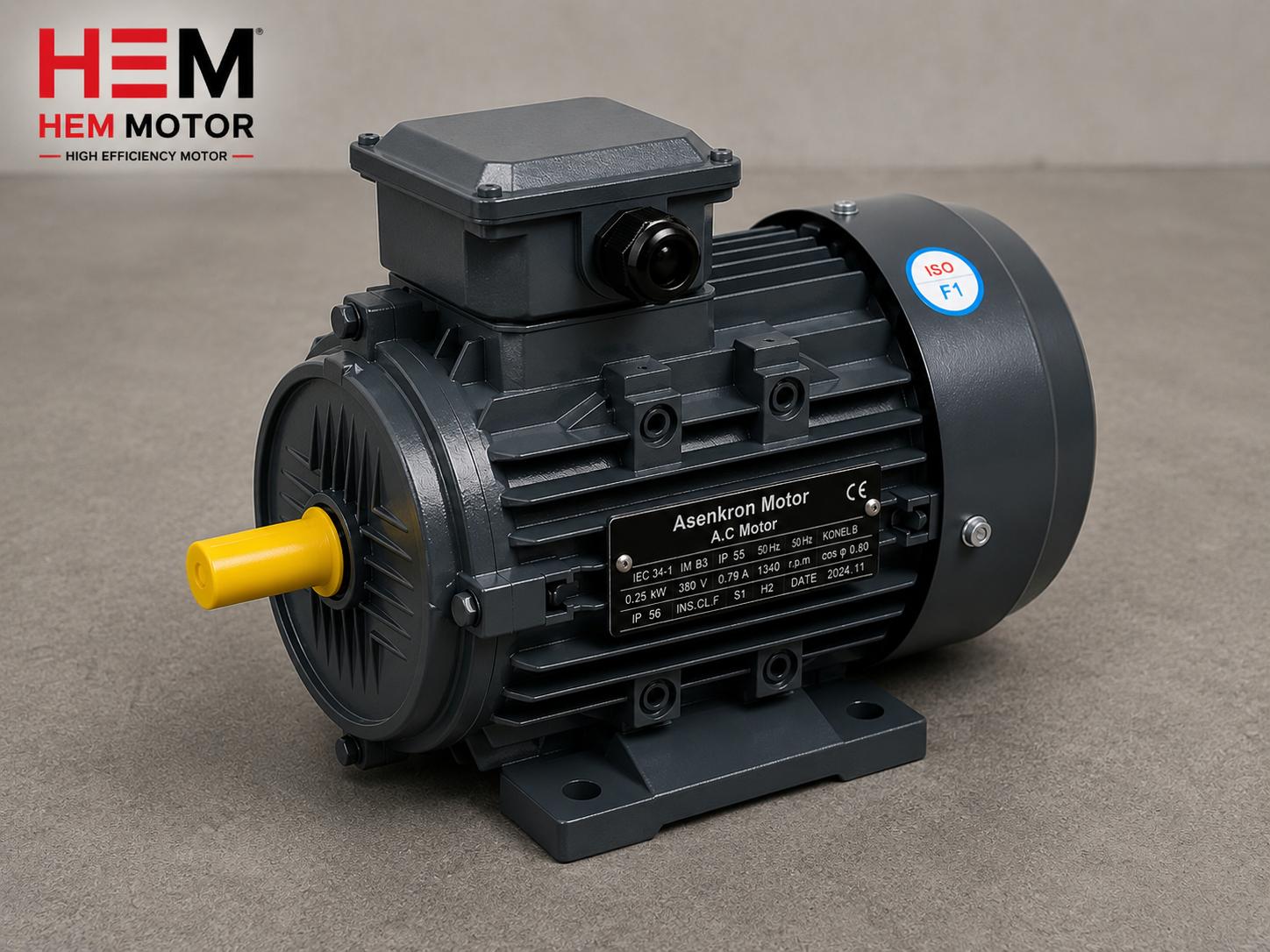
Noise Under Frequency Drive Operation
On motors operating with a frequency drive (VFD), the noise behaviour differs from a motor supplied directly from the grid. The drive feeds the motor with its switching frequency; this switching can create an additional magnetic "hum" or a fine high-pitched sound, especially at certain frequency and load points. For this reason, in an application that requires quiet operation and will run with a drive, setting the drive's switching frequency correctly is important for noise. A higher switching frequency often provides a quieter motor sound, but can increase drive losses; this balance is established according to the application.
An advantage of drive operation in terms of noise is that, in variable-flow applications, it can run the motor at low speed. When a fan or pump turns at a lower speed rather than full speed when needed, it both consumes less energy and runs noticeably more quietly. Therefore, in noise-sensitive applications such as HVAC and ventilation, drive operation provides a two-way benefit in terms of both energy saving and low dB. Because the efficiency of the motor's own cooling fan drops at low speeds, an external (forced) cooling fan is preferred where needed; this fan, too, is chosen to be low-noise so that the total sound level is kept under control.
Combining IE3 Efficiency with Quietness
IE3 Premium efficient motors are 100% copper-wound motors with cast iron frame options, designed for high efficiency and long service life. Because an efficient motor converts less of its losses into heat, its cooling requirement is relatively lower; this makes it easier to apply quiet fan solutions. In other words, IE3 efficiency and the low-dB target do not conflict; on the contrary, they support each other. Motors designed for HVAC, ventilation and fan applications are particularly suitable in this respect; our article on fan motor supply in HVAC projects addresses the noise and equivalent-selection dimension of these applications.
In Which Applications Is Low dB Critical?
The low-noise target does not have the same priority in every application. In some environments, noise is directly a matter of legal limits, worker health or user comfort. The main such applications are:
- Healthcare facilities: Hospital ventilation and air-handling units require low noise for patient comfort and rest.
- Hospitality and office buildings: In hotels, residences and offices, mechanical-plant noise directly affects user satisfaction.
- Facilities near residential areas: Plants operating at night and close to residential zones must comply with environmental noise limits.
- Studios and educational spaces: Background noise must be kept low in recording studios, conference halls and schools.
- Enclosed work areas: In confined spaces where the operator works close to the motor, noise matters for occupational safety and productivity.
In these applications, the dB value is as much a priority as power and efficiency in motor selection. By contrast, in open-air heavy-industry environments where noise is not a concern, a standard motor is often sufficient and additional investments such as quiet fans/silencers are not needed. The correct decision is to determine the application's real noise requirement and to invest neither more nor less than necessary.
Ambient Noise Limit and Measurement Logic
Motor noise is usually measured as a sound pressure level at a given distance and compared with the permissible noise limit of the environment where the application is located. Because these limits are low near residential, healthcare and hospitality facilities, the dB value must be evaluated together with the project requirement during motor selection. For the correct decision, not only the motor's catalogue noise value but also the installation environment, indoor/outdoor space, reflective surfaces and the contribution of other equipment must be taken into account.
Because the noise level is a logarithmic scale, two equally loud motors running together do not double the total noise but increase it by only a few dB; conversely, lowering a single motor's noise by a few dB is perceived by the ear as a noticeable reduction. Therefore, in a multi-motor facility, focusing on the few loudest motors is the most effective way to lower the total sound level. In addition, the floor, frame and fasteners on which the motor is mounted can transmit vibration to the structure; anti-vibration mounts and a suitable base design reduce structure-borne noise. In some cases, even if the motor itself is quiet, high noise can be heard in the environment due to poor installation; this shows that quiet operation is a whole completed by correct installation, not just motor selection.
The Correct Procurement Decision and Order Information
To procure the correct motor on the first attempt in an application requiring quiet operation, sharing the following information speeds up the process:
- Application type (fan, ventilation, pump, etc.) and the desired power-speed;
- The permissible noise limit of the environment or the target dB value;
- The mounting type (B3/B5/B35) and the existing motor nameplate (if any);
- Whether it will run with a frequency drive (noise behaviour differs under drive operation).
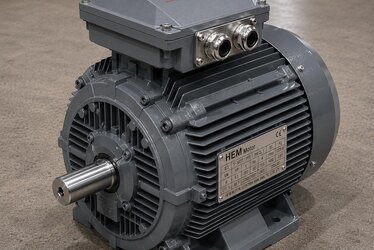
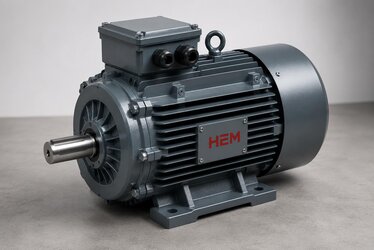
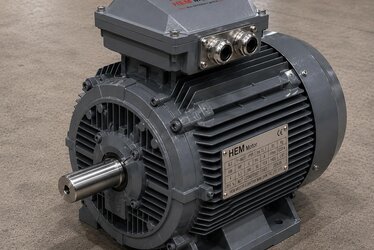
As HEM Motor, we offer IE3 and IE4 efficient, low-vibration motors from 0.55 kW to 355 kW suited to fan and ventilation applications. In projects targeting quiet operation, we recommend the appropriate fan/silencer configuration based on your application. For current electric motor prices and low-dB model recommendations, simply share your requirements with our technical team.
Frequently Asked Questions
What reduces motor noise the most?
In most motors the largest noise source is the aerodynamic noise of the cooling fan; therefore the most effective reduction methods are a quiet (optimised) fan, a silenced fan cowl and, where possible, choosing a lower-speed motor. In addition, a cast iron frame, quality bearings and good balancing reduce mechanically originated noise. The best result is achieved by applying these methods together.
Is a 4-pole motor quieter than a 2-pole motor?
Generally yes. Noise increases strongly with motor speed; a 4-pole (1500 rpm) motor is noticeably quieter than a 2-pole (3000 rpm) motor doing the same job. Therefore, in noise-critical applications, a lower-speed motor with a suitable transmission, where appropriate, is often the most economical silencing method.
Does choosing an IE3 efficient motor increase noise?
No; on the contrary, it can help. Because IE3 efficient motors convert less of their losses into heat, their cooling requirement is relatively lower and quiet fan solutions become easier to apply. Efficiency and quietness do not conflict; a well-designed IE3 motor can meet both the low energy consumption and the low-dB target together.