English
 Türkçe


A document showing a facility's energy identity goes beyond a formality about heating and lighting; it reveals how efficiently the building and the equipment inside it use energy. When it comes to industrial facilities and large buildings, a significant portion of total energy consumption comes from electric motors: pumps, fans, compressors, elevators, air handling units. For this reason, in the Energy Identity Certificate (BEP) and building energy performance assessment, the share of motor load is often the deciding element. Old motors with a low efficiency class drag energy performance down; switching to high-efficiency motors improves both the certificate and the real energy bill.
At HEM Motor, when supplying high-efficiency motors, we often recommend that a facility proceed with the logic of "draw up the motor inventory, identify those that consume the most and run the longest, and renew them first." This approach both raises the energy identity certificate performance and ensures the investment pays for itself fastest. In this article we cover why the motor share is so important in building energy performance, which motors should be replaced first, and how upgrading the efficiency class affects the investment decision. To build your facility's motor renewal plan together, you can get in touch with us from our electric motor prices page.
The Motor's Share in Building Energy Performance
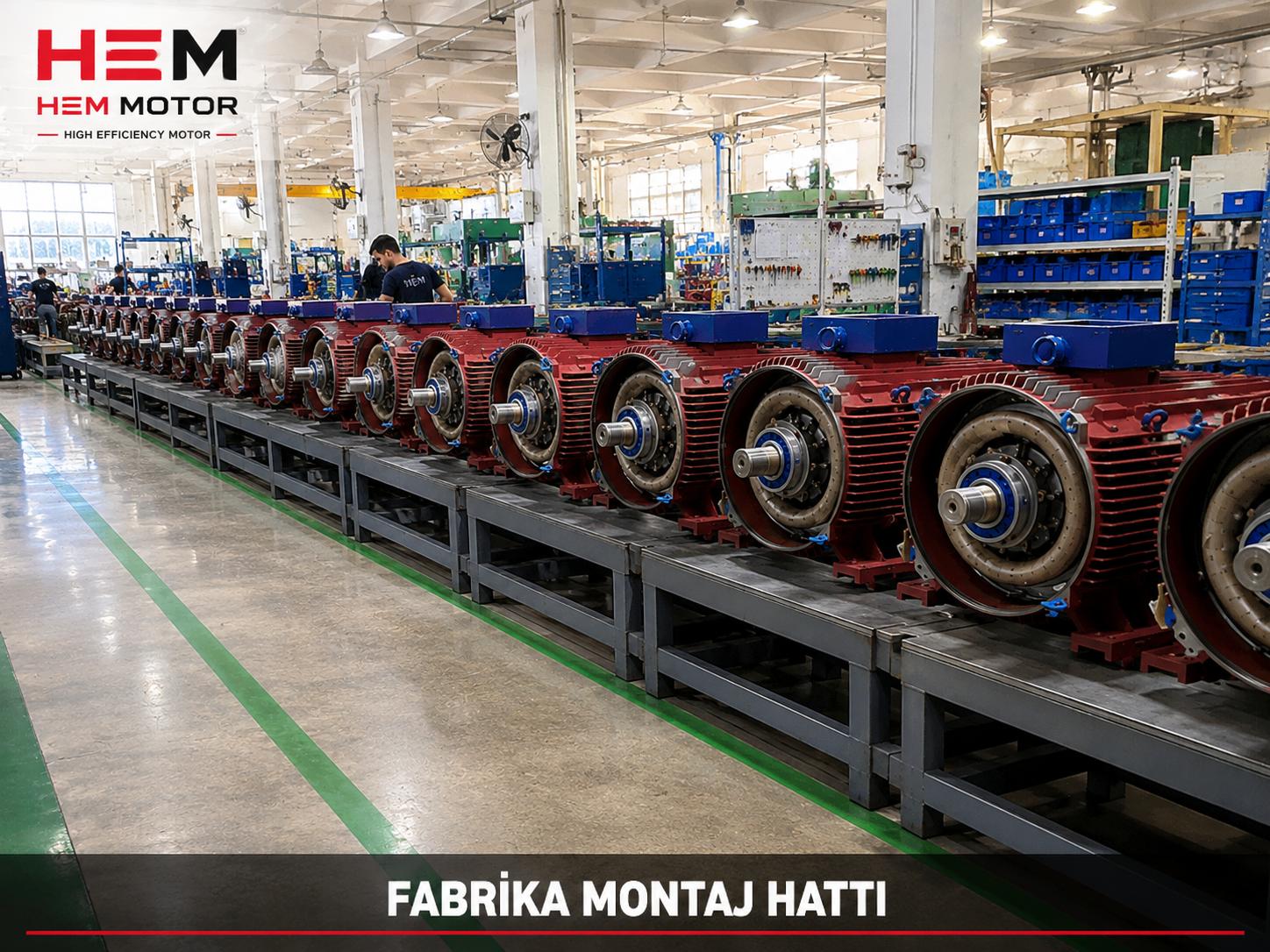
In industrial facilities and large commercial buildings, most electrical energy goes to rotating equipment, that is, to electric motors. The cost of the energy a motor consumes over its lifetime is many times its purchase price; especially in a motor running all day, the energy expense quickly overshadows the motor's initial price. For this reason, a business that genuinely wants to improve building energy performance should turn its lens to the motor fleet.
Two factors are decisive here:
- Efficiency class: An old IE1/IE2 class motor consumes markedly more energy doing the same work than an IE4 Super Premium motor. The difference grows the longer the motor runs.
- Operating hours: The inefficiency of a pump motor running thousands of hours a year is reflected directly in the bill; in a motor running a few hours a month, the same inefficiency remains insignificant.
The product of these two factors determines which motor should be replaced first. The difference between nameplate efficiency and the real efficiency measured in the field must not be overlooked either; we addressed this topic in our difference between nameplate efficiency and field efficiency article. Making the real savings calculation with field efficiency properly grounds the certificate and investment decision.
The Direction of Efficiency Regulation
Energy efficiency regulations foresee the gradual withdrawal of low-efficiency motors from the market. For certain power ranges, an IE3-and-above efficiency class has become mandatory; for larger powers, the IE4 threshold is on the agenda. So renewing an old motor is no longer merely an economic choice but often a requirement of regulatory compliance as well. We compiled which power requires which class from which date in our IE3 and IE4 efficiency mandate article.
Which Motors Should Be Replaced First? The Inventory Logic
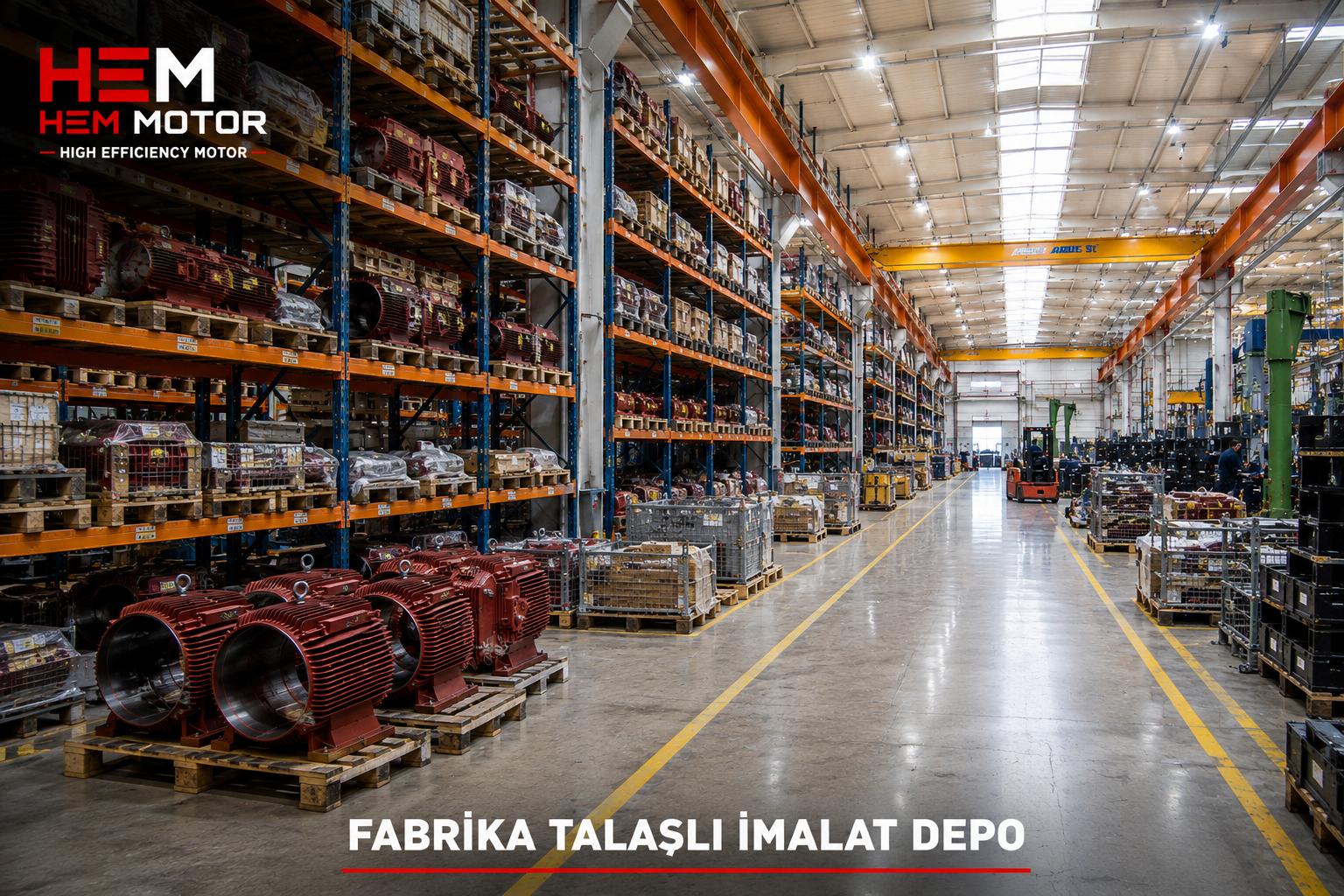
Renewing all of a facility's motors at the same time is rarely necessary and usually uneconomical. The right approach is to draw up a motor inventory and prioritize. The motors that will raise the energy identity certificate performance fastest and repay the investment in the shortest time are these:
- Long-running + high-power motors: Continuously running main process pumps, fans, and compressors. The efficiency gain in these means a deduction from the biggest bill.
- Old motors in a low efficiency class: IE1/IE2 class motors or motors that have lost efficiency through rewinding over the years. We examined post-rewind efficiency loss in our rewind the motor or buy new article.
- Variable load in pumps and fans: Pumps and fans that do not run at continuous constant load and are operated throttled. In these, a high-efficiency motor + frequency drive combination provides large savings.
When drawing up the inventory, each motor's power, efficiency class, daily/annual operating hours, and current condition should be recorded. We explained step by step how to do this work in our preparing for an energy efficiency audit and motor inventory article.
The Effect of Efficiency Class Upgrade on the Investment Decision
Switching to a high-efficiency motor is not a cost but an investment with a payback period. The concept to look at when deciding is not just the motor's purchase price but the total cost of ownership (TCO) over its lifetime. TCO handles the purchase + energy + maintenance items together and in most cases shows that the energy item is many times larger than the purchase price. We detailed how the TCO calculation is done in our total cost of ownership (TCO) article.
For the investment decision, a practical priority order can be set up as follows:
- First replace the longest-running and highest-power motors with a high-efficiency class; these are the fastest-repaying items.
- Provide extra savings by using speed control instead of throttling on pumps and fans.
- Replace small, low-running motors with a high-efficiency equivalent at the end of their natural life.
- Document the renewal and reflect it in both energy identity certificate performance and internal reporting.
Measuring and documenting the annual savings obtained after renewal both shows the investment has truly paid off and strengthens subsequent investment decisions. We addressed this measurement and documentation process in our measuring and documenting annual energy savings article. At HEM Motor, we support this renewal process with our high-efficiency motor range through fast delivery from stock and exact-equivalent selection; our IE4 high-efficiency electric motors page is a good starting point.
What You Should Share With Us for the Renewal Plan
- The nameplate data of the motors you are considering replacing (power, speed, efficiency class)
- The approximate daily/annual operating hours of each motor
- The load type (continuous constant, variable, stop-start)
- If a pump/fan, whether it runs throttled (VFD potential)
- If the facility has an energy performance or certificate target
With this information we prioritize which motors should be renewed first and deliver exact-equivalent, mechanically compatible high-efficiency motors quickly from stock.
Speed Control on Pumps and Fans: Hidden Savings
An often-overlooked source in building and facility energy performance is the way pumps and fans are operated. In many facilities, pumps and fans turn at full speed, and the required flow is adjusted by throttling a valve or damper. This is like pressing the gas pedal all the way down while pressing the brake at the same time: the motor draws full power, but part of the energy is wasted in throttling losses.
In pumps and fans, flow is directly related to speed; while the power consumed is related to the cube of speed (affinity law). That is, dropping the speed a little provides a much larger reduction in power consumption. For this reason, using a high-efficiency motor together with a frequency drive, switching from throttling to speed control, is one of the biggest savings items in pumps and fans. We detailed the real gain of the affinity law in our savings in pumps and fans with the affinity law article; and the efficient-motor-and-drive combination in our high-efficiency motor + frequency drive article.
In a facility that wants to improve energy identity certificate performance, it is necessary to review not only replacing the motor with a high-efficiency class but also the operating method. A pump operating throttled, even if switched to an IE4 motor, loses most of the potential savings if speed control is not adopted.
Correct Sizing: The Oversized Motor Trap
Another factor affecting energy performance is sizing the motor correctly for the load. A situation frequently encountered in the field is motors selected oversized "just in case." An oversized motor runs at a load far below its rated power, and at this point its efficiency and power factor drop. The result is both wasted energy and a reactive penalty risk.
The load range in which a motor runs most efficiently is usually within a certain band of its rated power; it is wanted neither far below nor far above. So during renewal, instead of blindly replacing the old motor with the same power, it is important to evaluate the actual load and select the right size. We addressed at what load a motor should be run in our motor load ratio and correct sizing article. We examined the effect of power factor on the reactive penalty in our power factor and reactive penalty article.
A Holistic View in the Renewal Decision
In conclusion, when renewing motors for the energy identity certificate and building energy performance, three axes must be evaluated together: the right efficiency class (IE4/IE5), correct sizing (power suited to the load), and the right operating method (speed control where needed). When these three are handled together, both certificate performance and the real energy bill improve to the highest degree. Replacing the motor alone is one step; but to reach the real potential, the system must be seen as a whole. At HEM Motor, we support your renewal plan with this holistic view, using high-efficiency motors that can be delivered quickly from stock.
Frequently Asked Questions
Do I need to replace all motors at once for the energy identity certificate?
No. The right approach is to draw up a motor inventory and first replace the longest-running and highest-power motors with a high-efficiency class. These both raise certificate performance fastest and repay the investment in the shortest time. Small, low-running motors can be renewed at the end of their natural life.
How do I tell which motor will save the most?
Two factors are decisive: efficiency class and annual operating hours. The motor whose product of these two is largest will save the most when renewed. That is, a low-efficiency, long-running motor is the highest-priority candidate. A motor inventory makes this prioritization easier.
How long does switching to a high-efficiency motor take to pay back?
This varies with the motor's power, operating hours, and current efficiency class; a single period cannot be given. For the decision you should look not at the purchase price but at the lifetime total cost of ownership (TCO). If you share your nameplate data and operating hours, we can evaluate together how long each motor will take to repay.