English
 Türkçe

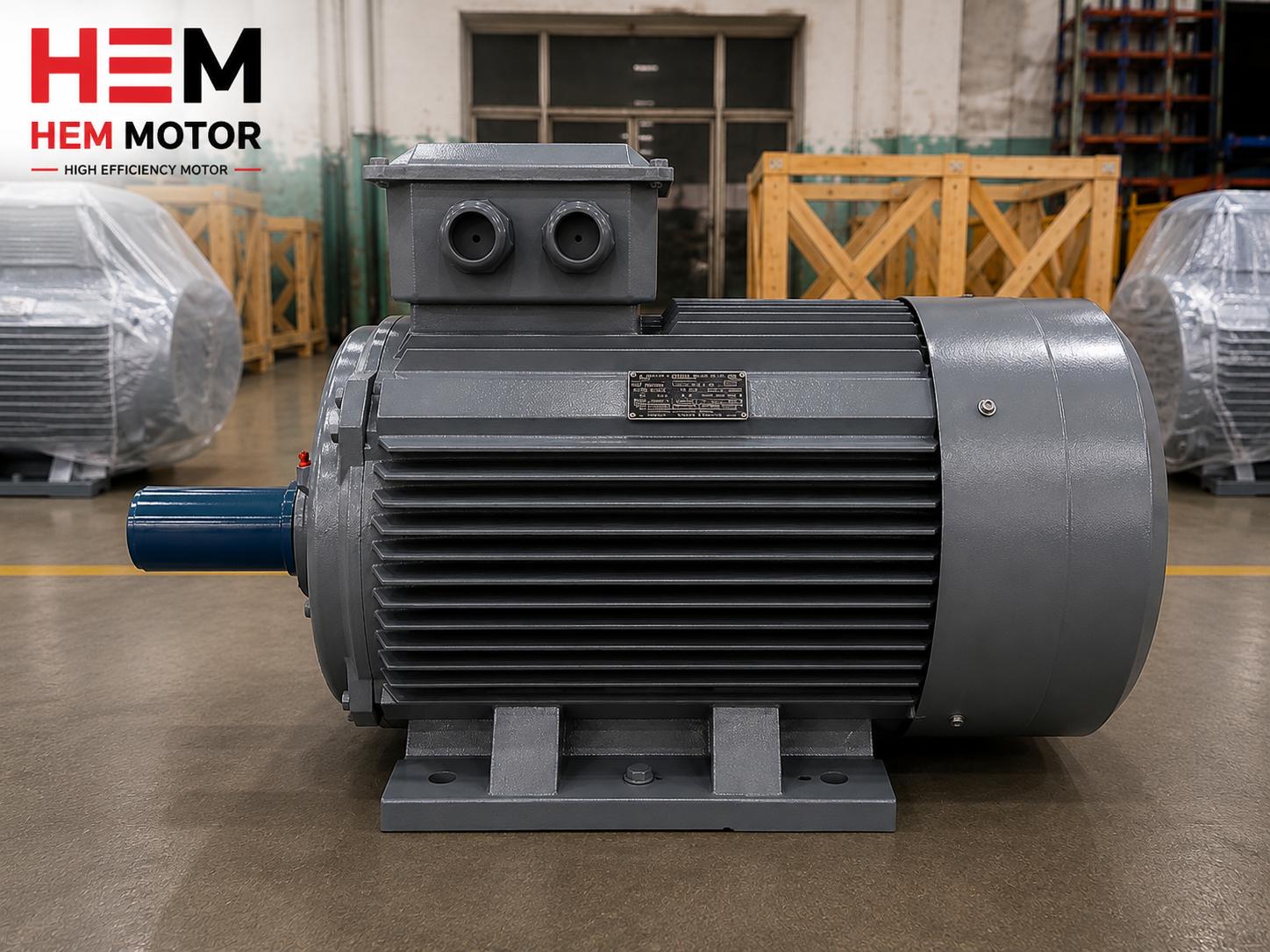

When it comes to fan drives in ventilation and HVAC projects, two approaches face off: on one side, classic fans driven by IE4/IE5 efficient asynchronous motors, and on the other, EC (electronically commutated) fans with built-in electronic control. Project owners, consultants and facility managers frequently encounter the question "efficient motor or EC fan, which is more correct?" There is no single right answer to this question, because the application areas in which each solution is strong differ. In this article we compare the efficient motor with the EC fan in terms of efficiency, control, power range, maintenance and supply, addressing which is more sensible in which application from the standpoint of a motor manufacturer.
At HEM Motor our aim is not to defend one technology against the other, but to help you select the solution that fits the project's real need with the right criteria. In some applications the EC fan provides a clear advantage, while in high-power, continuously running systems fans with IE4/IE5 asynchronous motors can be both economical and reliable. Below we compare the two approaches systematically.
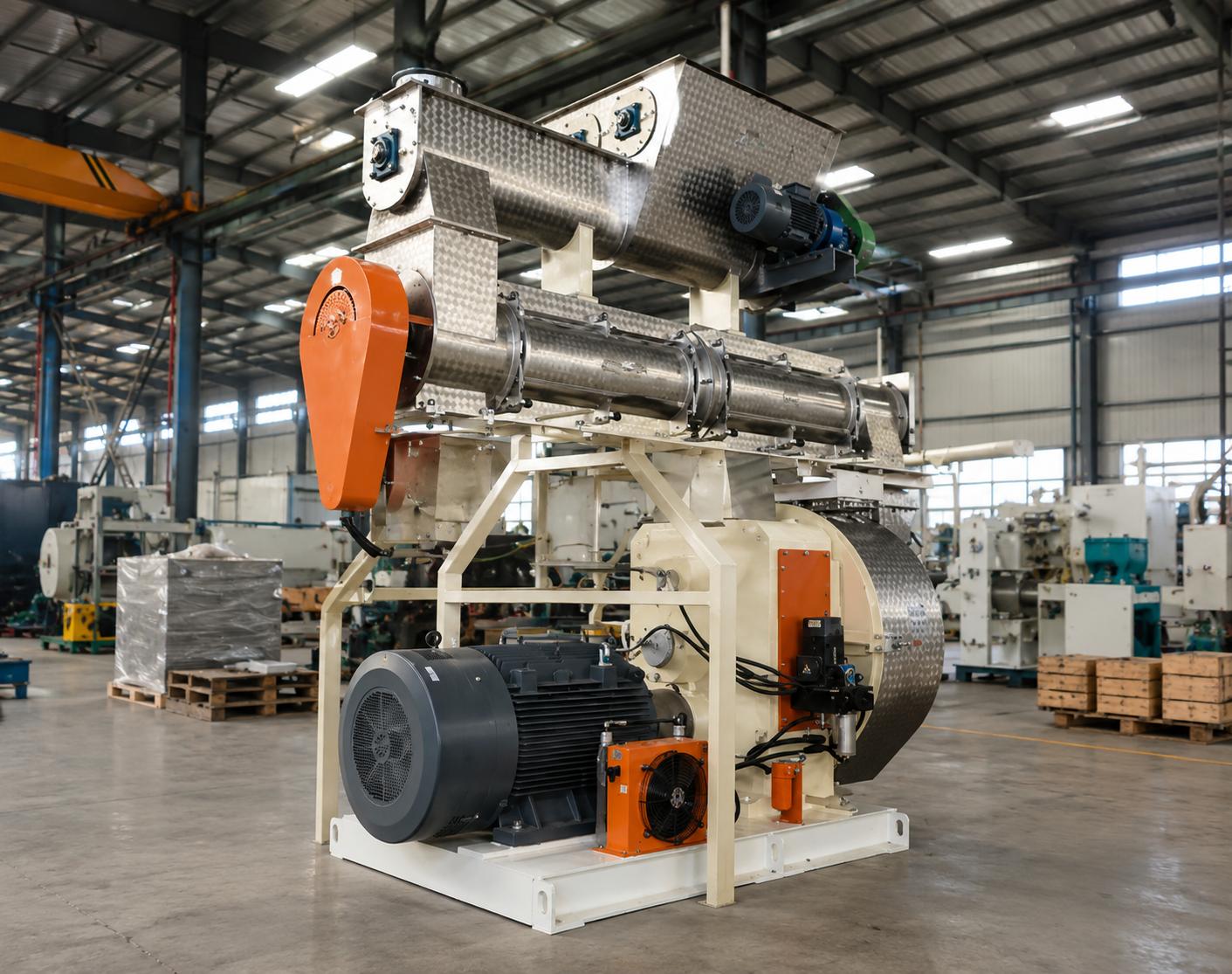
The Fundamental Difference Between EC Fan and Efficient Asynchronous Motor
An EC fan is a compact fan unit driven by a brushless DC (BLDC-like) motor, with speed control performed via a built-in electronic board. A fan with an efficient asynchronous motor, on the other hand, is based on an IE4 or IE5 class asynchronous motor driving a fan blade, with speed control performed by an external variable frequency drive when needed. The fundamental differences between the two approaches:
- Control architecture: In an EC fan, speed control and motor are combined in a single unit; in a fan with an asynchronous motor, speed control is performed with an external variable frequency drive.
- Power range: EC fans generally stand out in the small and medium power band; in high-power applications, fans with asynchronous motors are more common.
- Part-load efficiency: EC fans maintain efficiency well at low speed; asynchronous motors, in the IE4/IE5 class and with the right drive, offer strong efficiency at part load.
- Maintenance and spare parts: Fans with asynchronous motors are a technology that has been used for decades, with widely available spare parts and service; in EC fans, the electronic board is a critical component.
These differences are the main axes determining which solution is appropriate. The EC fan stands out in low-power applications requiring fine modulation, while fans with asynchronous motors are strong in projects requiring high power and long life.
Efficiency Comparison: Which Solution Saves More?
Efficiency is the most debated dimension of this comparison, and the answer depends on the power range and operating profile:
- EC advantage at low power: At low powers (for example, terminal units, fan coils, small grille fans), EC fans offer very good efficiency thanks to optimised built-in electronic control, and are particularly advantageous at part load.
- Asynchronous advantage at high power: In high-power air handling units and exhaust fans, IE4/IE5 asynchronous motors are both an economical and efficient solution with their high efficiency class and the right drive.
- Operating profile is decisive: A fan that mostly runs at full load and constant speed operates very efficiently with an IE4/IE5 asynchronous motor; in small fans running continuously at part load and modulated, EC stands out.
- System efficiency: Beyond the motor's rated efficiency, the fan's aerodynamic design and the correct sizing of the system also determine total energy consumption.
Therefore the answer to "which is more efficient?" depends on the application. In small, modulated applications EC; in large, continuous and constant-speed applications IE4/IE5 asynchronous is usually more sensible. Our article on fan motor supply in HVAC projects, which addresses efficiency-class selection in HVAC fan motor supply, details the project-based approach.
Power, Scale and Application Type
One of the most decisive criteria of the right choice is the power scale of the application. The following distinction provides direction in most projects:
- Low power, many units: In applications containing many small fans, such as fan coils, terminal units and small grille fans, EC fans can be practical and efficient.
- Medium-high power, central system: In central and high-power systems such as air handling units, exhaust fans and car park ventilation, fans with IE4/IE5 asynchronous motors are a strong choice.
- High temperature and special environment: In smoke exhaust, high temperature or harsh environment applications, durable asynchronous motors with cast iron bodies provide a reliability advantage.
- Industrial exhaust and aspiration: In environments containing dust, moisture or chemicals, asynchronous motors with robust bodies and high IP protection are preferred.
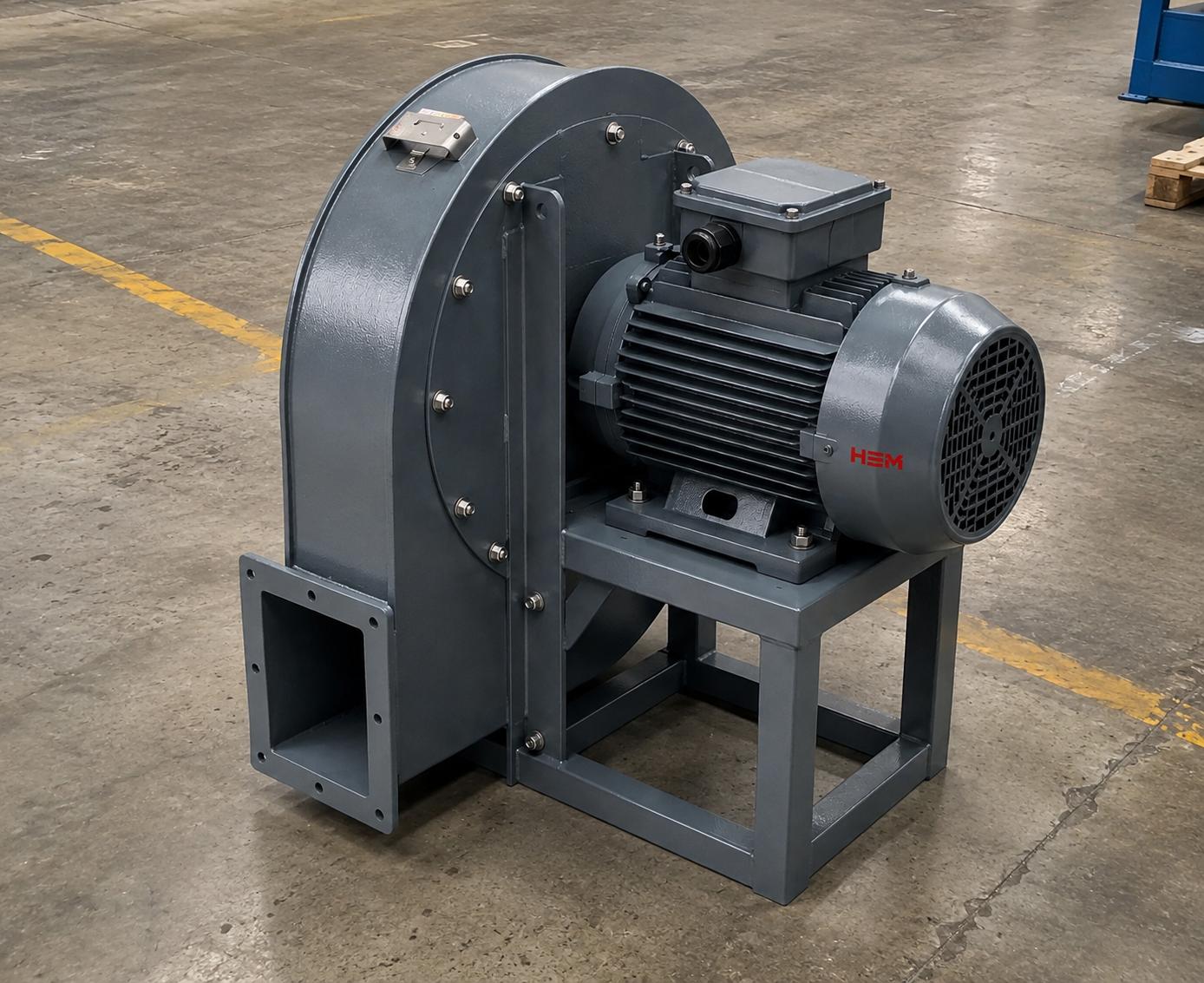
In high-power, continuously running ventilation systems, durable and efficient asynchronous motors offer the advantage of long life and easy servicing. Our ventilation electric motors product group meets this need with power, speed and connection options suitable for fan and ventilation applications.
Maintenance, Spare Parts and Long Life
The total cost of ownership of an HVAC system is determined not only by energy consumption but also by maintenance, spare parts and serviceability. The two solutions differ in this respect:
- Fan with asynchronous motor: A proven technology of decades; spare motors and service are widely available nationwide. In the event of a failure, motor replacement is fast and economical; IE4/IE5 motors are long-lived.
- EC fan: Compact and low-vibration; however, the electronic board is a critical component, and its failure usually requires a complete unit replacement. High temperature and harsh environments can strain the electronics.
- Stock and lead time: In large projects, the availability of spare motor stock and fast supply are critical for continuity of production and comfort.
- Serviceability: In systems with asynchronous motors, operations such as bearing replacement and winding maintenance can be done on site, whereas in an EC fan an electronic fault usually requires unit replacement.
For this reason, in high-power, continuously running systems where long life is expected, fans with IE4/IE5 asynchronous motors are often advantageous in terms of total cost. For the flexibility an efficient motor provides together with a variable frequency drive, our article on energy savings with high-efficiency motors and VFD explains how the asynchronous solution is competitive in modulated operation. For cold-storage and special-environment fan applications, our guide on fan and compressor motors for cold storage is complementary.
Which One in Which Case? A Practical Decision Guide
To summarise, you can make the choice with the following practical framework. No solution is always superior; the right decision depends on the application's requirements:
- Low power + many units + modulation → EC fan is usually practical and efficient.
- Medium-high power + central system + long life → fan with IE4/IE5 asynchronous motor is often more economical and reliable.
- Harsh environment + high temperature + dust/moisture → durable asynchronous motor provides a reliability advantage.
- Widespread service + fast spare parts important → fan with asynchronous motor is advantageous.
At HEM Motor we offer IE4 and IE5 efficient asynchronous motor solutions for fan drives in your ventilation and HVAC projects, determining together the most suitable motor according to your application's power, operating profile and environmental conditions. If you wish to carry out motor selection, quotation and lead-time evaluation for your project, you can contact us for up-to-date electric motor prices and stock availability.
Comparison in Terms of Noise, Vibration and Comfort
In HVAC systems, especially in spaces where people are present, noise and vibration comfort is an important criterion. The two solutions offer different advantages in this respect, and the right choice depends on the application's comfort expectation:
- EC fan noise profile: EC fans can offer quiet operation in low-power applications thanks to their compact structure and efficient operation even at low speed.
- Asynchronous motor fan noise control: Fans with IE4/IE5 asynchronous motors, whose speed is modulated with a variable frequency drive, can control the noise level by reducing speed; comfortable operation is achieved together with the right fan selection.
- Vibration and balancing: A well-balanced fan with an asynchronous motor runs with low vibration for a long life; this is important for both comfort and mechanical durability.
- Mounting and isolation: In both solutions, correct anti-vibration mounts and installation reduce the noise transmitted from the body to the structure.
In spaces with high comfort expectations, the fan design and mounting details are as decisive as the right motor selection. Our article on fan motor selection in aspirator and dust collection systems, which addresses fan motor selection in industrial ventilation applications, details the industrial side.
A Total Cost of Ownership (TCO) Perspective
Looking only at the purchase price when evaluating a ventilation solution can be misleading. The right decision is made by considering the total cost of ownership (TCO). TCO includes the following components:
- Initial investment: The purchase cost of the solution varies according to the power range and the number of units.
- Energy cost: In continuously running systems, energy is the largest item of TCO; the efficiency class is therefore decisive.
- Maintenance and spare parts: The widespread service and economical spare motors of fans with asynchronous motors reduce maintenance cost in the long term.
- Failure and downtime cost: In critical systems, a fan stopping causes comfort or production loss; fast spare-parts supply reduces this risk.
- Life: A long-lived and serviceable solution improves TCO by reducing the frequency of replacement.
Evaluated with this holistic view, fans with IE4/IE5 asynchronous motors usually come out ahead in high-power, continuously running systems, while EC fans can take the lead in low-power and modulated applications. At HEM Motor we help you determine together the motor solution that fits your project's TCO analysis.
Frequently Asked Questions
Is an EC fan always more economical than an efficient asynchronous motor?
No, not always. EC fans offer very good efficiency especially at low power and in applications running continuously at part load and modulated. However, in high-power systems running mostly at full load and constant speed, IE4/IE5 efficient asynchronous motors also provide very high efficiency and are usually more economical and longer-lived. The right decision depends on the application's power range and operating profile; we recommend evaluating this together.
Which should be preferred in a high-power exhaust or air handling fan?
In high-power central ventilation, exhaust and air handling unit applications, fans with IE4/IE5 efficient asynchronous motors are usually more suitable. In these systems, asynchronous motors offer a reliable, durable and serviceable solution at high power; when speed control is needed, modulation is provided with a variable frequency drive. The wide availability of spare parts and service also secures continuity in large projects.
How is speed control provided in a fan with an asynchronous motor?
In fans with asynchronous motors, speed control is provided by an external variable frequency drive (VFD). The VFD modulates the fan's flow by adjusting the motor's speed as needed and saves energy at part load. IE4/IE5 efficient motors offer high efficiency over a wide operating range together with the drive. In this way, a fan with an asynchronous motor forms a competitive alternative to the modulation flexibility of an EC fan at high powers.