English
 Türkçe

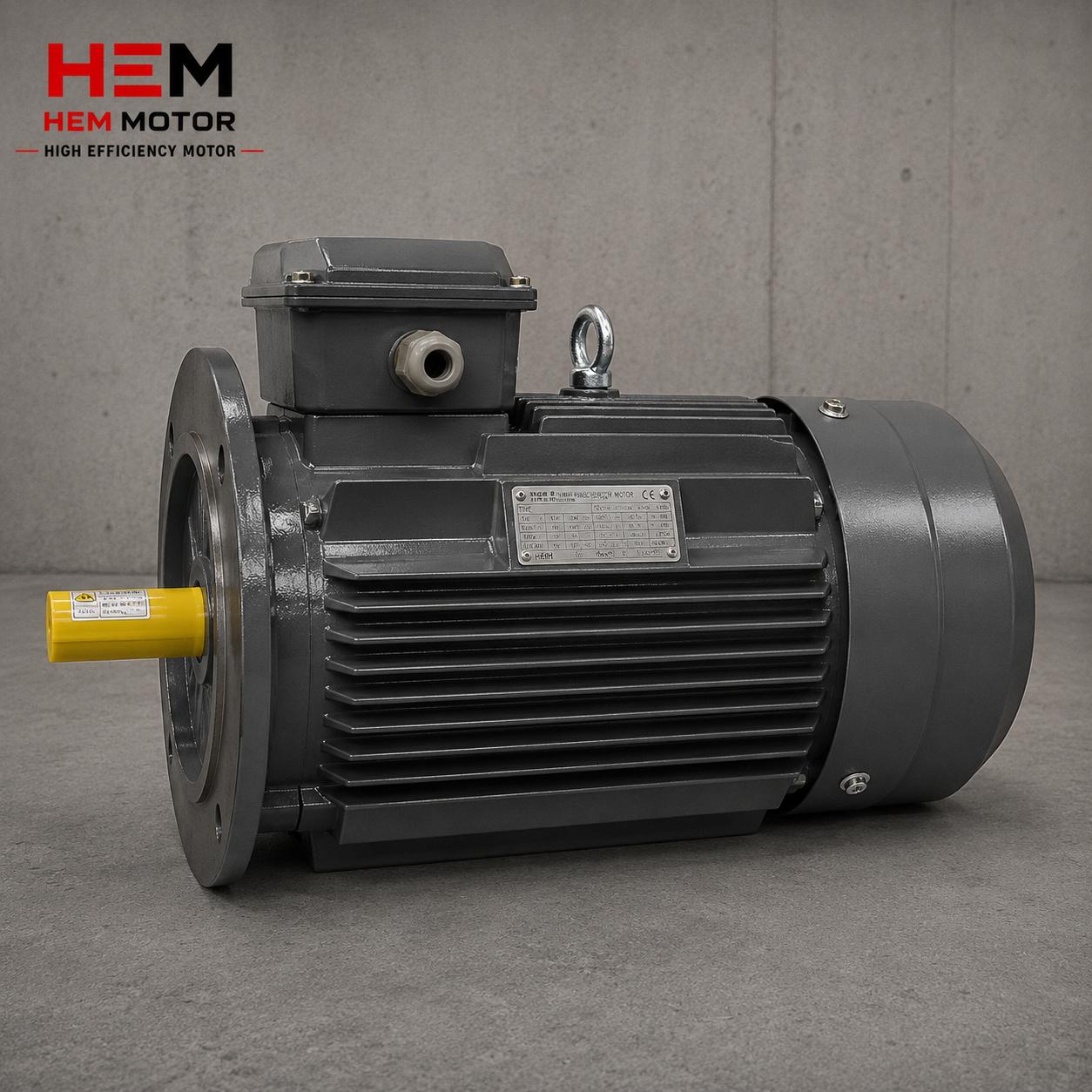

One of the most critical components that determines the efficiency of an asynchronous motor, its starting behavior, and which IE class it can reach is the often overlooked squirrel-cage rotor bar. No matter how carefully the stator windings are designed, when the material of the rotor bar is chosen incorrectly, the efficiency ceiling the motor can reach is limited from the outset. In this article we compare in detail the two fundamental materials used for the rotor bar in asynchronous motors, namely die-cast aluminum and copper, and the effect of these two options on starting torque, efficiency, inertia, and overall quality. The aim is to clearly demonstrate why selecting the right rotor material for the right application is so decisive.
How Does a Squirrel-Cage Rotor Work?
At the heart of an asynchronous motor lies a rotor made of conductive bars embedded inside it. These bars are connected to each other at both ends by short-circuiting rings, and because the resulting structure resembles the cage of a squirrel, it is referred to by this name. The rotating magnetic field created by the stator windings induces a current in the rotor bars; this induced current creates its own magnetic field, and the interaction of the two fields produces the torque that turns the rotor. Therefore, how easily the current passing through the rotor bars flows, that is, the electrical resistance of the bar material, directly determines the behavior of the motor.
At this point, a fundamental rule of physics comes into play: when current passes through a conductor, a loss in the form of heat occurs due to resistance. The lower the resistance of the rotor bar, the smaller this loss. Since rotor losses constitute a significant part of the motor's total losses, the choice of bar material is directly reflected in the efficiency. It is precisely here that the fundamental difference between copper and aluminum becomes apparent.
Why Is Rotor Resistance So Important?
Rotor resistance affects not only the efficiency but also the starting torque and the slip behavior. A low-resistance rotor produces fewer losses in normal operation and turns with lower slip; that is, it operates closer to the synchronous speed. However, this same low resistance can limit the torque produced at the moment of starting. A high-resistance rotor, on the other hand, can produce higher torque at start-up, but it means more losses and higher slip in normal operation. For this reason, the selection of rotor material is always a matter of balance that must be evaluated together with the needs of the application.
Copper Rotor: The Key to High Efficiency
Copper has a significantly lower electrical resistance than aluminum. This means that when the rotor bar is made of copper, the losses occurring within the bar are reduced. Lower rotor loss is directly reflected in the motor as higher efficiency. Especially when it comes to reaching the high efficiency classes, that is, IE4 and above, the copper rotor often becomes a decisive choice. This is because it is difficult to reach the targeted efficiency levels in these classes through stator improvements alone; the rotor losses must also be reduced.
The advantages provided by the copper rotor can be summarized under the following headings:
- Lower rotor loss: Thanks to the low resistance of copper, the heat loss occurring in the bars is reduced, and the motor operates more efficiently.
- Higher efficiency class: The copper rotor is an important enabler in reaching IE4 and higher classes.
- Lower operating temperature: Reduced losses allow the motor to run cooler; this is reflected positively in winding and bearing life.
- Lower slip: The low-resistance rotor turns the motor closer to the synchronous speed and provides a more stable speed.
The Challenges of the Copper Rotor
These advantages of copper bring with them some manufacturing challenges. The melting temperature of copper is much higher than that of aluminum; this complicates the die-casting processes and requires special mold materials and more advanced production techniques. In addition, copper is a denser and more expensive material than aluminum. For this reason, copper-rotor motors are generally produced at a higher cost and are mostly preferred in long-running applications where high efficiency is critical. The high density of copper also increases the inertia of the rotor somewhat; this is a factor that affects the starting behavior.
Die-Cast Aluminum Rotor: The Common and Economical Solution
The die-cast aluminum rotor is the most widely used solution in industry, and there are very solid reasons for this. The melting temperature of aluminum is low; this makes it possible to produce the rotor bars and the short-circuiting rings quickly and economically in a single die-casting operation. Molten aluminum is injected under pressure into the slots in the rotor lamination stack, and in the same operation both the bars and the end rings are formed as a single whole. This production speed makes the die-cast aluminum rotor extremely attractive for standard applications.
The prominent features of the die-cast aluminum rotor are as follows:
- Fast and economical production: Single-step die casting reduces cost in mass production and shortens production time.
- Low inertia: The low density of aluminum reduces the rotor inertia; this provides an advantage in applications requiring frequent starting and stopping.
- Sufficient efficiency: A large part of the IE2 and IE3 classes can be comfortably met with a die-cast aluminum rotor.
- Wide field of use: The die-cast aluminum rotor is sufficient in most standard drive applications such as pumps, fans, and conveyors.
Why Is Low Inertia Important?
The low density of aluminum reduces the moment of inertia of the rotor. Inertia expresses the resistance that a rotating mass shows to a change in speed. A rotor with low inertia starts faster and stops faster; this is a clear advantage in applications requiring positioning, frequent engagement and disengagement, and quick response. In contrast, the higher inertia of the copper rotor generally does not create a disadvantage in continuously running applications where efficiency is the priority. For this reason, inertia is a parameter that must be evaluated according to the application profile in material selection.
The Factor That Determines Quality: Casting Porosity
In die-cast aluminum rotors, the most critical element that determines quality is the porosity that may occur during casting. While the molten aluminum is being injected into the slots during die casting, if the air cannot be fully evacuated or the filling remains incomplete, small voids and pores may form inside the bars. These pores reduce the effective cross-sectional area of the bar, increasing the resistance and preventing the current from flowing smoothly. As a result, both the efficiency drops and an uneven current distribution between the bars can occur.
Casting porosity can create serious performance differences between two rotors that appear identical. In a well-controlled casting process, porosity is minimized; the bars attain a full, continuous, and homogeneous structure. In a poorly controlled process, on the other hand, porous bars lead to heating of the motor, efficiency loss, and even unbalanced operation. For this reason, the quality of a motor with a die-cast aluminum rotor largely depends on how well the manufacturer controls the casting process. In motors supplied from a reliable source, this process is managed meticulously; in the motors supplied from HEM Motor's stock as well, rotor quality is important in this respect.
The Consequences of Porosity
- Increased rotor resistance: Voids reduce the effective cross-section of the bar, the resistance increases, and the losses rise.
- Efficiency loss: High resistance directly lowers efficiency and makes it difficult to reach the targeted IE class.
- Unbalanced current distribution: Current is not distributed evenly between porous bars; this can lead to local overheating.
- Vibration and noise: Unbalanced rotor behavior can manifest itself as mechanical vibration and noise.
Which Rotor for Which Application?
The selection of rotor material must always be considered together with the requirements of the application. In continuously running applications where high efficiency is critical and energy cost is high, the copper rotor pays for itself in the long run thanks to the low loss and high efficiency it provides. In contrast, in standard industrial drives, in applications requiring frequent starting and stopping and where cost is the priority, the die-cast aluminum rotor is the most sensible solution. On the subject of selecting a motor at the right power and speed, our content on 55 kW electric motor selection offers a complementary perspective.
When selecting the right rotor material, the following steps can be followed:
- Determine the annual operating hours and the load profile of the motor; in motors that run a lot, efficiency is the priority.
- Clarify the IE class you are targeting; for IE4 and above, a copper rotor is most likely necessary.
- Evaluate the starting frequency of the application; if there is frequent starting, low inertia provides an advantage.
- Take the unit price of energy into account; a high electricity price makes the efficiency advantage of the copper rotor more valuable.
To understand how efficiency changes with the load point, you can review our content on the partial load efficiency curve, and for the correct motor matching in pump applications, our article on centrifugal pump motor selection.
Efficiency, Cost, and Lifetime Evaluation
The rotor material decision should not be made by looking only at the purchase price. The major part of the money a motor spends over its lifetime is not the purchase price but the electricity it consumes. For this reason, a copper-rotor motor that is more expensive but more efficient can be more advantageous in terms of total cost over its lifetime in a heavily running application. In contrast, in a lightly running application, the economic superiority of the die-cast aluminum rotor motor is preserved. The decision should not be an emotional preference but an engineering evaluation based on the operating profile and the energy cost.
In conclusion, the rotor bar material is an invisible but decisive component of the motor. When the right material is chosen in the right application, both efficiency and reliability are gained. To quickly supply motors with the right rotor quality across a wide power range from stock, the electric motor solutions offered by HEM Motor provide technical support in selecting the efficiency class and rotor type suitable for your application.
How Does the Production Process Affect Performance?
As much as the rotor bar material, how this material is processed also determines the performance of the motor. In die-cast aluminum rotors, the pressure applied while filling the molten metal into the slots, the mold temperature, and the cooling rate directly affect the density and homogeneity of the bars. In a casting made with insufficient pressure, the melt cannot fully reach all the voids and micro-voids remain inside. If the mold is too cold, the metal solidifies early and the filling is incomplete. Therefore, a good casting process requires the parameters to be carefully controlled.
In copper rotors, the process is even more sensitive. The high melting temperature of copper requires the mold materials to withstand this temperature and the casting equipment to be specially designed. Some manufacturers, instead of casting in copper rotors, prefer the method of placing pre-manufactured copper bars into the slots and soldering them to the end rings. This method largely eliminates the risk of casting porosity but increases the labor cost. Whichever method is used, the aim is for the bars to attain a full, continuous, and low-resistance structure. These details in the production process can create visible performance differences even between two rotors made of the same material.
The main points to be considered when evaluating production quality are as follows:
- Casting integrity: The bars being void-free and continuous is the basic condition for low resistance and high efficiency.
- Lamination stack quality: The rotor laminations being thin and insulated reduces eddy current losses and contributes to efficiency.
- Balancing: Dynamic balancing of the rotor reduces vibration and extends bearing life.
- Heat treatment: In some applications, the heat treatment applied to the rotor improves the bar properties and makes the performance stable.
Starting Torque and Slot Geometry
What determines rotor performance is not only the bar material but also the shape of the bars and the slot geometry. The cross-sectional shape of the bar is used to adjust the balance between the torque at the moment of starting and the efficiency in normal operation. Deep-slot or double-cage designs produce high starting torque by temporarily increasing the rotor resistance at the moment of starting thanks to the skin effect; as the motor accelerates, this effect decreases and the rotor behaves with low resistance in normal operation. In this way, both a good starting torque and high operating efficiency can be combined in the same motor.
This design approach must be evaluated together with the rotor material selection. For example, in applications requiring high starting torque such as conveyors or crushers, the slot geometry is designed to bring the starting behavior to the fore, while in continuously and efficiently running pump-fan applications, the geometry is chosen to prioritize efficiency. Optimizing the material and the geometry together ensures that the motor both produces the right torque and reaches the targeted efficiency class. For this reason, the rotor should not be treated as an isolated component but as an integral part of the entire motor design.
Frequently Asked Questions
Is a copper rotor always better than a die-cast aluminum rotor?
No. A copper rotor has lower resistance and higher efficiency, but it is more expensive and its inertia is higher. In continuously running applications where high efficiency is critical, the copper rotor is advantageous; in standard applications requiring frequent starting and where cost is the priority, the die-cast aluminum rotor is more sensible. The right choice depends on the application.
Is a copper rotor essential for an IE4 class motor?
In most cases, yes. To reach the targeted efficiency levels in IE4 and higher classes, the rotor losses must be reduced, and the low resistance of copper becomes decisive in achieving this. Reaching these classes through stator improvements alone is often not sufficient, which is why the copper rotor is an important enabler.
What determines quality in a die-cast aluminum rotor?
The most critical element is casting porosity. The voids and pores that may form in the bars during die casting reduce the effective cross-section, increasing resistance and lowering efficiency. In a well-controlled casting process, porosity is minimized; for this reason, the quality of a motor with a die-cast aluminum rotor largely depends on how well the manufacturer manages the casting process.