English
 Türkçe

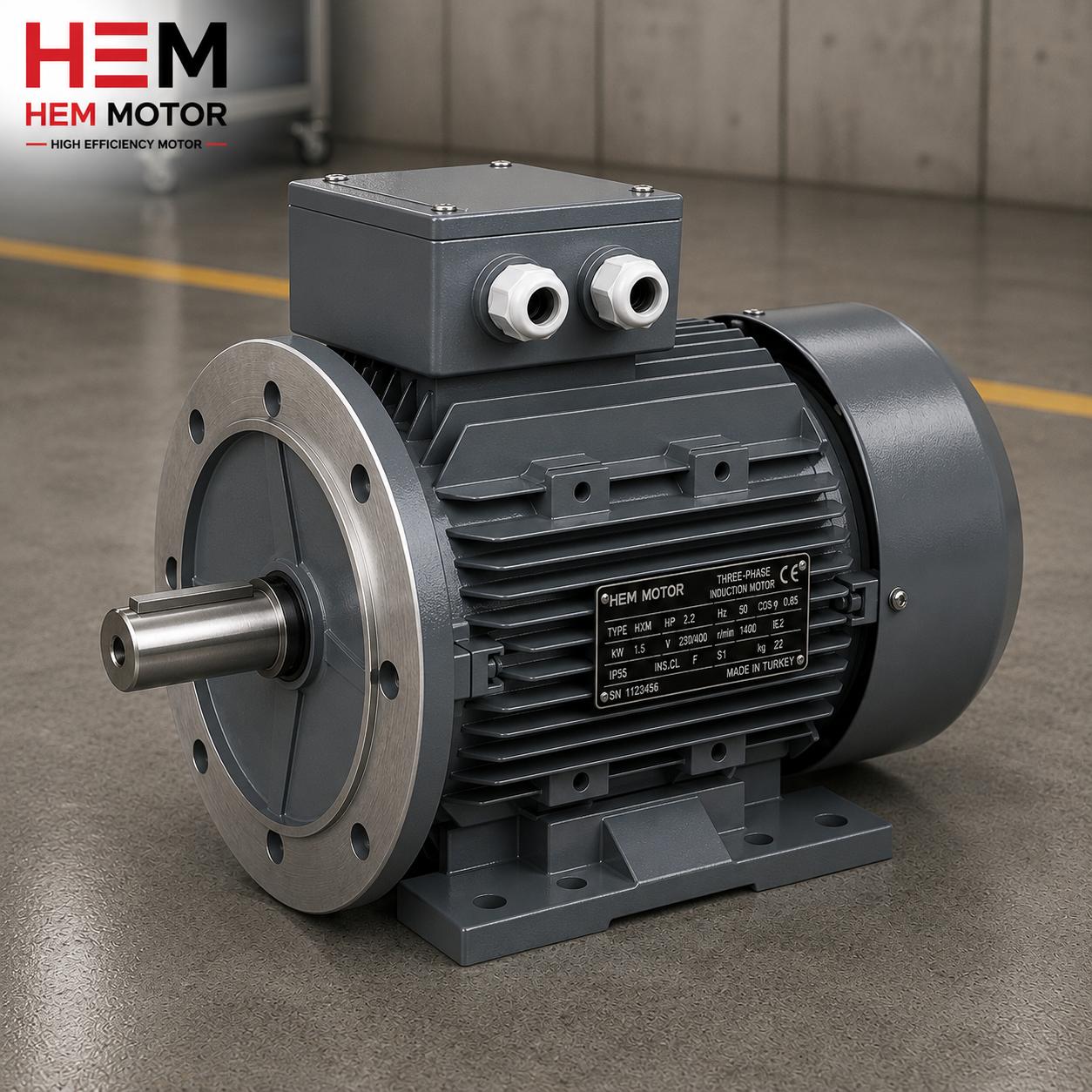

Starting an asynchronous motor directly from the grid (DOL — Direct On Line) is the simplest and most economical starting method. The motor is connected directly to the grid with a contactor, without an additional control device, and starts with its own starting torque. But this simplicity has a price: at the moment of starting the motor draws an inrush current about 6-8 times the rated current and applies a transient, oscillating torque pulsation to the shaft. This torque pulsation imposes a serious mechanical shock on the coupling, gearbox, belt and foundation during DOL starting of an asynchronous motor.
This mechanical shock is often overlooked, because it happens in a small fraction of a second. Yet this impact, repeated at every start, can over time lead to coupling wear, belt slip, gear fatigue and even the loosening of foundation bolts. In this article we examine the source of torque pulsation in DOL starting, its effect on mechanical components, and solutions such as star-delta, soft starters and variable frequency drives from a field perspective.
Our goal is to plan a suitable starting method and the right robust-bodied motor together for your application. You can review current electric motor prices and the product families to supply the right motor for your application from stock.
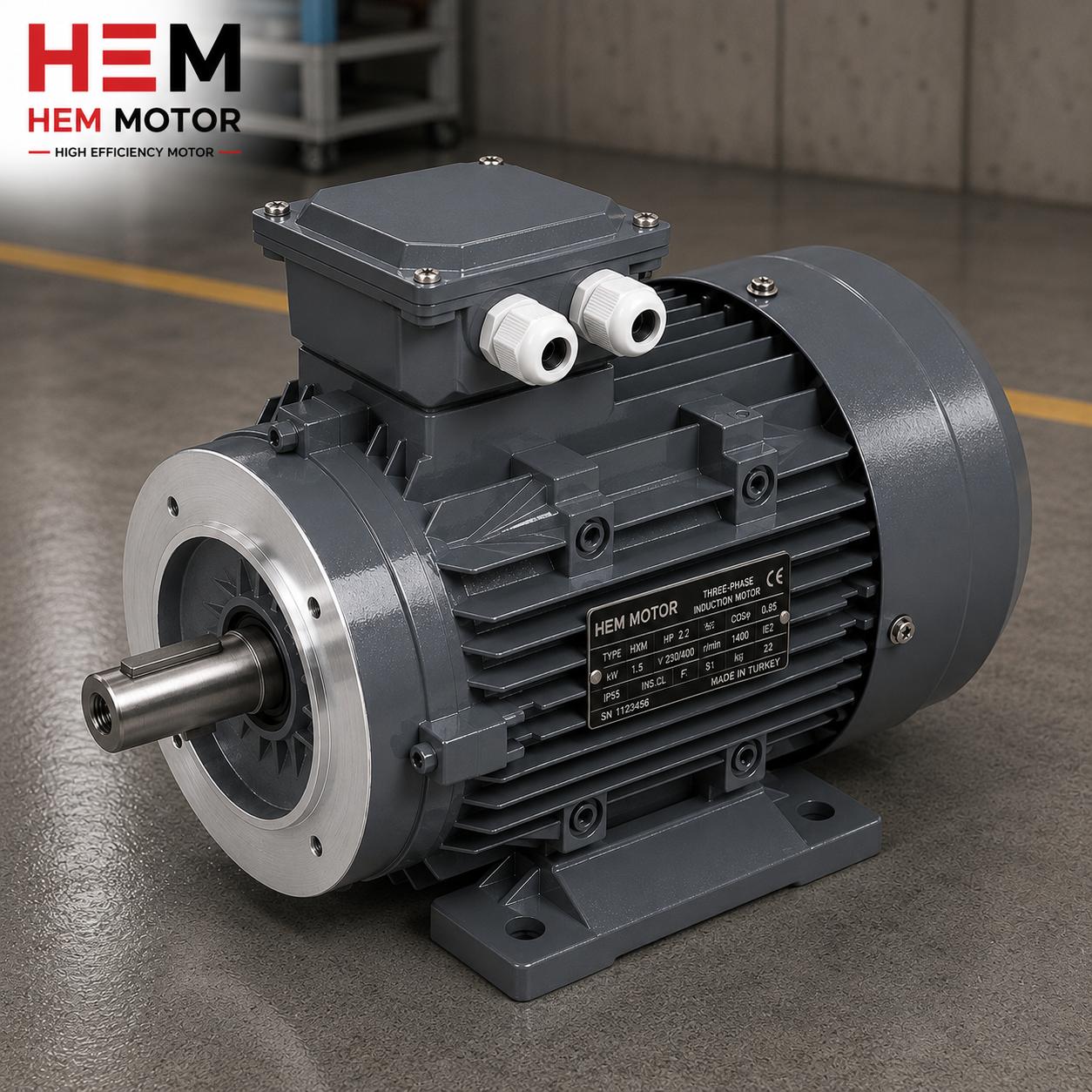
What Happens at DOL Starting?
When an asynchronous motor is at standstill, the relative speed between the stator field and the rotor is maximum; that is, the slip is 100%. At this moment the motor draws a very high current from the grid to build the magnetic field and set the rotor in motion. This inrush current is typically 6-8 times the rated current and falls rapidly to the rated current as the motor approaches its rated speed.
Along with the high current, a transient torque arises at the first moment the motor is connected to the grid. This torque is not constant; it shows an oscillating character depending on the connection phase of the grid voltage, and its peak can reach several times the rated torque. This transient torque peak applies a sudden impact to the mechanical transmission components.
The Physical Cause of Torque Pulsation
When the motor is energized, the stator magnetic field is suddenly established; but during the establishment of this field a DC component and transient components appear. These components add to the steady rotating field and produce an oscillating torque during the first few periods. Since this oscillation depends on the voltage angle at the moment of connection, it can have a different magnitude at each start; in the worst case a peak reaching significant multiples of the rated torque occurs.
The Effect on Mechanical Components
The torque pulsation spreads through the motor shaft to the entire transmission chain. Each component is affected differently by this impact.
Coupling and Shaft
Flexible couplings are designed to damp a certain torque pulsation; however, the peak torque created by DOL starting can overstress the coupling's elastic element. Repeated impacts lead to early fatigue and tearing of the coupling rubber or flexible element. The shaft end and keyway also carry a fatigue crack risk under this cyclic impact.
Gearbox and Gears
In a gear drive, the starting torque imposes a sudden load on the gear teeth. This impact increases the risk of pitting (surface fatigue) and tooth breakage on the gear surfaces. Especially in high-ratio gearboxes, the torque peak on the input shaft turns into a large mechanical stress.
Belt-Pulley and Foundation
In belt-pulley drives, the starting impact can cause belt slip or overstretch; this shortens belt life. In addition, the reaction torque at each start stresses the motor's connection to the foundation and over time can cause the foundation bolts to loosen.
The Effect of Inrush Current on the Grid
Besides torque pulsation, the second important effect of DOL starting is the reflection of the high inrush current onto the grid. A current 6-8 times the rated current, even if brief, causes a serious voltage drop on the grid. Other equipment connected to the same transformer can be affected by this voltage drop; lighting can flicker, sensitive devices can reset, or other motors can be stressed. This effect is more pronounced on weak or long-line grids.
For this reason DOL starting is limited not only mechanically but also electrically in large-power motors. Distribution utilities may require a method that limits the inrush current (star-delta, soft starter or drive) for motors above a certain power limit. When choosing the starting method, both the mechanical shock and the voltage-drop effect on the grid must be evaluated together.
Solutions: Softened Starting
Several methods are used to reduce torque pulsation and inrush current. The right method depends on the application's load type, starting frequency and grid condition.
- Star-delta starting: the motor first starts in star connection at low voltage, then switches to delta; reduces inrush current and torque to about one third.
- Soft starter: raises the voltage gradually, smoothly increasing current and torque; significantly reduces mechanical shock.
- Variable frequency drive (VFD): provides fully controlled, shock-free starting by controlling both frequency and voltage; also offers variable speed.
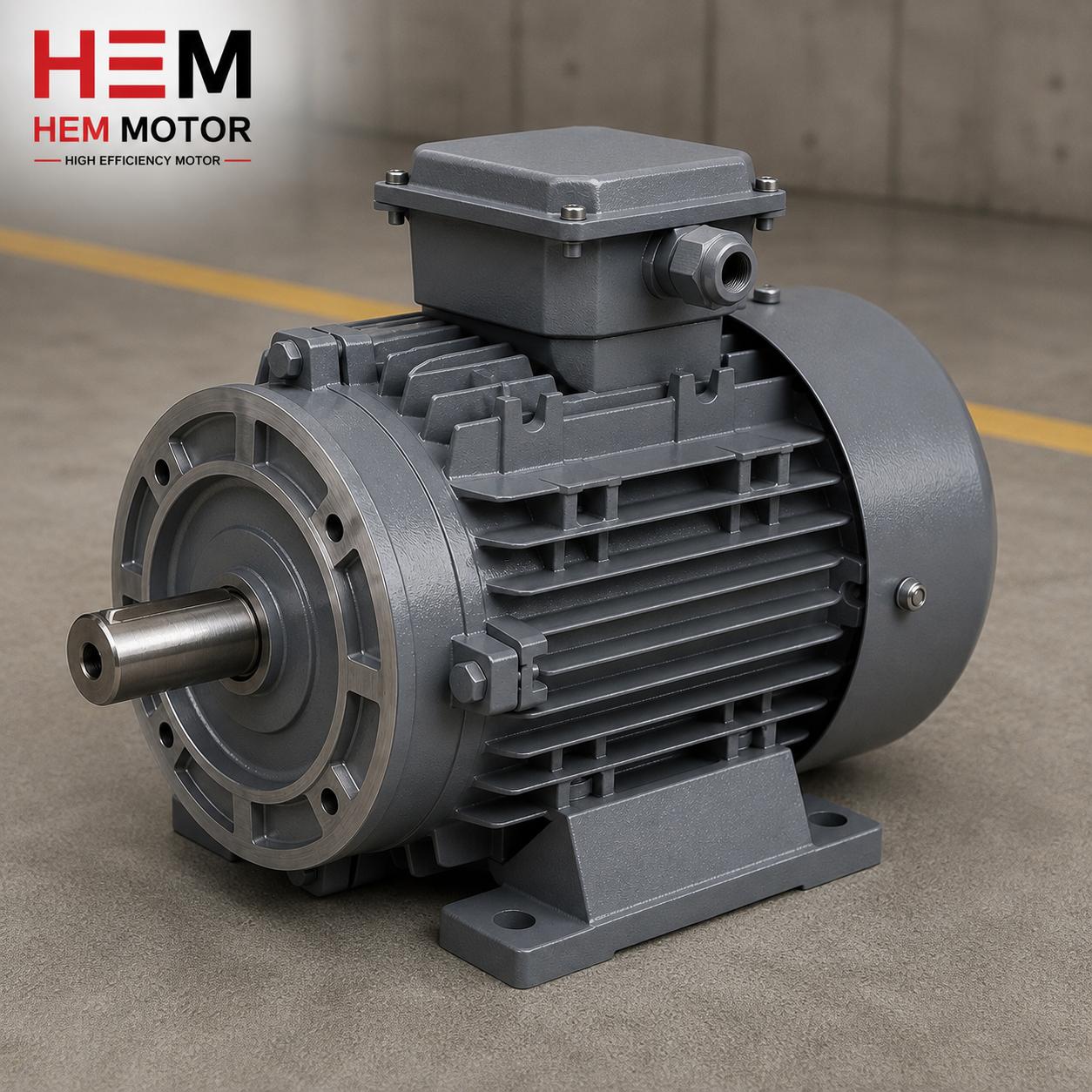
- Robust cast iron body and quality bearings: an impact-resistant mechanical structure safely handles the effect of DOL starting.
When the right starting method is chosen, the life of both the motor and the transmission components is extended. You can review the efficient and robust motor families on the efficient electric motors page.
The Role of Load Inertia
The severity of the mechanical shock during starting also depends on the inertia of the driven load. High-inertia loads (large fan impellers, flywheels, mill drums) accelerate over a longer time during starting; this means the motor runs at high current and high torque for a longer period. A long starting time increases the heating of the motor winding and amplifies the effect of the impact on the transmission components.
For this reason DOL starting is risky for high-inertia loads in terms of both motor heating and mechanical stress. In such applications, controlled starting with a soft starter or frequency drive makes the starting time manageable and protects the life of the motor and mechanical components. Load inertia is a parameter that must always be considered when determining the correct starting method.
Method Comparison and the Correct Choice
When choosing among softened starting methods, it is important to know the advantages and limits of each. Star-delta is the most economical softening method; however, a short current and torque jump occurs at the moment of transition from star to delta, and it is only suitable for loads requiring low starting torque. A soft starter provides a much smoother start by raising the voltage gradually and makes the starting torque adjustable; it is ideal for loads such as pumps and fans. A frequency drive is the most comprehensive solution; it offers fully controlled, shock-free starting and also provides variable speed, energy savings and precise torque control.
The correct choice is made according to the application's requirements. In a fixed-speed application that only wants to reduce the starting shock, a soft starter is an economical solution. In an application that also requires variable speed, a frequency drive gives the best result for both starting and operation. In very infrequently started, small-power and impact-tolerant loads, the simplicity and low cost of DOL can still be the most sensible choice.
When Is DOL Preferred?
Despite all these mechanical effects, DOL starting is still the most suitable method in many applications. In small- and medium-power motors, in applications where starting is infrequent and the load is impact-tolerant, DOL is preferred for its simplicity and low cost. For example, if a fixed-load fan or pump starts a few times a day, DOL is usually sufficient.
However, softened starting is essential for heavy-start loads (high inertia, crushers, mills), applications requiring frequent starts and grids sensitive to voltage drop. When making this decision, the life of the motor and transmission components must be evaluated together with the initial investment cost. You can find the effect of pole and speed selection on starting behavior in our pole selection article.
Maintenance and Monitoring
Another way to manage the mechanical effects of DOL starting is regular maintenance and monitoring. Periodic checks of the coupling, belt and foundation bolts make it possible to detect early the loosening and wear created by the repeated impact. Vibration measurement reveals abnormal impacts at the moment of starting, indicating a possible misalignment or coupling problem in advance. This preventive approach avoids unplanned stops and extends the life of the transmission chain. When a robust motor, the correct starting method and regular maintenance come together, the mechanical risks of DOL starting are largely brought under control.
The Importance of a Robust Motor Selection
The most fundamental defense against the mechanical impact created by DOL starting is a robustly built motor. A cast iron body provides higher mechanical durability and better vibration damping than an aluminum body; this means resistance to repeated starting impacts. Quality bearings and the correct frame size safely handle the radial and axial loads at the moment of starting.
In a DOL starting of an asynchronous motor application, the motor must be selected to suit the application not only electrically but also mechanically. The correct starting decision is a holistic engineering decision in which the motor and the method are considered together: first the load type, inertia, starting frequency and grid condition are determined; then whether DOL is sufficient is evaluated; finally a correctly framed, robust motor suited to the chosen method is selected. By planning the right motor and the right starting method together, and supplying it quickly from stock, we ensure safe starting and long life. To clarify power and speed selection, review our power and speed guide.
Frequently Asked Questions
Why do high current and torque occur at DOL starting?
When the motor is at standstill the slip is 100%, and the motor draws a current 6-8 times the rated current to build the magnetic field. At the moment of connection a transient, oscillating torque arises; its peak can reach several times the rated torque and applies a sudden mechanical impact to the shaft.
Which components does torque pulsation damage?
The peak of the starting torque applies mechanical shock to the coupling, shaft, gearbox gears, belt-pulley and foundation connection. Repeated impacts can lead to coupling fatigue, gear pitting, belt slip and loosening of foundation bolts. For this reason softened starting is preferred in heavy and frequent-start applications.
When is DOL sufficient and when is softened starting needed?
In small-to-medium-power, infrequent-start and impact-tolerant loads, DOL is usually sufficient. In heavy-start (high-inertia), frequent-start or voltage-drop-sensitive applications, star-delta, a soft starter or a frequency drive is needed. We provide safe starting by supplying the right robust cast-iron-body motor quickly from stock. A cast iron body provides higher mechanical durability and better vibration damping than an aluminum body, protecting the motor's life against the impact that DOL starting repeats at every start.