English
 Türkçe


When an electric motor suddenly fails on a production line, everyone's eyes tend to fix on the price tag of the replacement. Yet this is the most expensive misjudgment most businesses make. The real cost is not in the motor itself; it hides in the line that stops running while that motor is down, in the orders that cannot ship, in the shift that draws wages without producing value, and in the customer trust you lose because you missed a delivery date. In this article we examine, from both a technical and operational standpoint, why stock dispatch and a fast delivery commitment sit at the heart of modern industrial maintenance, what lead-time assurance truly means in an emergency, and how the right supply process gets your production back on its feet in hours rather than weeks.
At HEM Motor, one fact has held true across years on the ground: you cannot choose the hour your motor fails, but you decide how long you wait afterward by choosing your supplier. A wide and deep electric motor stock is the only realistic way to get a motor of the correct power and the correct frame to your site the same day or the next day. Below we walk through every step of this process and explain why some suppliers say "we'll look into it tomorrow" while we can say "it ships today."
The True Cost of Downtime: The Motor Price Is the Tip of the Iceberg
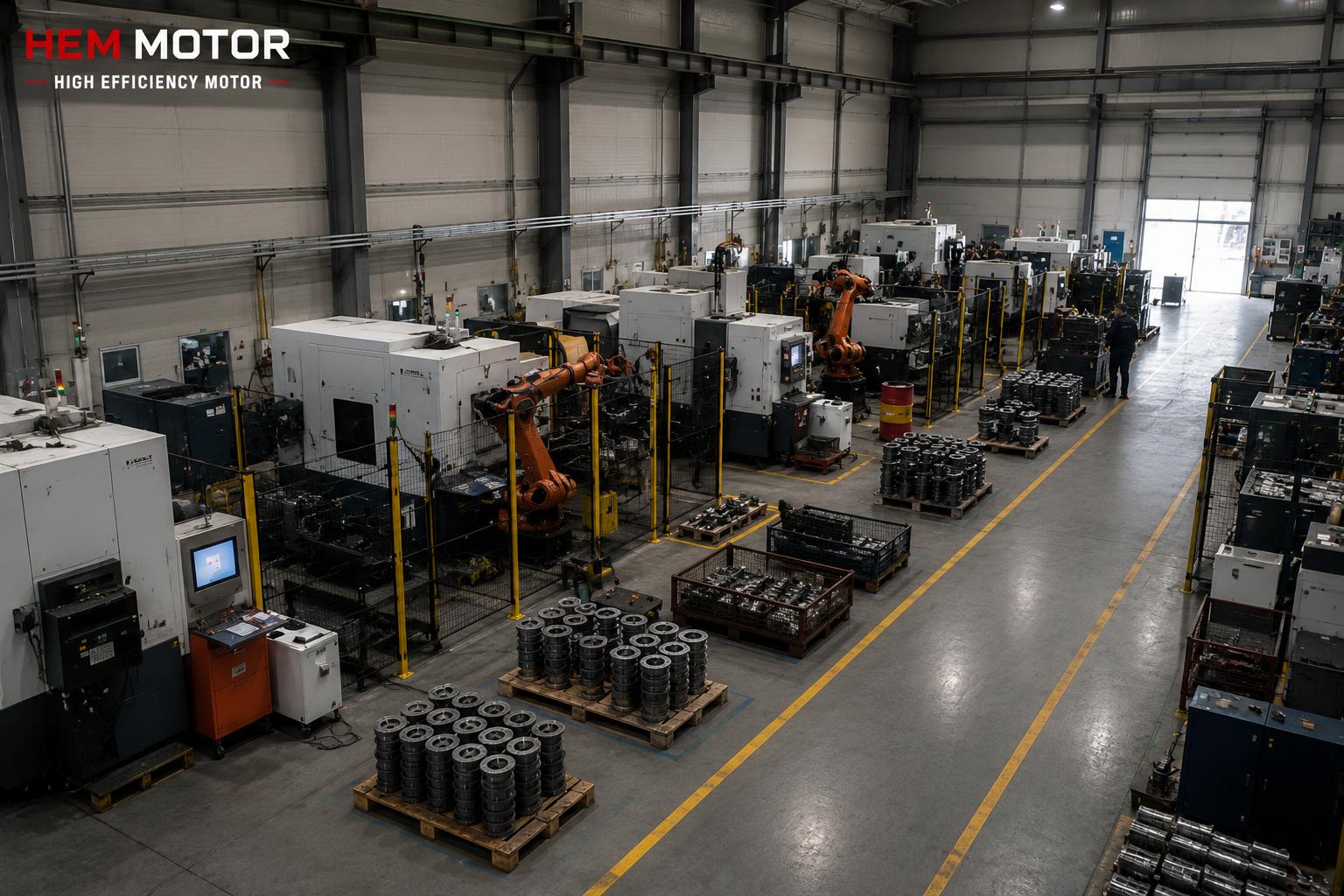
For a plant manager, the hardest moment is when the line stops and the minutes begin melting into money. The purchase price of an electric motor is usually less than a single hour of downtime on the line it feeds. In a continuous-production facility, the failure of a conveyor motor or a pump motor halts not just that piece of equipment but the entire process that depends on it. That is why, in motor selection, the vital question is not "which is cheapest" but "which one can I get in my hands fastest."
To grasp the cost of downtime correctly, you must weigh both the visible and the hidden items:
- Direct production loss: Every hour the line is down means product not made and orders not met.
- Labor cost: The shift keeps working but produces no value; this is a loss booked directly against the bottom line.
- Delivery penalties and reputation loss: A supplier that misses a deadline jeopardizes future orders too.
- Restart cost: In some processes, stopping and restarting itself means additional raw material and energy consumption.
- Cooling and solidification risks: On lines handling melt, dough or chemicals, a long stoppage can let material solidify inside the equipment, leading to heavy cleaning costs.
When all these items combine, even a delay of a few hours far exceeds the price of the new motor. This is precisely why, in an emergency, the deciding factor is not the listed price of the motor but how quickly it will reach you. To secure a motor of the right power and speed quickly, our IE3 electric motor stock guide on power and speed selection helps you define exactly the model you need.
Why Is Stock Dispatch Possible? The Logic of Wide and Deep Stock
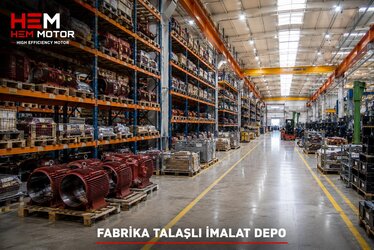
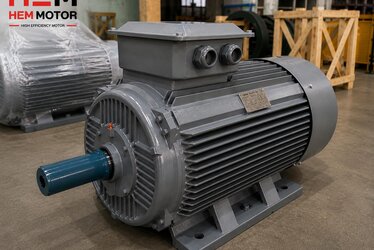
Every supplier says "we have stock"; the difference lies in the breadth and depth of that stock. A wide stock means holding different power classes, different speeds (2, 4, 6 poles) and different frame types (foot-mounted, flange-mounted, foot-and-flange) all at once. A deep stock means keeping not one but several units of the most-demanded models, so that several urgent requests arriving at the same time can all be met.
For a motor to ship the same day, these three pieces of information must match the stock:
- Rated power (kW): The shaft power the application requires.
- Synchronous speed / pole count: The speed at which the motor turns; it directly affects pump, fan and conveyor selection.
- Frame / mounting dimensions: The IEC frame size and flange type, critical for bolting the motor into the existing system without rework.
When these three parameters are defined correctly, a wide and deep stock maximizes the chance that the motor you need is already on the shelf. Reading these values correctly from the nameplate is the first condition for preventing a wrong dispatch; when your field team sends us the right data, the process starts as fast as possible.
From-Stock Delivery or Production Order?
Some special motors (unusual speeds, atypical voltages, special shaft ends) require factory production, and their lead time is measured in weeks. In an urgent failure, that wait is unacceptable. So for critical equipment it is wise to define in advance a standard equivalent that can be delivered from stock rather than waiting for a production order. We compare in detail when to choose each option in our article on from-stock delivery versus production order.
Lead-Time Assurance: The Binding Power of a Promise in an Emergency
Lead-time assurance is far more than naming a date. A genuine lead-time commitment means the entire process — from stock verification to logistics integration, from technical inspection to invoicing — is defined in advance. In an emergency, what a business wants to hear is not "it'll probably make it" but the clarity of "it ships at this hour and reaches you on this day."
Our lead-time assurance process consists of these steps:
- Instant stock verification: Whether the power-speed-frame combination you request is on the shelf is confirmed within minutes.
- Rapid technical check: Before dispatch, the motor's rated values, insulation condition and mounting dimensions are checked, eliminating the risk of a wrong model.
- Same-day / next-day dispatch: After approval, the motor leaves via the shortest route by courier or our own logistics.
- Tracking information: A tracking number is shared after dispatch so you can see where the motor is.
The Right Process: From the Moment of Failure to Running Again
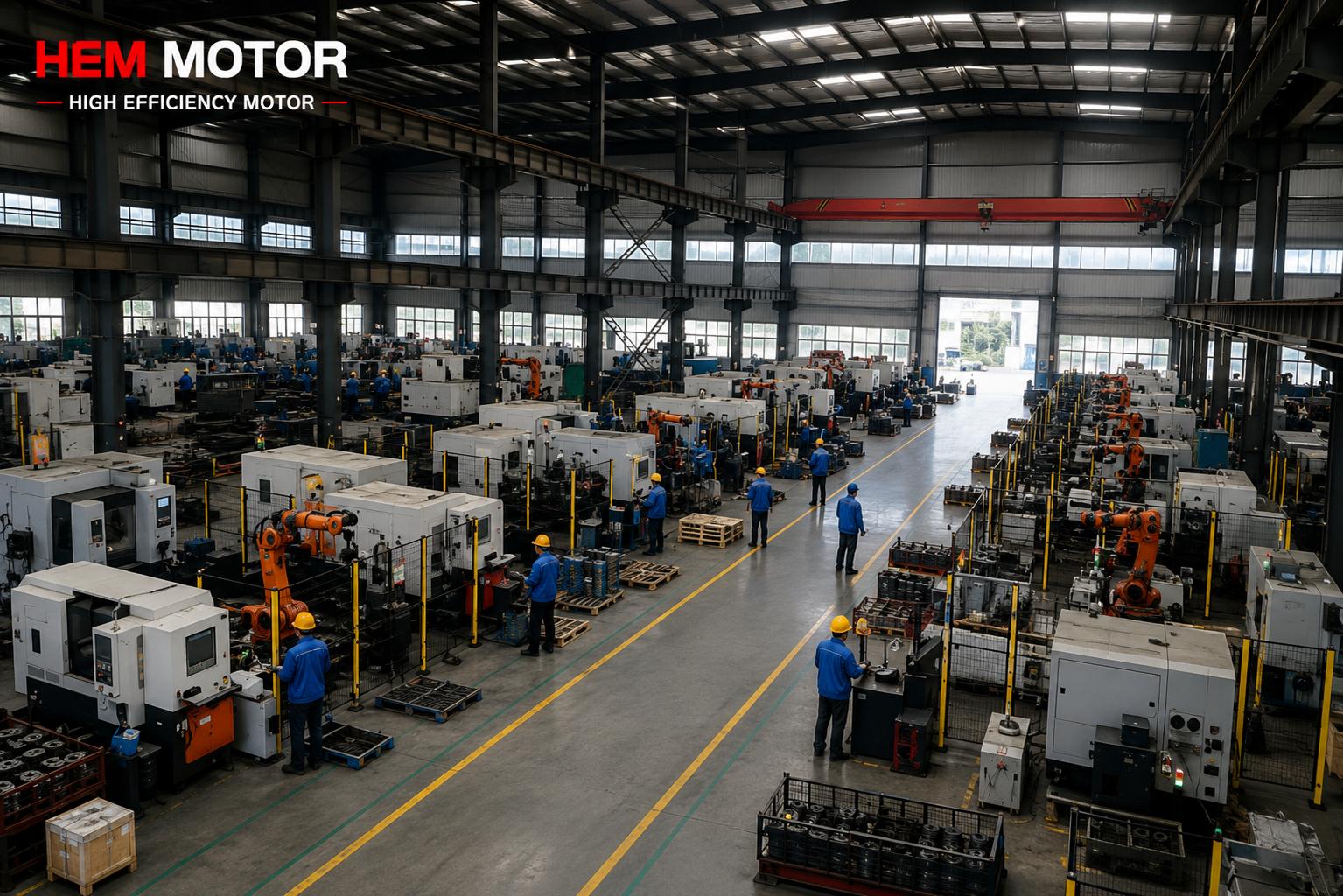
Fast delivery is not merely a logistics matter; it becomes possible when the right information flows in the right order. To minimize time in a motor failure, the flow we recommend is as follows:
- Read the nameplate: Photograph the rated values on the failed motor (kW, speed, frame, voltage, IP class).
- Note the mounting dimensions: Shaft diameter, flange type and mounting arrangement are critical for the replacement to fit cleanly.
- Contact us: With this information we identify the matching motor in stock within minutes.
- Dispatch approval: The lead time is confirmed and the motor leaves.
- Installation and commissioning: Arriving in the right dimensions, the motor is fitted on site without extra work and the line runs again.
Completing this process in the shortest possible time depends heavily on the preparation you do beforehand. That is why we recommend our critical spare motor list and stock planning approach to plants that want to prevent unexpected stoppages; this way, when failure strikes, you already know which motor is needed and can start the dispatch process in seconds.
Critical Spare Strategy: Bringing Waiting Close to Zero
Even the fastest delivery does not mean exactly zero waiting. True continuity is achieved by supporting the plant with strategic spares of its own. Identifying in advance the motors of the critical equipment that stops your production, and defining their quickly-supplied equivalents together with us, minimizes the wait.
Points to watch in a critical spare strategy:
- Prioritize bottleneck equipment: Motors whose failure locks up the whole line should top the list.
- Define standard equivalents: Determine in advance the standard, stock-ready models that can replace special motors.
- Archive mounting dimensions: File the frame and flange details of each critical motor; don't lose time searching during a failure.
- Keep the supplier relationship alive: Regular contact is the foundation of a fast response in an emergency.
At HEM Motor, we manage our wide and deep stock with exactly this logic. Our aim is to keep the most-needed power and frame combinations always within reach, turning your emergency into our routine dispatch. You can reach our full product range and our fast-delivery approach through our homepage, and start the process immediately by sharing the motor you need with us.
Why HEM Motor? Speed, Accuracy and Continuity
What truly makes a motor supplier valuable is not the number of products in its catalog but its agility in the moment of urgent need. Our approach rests on three pillars: sending the correct motor the first time, dispatching it as fast as possible, and making that speed a repeatable process every single time. Our stock-dispatch commitment is not an advertising promise but an operational discipline we have run again and again.
In that critical moment when your production stops, having a partner who keeps the right motor waiting on the shelf, reads your nameplate data correctly, and can say "it ships today" is how you turn speed into a competitive advantage rather than turning waiting into cost.
Frequently Asked Questions
In an urgent motor failure, how quickly can I reach you and when does the motor ship?
The moment you send us the power, speed and frame details of the motor you need, we verify stock within minutes. If the model you are looking for is ready in our wide and deep stock, we can dispatch the motor the same day or the next day after a technical check and approval. That is why we recommend keeping the failed motor's nameplate data and mounting dimensions at hand; the process moves much faster with this information.
What happens if the exact motor I need is not in stock?
Even if the identical model is not in stock, a standard equivalent with the same power, speed and mounting dimensions can usually be dispatched quickly for most applications. Our team examines the motor's rated values and mounting dimensions to identify an alternative that will run flawlessly on site. In cases that require special production, we evaluate the from-stock delivery and production-order options with you and recommend the fastest solution.
What can I do to prevent unexpected stoppages in advance?
The most effective method is to identify in advance the critical motors that stop your production and define their quickly-supplied equivalents together with us. When you archive this critical spare motor list and the mounting dimensions of each motor beforehand, you can start the dispatch process within seconds when a failure occurs. This minimizes waiting time and brings your production back online far more quickly.