English
 Türkçe

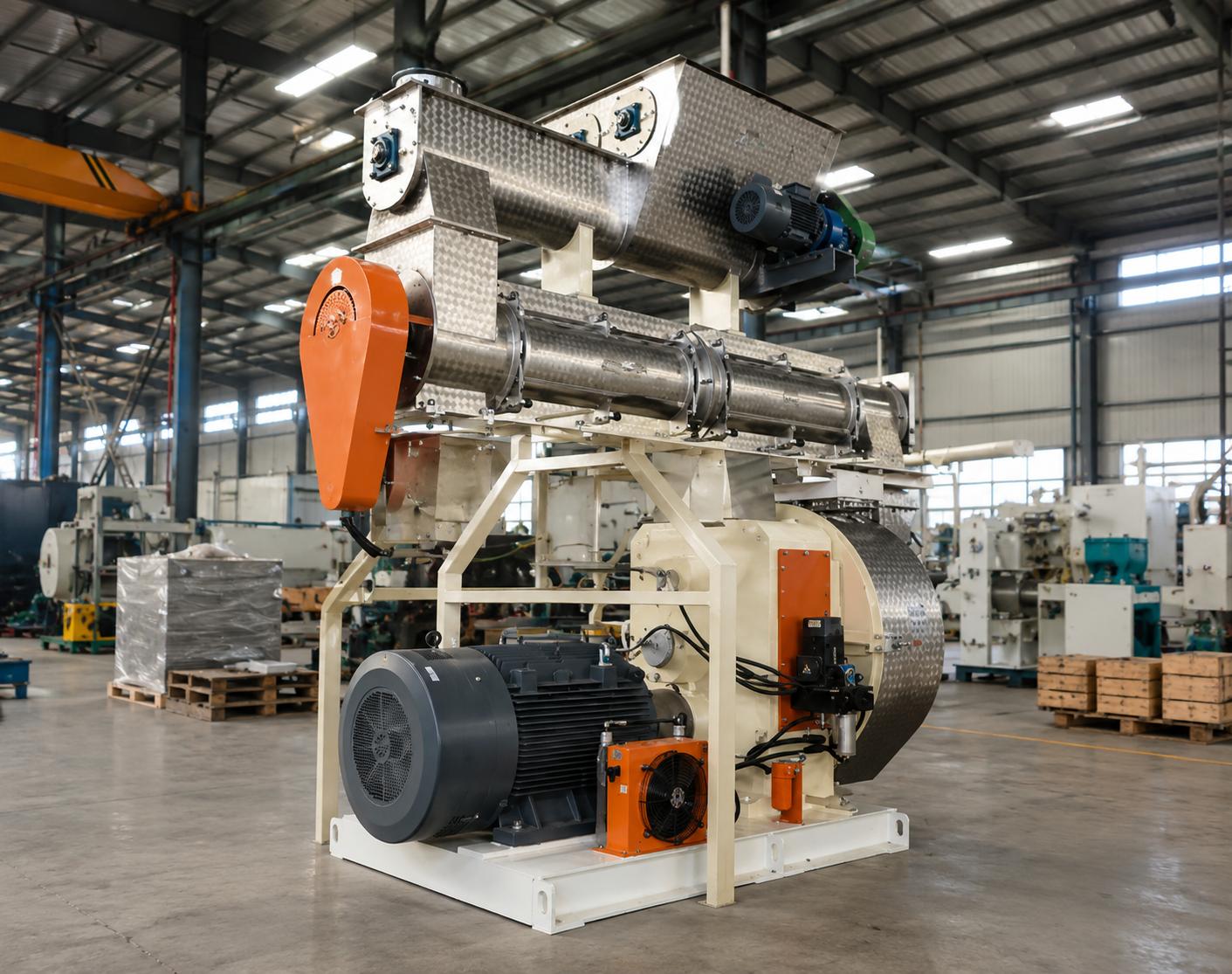

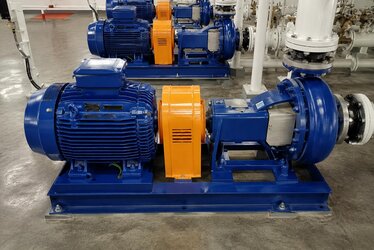
One of the most critical decisions in pump and fan motors is whether the load will be driven by direct drive (coupling) or by belt-pulley drive. This choice is not merely a mounting detail; it directly determines the motor's bearing life, shaft load, speed selection, vibration level, and consequently the frame size and price of the motor you purchase. Driving a centrifugal pump directly at 2900 rpm via a coupling is mechanically a completely different world from transferring the same flow to a radial fan at a lower speed through a belt-pulley ratio. In this guide we examine in detail how coupling versus belt-pulley drive affects speed, bearing load and motor selection in pump and fan applications, and explain how to source the right motor from stock with manufacturer assurance.
At HEM Motor we manufacture and stock cast iron body, IP55 protected, Class F insulated IE3 and IE4 efficient motors across a wide power and speed range for both pump and fan applications. Once you have determined the correct drive type, this article will guide you to place an error-free order with the right shaft diameter, key dimension and mounting type for your needs.
The Fundamental Difference Between Direct (Coupling) and Belt-Pulley Drive
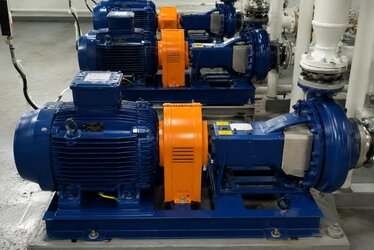
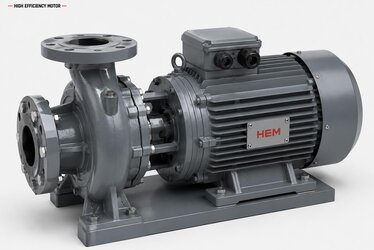
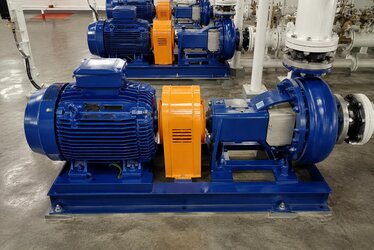
In direct drive, the motor shaft is connected directly to the pump or fan shaft through a flexible coupling. The motor speed and load speed are identical: while a 4-pole motor runs at 1500 rpm synchronous speed, the centrifugal pump it drives turns at the same speed. In this method only axial and small residual radial loads act on the shaft bearing; the system is quiet, efficient and low-maintenance.
In belt-pulley drive, a pulley is mounted on the motor shaft and motion is transferred to the load pulley through V-belts. The biggest advantage here is being able to freely choose the speed ratio: while the motor runs at 1500 rpm, the fan can be set to 900 rpm or 2200 rpm by the pulley diameter ratio. This flexibility is very valuable in fan applications because fan flow and pressure are highly sensitive to speed. However, this flexibility has a cost: belt tension imposes a serious radial load on the motor shaft, and this load is transferred directly to the motor bearings.
Comparison in Terms of Speed
- Coupling: Load speed = motor speed. To change speed you must change the pole count (2/4/6 poles) or use a frequency drive.
- Belt-pulley: Load speed = motor speed × (drive pulley diameter / driven pulley diameter). Speed can be fine-tuned by changing pulleys.
- Centrifugal pumps usually run direct-coupled with 2 poles (2900 rpm) or 4 poles (1450 rpm).
- Radial and large-diameter fans are mostly run at low speed via belt-pulley to control noise and tip speed.
Bearing Load: The Hidden Cost of Belt-Pulley Drive
The most frequently overlooked aspect of belt-pulley drive is the radial load on the shaft end. The higher the belt tension, the more torque is transmitted without slipping; but the same tension applies a constant radial force to the motor shaft bearing. This force grows as the pulley diameter shrinks and the transmitted power increases. A small-diameter pulley requires a larger belt force to transmit the same torque, which shortens bearing life.
A standard deep-groove ball bearing can carry only a limited radial load. Under high belt loads, a motor version equipped with a cylindrical roller bearing (NU type) should be preferred. HEM Motor's cast iron body heavy-duty motors can be supplied with reinforced bearing options to withstand high radial belt loads. Correct bearing selection is the key to fault-free operation throughout the expected life of the motor in a fan application. To study this topic in more depth, see our guide on radial and axial load limits on the motor shaft.
Factors Determining Bearing Load
- Pulley diameter: Small pulley = high radial load. Choosing the largest possible pulley extends bearing life.
- Pulley position: Mounting the pulley as close as possible to the shaft shoulder reduces the overhung moment.
- Belt tension: Excessive tension stresses both the bearing and the shaft; manufacturer tension values must be observed.
- Transmitted power: As kW increases, the required belt force and therefore shaft load increase.
Drive Selection in Pump Applications
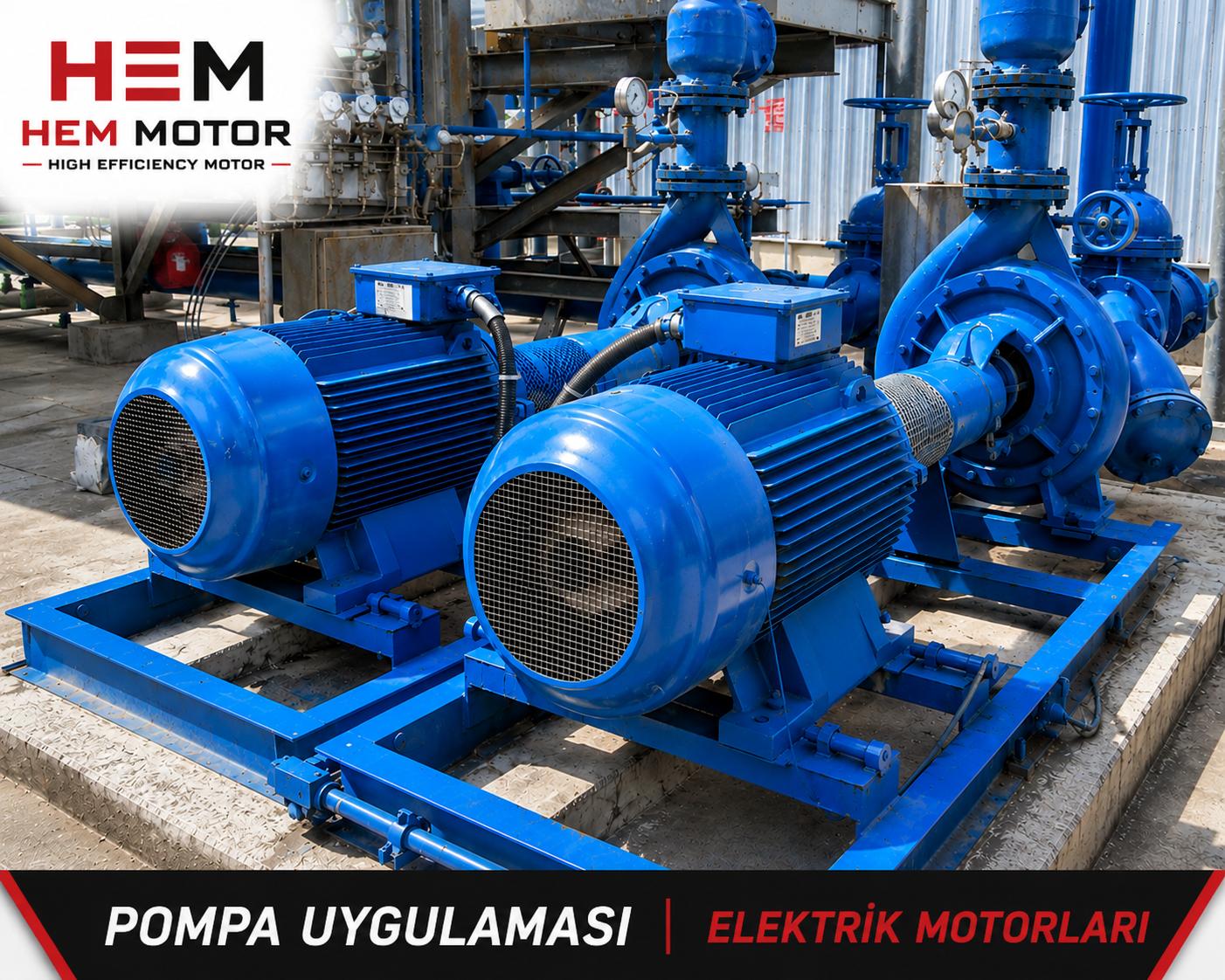
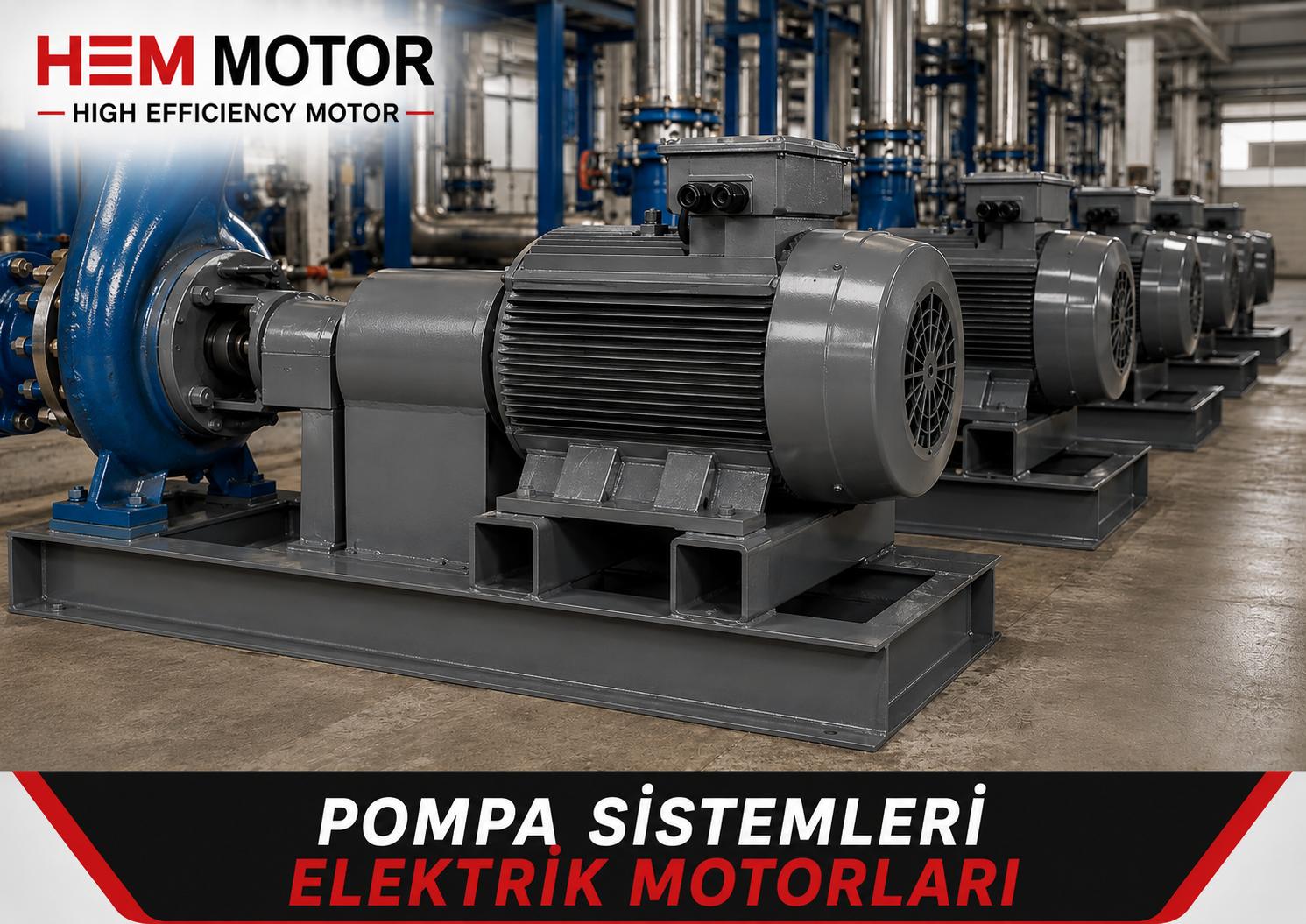
Centrifugal pumps, especially in booster, deep-well and fire pump applications, almost always run direct-coupled or as a monoblock (impeller mounted directly on the motor shaft). The reason is that the pump is designed at a specific efficiency point and the speed must remain constant. The coupling connection is quiet, suitable for leak-tight operation, and runs maintenance-free for years when shaft alignment is done correctly.
When selecting a pump motor, cavitation risk, duty type (S1 for continuously running pumps) and vertical/horizontal mounting must also be considered. HEM Motor's pump electric motors are supplied from stock with flanged (B5/B14) and foot-mounted (B3) options in S1 continuous duty. When direct drive is preferred in a pump, the correct flexible coupling selection and shaft alignment is critical; an alignment error dramatically shortens bearing life.
Drive Selection in Fan and Blower Applications
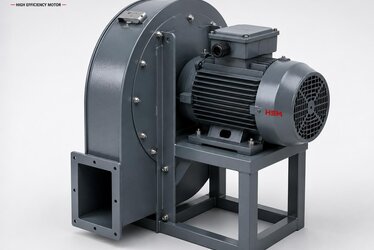
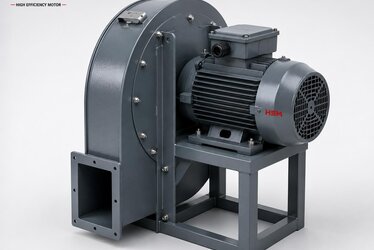
The situation is different in fans. Especially in large-diameter radial and scroll fans, the fan speed must differ from the standard motor speed to achieve the desired flow and pressure. This is where belt-pulley drive comes into play. By changing pulley diameters, different fan speeds can be obtained with the same motor; this provides invaluable flexibility for system tuning during plant commissioning.
However, there are two additional challenges in fan applications: high inertia and a large impeller. A large fan impeller has a high moment of inertia (GD²), which means long starting time and motor heating during start. We examined this topic in detail in our article on inertia (GD²/WR²) and starting in pump and fan motors. If the starting time on a large direct-drive fan becomes too long, the motor's thermal limit can be stressed; belt-pulley can soften the starting behaviour but brings belt slip with it.
Points to Watch in Fan Motor Selection
- Reducing speed via belt-pulley on large-diameter fans lowers tip speed and noise.
- A reinforced-bearing motor must be selected for belt drive; a standard bearing fails early.
- On continuously running blowers, IE3/IE4 efficiency class significantly reduces energy cost.
- In dusty environments, a fan cowl and IP protection upgrade may be required.
HEM Motor's industrial fan motors, with their heavy-duty bearing structure and cast iron body, are suitable for both direct drive and belt-pulley applications. After choosing the right drive type and motor, you can contact us for current electric motor prices and learn the stock status and delivery time.
Speed Selection: Pole Count or Pulley Ratio?
There are two ways to determine load speed: choosing a motor with the correct pole count (2/4/6/8 poles) or adjusting the belt-pulley ratio. In pumps, pole selection is usually sufficient because standard speeds (2900, 1450, 970 rpm) suit most pumps. In fans, the desired speed often does not match these standard values, so fine-tuning with a pulley ratio is needed.
For correct pole and speed selection, you need to know the synchronous speed table and the actual (post-slip) speed. Our article on slip and actual speed in asynchronous motors will be helpful here. Remember: the 1500 rpm on the nameplate is the synchronous speed; under load the motor turns at about 1450 rpm, and the pulley calculation must be based on this actual speed.
Sourcing the Right Motor from Stock
After determining the drive type, you need to clarify the following for ordering: power (kW), pole count/speed, mounting type (B3/B5/B35), shaft diameter and key dimension, protection class (IP55 standard) and efficiency class (IE3/IE4). For belt drive, specifying the reinforced bearing option is critical. HEM Motor offers all these options with manufacturer assurance and delivers the most sought-after power-speed combinations fast from stock. For correct shaft diameter and key compatibility, you can use our motor shaft diameter and key dimensions table.
Shaft Alignment and Mounting: This Is Where Direct Drive Life Is Determined
No matter how high-quality a motor you choose, a direct-coupled pump or fan system will not run long unless shaft alignment is done correctly. The smallest axial misalignment between the motor shaft and the load shaft (parallel or angular error) is reflected as an alternating load on the bearings through the coupling and increases vibration. This vibration both shortens bearing life and leads to seal/gasket leakage in the pump and early fatigue in the fan. Therefore, performing alignment with a dial indicator or laser alignment tool during field installation is as critical as motor selection.
The second important issue in mounting is fixing the motor to the floor or base without vibration. A non-flat surface under the feet is a classic soft foot error, and it stresses the body, changing the bearing load. HEM Motor's cast iron body products are more resistant to such mounting stresses thanks to their high mechanical rigidity; nevertheless, correct bolt tightening torque and a flat base are essential. In belt-pulley systems, mounting the motor on a slide rail makes it easier to adjust belt tension and re-tension when the belt stretches over time.
Choosing the Mounting Type According to the Drive
- B5 flange: Preferred in directly flange-connected pumps and monoblock structures.
- B3 foot-mounted: Suitable for coupled pumps and belt-pulley fan applications, for mounting on a base or slide rail.
- B35 (foot + flange): Provides extra rigidity in heavy applications requiring both flange and foot support.
- Choosing the wrong mounting type causes field incompatibility and repeat orders; therefore clarify the machine connection surface in advance.
Efficiency, Energy Cost and the Right Efficiency Class
In most plants, pump and fan motors run for the greater part of the day, even continuously. This means the motor produces an energy cost far greater than its purchase price. On a continuously running blower or circulation pump, choosing an IE4 super premium motor instead of IE3 provides significant energy savings over the years and more than pays back the initial investment difference. In direct drive, transmission loss is practically near zero; in belt-pulley, the friction and slip loss of the V-belts can take a few points off system efficiency. This loss should be minimised with the correct pulley diameter and appropriate belt tension.
Whatever the drive type, sizing the motor correctly for the load is decisive in maintaining efficiency. An oversized motor runs at low power factor and low efficiency at partial load; an undersized motor heats up under continuous overload and shortens its life. HEM Motor's 100% copper-wound, Class F insulated motors offer both high efficiency and long life when selected at the right power. We can determine the appropriate efficiency class together for your continuously running pump and fan lines and supply them with delivery from stock.
Frequently Asked Questions
Why is coupling mostly preferred over belt-pulley in pumps?
Centrifugal pumps are designed to run at a fixed speed at a specific efficiency point. Direct coupling transfers the speed one-to-one, imposes no extra radial load on the shaft bearing, is quiet and low-maintenance. Belt-pulley brings unnecessary radial load to the pump and creates a sealing risk. Therefore a coupling or monoblock structure is standard in pumps.
Which bearing should be chosen for a belt-driven fan motor?
Because high belt tension imposes significant radial load on the shaft bearing, a cylindrical roller bearing (NU type) should be preferred instead of a standard ball bearing in belt-driven fan motors. HEM Motor's cast iron body motors can be supplied with reinforced bearing options to withstand high radial loads; simply specify your application when ordering.
Do I need to change the motor to change the fan speed?
No. If you use belt-pulley drive, you can adjust the fan speed simply by changing the pulley diameters; you do not need to change the motor. In a direct-coupled system, however, changing the speed requires a motor with a different pole count or a frequency drive. This flexibility is the biggest advantage of belt-pulley drive in fan applications.