English
 Türkçe

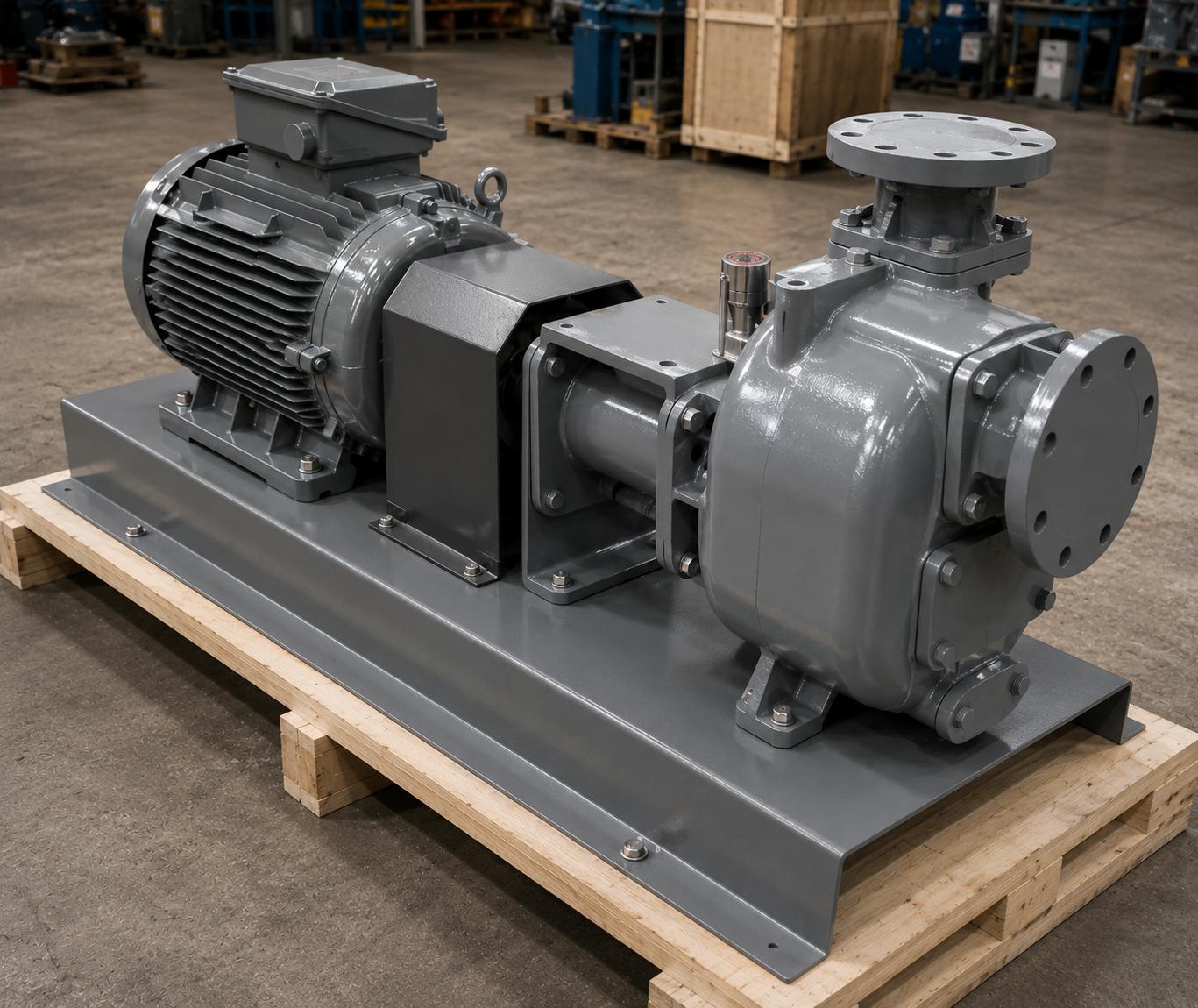

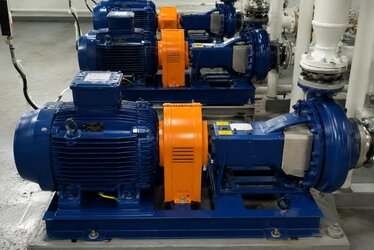
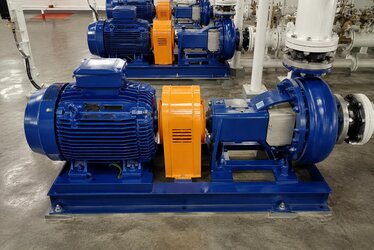
In thermal power plants, cement factories and large boiler facilities, flue-gas desulfurization (FGD) systems used to capture sulfur dioxide (SO₂) from flue gas rely on recirculation pumps that continuously circulate limestone slurry between the absorber tower and the reaction tank. At the heart of these pumps are large electric motors that pump an abrasive and corrosive fluid year-round and simply cannot be allowed to stop. A wrongly selected FGD recirculation pump motor means not only wasted energy but a halt of the entire desulfurization process and exceeded emission limits. For this reason, motor selection is not a matter of reading a single line from a power catalog; it is an engineering decision that evaluates duty type, corrosion risk, starting torque and supply continuity together.
At HEM Motor, when we supply motors to FGD facilities we base our work on real site conditions: the high solids content of the lime-gypsum slurry, the corrosive vapor of the sulfurous environment, the pump's continuous (S1) operating regime and the cost of downtime. In this article we explain the technical parameters you need to know to select the right motor and the information that must be clarified before ordering. For broader power-speed comparisons and current electric motor prices, you can review our product pages.
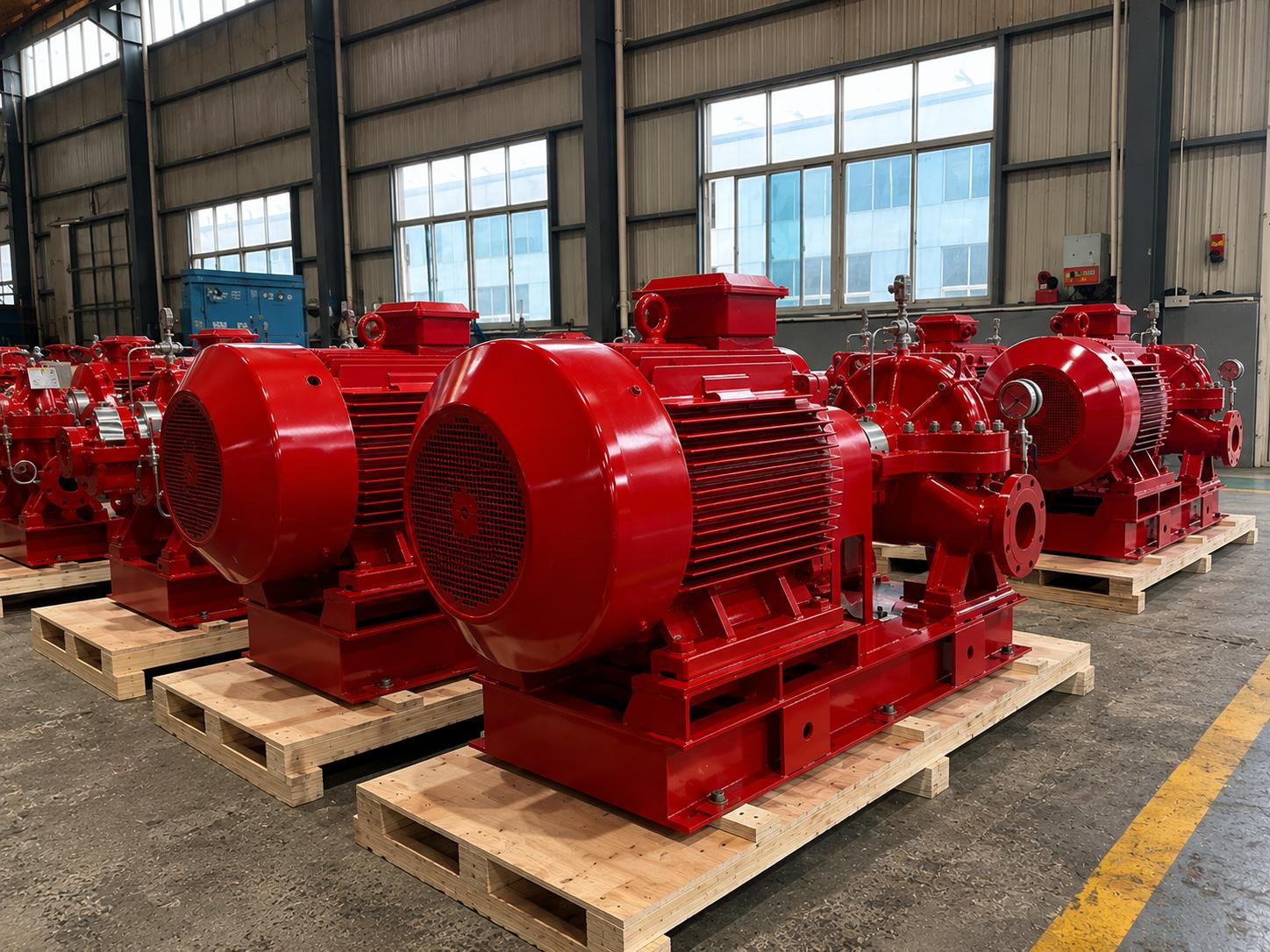
The Challenges the FGD Recirculation Pump Imposes on the Motor
An FGD recirculation pump presents a very different load profile from an ordinary water pump. The pumped fluid is not clean water; it is a dense, abrasive slurry containing limestone, gypsum and reaction products. This directly affects motor selection.
Continuous Duty (S1) and High Service Factor
Scrubbing in the absorber tower is the heart of the process and usually runs 24 hours without interruption. Therefore the motor must be of the S1 continuous duty type, with the thermal capacity to run at full load year-round. A motor sized for intermittent duty (S3) will have a shortened life in this application. Class F insulation and IP55 protection are the minimum expectation; in hot and humid environments, class H insulation and a higher service factor are preferred.
Corrosive Environment and Body Protection
The air of the FGD island is sulfurous, humid and chemically aggressive. A standard motor body corrodes quickly in this environment. For this reason, motors with additional corrosion-protection paint (C4/C5 environment class) applied over a cast iron body should be preferred. Our article on corrosion protection in cast iron body motors and open-field use contains valuable tips relevant to the FGD environment.
Abrasive Slurry and Continuous Full Load
The slurry density is markedly higher than that of water. This means the pump draws more shaft power at the same flow rate. A motor selected without accounting for fluid density is constantly overloaded and the thermal protection trips repeatedly. Our article on mine dewatering and slurry pump motor selection shares the same load logic.
Selecting the Right Power and Speed
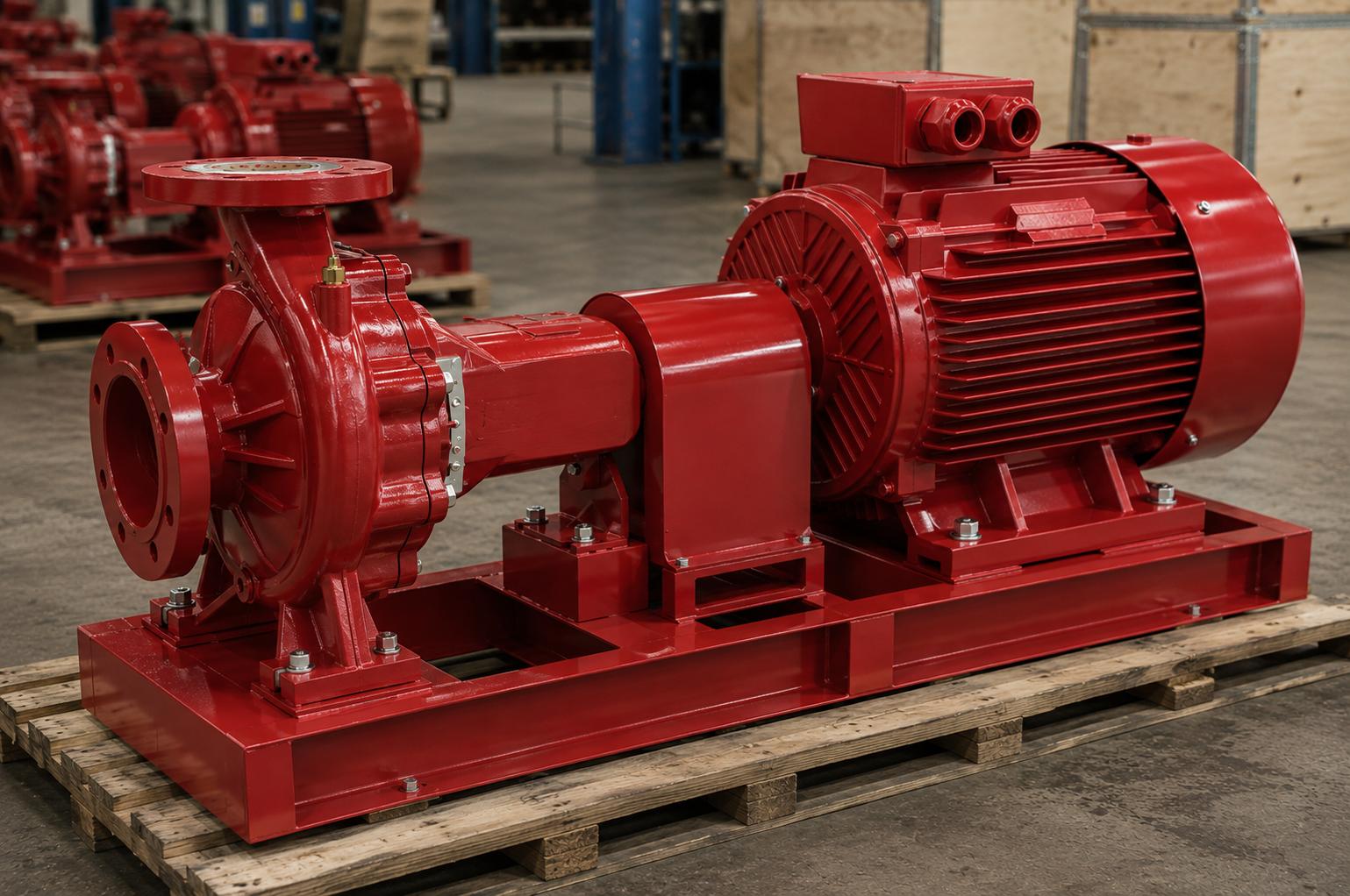
FGD recirculation pumps are generally fixed-speed centrifugal pumps in the medium-to-high power band. When determining motor power, the shaft power under the worst-case scenario (highest slurry density and flow) must be taken as the basis.
- Speed selection: Recirculation pumps mostly run at 4-pole (1500 rpm) or lower speeds. Lower speed reduces wear in the slurry environment and extends pump life.
- Power margin: A reasonable safety margin should be left above the shaft power to account for fluid density, viscosity and possible clogging risk. The motor should be evaluated at its real operating point, not at the most efficient point on the curve.
- Efficiency class: A continuously running large pump is a significant item in annual energy consumption. An IE3, or in the appropriate power band IE4, motor shortens the payback period.
- Mounting type: Most recirculation pumps are driven via a coupling with a B3 foot-mounted motor; some compact solutions prefer B35 combined mounting.
To calculate pump power from flow and head, our article on centrifugal pump motor selection: flow, head and power matching provides step-by-step guidance.
Starting and the Drive Train
The recirculation pump starts against a full line. With slurry-filled piping the pump's inertia is high; this requires the motor to produce sufficient torque during startup. At high powers, instead of direct-on-line (DOL) starting, star-delta or soft starters are preferred; this limits voltage dips in the grid and mechanical shock.
- Starting torque: Design N class is generally sufficient for starting against a full line; however, the pump curve and inertia must be evaluated together.
- Coupling and alignment: The coupling between motor and pump must be correctly selected and shaft alignment performed carefully. Misalignment shortens bearing and seal life.
- VFD use: In facilities where a frequency drive is used for flow control, the motor must be drive-compatible (resistant to bearing currents and harmonic heating).
Supply Plan and Critical Spare Motor
When the FGD island stops, the plant either exceeds its emission limit or is forced to reduce load. For this reason, the recirculation pump motor should be among the first items on the facility's critical spare motor list. At HEM Motor, we build the supply plan for large motors along these axes:
- Preparing an exact equivalent based on the existing motor's nameplate data (kW, speed, frame, shaft diameter, mounting).
- Stock or fast-supply agreements for critical powers; redundancy that shortens downtime in sudden failure.
- Transport and commissioning plan; lifting and handling logistics for large-frame motors.
For lead-time and logistics planning on large motors, our article on high-power electric motor supply above 90 kW explains the supply process in detail. To review our pump-specific product range, see our pump electric motors page.
The Effect of Slurry Density on the Power Calculation
The most common mistake in FGD pump motor selection is sizing the pump according to clean-water flow. However, the absorber slurry is markedly heavier than water depending on its solids content. Since the shaft power drawn by the pump increases in direct proportion to the fluid density, pumping slurry at the same flow rate demands more power than pumping clean water. For this reason, the motor must be sized not according to water but according to the highest slurry density in the process.
In addition, the load state of the FGD system is not constant. When the sulfur content in the fuel rises, more limestone reacts, the slurry density increases, and the pump draws more power. The motor must have a power margin that allows it to run without tripping the thermal protection even in the worst-case scenario of these fluctuations. Otherwise the system goes offline at the most critical moment, that is, when emissions are highest. This is why the "highest" rather than the "average" operating point is taken as the basis in motor selection.
- Solids content: As the solids percentage in the slurry rises, the power drawn by the pump increases; the motor must be selected for the highest solids content.
- Wear margin: Abrasive slurry wears the pump impeller over time; a worn impeller lowers efficiency and changes the motor load. The power margin must tolerate this effect too.
- Clogging risk: If accumulation or settling occurs in the slurry, the pump is momentarily overloaded; the motor's short-term overload capacity (service factor) is important.
Commissioning and Maintenance Strategy
As much as selecting the right motor, commissioning and maintaining it correctly determine its life. Because the FGD environment is aggressive, the motor's first-start checks must be performed meticulously.
Commissioning Checks
- Insulation resistance: On motors kept in a humid environment, the winding insulation resistance must be checked with a megger; a low value indicates moisture has been absorbed.
- Rotation direction: The pump impeller's rotation direction is critical; a pump running in the wrong direction both loses efficiency and may be damaged.
- Vibration and temperature: At first start, vibration and bearing temperature are monitored to verify alignment and bearing condition.
Periodic Maintenance
- Regular cleaning of the cooling fan cover and fins from sulfurous deposits and dust.
- Checking the terminal box sealing and cable glands; preventing moisture from reaching the windings.
- Shortening the bearing lubrication interval according to the harshness of the environment.
- Early detection and repair of damage to the corrosion-protection paint.
Other Motorized Equipment on the FGD Island
An FGD system does not consist only of the recirculation pump. There is much complementary motorized equipment on the island, and their supply should be planned holistically. The recirculation pump is the most critical, but the downtime of the other equipment also affects the process.
- Limestone slurry feed pumps: The motors of the pumps that feed fresh limestone slurry to the reaction tank also run in an abrasive environment and require similar protection.
- Agitator motors: The agitators that prevent the slurry in the reaction tank from settling run continuously at constant load; they are driven by low-speed, high-torque geared motors.
- Dewatering and gypsum discharge motors: The pump and belt drives used to remove the reaction-product gypsum from the system.
- Oxidation air blower motors: The motors of the air blowers that oxidize calcium sulfite to sulfate run continuously and at high speed.
We address the selection logic of agitator and wastewater-line motors in our article on water treatment and wastewater plant motors: blower, agitator and pump. For oxidation air blower motors, our article on centrifugal and turbo blower motor selection provides guidance. When you evaluate the FGD island as a whole, working with compatible, complementary motors from a single supplier makes both stock management and spare-parts supply easier.
At HEM Motor, when we supply motors to FGD and similar treatment islands, we evaluate not just a single pump but the entire set of motorized equipment together. This way the power band, protection class and insulation selections remain consistent; a common spare-motor strategy can be established, and fast replacement becomes possible in sudden failures. This holistic approach reduces both operating cost and downtime risk over the long term.
Information to Clarify Before Ordering
To prevent the wrong motor from arriving when ordering an FGD recirculation pump motor, the following information must be clarified from the outset. This information makes both preparing an exact equivalent and fast supply easier:
- Power and speed: The shaft power at the pump's real operating point and the desired speed (pole count).
- Frame and mounting: IEC frame size, mounting type (B3/B35), shaft diameter and key dimension.
- Protection and insulation: IP protection class (IP55 and above) and insulation class (F/H).
- Corrosion protection: The environment's corrosion class (C4/C5) and the desired paint/coating level.
- Electrical: Voltage, frequency and any VFD use (whether a drive-compatible build is required).
- Accessories: Protection and monitoring equipment such as PT100/PTC temperature sensors and anti-condensation heaters.
We collected the information you should provide to get an accurate quote in our article on the 8 pieces of information to provide when requesting an electric motor quote. If you are replacing an existing motor exactly, our article on avoid receiving the wrong motor: exact matching from nameplate data before ordering provides step-by-step guidance.
Frequently Asked Questions
Why should an FGD recirculation pump motor be selected differently from a standard water pump motor?
Because the pumped fluid is not clean water but an abrasive lime-gypsum slurry with a high solids content. Since the slurry density is higher than water, more shaft power is required at the same flow rate; the environment is also corrosive and humid. Therefore the motor must be selected as continuous duty (S1), with corrosion-resistant body protection and power sized to the real operating point.
Which protection class and insulation are needed in an FGD pump motor?
Due to the sulfurous, humid and aggressive environment, a minimum of IP55 protection and class F insulation are expected. In absorber zones with high temperature and humidity, class H insulation and C4/C5 corrosion-protection paint are preferred. The correct choice must be finalized according to the environment's corrosion class and temperature.
My motor has failed; can you quickly supply an exact equivalent?
Yes. When you send us the existing motor's nameplate data (power, speed, frame size, shaft diameter, mounting type, insulation and protection class), we prepare an exact equivalent. For critical powers, we create a supply plan with stock and fast-delivery options to minimize downtime.