English
 Türkçe

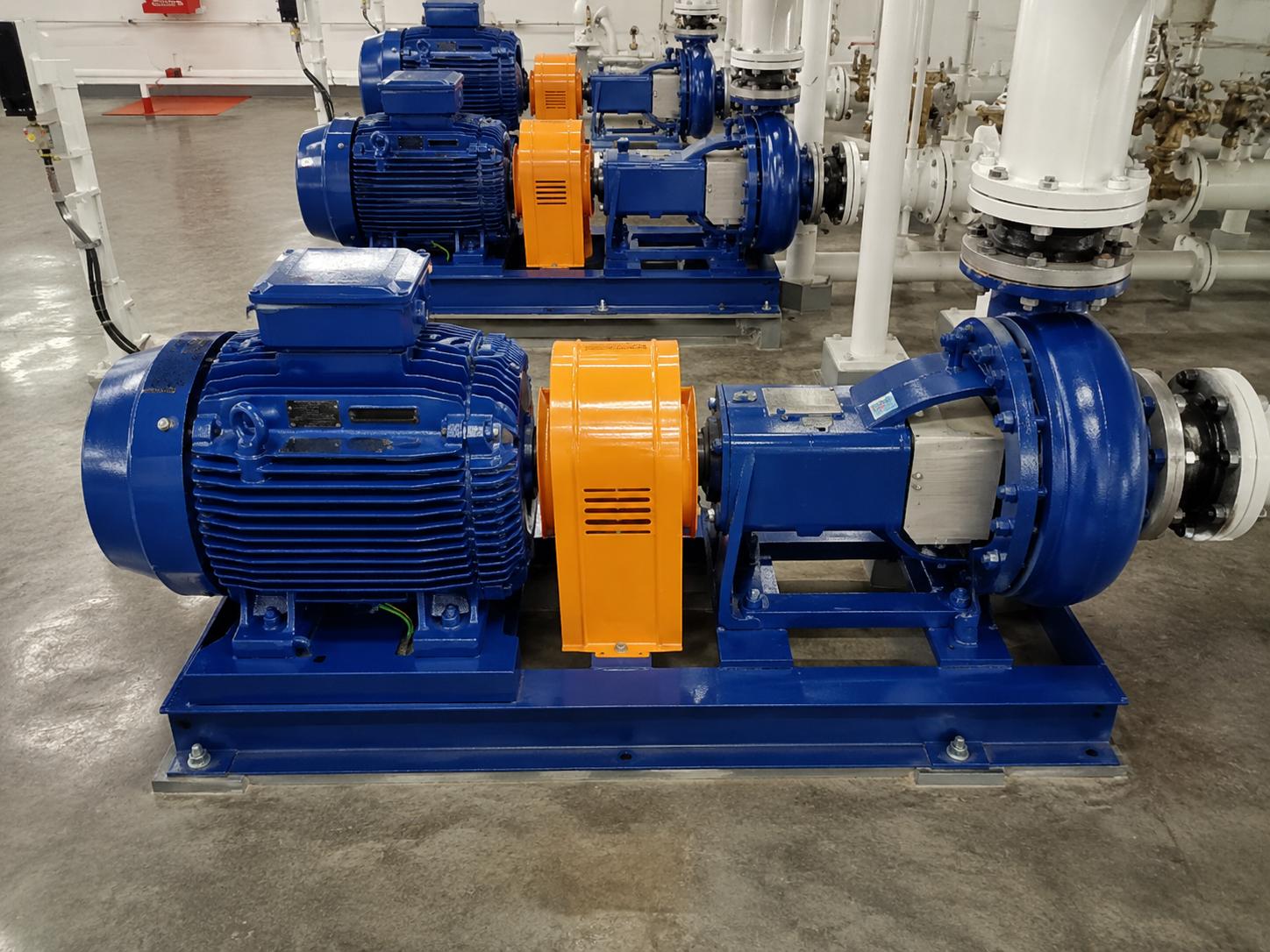

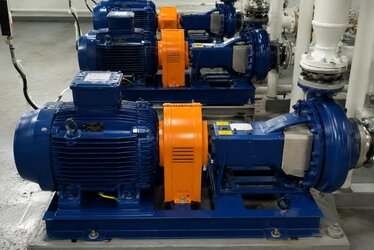
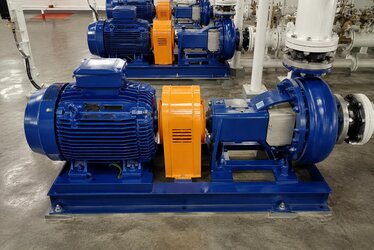
At the heart of every drilling operation is the mud pump, which pumps drilling fluid (mud) down the wellbore at high pressure. This pump cools the bit, carries cuttings to the surface and stabilizes the well wall. The motor that drives the pump is the most critical link in this chain: it must run continuously in an environment full of high torque, heavy pulsating load and abrasive slurry. A poorly selected mud pump motor leads to rig downtime, lost production and serious cost. For this reason, selecting a mud pump motor is a far more demanding engineering decision than choosing an ordinary pump motor.
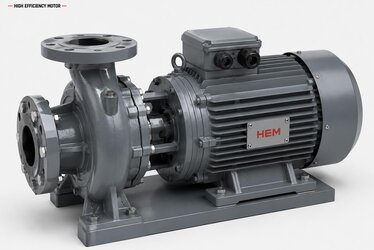
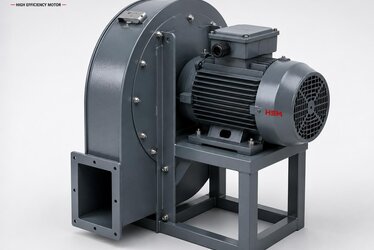
As HEM Motor, when we supply motors for drilling and heavy-duty applications, we focus on three main challenges: high starting torque, a fluctuating (pulsating) load, and the dust and moisture that abrasive slurry spreads to the surroundings. In this article we explain how a mud pump motor meets these conditions, what you need to know for correct power supply, and the selection steps involved. You can review our mining and heavy-duty range and current electric motor prices on our product pages.
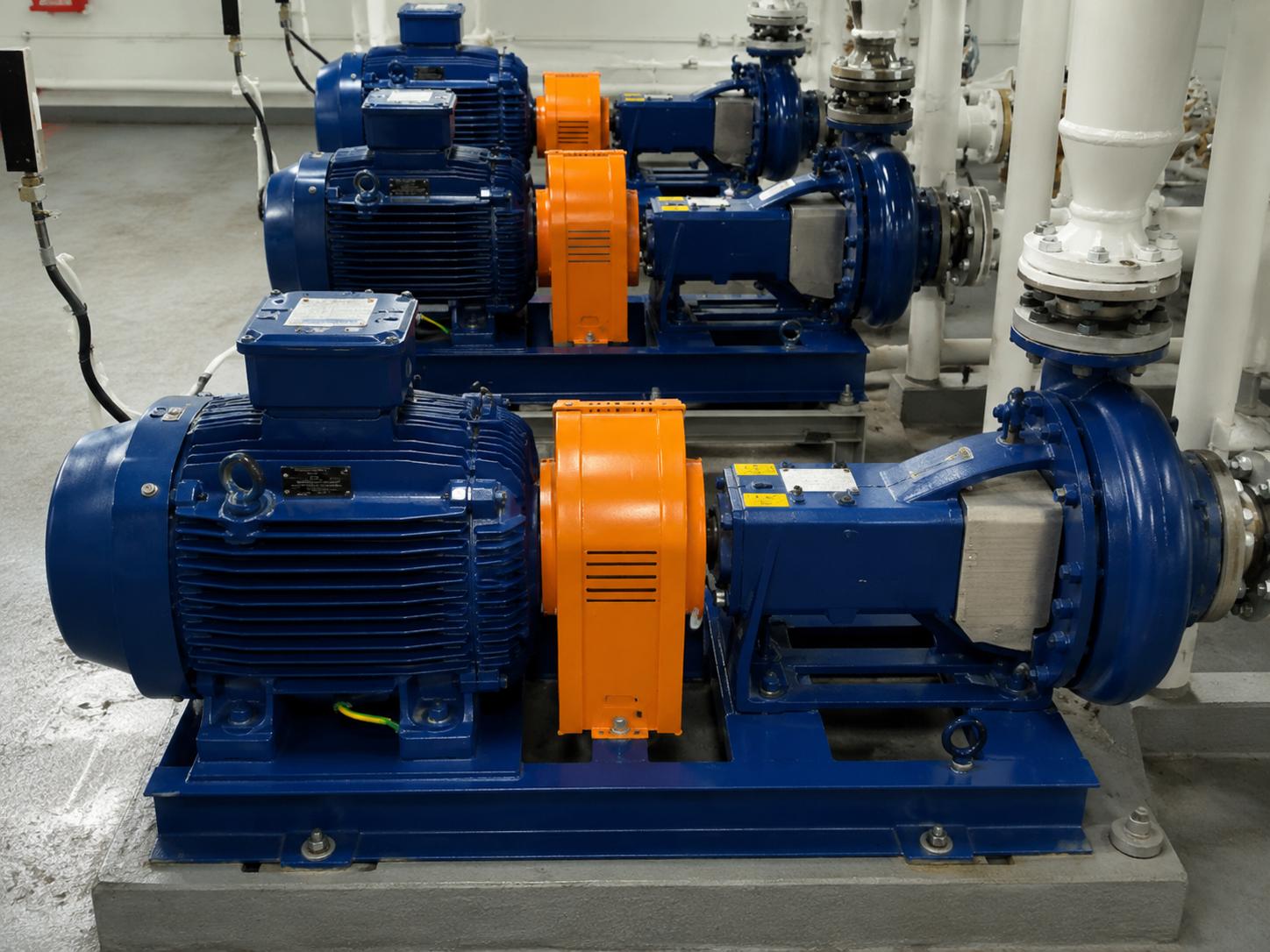
How a Mud Pump Works and What It Demands From the Motor
A mud pump is typically a reciprocating (positive displacement) pump. It forces mud by the back-and-forth motion of two or three pistons; this motion inherently creates a fluctuating load profile. The load rises with each stroke and falls on the return. The motor must convert this fluctuating load into smooth rotation, usually through a flywheel and a gearbox.
This working principle creates three fundamental requirements for the motor: high and sustained torque, stable operation despite fluctuation, and long life under a heavy-duty regime. We address the pulsating load characteristic of reciprocating pumps and the matching motor selection over a similar load profile in our peristaltic (hose) pump motor selection article.
Pulsating Load
In a centrifugal pump the load is almost constant; a mud pump, by contrast, raises the torque demand with every piston stroke. This pulsation continuously stresses the rotor and the gearbox. Motor selection must leave a margin of inertia (flywheel) and thermal capacity to flatten this fluctuation. We detail the role of the flywheel and inertia under impact and fluctuating load in our motor selection under impact load: flywheel, inertia and crusher drive article.
High Starting Torque
If the pump has stopped while full of mud, the motor must produce a high breakaway torque on restart. The mud pump motor must therefore be selected in a high starting-torque class (Design N/H), and the starting method planned accordingly. We explain starting-torque classes in our asynchronous motor torque classes (Design N/H) and starting torque article.
Abrasive Slurry and Environmental Conditions
Drilling mud is an abrasive slurry containing clay, barite, sand and solid cuttings. As the pump forces this slurry, leakage, splashing and dust spread to the surroundings. Even though the motor does not contact the mud directly, it must operate in this aggressive environment. This creates three separate threats for the motor: insufficient protection class, contamination of the cooling surface, and particles entering the bearing.
- Protection class: In a site with heavy splashing, dust and moisture, a minimum of IP55 is expected; in very aggressive environments IP65/IP66 is preferred. We cover protection selection in an abrasive slurry environment in our mine dewatering and slurry pump motor selection article.
- Frame material: A cast-iron frame is preferred against impact, vibration and external factors; its rigid structure is an advantage under a heavy-duty regime.
- Oil seal and sealing: Seals at the shaft outlet prevent dust and splashed mud from reaching the bearing. We explain sealing measures in our oil seal and sealing in cast-iron motors article.
Our motor protection in quarries and mines: dust, moisture and impact article summarizes whole-site protection.
Selecting the Correct Power and Speed
The power of a mud pump motor is determined by the flow and pressure the pump must deliver. High pressure (which rises with well depth) and high flow directly increase the required kW. When sizing the motor, the peak values of the pulsating load must also be considered; sizing should never be based on average load alone.
- Power margin: Under a fluctuating load the peak torque exceeds the average; the motor must be selected with a power margin to cover this peak.
- Speed and pole count: A mud pump is usually driven through a gearbox or belt-pulley that reduces speed; the motor speed is selected according to the stroke rate the pump requires.
- Duty type: Since drilling requires continuous or long-running operation, the motor must be selected for S1 (continuous) duty.
We address the steps of matching flow, pressure and power in a pump motor in our pump motor selection guide: flow, head, speed and power article. Our asynchronous motor buying guide: which pole count for which job article explains correct pole and speed selection.
Starting: High Torque and Inertia
A mud pump motor starts by lifting a pump full of mud; the starting current and mechanical shock are therefore high. At larger powers, a soft starter or star-delta is preferred over direct-on-line starting. This limits both the grid impact and the mechanical shock in the drive train.
- Soft starter: Smooths the starting current and torque, protecting both the motor and the gearbox; it is also advantageous against site voltage fluctuations.
- Star-delta: An economical solution; however, it can produce a transition shock under load, so it should be evaluated per application.
- Generator supply: Drilling sites are often fed by a generator; the starting current must be compatible with the generator capacity.
You can review the starting-current issue on generator-fed sites in our electric motor selection on generator-powered sites article, and generator kVA to motor kW matching in our how many kVA generator carries how many kW motor article.
Cooling and Continuous Full-Load Regime
Drilling operations mostly run long and uninterrupted. This means the motor runs continuously at full load (S1). Continuous full load requires the heat the motor produces to be dissipated continuously; if abrasive dust covers the cooling surfaces, the risk of overheating rises.
- Thermal capacity: The motor must be selected for continuous full load; the thermal effect of the pulsating load must be considered.
- Cooling method: In surface-cooled (IC411) motors, keeping the fan cover and fins clean is critical; regular cleaning is needed on a dusty site.
- Insulation class: In a hot environment, Class H insulation instead of F provides a temperature margin and extends life.
We detail insulation class selection in hot and dusty environments in our motor in hot and dusty environments: insulation class (F/H) and cast-iron frame selection article. Our motor cooling and overheating in crusher plants article covers cooling issues under continuous full load.
Bearing Life, Vibration and Lubrication
The pulsating load and continuous vibration directly affect the bearing, the most stressed part of a mud pump motor. Abrasive dust reaches the bearing under poor sealing and accelerates wear, while the fluctuating load fatigues the bearing mechanically.
- Reinforced bearing: Under impact and fluctuating load, a heavy-duty bearing and correct lubrication extend life.
- Sealing: Oil seals and labyrinth sealing at the shaft outlet prevent abrasive particles from reaching the bearing.
- Lubrication interval: In a harsh environment the lubrication interval must be shortened and the correct grease type selected.
- Re-lubrication fitting: On large motors, an external grease nipple eases maintenance.
We explain the bearing limit under axial and radial load in our electric motor shaft radial and axial load limit article, and bearing type selection in asynchronous motors in our bearing type and life in asynchronous motors article.
Supply and Critical Spare Plan
When a mud pump stops on a drilling rig, the entire operation stops; this means both lost production and high downtime cost. For this reason, mud pump drive motors must be on the site's critical spare list. As HEM Motor, in heavy-duty supply we prepare an exact equivalent based on the existing motor's nameplate and offer stock and fast-supply options at critical power ratings. You can review our mining and heavy-duty range on our mining sector electric motor page, and for pump applications on our pump electric motors page.
Replacing the Existing Motor Like-for-Like
When a mud pump motor fails, the only need is often to quickly source the exact same motor. For this, the existing motor's nameplate must be read correctly and conveyed completely. The basic information to read from the nameplate is:
- Power (kW) and speed (rpm) or pole count.
- Frame size (IEC frame), mounting type (B3/B5/B35) and shaft diameter.
- Voltage, frequency, current and connection (star/delta).
- Protection class (IP) and insulation class.
We explain like-for-like equivalent selection from the nameplate step by step in our avoid the wrong motor delivery: like-for-like matching by nameplate before ordering article. We address emergency replacement scenarios in our when a conveyor belt motor fails: finding an emergency replacement motor article.
Frequently Asked Questions
What type of motor is suitable for a mud pump?
Because a mud pump is a reciprocating pump, it creates a fluctuating (pulsating), high starting-torque load profile. A motor in a high starting-torque class, selected for continuous duty (S1), with a cast-iron frame and reinforced bearings is therefore suitable. The motor usually drives the pump through a flywheel and gearbox; this inertia flattens the pulsation and protects the motor.
What protection class is required in an abrasive mud environment?
On a drilling site with heavy dust, splashing and moisture, a minimum of IP55 is expected; in very aggressive environments IP65 or IP66 protection is preferred. In addition, the oil seals at the shaft outlet must be capable of preventing abrasive particles from reaching the bearing, and the cooling surfaces must be cleaned regularly.
Should I keep a mud pump motor as a critical spare?
Yes. Because the entire drilling operation stops when the mud pump stops, these motors should be on the critical spare list. When you convey the existing motor's nameplate, we prepare an exact equivalent and build a supply plan that minimizes downtime with stock and fast-supply options at critical power ratings.