English
 Türkçe

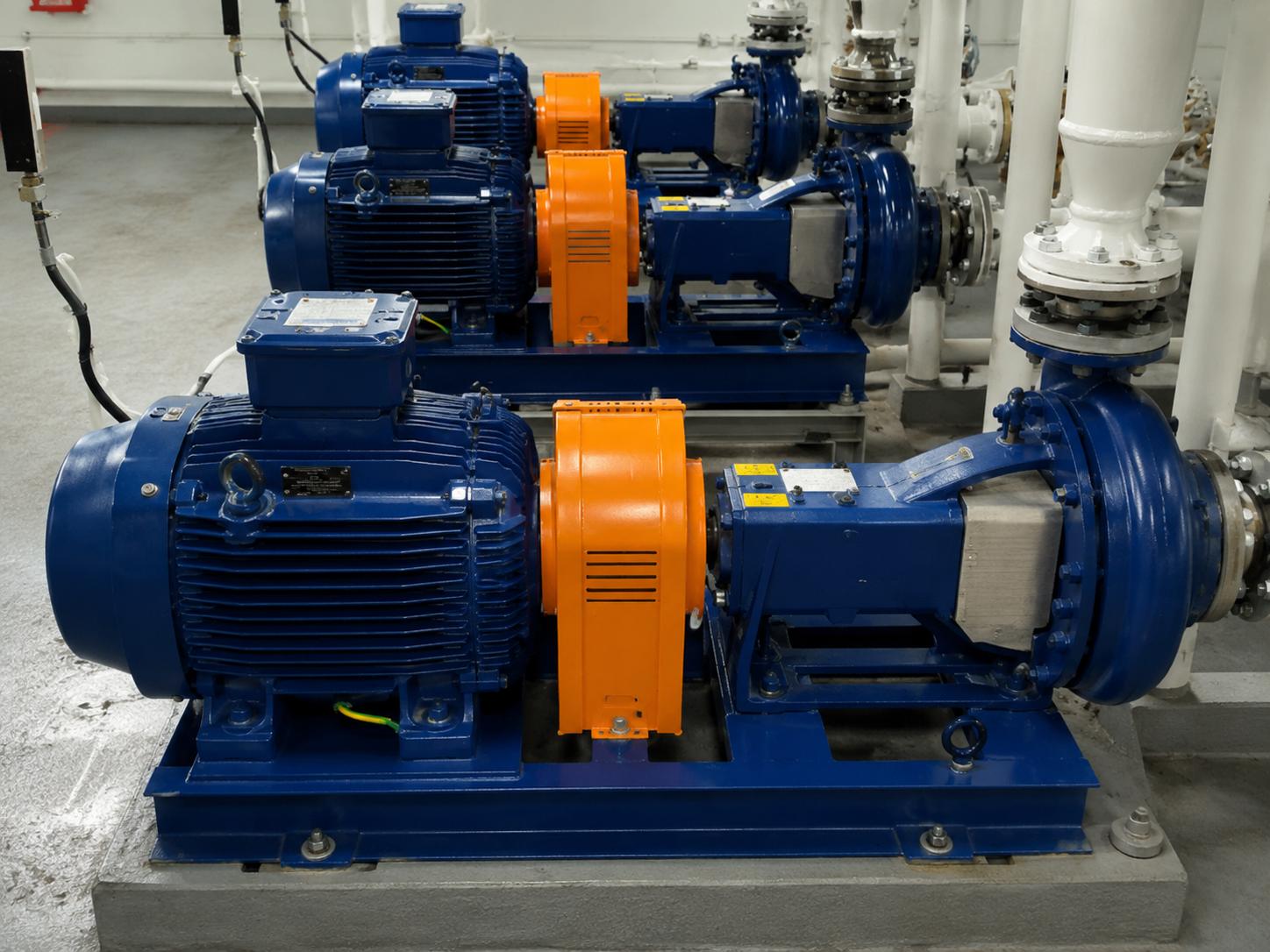

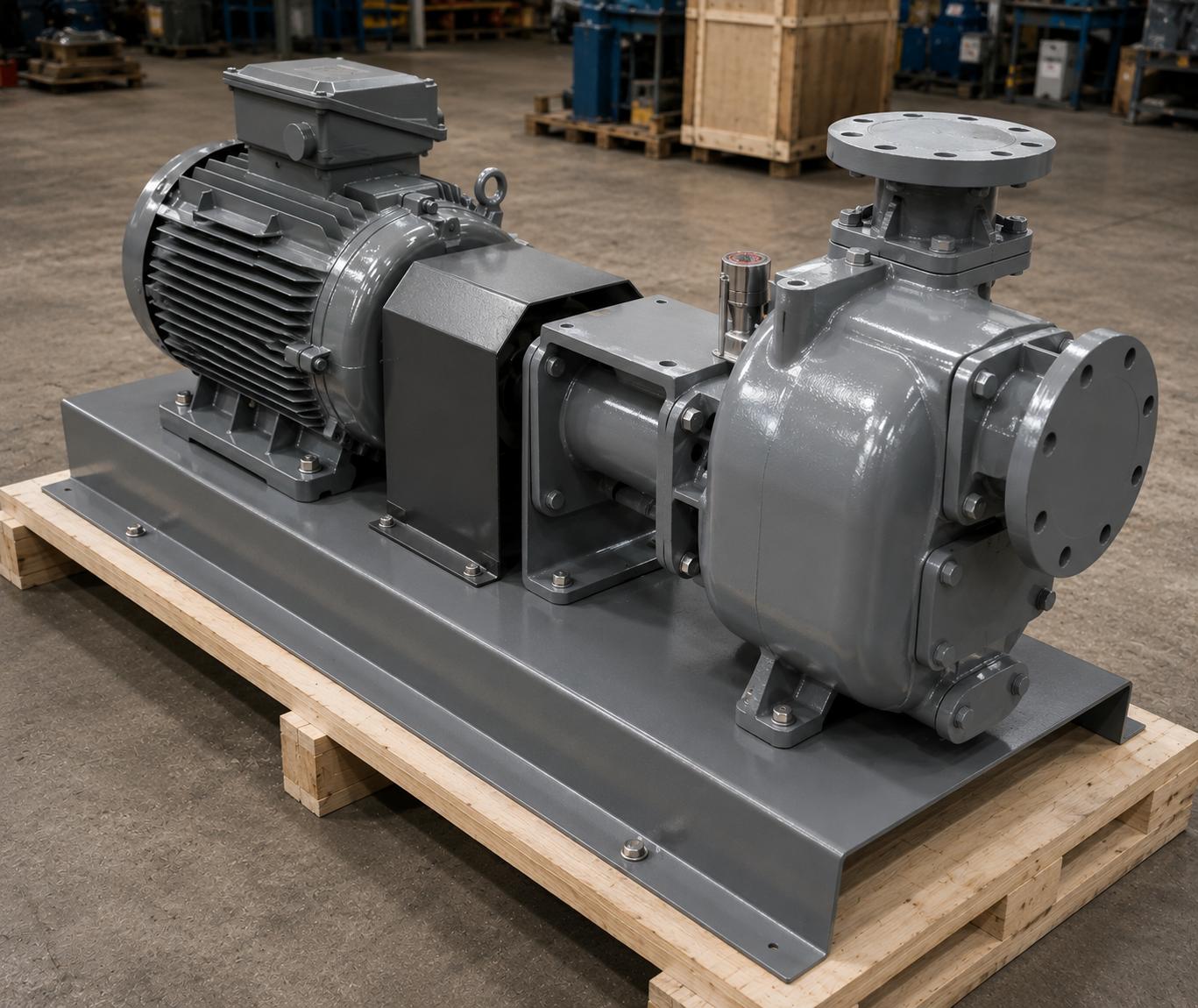
Double-suction (split-case) pumps are the most preferred pump type in high-flow water supply, cooling water circulation, fire fighting and large building installations. The distinguishing feature of these pumps is that water is drawn from both sides and enters the impeller from two directions; this achieves both high flow and a largely balanced axial thrust. This mechanical feature is the fundamental factor that directly determines motor selection for a double-suction pump.
When selecting a motor for a split-case pump, not only power but also speed, axial thrust balance, mounting type, protection class and duty type must be evaluated together. A wrongly chosen speed shifts the pump's operating point, causing efficiency loss and cavitation; insufficient protection class causes early failure in humid pump rooms. In this article we examine high flow, axial thrust balance and how to choose the correct power for water supply from a field perspective.
Our goal is to help you determine the right motor that exactly matches your pump and to supply suitable types quickly from stock. You can reach the product families from the homepage.
How a Double-Suction (Split-Case) Pump Works
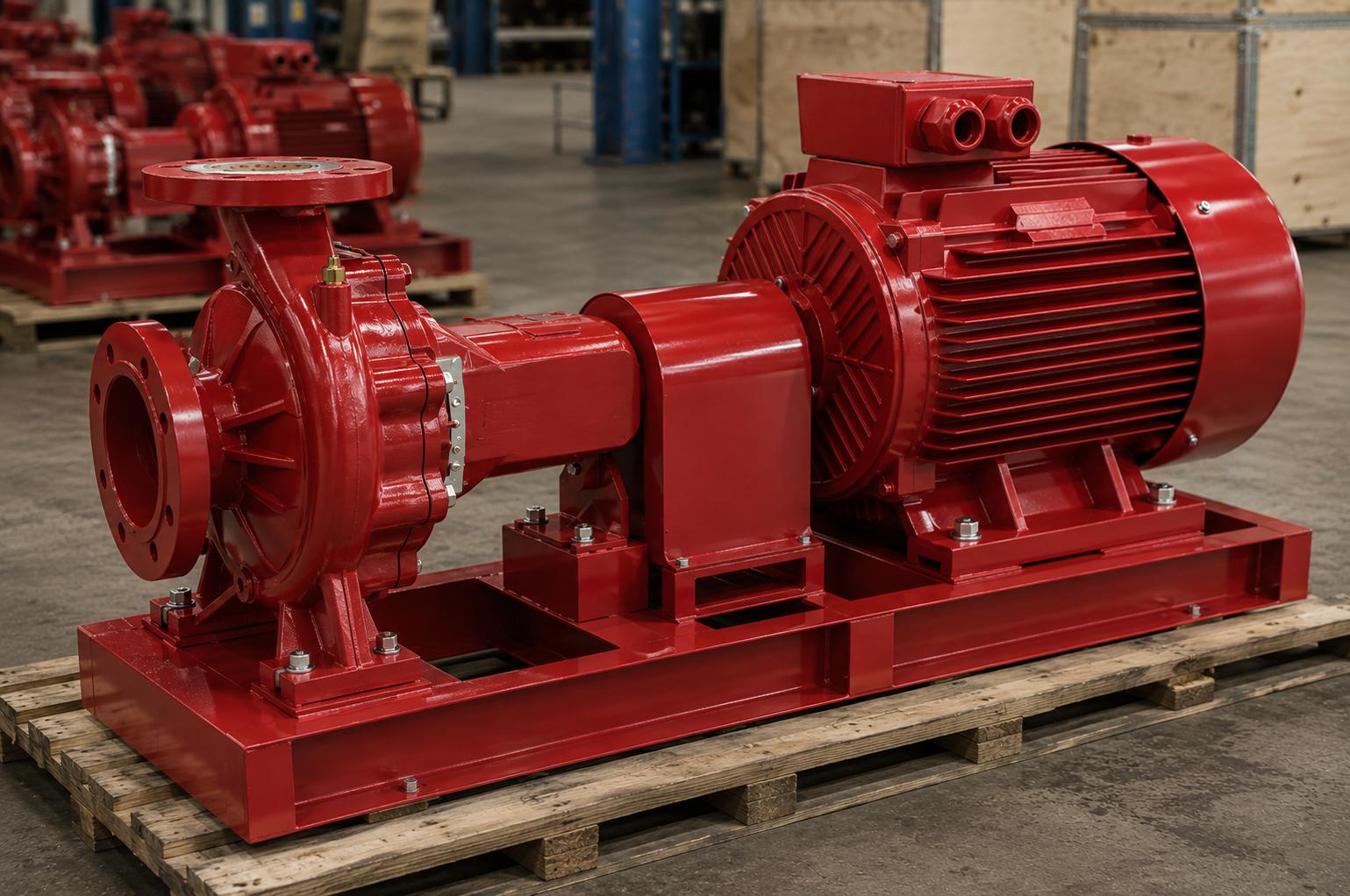
The split-case pump takes its name from the fact that its casing can be split in two parallel to the axis of the pump shaft. This structure facilitates maintenance and impeller replacement; because when the upper casing is lifted, the impeller and shaft can be removed without dismantling the suction and discharge pipes. The symmetrical entry of water into the impeller from two sides ensures that the axial forces acting on the two faces of the impeller largely balance each other.
This axial balance is a critical advantage in terms of motor selection. In single-suction pumps the axial thrust acting on the impeller imposes an extra load on the motor bearings and may require special axial bearings. In double-suction pumps, since this thrust is largely balanced, a motor with standard radial bearings is sufficient in most applications. Still, the residual axial load value stated by the pump manufacturer should be considered in motor selection.
Pump Curve and Motor Operating Point
Correct motor selection begins with reading the pump curve correctly. Every pump has a characteristic curve showing the relationship between flow (Q) and head (H). The point on this curve where it intersects the system resistance curve is the pump's real operating point, and the shaft power the motor must meet is determined at this point. As the system resistance changes, the pump runs at different points along the curve; for this reason the motor must safely meet the point of highest power draw as well.
In double-suction pumps, the high-flow operating point is usually in the mid-right region of the curve. The motor meeting the power need in this region without overloading is essential for both safe operation and long life. Running the pump near its best efficiency point (BEP) is ideal for both energy efficiency and pump life; moving away from this point increases vibration, wear and efficiency loss. Correct motor power supports the pump running safely in this optimal region.
Speed Selection: 4-Pole or 2-Pole?
In most split-case pumps a 4-pole motor, that is around 1500 rpm, is preferred. The reason is that 1500 rpm offers an ideal speed range for high-flow pumps, keeps the cavitation risk low and reduces mechanical wear. Low speed also provides quieter and longer-lasting operation.
When 2-Pole Comes into Play
In applications requiring high head, 2-pole (around 3000 rpm) motors come into play. High speed makes it possible to produce higher pressure; however, cavitation risk, mechanical stress and noise also increase. For this reason a 2-pole selection should be made only when the pump curve and system need truly require it. To examine the pole-speed relationship in more detail, see our pole selection article.
Cavitation, NPSH and Their Effect on Motor Selection
Cavitation is a subject that affects motor selection indirectly but importantly. Cavitation is the phenomenon of vapor bubbles, formed when the pressure on the suction side drops below the liquid's vapor pressure, collapsing on the impeller; this causes erosion on the impeller, noise, vibration and efficiency loss. The cavitation risk is higher in a pump running with a high-speed (2-pole) motor, because the increased speed raises the net positive suction head (NPSH) required on the suction side.
For this reason a 4-pole (1500 rpm) motor provides an advantage in double-suction pumps not only in terms of energy and wear but also in terms of cavitation safety. Low speed reduces the NPSH requirement, enabling the pump to run safely over a wider operating range. When selecting the motor, the operating point and NPSH values given by the pump manufacturer must be considered.
Correct Power Selection and Overload Margin
The power of a pump motor must match the shaft power at the pump's operating point but include a reasonable safety margin. The pump's power need changes along the pump curve as flow and head change; especially when system resistance decreases, the pump moves to the right of the curve and draws more power. For this reason the motor must be selected with a margin that meets the point of highest power draw without overloading.
In pump motors the S1 continuous duty class is usually essential, because pumps often run uninterrupted for long periods. IE3 or IE4 efficiency class provides serious energy savings over the years in a continuously running pump. To clarify power and speed selection, review our power and speed guide.
Mounting, Body and Protection Class
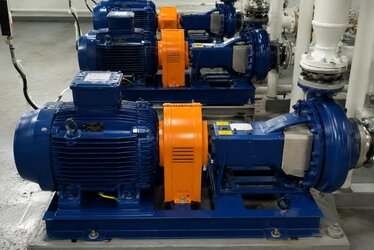
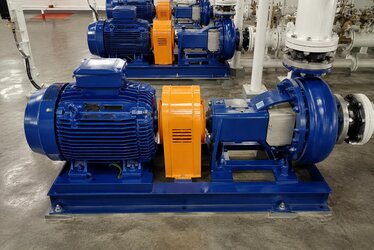
Split-case pumps usually run with coupled mounting; that is, the motor shaft is connected to the pump shaft with a flexible coupling. For this mounting a B3 foot motor is aligned with the pump on a common baseplate. Correct alignment is critical for coupling life and vibration; misalignment stresses both the motor and pump bearings.
- Mounting type: a B3 foot body is standard for coupled applications.
- Body material: a cast iron body is superior for mechanical durability and vibration damping.
- Protection class: at least IP55 is recommended for humid pump rooms.
- Insulation class: F-class insulation provides thermal endurance in continuous operation.
- Efficiency class: IE3/IE4 is preferred for energy savings in continuously running pumps.
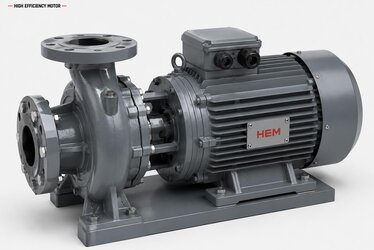
A cast-iron-body, IP55-protected and F-class-insulated motor provides long life and reliability in split-case pump applications. You can review the efficient motor families on the efficient electric motors page.
Alignment and Vibration Management
The most common problem in a coupled split-case pump-motor group is vibration and early bearing failure caused by misalignment. The motor and pump shafts must be correctly aligned both axially (parallel) and angularly. Misalignment imposes a cyclic load on the bearings of both equipment through the coupling, leading over time to bearing, coupling and shaft damage. A well-balanced rotor and correct alignment significantly extend the life of both the motor and the pump.
In a pump-motor group mounted on a common baseplate, it is also important to seat the baseplate on a flat, vibration-free floor. Vibration-damping pads are used if needed. A check with a laser alignment device during commissioning prevents vibration problems that may arise later. When selecting a motor for a double-suction pump, the motor's vibration class (for example a reduced-vibration class) should also be suitable for the application.
Exact Spare Motor Supply
In critical applications such as water supply and fire fighting, a stopped pump is unacceptable. For this reason keeping an exact spare motor for split-case pumps is a smart operating strategy. When selecting a spare motor, not only power and speed but also mounting type, shaft diameter, foot dimensions and frame size must match the original motor exactly.
With fast supply from stock and manufacturer assurance, the pump is quickly brought back online in case of failure. By keeping the most-used power and speed steps in stock, we secure the continuity of production and water supply.
Drive Use and Variable Flow
In split-case pumps the flow need can change over time; for example, in a building cooling system or a water distribution network, demand fluctuates during the day. In such applications, driving the pump motor with a frequency drive (VFD) provides both energy savings and process flexibility. Due to the pump characteristic, reducing flow with a drive lowers shaft power by a cubic ratio; that is, 20% lower speed can mean roughly half the energy consumption.
In drive-fed applications the motor must have reinforced (inverter duty) insulation and be selected in a suitable efficiency class. In large variable-flow pumps, the IE5 synchronous reluctance motor and drive combination offers high efficiency even at partial load, minimizing operating cost. In fixed-flow applications, a directly grid-connected IE3/IE4 motor is usually the most economical solution.
Reliability and Continuity in Water Supply
Double-suction pumps are often used in critical infrastructure applications: city water supply, industrial cooling, fire fighting and large building installations. In these applications a stopped pump is not just an equipment failure but a water cut, production stop or safety risk. For this reason reliability outweighs initial investment cost in motor selection. A reliable motor is achieved by combining a robust cast iron body, quality bearings, the correct protection class and a suitable efficiency class, plus keeping an exact spare in stock for critical pumps.
Frequently Asked Questions
Which speed should be preferred in a double-suction pump?
In most split-case pumps a 4-pole, around 1500 rpm motor is preferred; this speed offers the ideal range for high-flow pumps, keeps cavitation risk low and reduces wear. Only in applications requiring high head does a 2-pole (around 3000 rpm) motor come into play.
Why is axial load important in a split-case pump motor?
Since water enters the impeller symmetrically from two sides in double-suction pumps, the axial forces acting on the two faces of the impeller largely balance each other. This balance allows a motor with standard radial bearings to be sufficient in most applications. Still, the residual axial load value stated by the pump manufacturer should be considered in motor selection.
Which protection and efficiency class are recommended in a pump motor?
At least IP55 protection class for humid pump rooms, F-class insulation in continuous operation and IE3/IE4 efficiency class are recommended. A cast iron body is superior for mechanical durability and vibration damping. An exact spare motor can be supplied with fast supply from stock and manufacturer assurance.