English
 Türkçe

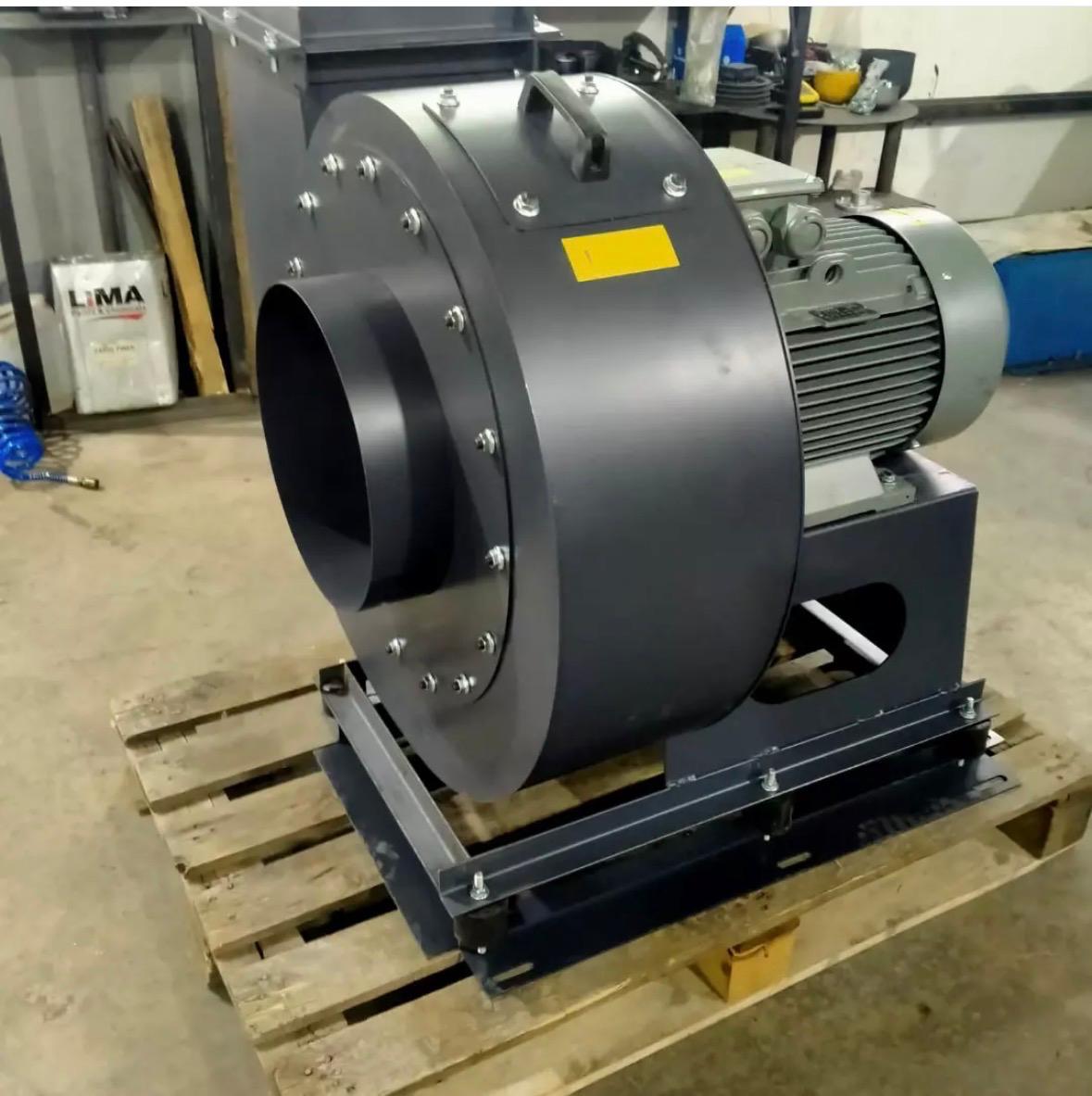

When selecting a motor for a centrifugal pump, most people look only at two numbers: flow and head. These two values describe the working side of the pump, but the real danger that determines the life of the motor and the pump is often hidden on the suction side. When the pressure conditions on the suction line are set wrongly, the result is cavitation, a phenomenon that gnaws at the pump from within, producing noise, vibration and early failure. In this article we approach centrifugal pump motor selection not only through the flow-head window but together with the NPSH balance and cavitation risk on the suction side, explaining in detail how suction head, speed selection and correct power-speed matching determine the health of the pump-motor set.
What Is NPSH and Why Does It Matter?
NPSH stands for net positive suction head and describes how close the liquid at the pump's suction inlet is to its vaporisation limit. The concept is handled with two separate values: the NPSHa (net positive suction head available) provided by the system and the NPSHr (net positive suction head required) needed by the pump. The basic rule for preventing cavitation is simple: the NPSHa offered by the system must exceed the NPSHr demanded by the pump by a sufficient safety margin.
NPSHa is a result of the physical conditions on the suction side. Atmospheric pressure, the height of the liquid, the friction losses in the suction line and the vapour pressure of the liquid as a function of temperature determine this value. As the liquid rises, the suction line lengthens and temperature increases, NPSHa drops. NPSHr, on the other hand, depends on the pump's own design and is given on the manufacturer's pump curve as a function of flow. As flow increases, the NPSHr demanded by the pump generally rises too.
How Does Cavitation Form?
When NPSHa falls below NPSHr, the pressure at the pump inlet drops to the liquid's vapour pressure and tiny vapour bubbles form within the liquid. When these bubbles reach the region inside the impeller where pressure rises again, they suddenly collapse; this collapse produces micro-impacts that strike the impeller surface. These continually repeated impacts erode the impeller material, make the pump run noisy and with vibration, and over time cause serious damage to both pump and motor. Cavitation produces a characteristic sound, as if small gravel stones were constantly turning inside the pump.
The Relationship Between Suction Head and Speed
In applications where the pump must draw the liquid from above, that is, where the suction lift is large, NPSHa is naturally low. In this case, to avoid cavitation the NPSHr required by the pump must be kept as low as possible. This is exactly where motor speed comes into play. The NPSHr demanded by the pump is directly related to the impeller peripheral speed; as speed rises, NPSHr rises rapidly too. For this reason, in tough suction conditions a low-speed pump-motor set is far safer.
In practice this translates into the choice of motor pole count. A two-pole motor turns at around 2900 rpm, while a four-pole motor turns at around 1450 rpm. In an application with large suction lift, choosing a four-pole, that is, low-speed motor, reduces the NPSHr required by the pump and thereby significantly lowers cavitation risk. While a high-speed pump easily cavitates under the same suction conditions, a low-speed pump can run safely under the same conditions.
The Benefits of Choosing Low Speed
- Lower NPSHr: Because the impeller peripheral speed is reduced, the suction head demanded by the pump drops, providing safe operation under tough suction conditions.
- Less wear: Low speed reduces hydraulic stress on the impeller and seal; pump life is extended.
- Quieter operation: Because both cavitation risk and hydraulic noise are reduced, the set runs more calmly.
- Bearing and shaft safety: When the cavitation-induced pulsating load is removed, the motor bearings and shaft wear far less.
The Damage Cavitation Does to the Motor
Cavitation is not only a pump problem; it directly affects the motor too. The bubbles collapsing inside the impeller create an irregular, pulsating load, and this load is transmitted to the motor through the shaft. This constantly changing pulsating load fatigues the motor's bearings and shaft. Early bearing wear, vibration transmitted to the windings and mechanical loosening over time appear. In other words, a mistake made on the suction side can turn into a chain reaction that extends all the way to motor failure.
For this reason the pump-motor set must be assessed as a whole. When the suction conditions are set correctly, cavitation is prevented and the motor turns under a smooth, vibration-free load. For the motor to withstand these tough conditions, the correct protection class and insulation are also critical. In pump applications, IP55 protection class and class F insulation are generally preferred; this combination protects the motor against both moisture and temperature rise and ensures long life.
Correct Power-Speed Matching
In centrifugal pumps, power varies together with flow and head. Selecting the pump at the correct operating point, that is, close to its best efficiency point, is important both for energy and for mechanical health. When the pump is run far from its operating point, efficiency drops and hydraulic stresses increase. The motor power should be selected to cover, with a reasonable margin, the power requirement at the pump's toughest operating point. On correct power selection, our 55 kW electric motor selection content offers a concrete framework for pole and speed matching.
The steps to follow for correct matching are as follows:
- Clearly determine the pump's operating point (flow and head) and read the NPSHr value from the pump curve.
- Calculate the NPSHa offered by the system according to the suction conditions; include liquid temperature and suction line losses.
- Make sure there is a sufficient safety margin between NPSHa and NPSHr; if the margin is insufficient, consider lowering the speed.
- If suction conditions are tough, lower NPSHr by selecting a low-speed, that is, four-pole motor.
Factors Affecting the NPSHa Calculation
The NPSHa offered by the system is not a fixed number; depending on many variables on the suction side, it can differ even within a day. Grasping these variables correctly is the key to preventing cavitation before the pump even comes online. Especially in outdoor plants, seasonal temperature variations, fluctuations in the tank water level and blockages in the suction line can lower NPSHa and bring it closer to the cavitation threshold.
The main factors that determine the NPSHa calculation are as follows:
- Atmospheric pressure and altitude: As altitude rises, atmospheric pressure drops; in high-altitude plants NPSHa is lower from the start and cavitation risk increases.
- Liquid temperature: As temperature rises, the liquid's vapour pressure rises and NPSHa drops rapidly; in hot-water or hot-fluid pumps this effect is decisive.
- Suction line friction losses: Long, narrow or many-elbowed suction lines increase friction loss and reduce NPSHa; keeping the suction pipe short and wide is important.
- Liquid level: If the pump draws liquid from below (positive suction lift), NPSHa drops; if the liquid is above the pump axis (flooded suction), NPSHa rises and cavitation risk decreases.
When these factors are assessed together, it becomes clear why the same pump runs trouble-free in one plant but cavitates in another. Pump selection must always be made according to the real suction conditions of the site where it will be installed; catalogue values alone are not sufficient.
The Relationship Between Pump Efficiency and Motor Load
The operating point of the centrifugal pump determines not only cavitation but also the loading level of the motor. When the pump is run far from its best efficiency point, for example at a high-flow point where the valve is too far open, the motor's power requirement rises and the motor can be overloaded. Conversely, when the valve is throttled too much, the pump turns at low flow; in this case efficiency drops and recirculation and heating begin inside the pump. For this reason the motor power must be selected to cover the highest power requirement within the pump's operating range.
The points to watch for the motor to work in harmony with the pump are as follows: the motor must not be overloaded even at the toughest point on the pump curve; the operating point should be kept as close as possible to the efficiency peak; and in variable-flow systems, speed control with a frequency converter should be considered instead of fixed speed. Speed control both provides energy savings and offers additional safety against cavitation by lowering NPSHr at low speed. This way the pump-motor set operates in both an efficient and a safe region.
The Importance of Suction Line Design
Correct design of the suction line is critically important for keeping the pump-motor set free of cavitation. The suction pipe should be at least one size larger than the discharge pipe and as short, straight and elbow-free as possible. Every elbow, every valve and every reduction creates additional friction loss on the suction line and lowers the NPSHa value. Therefore avoiding unnecessary fittings in the design preserves the pressure budget of the suction side and keeps it away from the cavitation threshold.
The basic principles to observe in suction line design are as follows:
- Prevent air pockets: The suction line should continuously rise toward the pump; no high points that could create an air pocket should be left in horizontal pipes.
- Use eccentric reducers: At pipe diameter changes, an eccentric reducer with a flat top should be preferred to prevent air accumulation.
- Keep the suction strainer clean: A clogged strainer suddenly lowers NPSHa by increasing friction loss and triggers cavitation.
- Provide sufficient submergence: The suction inlet should be deep enough in the liquid; otherwise a vortex forms and the pump draws air, suffering cavitation-like damage.
Correct suction line design is often a far cheaper and more effective solution than an expensive pump replacement. If cavitation is occurring in an existing plant, inspecting the suction line for conformity to these principles before replacing the motor or pump is a wise first step. Because the root cause of most cavitation problems is a design fault on the suction side, this inspection can resolve them.
Diagnosing Cavitation Early
Cavitation usually begins with telltale signs; noticing these signs early is of great importance for protecting both the pump and the motor. The most obvious symptom is the pump making a characteristic noise, as if gravel were turning inside it. Alongside this, increasing vibration, fluctuating discharge pressure and irregular fluctuations in flow are also harbingers of cavitation. When these symptoms are ignored, pitting on the impeller surface, seal leaks and finally bearing failures appear.
The practical indicators to watch for early diagnosis are as follows:
- Change in sound: The pump making an unusually harsh and irregular sound is the first warning; this sound often changes with valve setting.
- Increased vibration: A rise in the vibration level measured on the bearing housing shows that the pulsating load inside the impeller is being transmitted to the motor.
- Pressure fluctuation: Unstable pressure observed on the gauge is a sign that vapour is forming on the suction side.
- Efficiency drop: An unexplained decrease in flow or head at the same operating point suggests the impeller surface has been degraded by cavitation.
When these indicators are monitored regularly, it becomes possible to intervene before cavitation turns into permanent damage. Intervention often means improving suction conditions, raising the liquid level, shortening the suction line or, if necessary, moving to a lower-speed pump-motor set. Early diagnosis significantly reduces both repair cost and the risk of unplanned downtime.
Common Mistakes in the Field
The most common mistake in pump-motor selection is to ignore the suction side entirely and focus only on flow-head values. This approach can lead to a pump set that looks correct on paper but cavitates continuously in the field. Another common mistake is to prefer a high-speed two-pole pump because it is smaller and cheaper; this choice is a direct invitation to cavitation in applications with large suction lift. The third mistake is failing to account for the fact that when pumping hot liquid the vapour pressure rises and lowers NPSHa.
To avoid these mistakes, the pump and motor should be selected together, with the whole system in mind. To supply the right motor quickly across a broad power and speed range, the electric motor solutions offered by HEM Motor provide technical support in correct selection with the protection class and insulation suited to pump applications. Correct lubrication is also important to limit the effect of cavitation-induced stresses on motor life; on this our grease nipple on cast iron body motors content offers complementary information.
Frequently Asked Questions
How much margin should I leave between NPSHa and NPSHr?
As a general rule NPSHa should exceed NPSHr by a clear safety margin; typically at least a few metres of margin is recommended. The larger the margin, the greater the safety against cavitation. In tough conditions such as hot liquid, high altitude or long suction lines, the margin should be kept wider.
Why should I choose a low-speed motor if the suction lift is large?
Because the NPSHr demanded by the pump is directly related to the impeller peripheral speed and rises rapidly as speed increases. A four-pole, that is, low-speed motor turning at around 1450 rpm lowers the NPSHr required by the pump and reduces cavitation risk under tough suction conditions.
Does cavitation really affect the motor?
Yes. Cavitation creates an irregular, pulsating load inside the impeller; this load is transmitted to the motor through the shaft, wearing the bearings and shaft. Early bearing wear, increased vibration and mechanical loosening are the results. That is why setting suction conditions correctly, together with IP55 protection and F insulation, is critical for preserving motor life.