English
 Türkçe

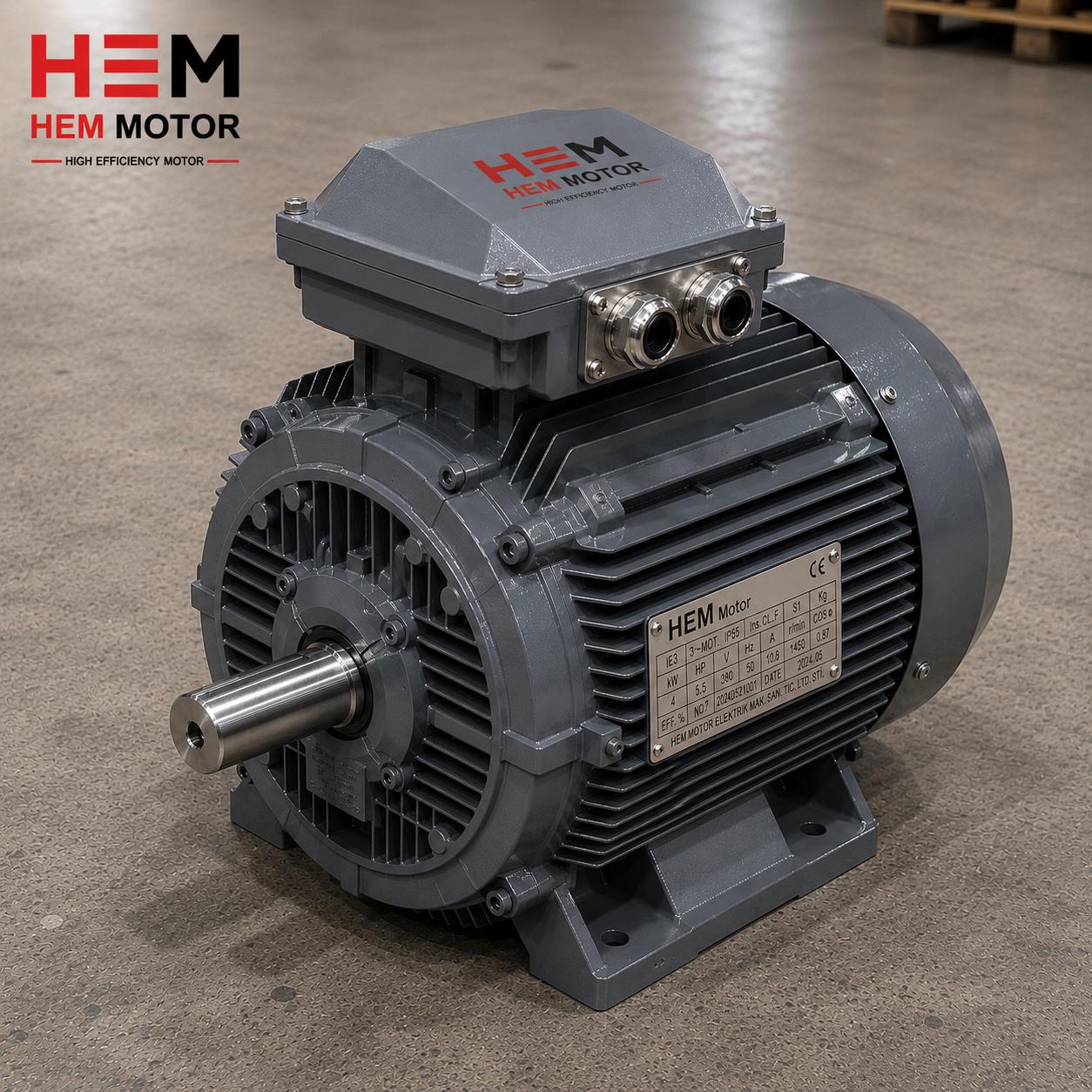

One of the decisions most frequently faced when purchasing an electric motor is whether to choose the standard value closest to the calculated power and speed, or to step up one frame size or one power class. This approach, known in the industry as oversizing (going one frame or power up), is sometimes a smart decision that protects the operation, and in other cases means unnecessary cost and efficiency loss. In this guide we examine when going one frame up in power and speed selection makes sense, what it means in terms of stock and procurement, and which questions you should ask when making the right decision. Our aim is not to recommend a large motor at any cost; it is to help you select the most suitable, economical and sustainable motor for your application.
What Is Oversizing and Why Does It Come Up?
Oversizing means selecting a motor of greater power or one IEC frame size up than the application actually requires. This approach arises for several reasons. Sometimes a safety margin is wanted against uncertainties in the engineering calculation; sometimes a larger size is chosen from the outset because a capacity increase is planned in the future; and sometimes a larger value is preferred because the exact required power is not in stock. Each of these reasons may be legitimate, but each produces different consequences.
To make the right decision, both extremes must be seen. Choosing a motor smaller than needed (undersizing) brings the risk of overheating, early failure and unplanned downtime. Choosing one larger than needed increases the purchase cost, may run the motor inefficiently at low load and can adversely affect the power factor. Sound engineering is about finding the application-specific balance between these two extremes.
A common misconception worth addressing here is the idea that "a larger motor is always safer." This is not true. An asynchronous motor generally delivers its highest efficiency and best power factor in a certain region of its rated power. When the motor runs at very low load, that is, when it is chosen larger than needed, both efficiency and power factor drop. A low power factor increases the reactive power the plant draws from the grid and, in many operations, is reflected in the bill as a reactive penalty. Therefore the "let us choose large to be safe" approach can raise the operating cost in addition to increasing the initial investment. The correct decision is to keep the safety margin measured and to position the motor's operating point in the efficient region.
When Does Going One Power Up Make Sense?
In the following situations, stepping up one power or frame class is usually the right decision:
- Loads requiring high starting torque: Applications such as crushers, large fans and mills started fully loaded need high torque at the moment of starting; here a step up in power provides safety.
- Applications that start and stop frequently (high number of starts): In systems that constantly start and stop, the thermal load increases; a motor one class up handles this load more comfortably.
- High altitude and hot environments: Because cooling efficiency drops, the power the motor can carry decreases. In this case, performing a power derating calculation for high altitude and hot environments and stepping up one power may be correct.
- Future capacity increase: If the line is planned to be expanded in the near future, choosing one frame up from the start avoids the cost of a new motor and modifications.
- Uncertain or variable load profile: In applications where the load profile is unclear and occasionally sees peak loads, a safety margin is meaningful.
When Going One Power Up Does Not Make Sense
Conversely, in the following situations oversizing is usually unnecessary and harmful:
- Constant, well-known and continuous load: In applications where the load is clearly known, such as a pump or a continuous-duty fan, the correct power is already safe; stepping up brings efficiency loss.
- Efficiency and power factor concern at low load: If an over-large motor runs at a small fraction of its rated power, its efficiency and power factor drop; this can lead to reactive penalties and a high bill.
- Sensitive applications with a frequency drive: Because the drive already manages starting and speed control, stepping up out of starting concerns is usually unnecessary.
Establishing the Power-to-Speed (Frame) Relationship Correctly
A common mistake in the oversizing decision is to disregard speed (the number of poles) while increasing power. The same power corresponds to different frame sizes and different torque values at different speeds. For example, if an application needs high torque, choosing a lower-speed (higher-pole) motor may be more correct than increasing power. Our guide on 2, 4, 6-pole asynchronous motor selection explains in detail which speed suits which job.
Establishing the relationship between frame size and power correctly is critical for both mechanical compatibility and stock. When you step up one frame, the shaft diameter, foot hole spacing, flange dimensions and shaft height may change; this can create incompatibility in the coupling, pulley or reducer connection. Reading our material on frame size and power matching is useful so that you avoid surprises when stepping up one frame.
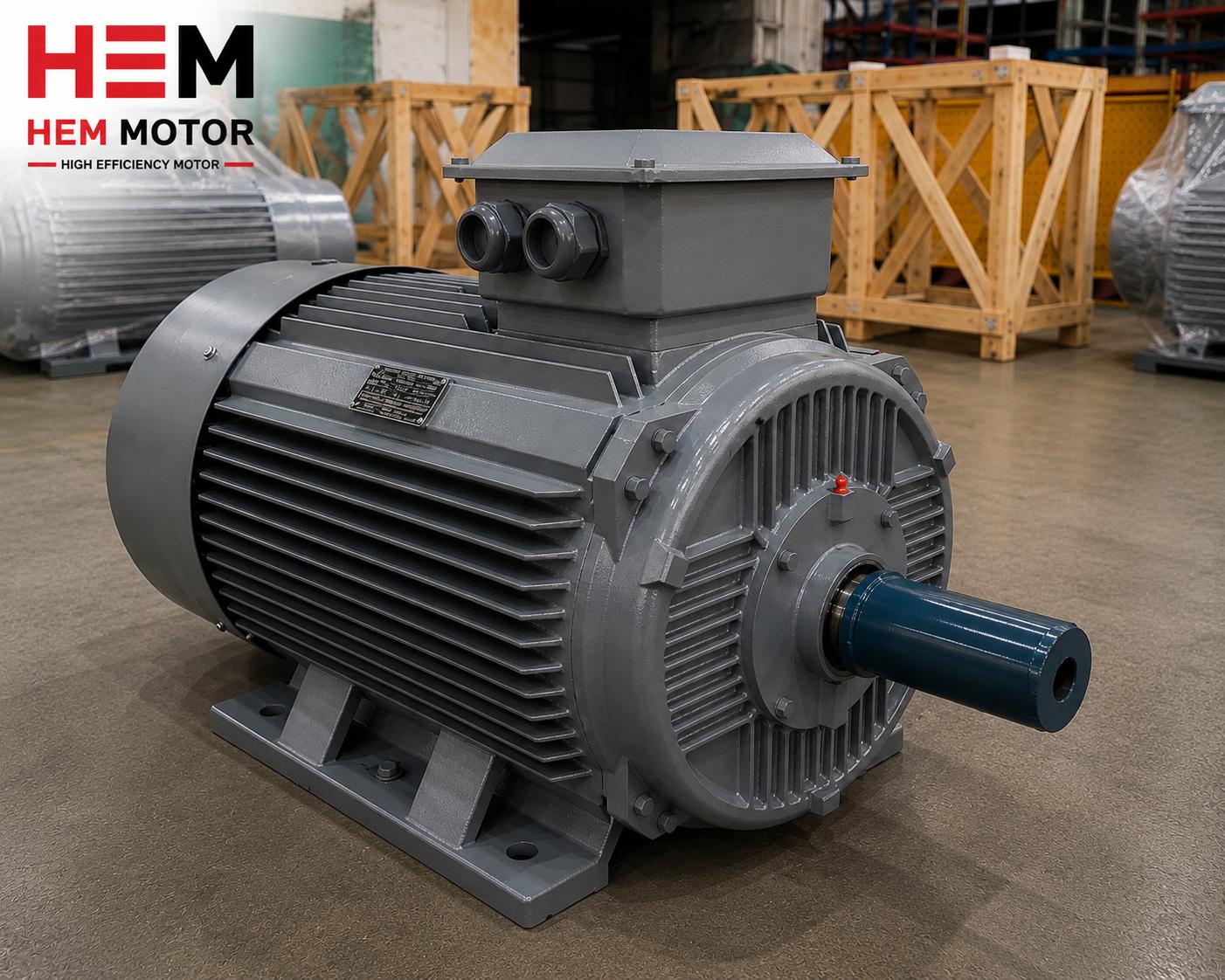
Oversizing from a Stock and Procurement Perspective
In practice, an important dimension of the oversizing decision is stock and procurement. In an emergency breakdown, a motor at exactly the required power and speed may not be instantly available. In this case there are two options: bring the line back online immediately with a motor one power up that is ready in stock, or wait for the exactly required power to arrive. If the downtime cost in a continuously operating plant is very high, running with a stock motor one power up, even temporarily, is often the economically correct decision.
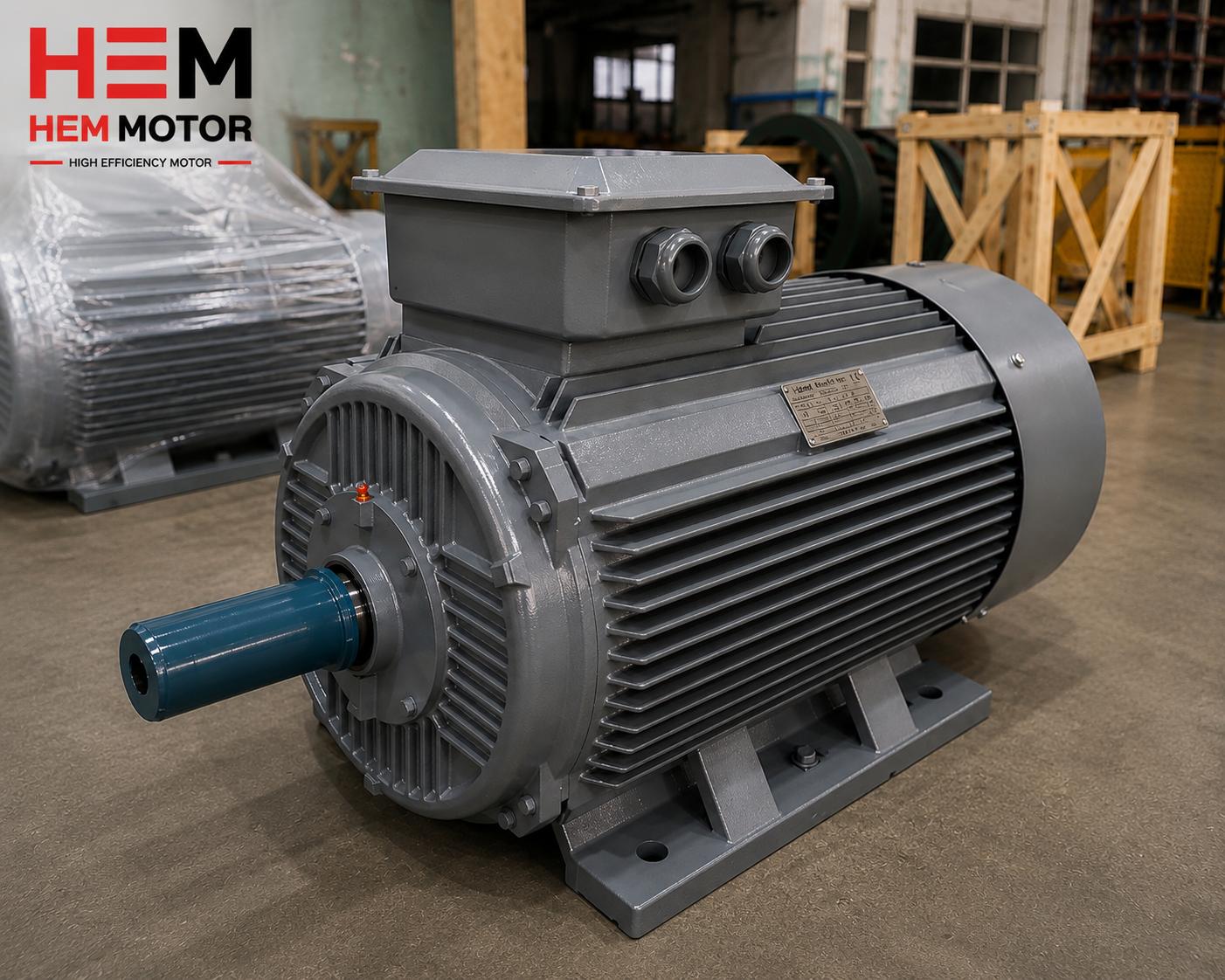
For this reason, it is a great advantage for operations to know in advance which frames can be supplied quickly at which powers for their critical lines. As HEM Motor, we keep stock across a wide power range from 0.25 kW to 355 kW in various speeds and mounting types, and can quickly offer one-to-one replacements or one-frame-up alternatives.
Another important point from a stock perspective is that standard power and speed combinations are much easier to find. Preferring the frame and power classes most widely available on the market eases both the initial supply and the future spare-finding process. When a very rare power-speed combination is chosen, finding its exact match at the moment of a breakdown can take days; in this case stepping up to the next standard power becomes a strategic choice in terms of both stock availability and fast commissioning. Therefore the oversizing decision is sometimes not purely technical but is based on the supply chain and continuity.
Drawing up a standard power map for their own facilities makes both purchasing and maintenance easier for operations. Using standard and mutually close power classes as much as possible in the same facility reduces the number of spare motors needed: a single spare motor can rescue more than one line. This approach significantly lowers stock cost and reduces the risk of unplanned downtime, especially in facilities with many motors.
The Hidden Cost of Undersizing
What is often overlooked when discussing oversizing is the error in the opposite direction: choosing a motor smaller than needed. A motor chosen very close to the exactly required power, without leaving an adequate safety margin, is constantly strained when it meets unexpected peak loads in the field. This strain shows itself first as overheating, then as the thermal protection tripping frequently and finally as premature ageing of the winding insulation. The insulation life of an overheating motor shortens markedly with every few degrees of excess temperature. In other words, the small saving gained at purchase by choosing a motor smaller than needed is more than repaid by the cost of failure and unplanned downtime that arrives much sooner.
For this reason, the correct approach is neither to enlarge blindly nor to pull dangerously to the limit. The ideal choice is to determine a balanced power class in which the motor will run in the efficient region but will not be strained at peak loads, by evaluating the application's real load profile, peak loads, starting frequency and ambient conditions together. Establishing this balance simultaneously optimises the initial investment, the operating cost and reliability.
Order Checklist When Stepping Up One Frame
- Mechanical compatibility: Do the shaft diameter, shaft height and foot/flange dimensions change on the new frame?
- Electrical compatibility: Are the existing contactor, cable cross-section and thermal protection suitable for the new power?
- Efficiency region: Will the new motor run in a comfortable region of its rated power during continuous operation?
- Connection parts: Is the coupling, pulley or reducer connection compatible with the new shaft diameter?
Ordering without these checks may cause surprises at installation even if the motor arrives. To get a correct and fast quotation, we recommend using the checklist in our guide on information to provide when requesting a quote. For current electric motor prices and for both the exactly required power and one-frame-up alternatives, our technical team offers recommendations based on your application.
Frequently Asked Questions
Is choosing a motor larger than needed harmful?
When a motor chosen much larger than needed runs at a small fraction of its rated power, its efficiency and power factor drop; this can increase the energy bill and lead to a reactive power penalty. It also raises the purchase cost. However, stepping up a reasonable class (especially with high starting torque, hot/high-altitude environments or a future capacity increase) is a correct and protective decision. What matters is establishing the balance according to the application's load profile.
If I step up one power, do I also need to change the contactor and cable?
In most cases, yes. A higher-power motor draws more current; therefore you must ensure the contactor, thermal protection and cable cross-section are suitable for the new power. If the existing panel equipment cannot handle the new power, the protection equipment must be reviewed along with the motor. Sharing the existing panel and cable details before ordering helps set up the right solution from the start.
In an emergency stoppage, if a motor at the exact power is unavailable, is it correct to run with a motor one power up?
If the downtime cost in a continuously operating plant is high, then as long as mechanical and electrical compatibility is ensured, temporarily bringing the line online with a stock motor one power up is often the economically correct decision. In this case shaft/flange compatibility, the contactor and thermal protection must be checked; afterwards, replacement with the exactly required power motor should be planned at a suitable time.