English
 Türkçe

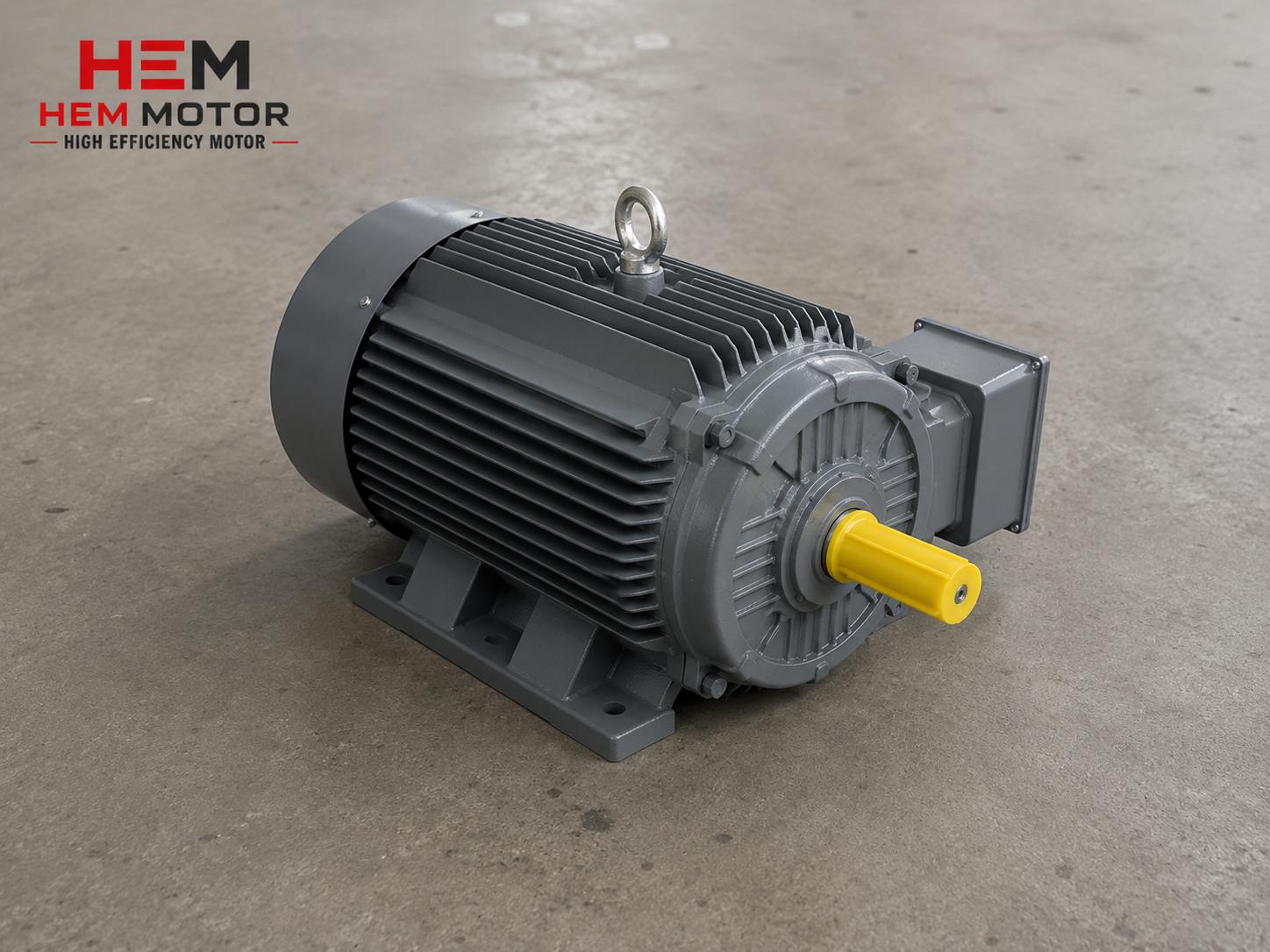

The power value written on an electric motor's nameplate is, contrary to what most people assume, not valid in every environment. That value rests on an internationally accepted assumption: the motor can safely deliver its nameplate power in an environment of at most 40°C ambient temperature and up to 1000 metres above sea level. Once these two limits are exceeded, the motor's cooling becomes insufficient and the nameplate power is no longer a safe target.
If the limit is exceeded yet the motor is forced to deliver nameplate power, it overheats, the winding insulation ages rapidly and the motor fails early. The power-reduction calculation made to prevent this is called derating. In this article we cover how the derating calculation is done above 1000 metres altitude and above 40°C ambient temperature, when it is necessary to step up a power size, and what should be written on the order note.
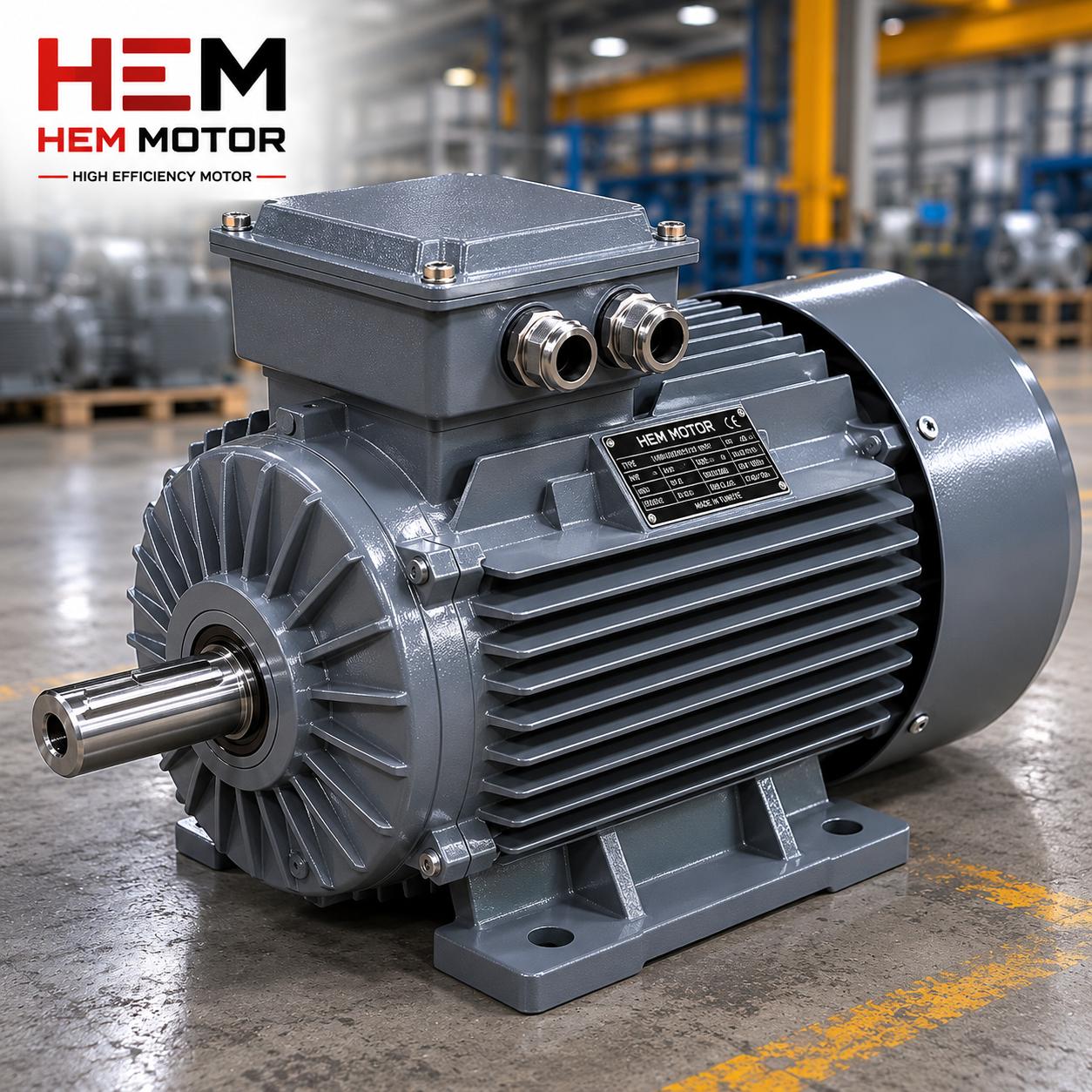
Why Is Nameplate Power Conditional?
The real factor that limits a motor's power is how well it can shed the heat it produces into its surroundings. As the motor runs it generates heat in its windings and iron body; this heat is transferred to the surrounding air through the motor frame and cooling fan. This heat-rejection balance forms the basis of the nameplate power.
Cooling depends on two things: the temperature of the surrounding air and the density of that air. The cooler the ambient air, the more easily the motor sheds its heat. The denser the air, the more heat each cubic metre moved by the fan can carry. The 40°C and 1000-metre assumption fixes exactly these two variables. When the temperature rises above 40°C, the temperature difference between the cooling air and the motor shrinks and heat rejection becomes harder. When the altitude rises above 1000 metres the air thins, its density drops, and the same volume of air carries less heat.
For this reason, when selecting a motor that will run in a high, hot environment, trusting the nameplate power blindly is misleading. A correct asynchronous motor selection is made by accounting for the ambient conditions; otherwise a motor that looks adequate on paper will overheat constantly in the field.
Temperature-Based Derating
When the ambient temperature exceeds 40°C, the continuous power the motor can deliver decreases. The reason is simple: the motor's winding insulation is designed to withstand up to a certain maximum temperature. If the surrounding air is already hot, the "temperature margin" the winding can use before overheating narrows. To preserve this margin, less power must be drawn from the motor.
In practice, motor manufacturers give the power-reduction factors to apply as the ambient temperature rises in the form of tables. The general trend is:
- Up to 40°C: The motor delivers full nameplate power, no correction is needed.
- Above 40°C: For each few-degree rise, the continuous power the motor can deliver decreases gradually.
- Very high temperatures: Beyond a certain point, instead of a standard motor a motor with a higher temperature-class insulation or a larger frame is needed.
The key is to estimate the real maximum temperature of the environment correctly. Near a furnace, in a foundry, in a boiler room or inside a panel on a south façade exposed to sunlight, the temperature can easily exceed 40°C in summer. For motors at these spots, temperature derating must not be neglected.
Altitude-Based Derating
When the altitude exceeds 1000 metres the air thins. Even if the fan turns at the same speed, because it moves less dense air it carries less heat. The result is the same: the motor's cooling weakens and the continuous power it can deliver decreases. This effect must be taken into account for facilities to be built on high plateaus, in mountainous regions or in high-altitude industrial zones.
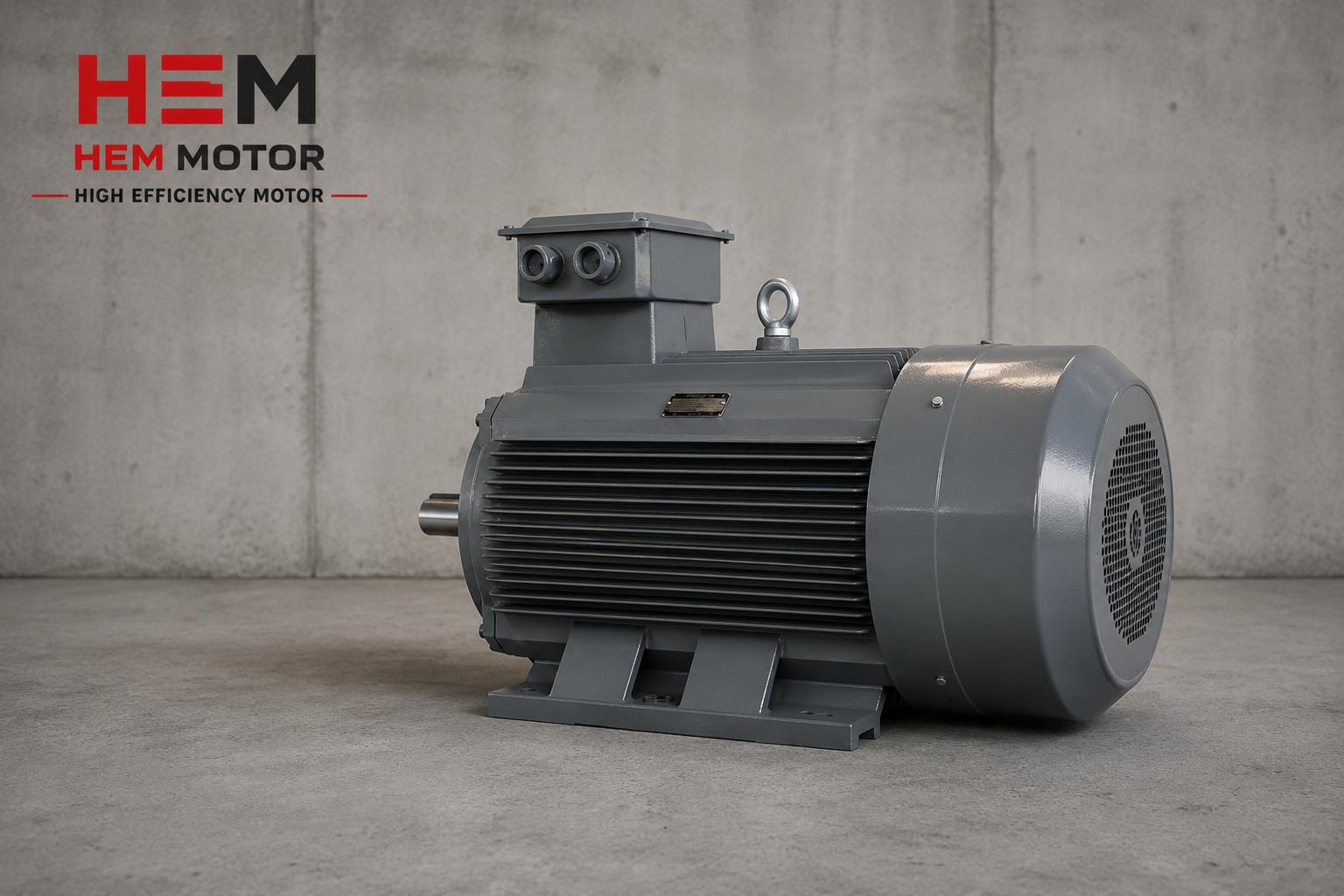
Altitude derating is also done according to the manufacturer's tables. The general logic is:
- Up to 1000 metres no correction is needed.
- Above 1000 metres, the power the motor can deliver decreases gradually for each defined height band.
- If both high altitude and high temperature are present at the same time, the combined correction of the two effects is applied and the power margin narrows markedly.
Sites where both effects are present, for example a facility running in summer heat in a high-altitude region, require the most careful calculation. In such cases the temperature and altitude factors are multiplied to obtain a combined correction, and the motor's real usable power is determined accordingly.
When Should You Step Up a Power Size?
If, as a result of the derating calculation, the continuous power the motor can deliver falls below the power the machine needs, the solution is clear: step up to a larger power size. A motor with a larger frame offers, even after derating, a power margin that comfortably feeds the machine and removes the risk of overheating.
A practical approach to the decision to step up a power size is:
- First the shaft power the machine actually needs is determined.
- By applying the ambient temperature and altitude factors, the real power the motor can deliver at that site is found.
- If this real power is below the machine's need, the next power size up is chosen.
- Leaving a safe margin lets the motor run without strain even on hot summer days.
Stepping up a power size may look at first like extra cost, but the early failure of a constantly overheating motor and the production downtime it causes are far more expensive. A correctly sized power margin is the most economical insurance. To determine the motor suited to your site conditions together, you can review our broad product and solution range.
What to Write on the Order Note
For the derating calculation to be done correctly, the supplier needs to know the real conditions in the field. For this reason, writing the following on the order note prevents the wrong motor from being shipped in the first place:
- The facility's height above sea level (altitude).
- The real maximum ambient temperature in summer at the spot where the motor will sit.
- The shaft power the machine actually needs.
- Whether the motor will run continuously or intermittently.
- Whether there are extra heat-raising conditions such as being inside a panel or an enclosed space.
When this information is given, the correct selection is made not according to the motor's nameplate power but according to the power it can really deliver in the field. High altitude and a hot environment are two realities that cannot be ignored in motor selection; the derating calculation is the key to a long-lived installation that is at peace with these realities.
Insulation Class and Temperature Reserve
The fundamental property that determines how well a motor can withstand heat is the winding insulation class. The insulation class defines the maximum temperature the winding can endure without damage. A motor with a higher insulation class has more temperature reserve in the same ambient conditions, which provides an important advantage in hot environments.
When selecting a motor that will run in a hot environment, looking only at derating factors is not enough; the motor's insulation class and temperature rise value should also be assessed. A motor with a higher insulation class offers a wider safe window even after derating. For this reason, in very hot environments, choosing a motor with a higher insulation class alongside stepping up a power size is also an effective solution.
- Insulation class: Sets the maximum temperature the winding can endure without damage.
- Temperature reserve: A high insulation class provides a wider safe window in a hot environment.
- Temperature rise limit: Shows how much the winding will heat up while the motor runs.
The Effect of the Duty Cycle
Derating depends not only on the ambient conditions but also on how the motor runs. A motor running continuously at full load must shed the heat it produces continuously and is therefore the case most sensitive to ambient conditions. In a motor running intermittently, starting and stopping frequently or running with a variable load, the heat balance is different.
In frequent start-stop applications each start produces extra heat; in this case a high ambient temperature makes the motor's heating during start-up even more critical. In a conveyor or fan motor running continuously under heavy load, the derating calculation must be done most rigorously, because the motor never pauses to shed its heat. The duty cycle is information that must be written on the order note, because even in the same ambient conditions different duty cycles produce different derating results.
For a correct selection, the ambient temperature, altitude and duty cycle must be assessed together. When these three variables come together, the power the motor can really deliver in the field becomes clear and the risk of a wrong selection disappears.
Panel and Enclosed-Space Temperature
A point often missed is that the space the motor sits in may differ from the ambient temperature. A motor placed inside a panel, an enclosed cabinet or a poorly ventilated compartment runs in a much hotter environment even if the outside air is cool. If this local temperature rise is not considered in the derating calculation, the motor can overheat unexpectedly.
For this reason, the order note should record not just the facility's general ambient temperature but also the temperature of the local space the motor sits in. For a motor running in an enclosed space, planning extra ventilation or stepping up a power size prevents problems caused by the local temperature rise from the start. To select a motor fully suited to your site conditions, you can review our three-phase motor options and determine the right power and insulation class together.
Frequently Asked Questions
Should I do the derating calculation even if the ambient temperature is below 40°C?
If the ambient temperature is below 40°C and the altitude below 1000 metres, no temperature- or altitude-based derating is needed, because the motor can deliver full nameplate power. However, it is important to assess the real summer temperature at the motor's location; a spot inside a panel, near a furnace or exposed to sunlight can locally exceed 40°C even if the environment is generally cool. For this reason the calculation should be based not on the average but on the highest temperature the motor actually sees.
What should I do if there is both high altitude and high temperature?
In this case both effects weaken cooling at the same time, so the correction factor of each is applied together. The temperature and altitude factors are multiplied to obtain a combined correction, and the real power the motor can deliver at that site is set accordingly. Because this combined effect narrows the power margin markedly, stepping up to the next power size is often the safest solution. Writing both the altitude and the real maximum temperature on the order note is essential for the correct selection.
Is it possible to cool the motor better instead of stepping up a power size?
In some cases external cooling, an extra fan or better ventilation can lower the motor's operating temperature and reduce the need for derating. However, these solutions require extra hardware, maintenance and energy and may not be practical at every site. Where high altitude and constantly high temperature occur together, a higher power size with the right margin is often a simpler and more reliable solution. Which approach is suitable is determined by the site conditions and the duty cycle.