English
 Türkçe

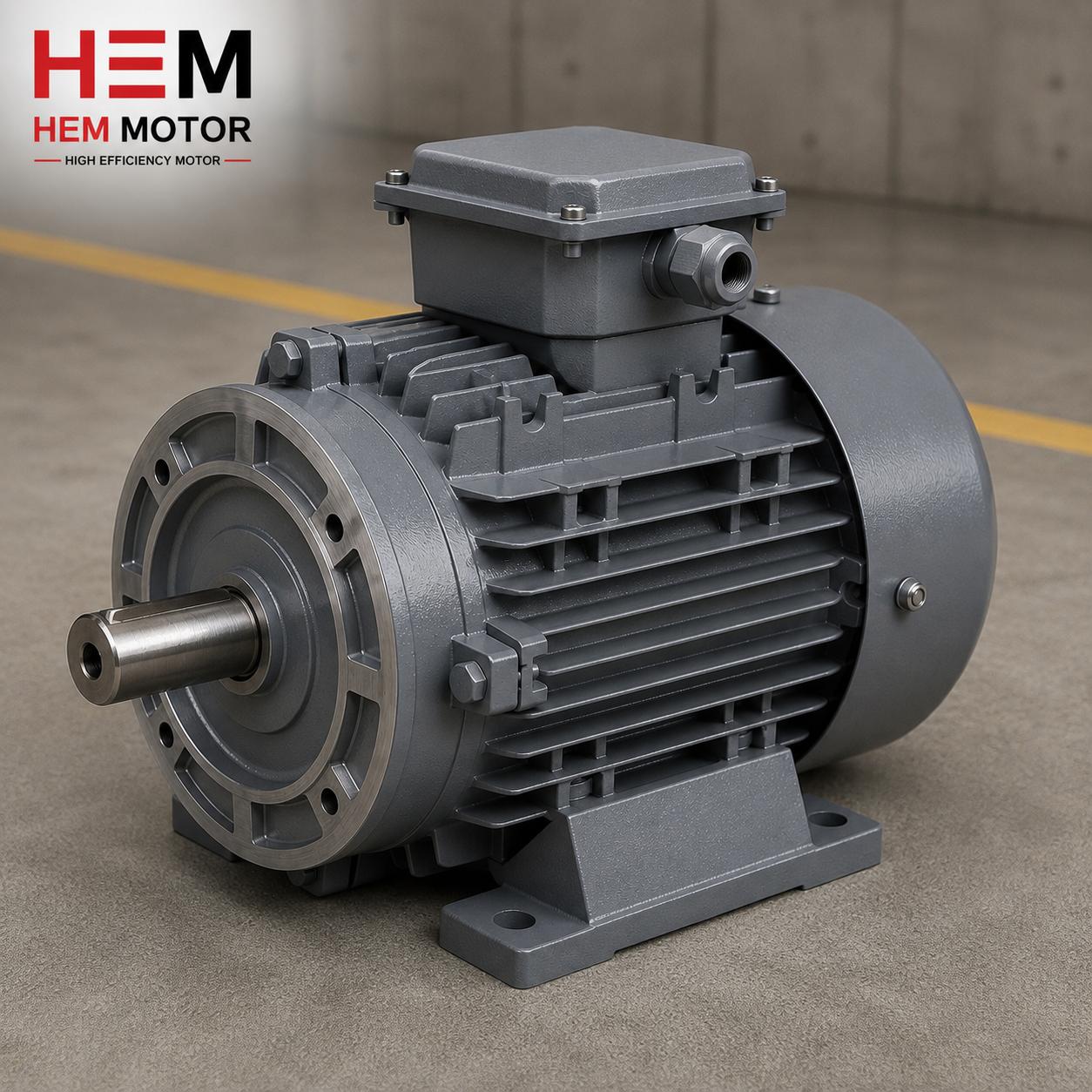

Conveyor drives, mixers, large-diameter fans, mills and directly driven heavy machinery; the common feature of these applications is that they require high torque and low speed. This is exactly where the 6-pole 1000 rpm motor comes in. On a 50 Hz grid the synchronous speed of a 6-pole asynchronous motor is 1000 rpm; under load it rotates at roughly 960-985 rpm with a small slip. Compared with 2-pole (3000 rpm) and 4-pole (1500 rpm) motors, this speed band produces higher torque at the same power and reduces the need for a gearbox in many industrial drives. In this guide we examine the full power-frame relationship of the 6-pole 1000 rpm motor, which IEC frame size is expected at which power, its torque and efficiency behaviour and the stock-supply approach for correct ordering, from the perspective of a manufacturer and supplier.
What Does 6-Pole, 1000 rpm Mean?
In an asynchronous motor the speed is determined by the pole count and the grid frequency. As the pole count increases the synchronous speed decreases: 2-pole gives 3000, 4-pole 1500, 6-pole 1000 and 8-pole 750 rpm. The actual (under-load) speed is slightly below the synchronous speed because of slip. Because a 6-pole motor rotates at a lower speed than 2- and 4-pole motors of the same power, it transmits the same power with higher torque. Due to the basic relationship between torque and power, torque rises at the same power as speed falls; this makes 1000 rpm motors ideal for high-torque, directly driven applications.
This speed band stands out especially in the following applications: large-diameter axial and radial fans (quiet and balanced operation), slow-rotating mixers, screw conveyors, some pump applications, mill and crusher drives. Low speed reduces both mechanical noise and, in some applications, the gearbox stage; this provides advantages in maintenance and energy.
The Logic of the Power-Frame Relationship
In the IEC standard the frame size expresses the shaft centre height of the motor in millimetres; for example, a 132 frame means the shaft centre is 132 mm above the foot base. The same power value is produced in different frame sizes depending on the pole count. Because 6-pole motors require more copper and a larger magnetic cross-section to produce the same power at low speed, they are usually one or two frame sizes larger than a 2- or 4-pole motor of the same power. Therefore, when replacing a 4-pole motor with a 6-pole one in a plant, the change in mounting dimensions and frame size must be taken into account.
Typical 6-Pole 1000 rpm Power-Frame Approach
The following approach summarises typical power-frame matches based on the IEC standard. Since the exact frame size may vary by manufacturer and efficiency class, verification with a technical table before ordering is recommended. The general trend is as follows:
- Small powers (0.55-1.5 kW): Typically the 90-100 frame range; common in gearbox inputs and small drives.
- Medium powers (2.2-5.5 kW): The 112-132 frame range; most conveyor and mixer drives fall in this band.
- Upper-medium powers (7.5-15 kW): The 132-160 frame range; large fans and medium-scale mill drives.
- High powers (18.5-37 kW): The 180-225 frame range; heavy-duty conveyor and process drives.
- Large powers (45 kW and above): 250-355 frame and above; large industrial drives and directly coupled applications.
These matches generally mean a frame one size larger than a 4-pole motor of the same power. To use the frame-power and shaft-diameter relationship without error in replacement orders, our guide on the IE3 motor shaft and frame table (IEC 56-355) is a practical reference.
Torque, Efficiency and Power Factor Behaviour
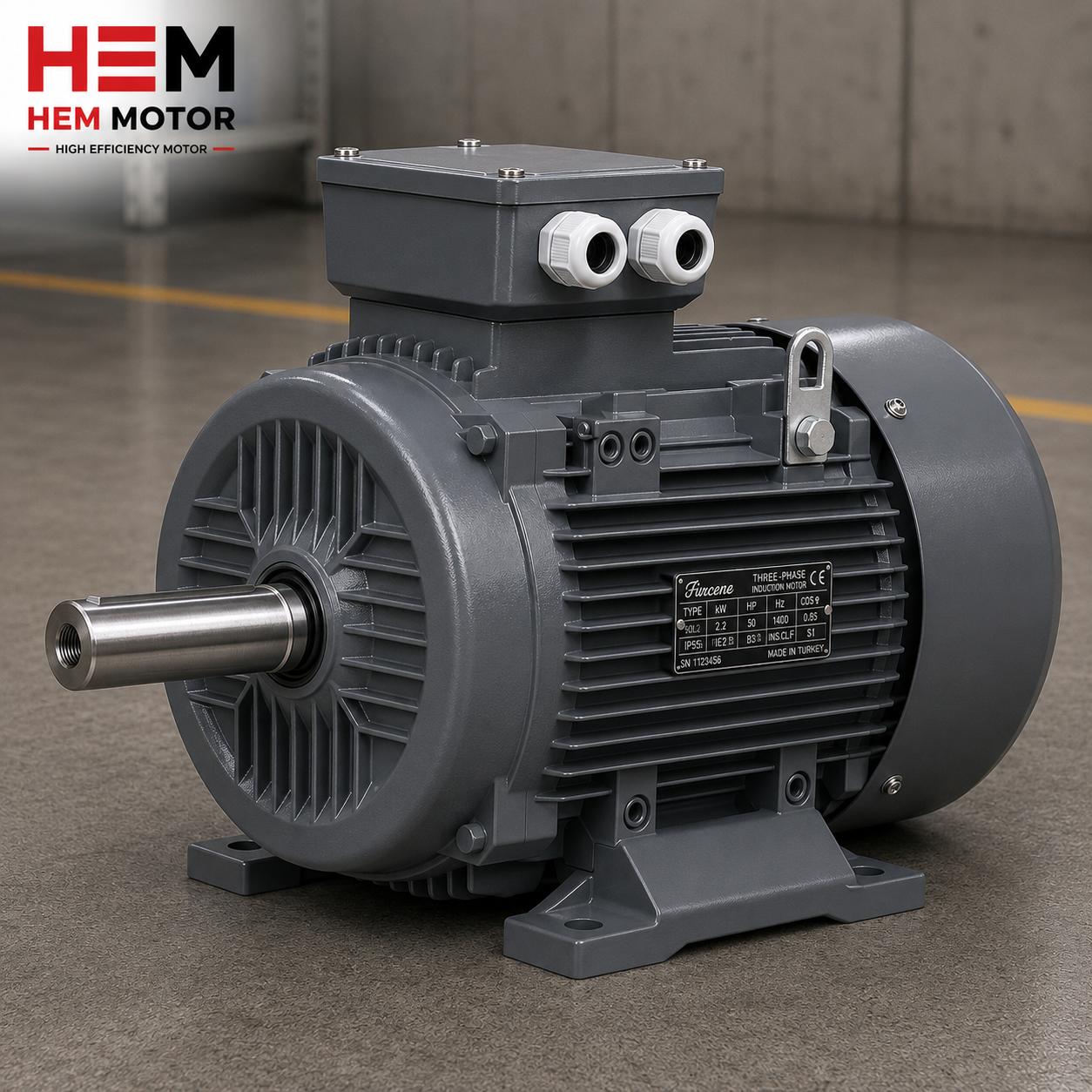
Because 6-pole motors produce high torque, they stand out in direct-drive applications; however, alongside this advantage there are behaviours to watch. In low-speed motors the power factor (cosφ) is generally slightly lower than in 2- and 4-pole motors. This means that the apparent power (kVA) drawn for the same kW, and therefore the current, may be somewhat higher; this must be considered in the selection of cable, fuse and contactor. In terms of efficiency, modern IE3 and IE4 6-pole motors reach high values, but the typical efficiency may differ somewhat from the 4-pole equivalent of the same power.
In terms of the torque-speed curve, 6-pole motors provide sufficient torque at start to safely turn high-inertia loads (fans, mills). When high inertia and shock loads are involved, the starting behaviour and the starting method also become important. To examine torque selection according to load in direct-on-line (DOL) starting in detail, our content on rated torque and starting torque in IE3 motors is a guide.
Low Speed or Geared High Speed?
In many applications the same output speed can be reached in two ways: using a directly low-speed (6/8-pole) motor or slowing a high-speed motor with a gearbox. A direct 6-pole motor offers mechanical simplicity, fewer maintenance points and quieter operation. The geared solution becomes unavoidable when much lower output speeds and very high torque are needed. The decision is made according to the required output speed, torque, budget and maintenance strategy. To see the advantages of 1000 and 750 rpm (6/8-pole) low-speed motors in high torque and direct drive in more depth, our guide on IE3 1000 and 750 rpm low-speed motors offers a comprehensive comparison.
Mounting Type, Cooling and Environmental Conditions
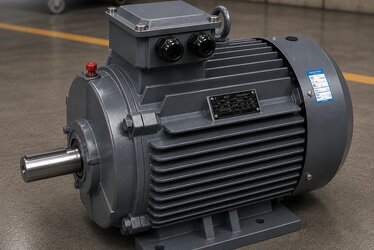
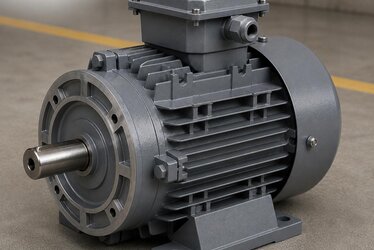
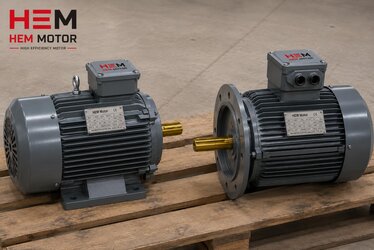
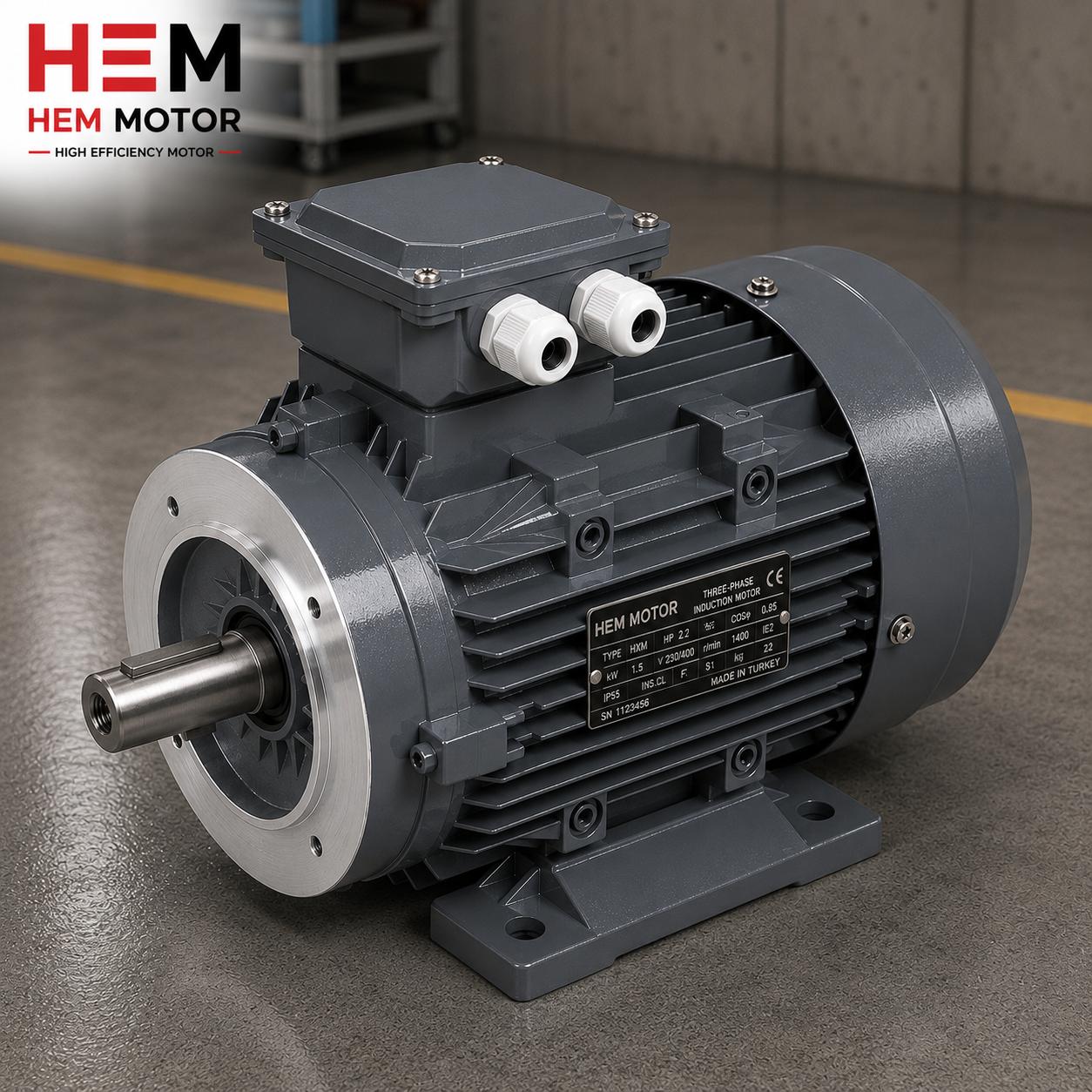
6-pole motors are offered in B3 (foot), B5 (large flange) and B35 (foot + flange) mounting types. In conveyor and fan drives the mounting type is determined by the machine's connection surface. Since fan cooling in low-speed motors is also at low speed, cooling reserve must be carefully evaluated in plants running continuously at full load and with high ambient temperatures. In dusty, humid or outdoor applications, at least IP55 protection class is accepted as standard; in harsher environments IP65/IP66 solutions come into play.
- B3 foot: The most common mounting in belt-pulley, coupling and gearbox-input drives.
- B5 flange: Applications connected by flange directly to a pump, fan or gearbox housing.
- B35 combined: Drives requiring both foot and flange connection and additional mechanical support.
Efficiency Class and Regulatory Compliance
Current efficiency regulations impose a minimum efficiency-class requirement in certain power and pole ranges. 6-pole motors are also evaluated within this scope; choosing the correct efficiency class is critical both for legal compliance and energy cost. Preferring IE4 over IE3 in continuously running high-power drives can provide significant annual energy savings. Verifying which efficiency class is mandatory at which power puts the purchasing decision on a solid foundation.
6-Pole Selection in Conveyors, Fans and Mixers
Making the behaviour of a 6-pole motor concrete according to the application is the most effective way to ensure correct selection. In conveyor drives the load is generally balanced and continuous; however, starting a full belt requires high starting torque. A 6-pole motor, by providing high torque at low speed, reduces the gearbox stage in most belt drives and offers a simpler mechanical transmission. In screw conveyors, material jamming creates a sudden torque rise, so the motor's service factor and overload capacity become important.
In large-diameter fans the speed directly affects both the air flow and the noise level. Operation at 1000 rpm provides both sufficient flow and quiet operation in large radial and axial fans; therefore 6-pole motors are widely preferred in ventilation and aspiration systems. Because the inertia of the fan load is high, the starting time and the permitted number of starts per hour must be planned according to the motor's thermal limit. In mixers, slow and steady rotation is desired; a 6-pole motor offers both the correct speed band and high starting torque in these applications.
In all three application groups the common principle is that the motor is selected according to the actual torque-speed characteristic of the load. A motor selected at the wrong speed either incurs unnecessary gearbox cost or, due to insufficient torque, cannot start under full load. Therefore, sharing application information with the supplier is the basis for setting the frame-power-speed trio correctly the first time.
Maintenance, Bearings and Long Service Life
Low-speed motors have a different load profile in terms of bearings compared with their high-speed equivalents. Because the speed is low, the bearing's revolutions per minute are few; however, in high torque and especially belt-pulley drives the radial load can be high. Therefore the bearing selection and lubrication interval are determined according to the load type of the application. Regular greasing, correct belt tension and vibration monitoring significantly extend the life of 6-pole motors. In drives running continuously in heavy duty, following the maintenance intervals recommended by the manufacturer minimises the risk of failure and prevents unplanned downtime.
Stock, Supply and Correct Ordering
Because 6-pole motors are used in lower volume than their 2- and 4-pole equivalents, stock and supply planning is even more important for some power-frame combinations. The following steps are recommended for correct and fast ordering:
- Power and speed confirmation: The power and output speed at the application's actual operating point must be clearly determined.
- Frame and mounting compatibility: The frame size, shaft diameter and mounting type that will fit the existing machine must be confirmed from the start.
- Efficiency-class decision: The choice of IE3 or IE4 according to running time should be evaluated both for regulation and energy.
- Supply from stock: Keeping the most common combinations in stock shortens downtime.
- Manufacturer assurance: Copper winding, quality bearings and documented test values are basic criteria for long life and safe operation.
To learn the power-frame combination of the 6-pole motor suitable for your application and the current quotation information, you can request a quote together with stock status from our elektrik motoru fiyatları page. Correct frame-power matching optimises both the initial investment and operating cost.
Frequently Asked Questions
Why does a 6-pole motor rotate at 1000 rpm?
In an asynchronous motor the synchronous speed depends on the grid frequency and the pole count. On a 50 Hz grid the synchronous speed of a 6-pole motor is 1000 rpm. Under load, due to slip, the actual speed is slightly below this, around 960-985 rpm. As the pole count increases the speed decreases; therefore a 6-pole motor rotates more slowly than its 2- and 4-pole equivalents and produces higher torque at the same power.
Why is a 6-pole motor in a larger frame than a 4-pole at the same power?
A 6-pole motor must provide higher torque to produce the same power at low speed; this requires more copper and a larger magnetic cross-section. As a result, for the same power value a 6-pole motor is usually one or two frame sizes larger than its 4-pole equivalent. Therefore, when replacing a 4-pole motor with a 6-pole one, the mounting dimensions and frame size must definitely be checked.
For which applications is a 1000 rpm motor suitable?
1000 rpm (6-pole) motors are ideal for applications requiring high torque and low speed. Large-diameter fans, slow-rotating mixers, screw conveyors, mill and crusher drives and some pump applications are typical use areas. Low speed both reduces mechanical noise and, in some applications, eliminates the gearbox stage, providing maintenance and energy advantages.