English
 Türkçe

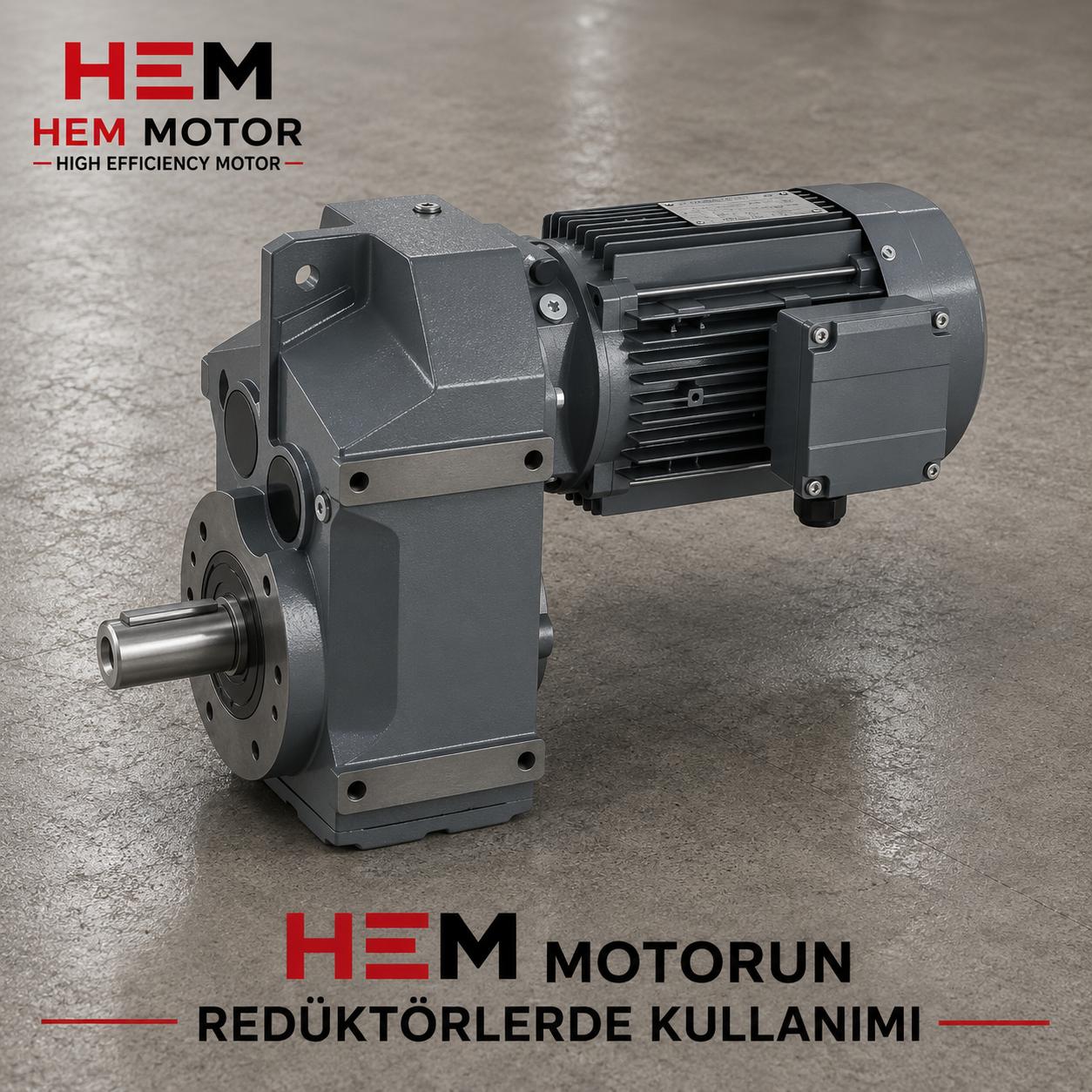

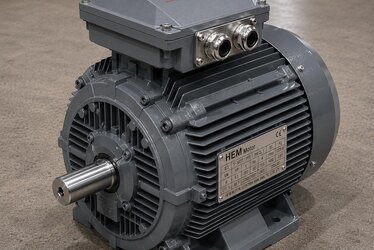
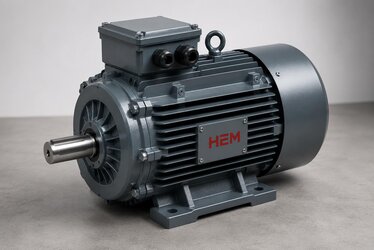
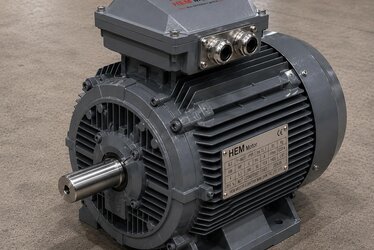
The speed of an electric motor is as fundamental to selection as its power. Two motors of the same kW value offer very different torque and very different operating characteristics if their pole counts differ. In slow machines such as mixers, agitators, mills, large fans and conveyors, low-speed motors stand out. IE3 1000 rpm (6-pole) and IE3 750 rpm (8-pole) motors often enable direct drive without the need for a reducer in such applications.
The clearest advantage of low-speed motors is that they produce higher torque at the same power. Torque is obtained by dividing power by angular speed, so as speed falls, the torque (Nm) obtained for the same kW rises. A 6-pole motor rotates around 1000 rpm and an 8-pole motor around 750 rpm, providing significantly more torque than a 2- or 4-pole motor of the same power. This high torque is ideal for directly driving slow and hard loads.
Choosing the right pole count both simplifies the mechanical design and lowers maintenance and energy costs in the long term. HEM Motor offers 750 and 1000 rpm IE3 stock motors with fast supply assurance. For more about our product range you can visit our homepage.
The Relationship Between Low Speed and High Torque
In electric motors, power, torque and speed are three interconnected basic quantities. When power stays constant, torque rises as speed decreases. A low-speed motor therefore produces much more torque than a high-speed motor of the same kW value. This is the basic logic of low-speed motor selection: slow but powerful drive.
Pole Count and Synchronous Speed
The synchronous speed of an asynchronous motor is determined by the pole count and the line frequency. On a 50 Hz grid, a 2-pole motor turns at 3000 rpm synchronous, a 4-pole at 1500 rpm, a 6-pole at 1000 rpm and an 8-pole at 750 rpm. The real speed is slightly below these values due to slip. As pole count increases, speed falls and torque rises; this determines which machine the motor suits.
The Practical Meaning of Torque Calculation
For example, comparing a 4-pole motor with an 8-pole motor of the same power, the 8-pole motor produces about twice the torque because its speed has halved. This is a critical advantage for directly moving a heavy mixer or a loaded conveyor. Instead of increasing torque with a reducer, selecting a motor of the right pole count is often a simpler and more efficient solution.
Frame Size and Weight
An important feature of low-speed motors is that they sit in a larger frame than high-speed motors of the same power. The reason is that producing high torque requires a larger magnetic circuit and more copper. An IE3 1000 rpm or IE3 750 rpm motor is significantly heavier and bulkier than a 3000 rpm motor of the same kW value.
This is a point that must be considered in mounting planning. A larger frame means a larger mounting flange, a stronger foundation and more space. When selecting a low-speed motor, it must therefore be ensured that the frame size is compatible with the existing machine and the mounting area. For correct mounting and connection, the motor's IM code and flange dimensions should be clarified from the start.
- Larger frame: At the same power, a low-speed motor sits in a larger frame number.
- More weight: Due to increased copper and iron, the motor is heavier; lifting and handling must be planned.
- Connection dimensions: Flange diameter and bolt pattern must be selected to match the machine.
- Foundation and chassis: A sufficiently strong foundation is needed for the heavy motor.
The Advantage of Reducer-Free Direct Drive
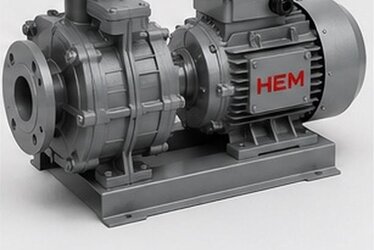
In slow machines, the conventional solution is to add a reducer to the output of a high-speed motor. But a reducer adds extra cost, extra maintenance and extra mechanical loss to the system. If a low-speed motor can directly provide the speed the machine needs, no reducer is required. This is the greatest advantage of direct drive.
What Is Gained by Removing the Reducer
The reducer-free solution reduces the number of parts in the system. Fewer parts mean fewer failure points and less maintenance. In addition, because the mechanical losses in the reducer (gear friction, lubrication losses) are eliminated, system efficiency increases. In continuously running machines such as mixers, agitators and mills, this efficiency gain reflects positively on the annual energy bill.
Which Applications Are Ideal
Low-speed motors are ideal especially for mixers, agitators, large industrial fans, slow conveyors and some mill types. All these machines naturally run at low speed and high torque. By selecting a motor of the right pole count, these machines can be run without a reducer and with high efficiency. You can review the details of pole selection in our asynchronous motor pole selection article.
The Mechanical Advantages of Low Speed
Besides the torque advantage, low-speed operation also has important mechanical benefits. A slowly rotating motor produces less vibration and lower noise. This both increases the comfort of the working environment and extends the life of the motor and connected equipment.
Vibration is one of a motor's most important sources of wear. In a high-speed motor, imbalance and vibration effects are much more pronounced; at low speed these effects are reduced. This means longer bearing life and wider maintenance intervals. As a result, a low-speed motor offers both quieter and more durable operation. To fully evaluate the power-speed relationship, our power and speed selection guide will be useful.
The Importance of the IE3 Efficiency Class
In low-speed motors too, efficiency is the decisive element of operating cost. The IE3 efficiency class represents the premium efficiency level and provides clear savings on the electricity bill in continuously running applications. Especially in machines that run all day, such as mixers and mills, the efficiency advantage of an IE3 motor turns into a sizeable saving by year end.
Efficiency shows how much of the electrical energy the motor draws is converted into mechanical power. A high-efficiency motor heats less, which means longer winding life and less cooling need. IE3 low-speed motors available quickly from stock are a sensible choice in terms of both initial investment and long-term operating cost.
What You Need to Know for a Correct Purchase
When buying a low-speed motor, clearly defining a few basic parameters ensures the right product is obtained on the first attempt. A purchase made with missing information can result in a motor with the wrong frame or wrong connection dimensions.
- Power (kW) and pole count: The torque and speed the machine needs determine the pole count.
- Mounting type (IM code): Foot (B3), flange (B5/B14) or combined mounting must be clear.
- Frame size: Compatibility with the existing machine and mounting area must be checked.
- Protection class (IP55/IP65): Determined according to ambient conditions.
- Stock status: Standard power and speed motors are obtained quickly from stock.
A purchase made with this information both speeds up the delivery process and eliminates the risk of the wrong product. Fast supply from stock rescues the business especially in urgent replacement needs.
Bearing and Shaft Load in Direct Drive
When using a low-speed motor for direct drive, the loads on the motor's shaft and bearings must be carefully evaluated. In applications such as mixers and agitators, the shaft carries both the rotational torque and, in some cases, axial and radial loads. The motor's bearing arrangement must therefore be selected to suit the load direction of the application. In vertical mixers with high axial load, the shaft and bearing design must be planned to carry this load safely.
In applications connected by belt and pulley, radial load comes to the fore. Belt tension applies a constant radial force to the shaft end; this force directly affects bearing life. Operating at low speed is generally advantageous for bearings because the number of revolutions is low; even so, the load direction and magnitude must be stated at the ordering stage. The motor is then manufactured with the bearing structure the application requires, or correctly selected from stock. Where necessary, a reinforced bearing or special lubrication arrangement is chosen so the motor runs for a long life even under heavy load.
The Energy and Maintenance Economy of a Low-Speed Motor
The total cost of ownership of a low-speed motor is not measured by purchase price alone. The savings achieved by removing the reducer continue throughout the life of the system. Costs such as reducer maintenance, oil changes and gear wear are eliminated. In addition, the disappearance of mechanical losses in the reducer increases system efficiency and lowers the energy bill.
Considering a continuously running mixer or mill, these gains turn into a clear cost advantage over the years. When the high efficiency of an IE3 1000 rpm or IE3 750 rpm motor is combined with the low loss of reducer-free operation, the business saves on both energy and maintenance. The initial investment in a low-speed motor therefore amply pays for itself in the long term.
The Role of Stock and Fast Supply
Because low-speed motors have larger frames, having the right product in stock is important for delivery time. Keeping standard power and speed 6- and 8-pole IE3 motors in stock ensures the business does not face long waiting times in urgent needs. A supply relationship built directly with the manufacturer brings together both correct technical guidance and fast delivery, providing the business with both time and cost gains.
Typical Use Areas of 6- and 8-Pole Motors
Which machine a low-speed motor will be used in is the most important factor determining the pole count. Each machine type runs most efficiently in a certain speed-torque range. Selecting the correct pole count ensures both that the machine runs at the right speed and that the motor is loaded at an efficient point.
Applications of 6-Pole (1000 rpm) Motors
6-pole motors are ideal for applications requiring moderate speed and high torque. Industrial fans, medium-speed conveyors, some pump types and mixers fall into this class. The speed around 1000 rpm offers reducer-free direct drive for many machines. These motors are the most frequently preferred low-speed option in applications seeking a balanced solution between speed and torque.
Applications of 8-Pole (750 rpm) Motors
8-pole motors are used for heavy applications requiring very slow speed and very high torque. Large mills, heavy mixers, slowly rotating large fans and some special process machines are directly driven by these motors. The low speed around 750 rpm provides both high torque and very low vibration. This achieves balanced, quiet and long-lived operation in heavy and sensitive processes.
In both pole classes it is essential to select the motor to suit the load profile and duty cycle. When the machine's real speed-torque need is clearly defined, the correct pole count and frame size are easily determined. This gives the best result in both energy efficiency and mechanical durability.
Frequently Asked Questions
Should I choose a 6-pole or 8-pole motor?
The choice depends on the speed the machine needs. A 6-pole motor rotates at about 1000 rpm and an 8-pole motor at about 750 rpm. If slower and higher-torque drive is needed, 8-pole is preferred; if slightly faster operation is sufficient, 6-pole is chosen. The machine's speed-torque need must be clearly determined for correct pole selection.
Why is a low-speed motor larger and heavier?
Providing the same power at low speed requires producing higher torque, which means a larger magnetic circuit and more copper and iron. A low-speed motor of the same kW value therefore sits in a larger frame and is heavier than a high-speed motor. This difference must be considered in mounting planning.
Is using a low-speed motor instead of a reducer always advantageous?
In most slow applications, a low-speed motor provides direct drive without the need for a reducer, reducing part count and mechanical loss. However, in some cases requiring very low speed or very high torque, a geared solution may be more suitable. The choice must be made according to the machine's speed-torque need and mounting constraints.