English
 Türkçe

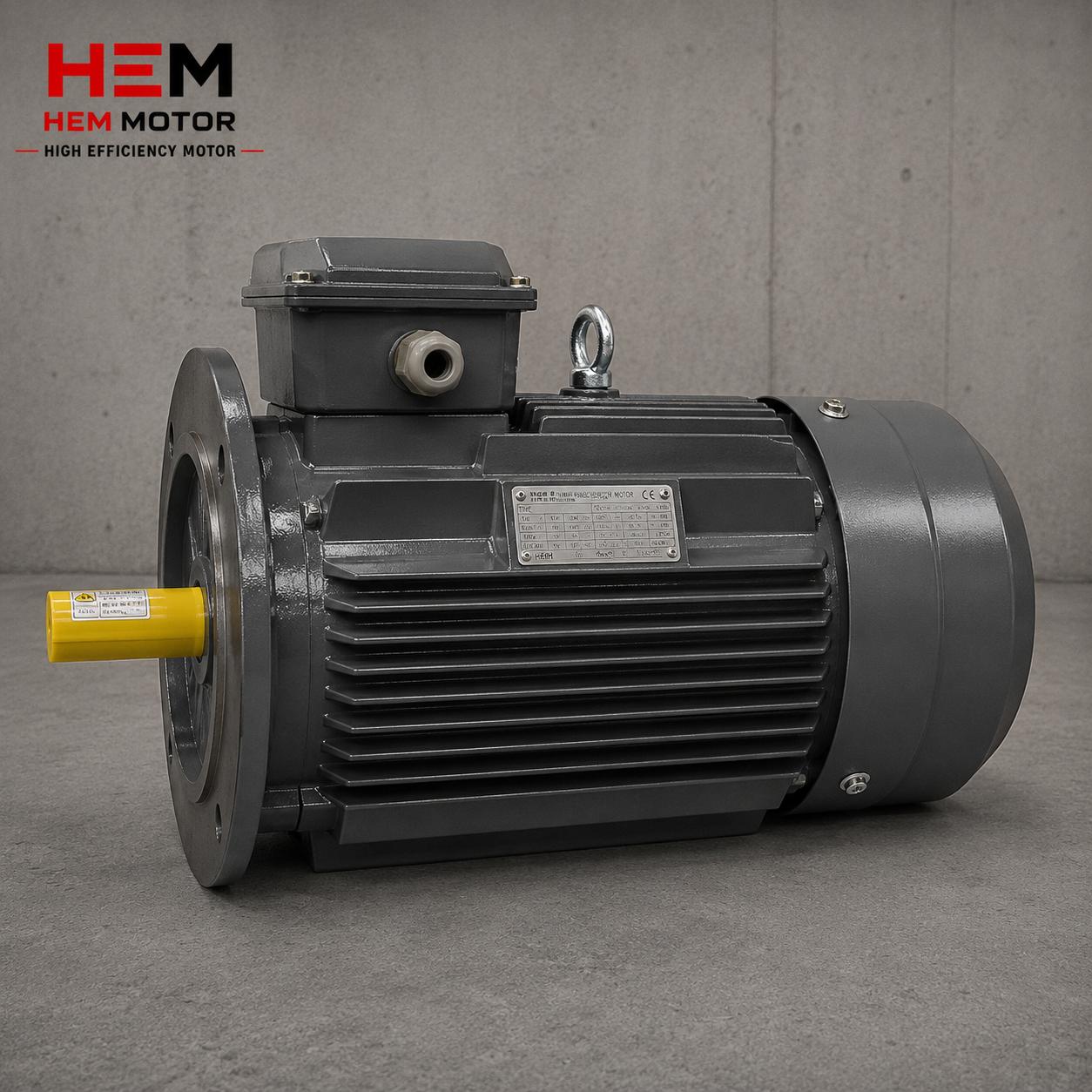

If you have decided to raise your facility efficiency level to IE5, the next question is usually a technology choice: synchronous reluctance (SynRM) or permanent magnet (PM) synchronous motor? Both technologies can reach the IE5 Ultra Premium efficiency class; however, they differ significantly in terms of purchasing, drive requirements, supply security and long-term cost. This guide summarizes the criteria a buyer of an efficient electric motor should consider under the headings of efficiency, cost, magnet risk and application fit, in a way that helps you at the quotation stage. As HEM Motor, with our identity as both manufacturer and seller, we aim to match the right technology to your project and bring you to the quote stage by the shortest route.
The Basic Operating Difference Between the Two Technologies
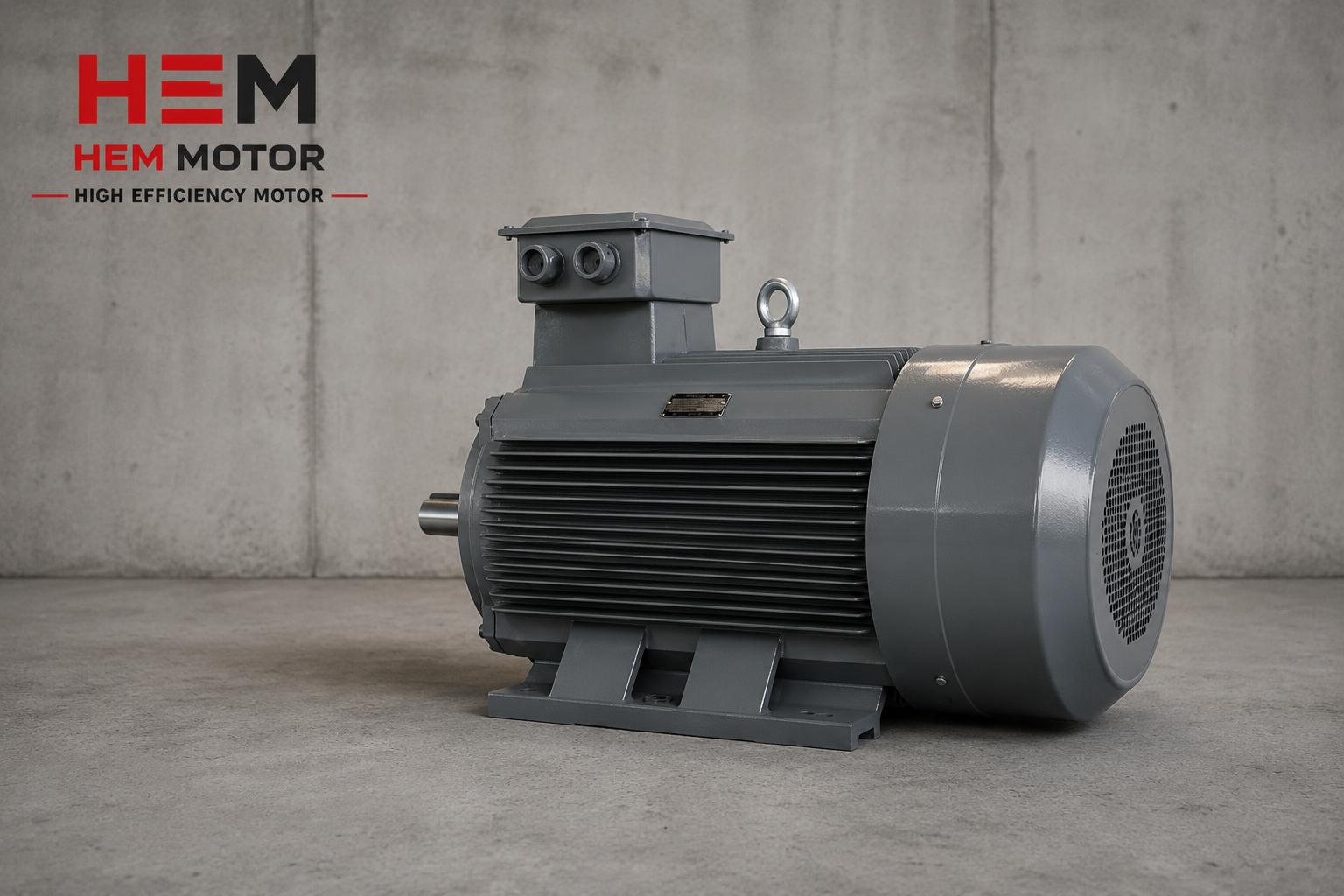
In a classic asynchronous motor, current is induced in the rotor, and these induction losses limit efficiency. To reach the IE5 level, manufacturers follow two different paths to eliminate this rotor loss. The synchronous reluctance motor (SynRM) uses a rotor made of specially shaped steel laminations without any magnets; the rotor aligns with the path of least magnetic resistance (reluctance difference) and rotates at synchronous speed. The permanent magnet synchronous motor (PMSM) uses rare-earth magnets (usually neodymium) embedded in or glued to the rotor; these magnets produce a fixed magnetic field and the rotor rotates in sync with it.
As a result, both motors have no slip, meaning they run at synchronous speed locked to the grid frequency. This fundamental difference is the source of all the pros and cons that directly affect your purchasing decision.
Synchronous Reluctance (SynRM): Efficiency Without Magnets
The strongest aspect of the SynRM motor is the absence of rare-earth magnets in its rotor. This lowers supply chain risk, protects against price fluctuations and simplifies recycling/disposal processes. Rotor heating is low because there is no magnet loss; this has a positive effect on winding and bearing life. On the other hand, SynRM motors generally deliver the same power in a slightly larger frame than their PM counterparts and have a lower power factor (cos φ); for this reason they are almost always sold together with a properly sized variable frequency drive (VFD).
Permanent Magnet (PM): High Power Density
PM motors offer higher torque and power density from the same frame thanks to the strong fixed field of the magnets. Efficiency stays high even at low speeds, which makes them attractive in direct-drive and variable-speed applications. However, they have two important disadvantages: the cost and supply risk of rare-earth magnets, and the possibility of the magnet losing its magnetism (demagnetization) at high temperature. Therefore, temperature protection and correct drive setting are critical in PM motors.
Comparison: Which Criterion Matters From the Buyer Perspective?
In a purchasing decision, fit to your application is more decisive than technical superiority. The following headings clarify which questions you should ask when requesting a quote.
Efficiency and Partial Load Behavior
Both technologies reach IE5 efficiency at full load. However, the difference appears at partial load. PM motors maintain efficiency better at low load; they are advantageous in applications running under constantly changing load. SynRM strongly maintains efficiency in applications running at constant and high load, rotating at the same point for long periods and needing an IE4 and above motor. The load profile of your facility should be decisive in this choice.
Drive (VFD) Requirement and Cost
The most critical point here is this: both SynRM and PM synchronous motors cannot be connected directly to the grid (DOL); they must be operated with a suitable variable frequency drive. So when buying an IE5 motor you are actually buying a motor+drive package. SynRM motors deliver the highest efficiency when offered as a package matched with the manufacturer drive. Be sure to clarify this package cost and drive compatibility at the quotation stage. If you want to examine the drive requirement in more depth, our article why IE5 synchronous reluctance motors do not run without a drive covers exactly this topic.
Magnet Risk and Supply Security
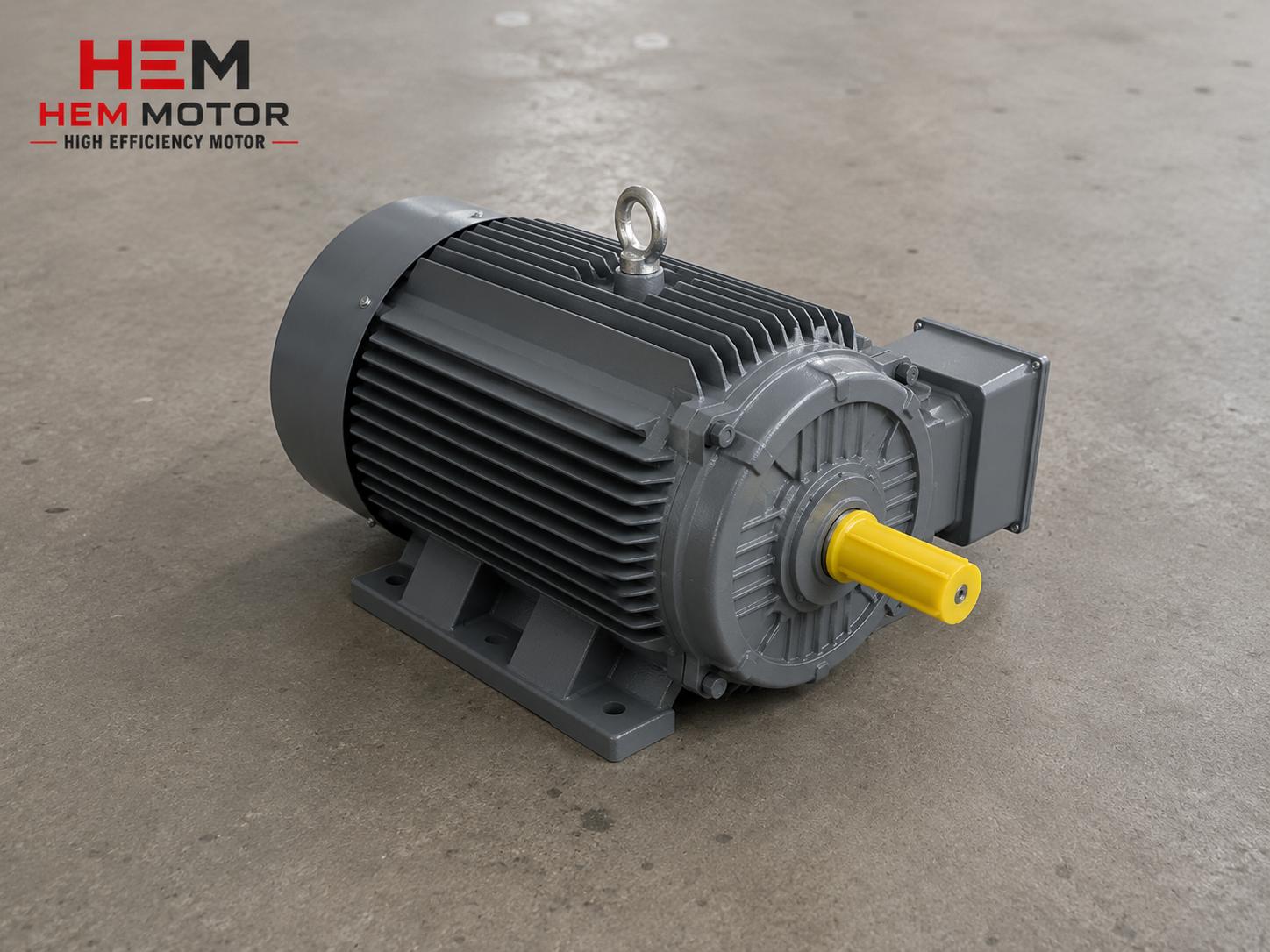
The rare-earth magnets at the heart of PM motors (neodymium, dysprosium) are subject to geopolitical supply risk and price volatility. For large fleets, this creates uncertainty in long-term spare part and replacement planning. SynRM, on the other hand, is independent of this risk because it uses an entirely steel-lamination rotor; standard electrical steel is always available. If supply continuity is critical for you, SynRM offers a more predictable choice in this respect.
Temperature, Environment and Demagnetization
At high ambient temperature or under overload conditions, the magnets of PM motors can permanently weaken; this means an irreversible loss of efficiency. Since there is no magnet in SynRM motors, there is no such risk and their tolerance to high temperature is better. If you will operate in hot or dusty sites, evaluate this point as well as the frame and insulation; our article on motor selection in hot and dusty environments details the frame and insulation decision according to ambient conditions.
Which Technology for Which Application?
In practice, the choice becomes clear like this: For applications running continuously at high, constant load and fixed speed such as pumps, fans, compressors and conveyors, SynRM is most often the most sensible IE5 choice in terms of both cost and supply security. In direct-drive special machines requiring a very wide speed range, frequently changing load and a compact frame, the power density of the PM motor stands out. To see when the IE5 investment pays for itself versus IE4, the payback analysis in our article IE5 vs IE4 does the efficiency difference justify the investment is a good guide. If you are not yet sure whether moving to IE5 is suitable for you, our IE5 Ultra Premium motor transition guide and our article on the future efficiency class, IE5 and synchronous reluctance motors, will ease your decision process.
Total Cost of Ownership (TCO) Perspective
Evaluate the purchasing decision not only by the nameplate price of the motor, but together with energy consumption, drive cost, maintenance and lifetime reliability. In a facility with high operating hours, the energy item quickly overshadows the initial cost of the motor. Therefore the IE5 SynRM or PM decision must be made over the total package including the drive. To size the right package according to your load profile, contact us.
Frequently Asked Questions
Does an IE5 synchronous reluctance motor run without a drive?
No. Since both SynRM and PM synchronous motors run synchronously, they cannot start from the grid on their own; they are always commissioned with a suitable variable frequency drive (VFD). When requesting a quote, we recommend evaluating the motor and drive as a package.
Does the magnet of a PM motor weaken over time?
With the correct drive setting and a suitable ambient temperature, the magnet remains stable for many years. However, overload or high temperature can cause demagnetization. Since there is no magnet in a SynRM motor, there is no such risk; this is an advantage in applications requiring high temperature tolerance.
Can I directly replace my existing IE3 motor with IE5?
In most cases, even if the frame and connection dimensions are compatible, it is not enough to simply install the motor and connect it to the old contactor panel, because the IE5 motor needs to run with a drive. The drive, cabling and protection equipment must also be planned. Contact us so we can review your existing system and offer a fully compatible solution.
Get a Quote
Which is suitable for your application, IE5 SynRM or PM motor, and which package including the drive gives the lowest total cost? Share your facility load profile, operating hours and existing motor details; as HEM Motor, with our identity as manufacturer and seller, let us match the right technology for you and provide a fast quote. You can call us at +90 (532) 345 49 86 or reach us via our contact page.