English
 Türkçe

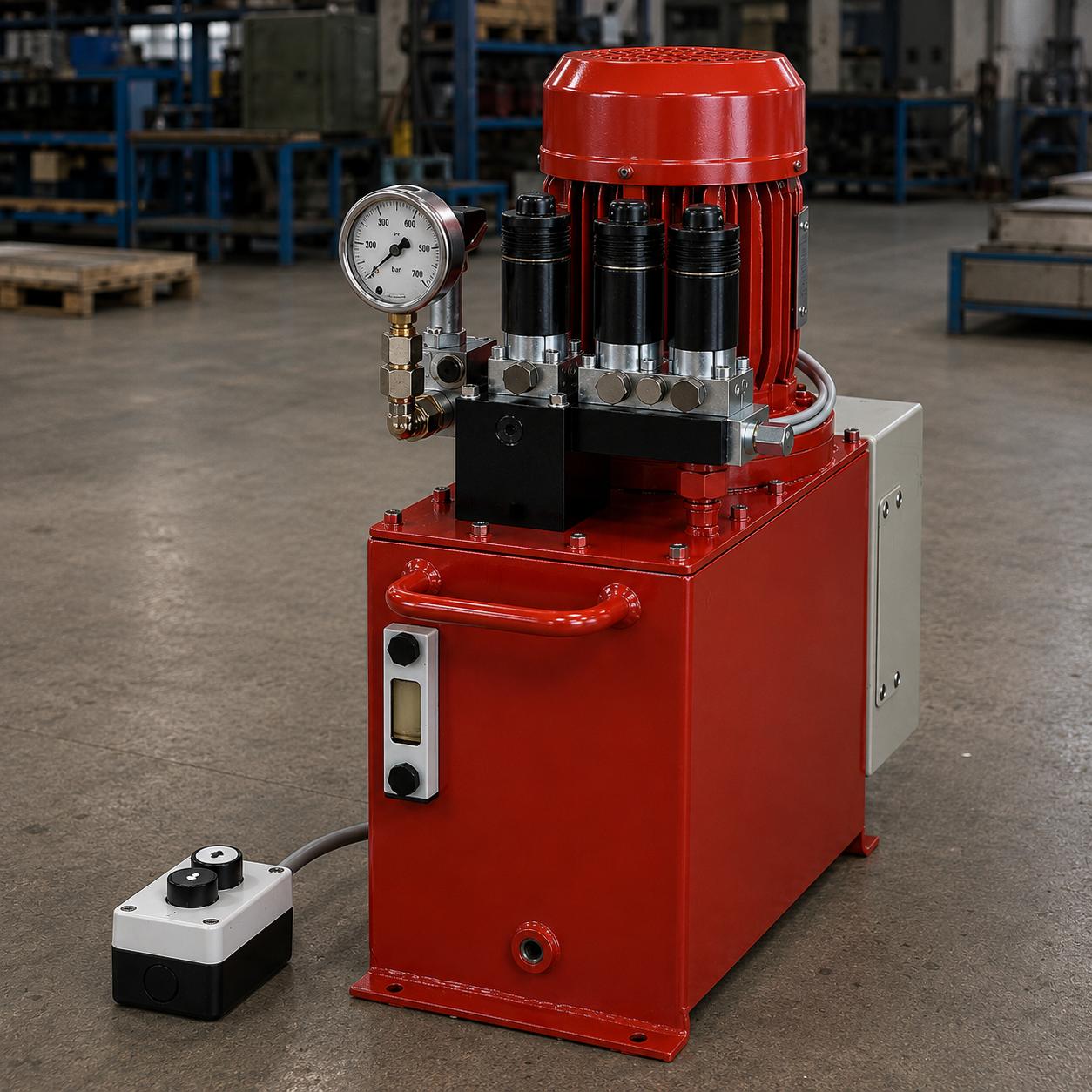

One of the most critical questions when selecting a motor for an export project is the supply frequency: while Turkey and Europe run on 50 Hz, the United States, Saudi Arabia, Canada and many Gulf countries operate at 60 Hz. In conventional asynchronous motors this difference directly affects speed, power and torque. However, with IE5 synchronous reluctance motor (SynRM) technology — which has pushed energy efficiency to its highest level in recent years — the picture is slightly different, because these motors always run with a drive (VFD), and the frequency is set by the drive output rather than the line. In this guide we examine, from a manufacturer's perspective, how IE5 ultra premium efficiency synchronous reluctance motors behave in 60 Hz export markets: speed, power and nameplate data; NEMA and IEC compatibility; voltage selection; certification and procurement — all framed to make your purchasing decision easier. Shipping the right product to the right market at the right frequency is decisive for both warranty and field performance. For current electric motor prices and export options, review our product portfolio.
What Is Synchronous Reluctance (SynRM) Technology and How It Differs from Asynchronous
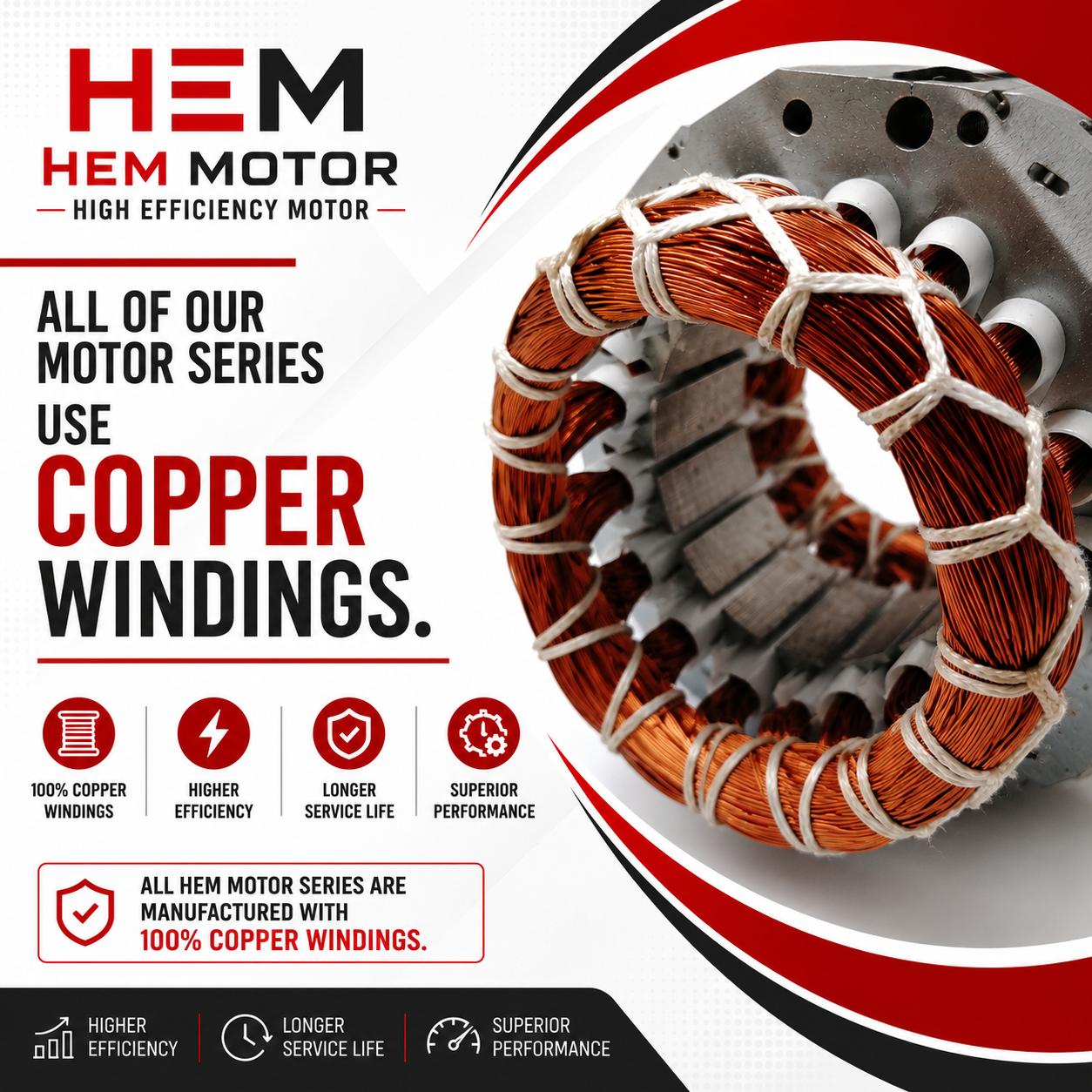
In classic asynchronous (squirrel-cage) motors the rotor carries copper or aluminium bars; the currents induced in these bars account for a large share of rotor losses. A synchronous reluctance motor, by contrast, has no windings, bars or permanent magnets on the rotor; instead it uses a laminated steel rotor machined with special flux barriers that make the magnetic flux prefer a specific direction. As the stator rotates this flux path, the rotor follows at synchronous speed, seeking the position of minimum reluctance (magnetic resistance). Because there is no current generating loss in the rotor, the motor runs much cooler and its efficiency rises.
The practical consequences of this architecture are:
- Higher efficiency: With rotor copper loss reduced to nearly zero, the motor can reach the IE5 ultra premium efficiency class.
- Lower rotor temperature: A cooler rotor extends bearing life and lubrication intervals.
- No permanent magnet risk: It contains no rare-earth elements, so there are no demagnetisation, price-volatility or recycling concerns.
- Synchronous speed: The motor runs at exactly synchronous speed without slip, an advantage in applications needing precise speed control.
For a detailed comparison of whether to choose asynchronous or synchronous reluctance, we recommend our article on the difference between IE4 asynchronous and synchronous reluctance.
50 Hz vs 60 Hz: How Speed, Power and Torque Change
A motor's synchronous speed is set by the number of poles (p) and frequency (f): n = 120 × f / p. When frequency rises from 50 Hz to 60 Hz, synchronous speed increases by about 20%. Because synchronous reluctance motors run at synchronous speed, this relationship applies exactly, without the slip uncertainty of asynchronous motors.
Speeds by pole count at 60 Hz are as follows:
- 2-pole (2p): 3600 rpm at 60 Hz (3000 rpm at 50 Hz)
- 4-pole (4p): 1800 rpm at 60 Hz (1500 rpm at 50 Hz)
- 6-pole (6p): 1200 rpm at 60 Hz (1000 rpm at 50 Hz)
- 8-pole (8p): 900 rpm at 60 Hz (750 rpm at 50 Hz)
What happens when speed rises? Power (P) is proportional to torque (T) times speed: P = T × ω. If the motor turns 20% faster at 60 Hz while holding constant torque, output power also rises by roughly 20%. Conversely, if the voltage-to-frequency (V/Hz) ratio is not maintained — that is, if the same voltage is applied at 60 Hz — the magnetic flux falls and available torque drops. This is exactly why nameplate power and voltage matching are critical in export. To understand the relationship between rated voltage and frequency more deeply, our article on the effect of rated voltage on speed and power at 50/60 Hz is a good starting point.
SynRM Always Runs with a Drive (VFD): The Subtleties of Frequency in Export
This is the most frequently misunderstood point about synchronous reluctance motors. An asynchronous motor can connect directly to the line; that is why it runs at 1500 rpm on a 50 Hz line and 1800 rpm on a 60 Hz line — the line frequency directly determines the motor. A synchronous reluctance motor, however, cannot start on its own because it has no magnets or bars on the rotor; it must be driven by a frequency converter (VFD/drive).
The critical export consequence is this: the frequency the motor sees is not the facility's line frequency (50 or 60 Hz), but the drive output frequency. The drive can be fed on its input side from a 60 Hz / 460 V American supply and still turn the motor at any desired speed on its output. In other words, with SynRM the motor's mechanical operating point is programmed to the application's needs.
So what must be watched in 60 Hz export?
- Drive input voltage and frequency: The drive must be selected to match the target country's supply (e.g. 60 Hz, 460 V or 575 V).
- Motor rated point: The motor is sized to the targeted maximum speed and power output point. If a high speed such as 3600 rpm is targeted, mechanical balancing and bearing selection are done accordingly.
- Drive output voltage: The maximum output voltage the drive can deliver to the motor is limited by the DC bus voltage, which sets the motor's base speed point and field-weakening behaviour.
- Nameplate: The motor nameplate usually carries dual-frequency / dual-voltage data and gives an operating range that must be assessed together with the drive.
In short, even though the drive — not the line — sets the frequency in a SynRM, the entire chain (line - drive - motor) must be compatible with the target market's 60 Hz infrastructure in an export project. If this compatibility is not ensured, unexpected problems can arise during commissioning once the motor reaches the site; the drive may fault, protection circuits may trip, or the motor may never reach the targeted speed and power. For this reason, treating the motor, the drive and the line infrastructure as a single whole when selecting a SynRM for export is the safest way to avoid later delays and costs.
Another point to watch in a drive-fed system is the motor's ability to maintain efficiency across a wide speed range. Because synchronous reluctance motors operate stably both in the constant-torque region and in the field-weakening region, they are especially advantageous in variable-speed export applications such as pumps, fans, compressors and conveyors. In a facility with a 60 Hz line, the drive makes it possible to run the motor with high efficiency at both low speeds and full load, directly reducing operating cost.
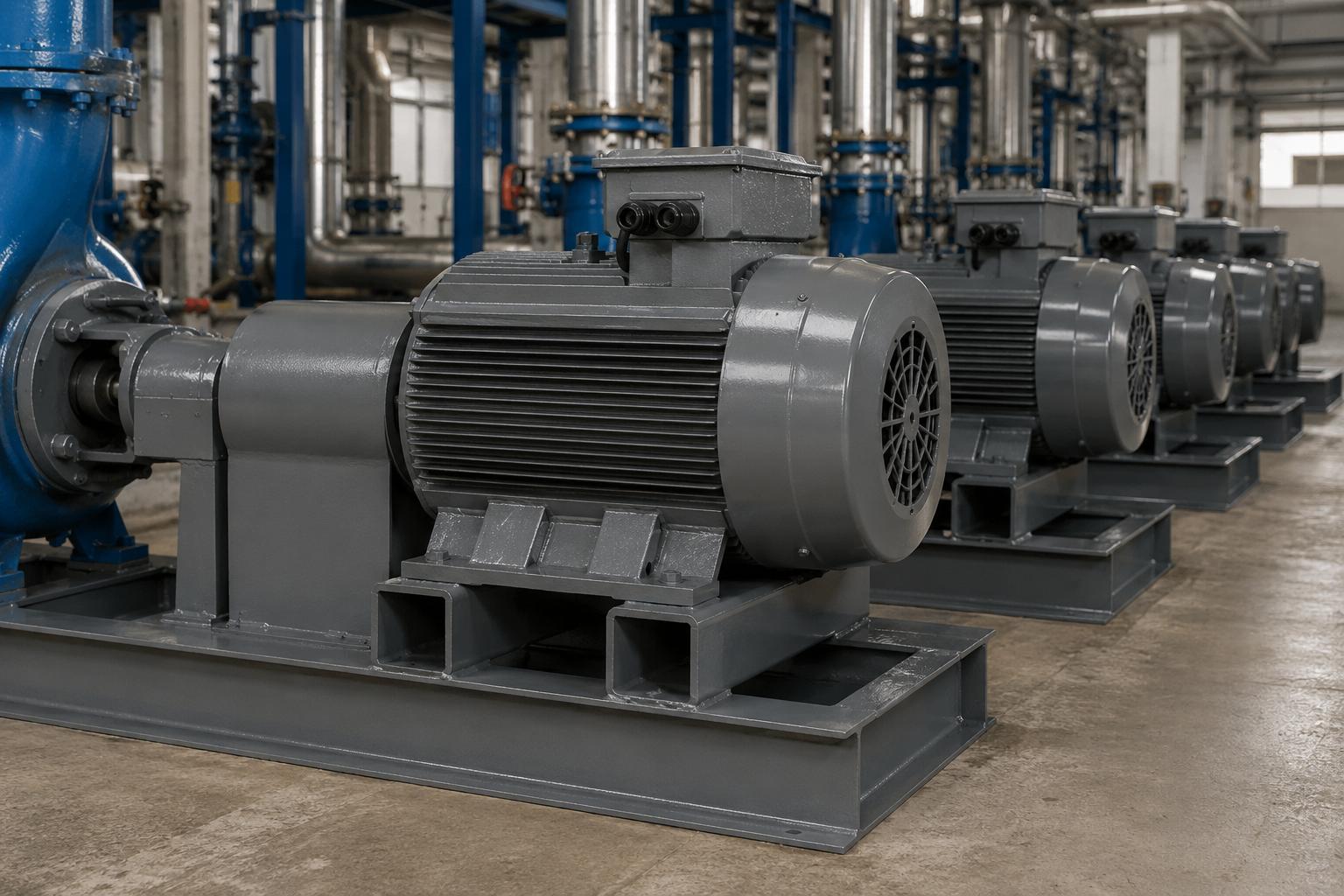
Dual-Frequency Nameplate Marking and Reading the Nameplate
On export-oriented motors the nameplate is less a single operating point than an operating map. On synchronous reluctance motors the nameplate typically shows:
- Separate power (kW / HP), speed (rpm) and voltage values for 50 Hz and 60 Hz,
- A note indicating drive operation (inverter duty / VFD only),
- The efficiency class (IE5) and the relevant test standard,
- Insulation class, protection class (IP), thermal protection and duty cycle (S1, etc.).
For motors heading to the American market, power is expected to be highlighted in HP (horsepower) and speeds in their 60 Hz values. For the European/Turkish market, kW and 50 Hz values are taken as the basis. As a manufacturer, arranging the nameplate according to the destination market and customer specification is part of our standard service. Reading the nameplate correctly is also vital when supplying spare motors.
It is worth remembering that the rated values on the nameplate reflect the real operating point the motor can reach together with the drive. For example, a 4-pole IE5 SynRM motor carries a power value for 1500 rpm at the 50 Hz reference, yet the same motor can deliver higher power when driven up to the 1800 rpm corresponding to 60 Hz. Clearly stating both values in the export offer lets both the machine builder and the end user act on the correct expectation. Which power a motor delivers at which speed only becomes meaningful when assessed together with the torque-speed characteristic of the connected load.
NEMA and IEC Compatibility: Frame, Voltage and Connection
The most visible technical difference in export lies in the world of standards. Europe and Turkey use IEC standards (frame size in mm, e.g. 132M, 160L), while North America uses NEMA standards (frame number, e.g. 213T, 256T). A direct one-to-one equivalent between these two worlds does not always exist; foot hole spacing, shaft diameter and shaft length differ.
Voltage Differences
While common voltages in US industrial facilities at 60 Hz are 230 V, 460 V and 575 V (575 V is common in Canada), Turkey/Europe use 400 V at 50 Hz. In a drive-fed SynRM the motor winding is designed for the voltage the drive will deliver; however, the line voltage feeding the drive must be selected for the target market. The wrong voltage class causes serious problems in drive selection and commissioning.
Frame and Mounting Compatibility
Replacing a NEMA-frame motor on an imported machine with an IEC unit, or vice versa, may require an adapter flange, shaft machining or a custom foot. We detailed how to perform this matching in our content on NEMA/IEC motor matching and frame selection. Which frame to ship in export should be decided up front according to the machine builder's standard.
Efficiency Labeling and MEPS Requirements in Export
Each market has different minimum energy performance standards (MEPS). In the US, DOE regulations and the NEMA Premium class dominate, while in the EU the IE3/IE4 requirements are paramount. Because the IE5 synchronous reluctance motor offers efficiency above all of these thresholds, it comfortably meets efficiency requirements wherever it ships, making it a future-proof choice for export projects. We explained in detail how efficiency class and IEC-NEMA compatibility are managed in 60 Hz export in our article on 60 Hz export and efficiency class in high-efficiency motors. For our broad product range, see our high-efficiency electric motors category.
Derating and the Voltage/Frequency Balance
If a motor designed for 50 Hz is run at 60 Hz with the same voltage, the V/Hz ratio falls, magnetic flux drops and the motor may struggle to produce the same torque; conversely, if a motor designed for 60 Hz is run at 50 Hz with the same voltage, it can saturate and overheat. In SynRMs the drive automatically maintains this balance through V/Hz or vector control, making them far more flexible than fixed-line motors. Even so:
- If high speed (3600 rpm) is targeted, mechanical stresses, bearings and the balancing class must be upgraded.
- In high-ambient markets (Gulf region), temperature derating and a suitable insulation class must be planned.
- The cable length between drive and motor determines the need for a dV/dt filter.
Certification and Procurement: Managing the Export Project
In export, documentation requirements vary by destination market: CE for Europe, EAC for the Eurasian Customs Union, and in some North American applications UL compliance comes to the fore. An improperly certified motor can be held at customs or rejected on site. That is why, in export projects, documentation planning is as critical as motor selection.
From a procurement standpoint, the approach we offer an exporter facility is as follows:
- Frequency, voltage and standard (NEMA/IEC) are clarified up front according to the machine's or facility's target market.
- The IE5 SynRM motor is sized as a system together with a suitable drive.
- Nameplate and documentation are prepared for the target market.
- Delivery time and serial production schedule are given according to the project plan.
For details of our 60 Hz certified motor supply programme, see our content on the 60 Hz certified motor supply programme for exporter facilities. With manufacturer assurance, simply sharing your technical data is enough for us to prepare an offer suited to your target market.
Frequently Asked Questions
Can an IE5 synchronous reluctance motor connect directly to the line?
No. Because synchronous reluctance motors have no magnets or short-circuit bars on the rotor, they cannot start on their own; they must be run with a frequency converter (VFD/drive). For this reason the frequency the motor sees is set by the drive output, not the line.
Does speed really increase by 20% in 60 Hz export?
Since synchronous speed is calculated by n = 120 × f / p, moving from 50 Hz to 60 Hz raises speed by about 20% (e.g. 1800 rpm instead of 1500 rpm at 4 poles). Because SynRM turns at exactly synchronous speed without slip, this value holds precisely; however, a different speed can also be programmed via the drive.
Which voltage should I choose for a motor shipped to the USA?
In US industrial facilities the most common voltages at 60 Hz are 230 V, 460 V and 575 V. The drive supply voltage must be selected for the target facility's line, and the motor and drive must be evaluated as one system. If you share your facility's voltage and frequency data, we will recommend the right combination with manufacturer assurance.