English
 Türkçe


In today's industry, where energy efficiency directly determines operating costs, the IE5 synchronous reluctance motor technology that represents the highest efficiency tier in electric motors is increasingly being chosen. Yet for most buyers it remains unclear what the efficiency class printed on these motors' nameplates actually means, which standard defines it, and whether the motor delivered to the site truly provides the expected performance. In this guide, within the framework of the IEC 60034-30-2 standard, we examine how the IE5 efficiency class is defined, how to verify the nameplate value, the tolerances applied to declared efficiency, and the correct procurement process from the perspective of a manufacturer and seller. Our aim is not merely to sell a high-efficiency motor; it is to ensure that the value printed on your motor's nameplate is met in the field as well. An IE5 synchronous reluctance motor purchased with the right knowledge means years of low energy consumption and reliable operation.
What Is an IE5 Synchronous Reluctance Motor?
The synchronous reluctance motor (abbreviated SynRM) is an electric machine that differs from classic induction motors fundamentally in its rotor structure. While induction motors have a current-carrying squirrel cage (aluminum or copper bars) on the rotor, the rotor of an IE5 synchronous reluctance motor contains no current-carrying conductor. Instead, the rotor consists of specially shaped lamination stacks with air-gap flux barriers that allow magnetic flux to pass easily in certain directions and with difficulty in others. The motor uses this difference in magnetic reluctance to produce torque at synchronous speed. Pure synchronous reluctance motors use no rare-earth permanent magnets, which is a significant advantage in terms of both supply security and cost.
The greatest benefit of this structure is that rotor losses are very low. In an induction motor, because current flows in the rotor bars, a certain amount of copper/aluminum loss occurs and the rotor heats up. In a synchronous reluctance motor, since there is no current-carrying conductor in the rotor, these losses are largely eliminated. Low rotor loss means both higher efficiency and a lower rotor temperature, which extends bearing and lubricant life. The core appeal of IE5 synchronous reluctance motor technology comes precisely from this: reducing loss at its source.
The Difference Between IE5 and IE4 Induction Motors
Most operators think of IE4 and IE5 as different tiers of the same motor; in reality the difference between them is significant in both technology and efficiency. IE4 (Super Premium) class motors are generally advanced-design induction motors and can run directly from the line supply. The IE5 (Ultra Premium) class is the highest step of the efficiency ladder, and this class is most often reached with synchronous reluctance or permanent-magnet synchronous motors.
- Rotor structure: A current-carrying squirrel cage in the IE4 induction motor; a magnet-free lamination stack with only magnetic flux barriers in the IE5 synchronous reluctance motor.
- Losses: The IE5 class is conceptually defined to operate with roughly 20% lower losses than IE4; this translates into cumulative savings, especially in continuously operating applications.
- Operating mode: While the IE4 induction motor can generally run directly from the line, a synchronous reluctance motor almost always requires a matched drive (variable frequency drive / VFD).
- Heating: Because rotor loss is low, the rotor runs cooler in an IE5 synchronous reluctance motor.
For this reason, the decision to move to IE5 is not just a motor selection; it is often a system decision that considers the motor and drive together. To explore the efficiency tiers and the logic of transition more broadly, we recommend reviewing the IE5 ultra premium motor transition guide. For a comparative evaluation with IE4, the content under IE4 efficient electric motors is a useful reference.
The IEC 60034-30-2 Standard: The Official Framework for IE5
For a motor's efficiency class to be expressed as "IE5" is not an arbitrary marketing claim; it depends on the motor meeting the numerical thresholds defined by an international standard. At this point, two standards must be distinguished:
- IEC 60034-30-1: Defines efficiency classes from IE1 to IE4 for line-operated, single-speed induction motors.
- IEC 60034-30-2: Defines efficiency classes from IE1 to IE5 so as to cover variable-speed / converter-fed (drive-fed) motors, complementing 30-1.
Since synchronous reluctance motors operate with a drive in practice, their efficiency class is generally assessed under IEC 60034-30-2. This standard defines, for the IE5 tier, the minimum efficiency values a motor must reach at specific power, pole, and speed points. Therefore, the presence of "IE5" on a motor's nameplate means the manufacturer declares that the motor meets the IE5 threshold of the relevant standard. This standards-based framework protects the buyer from vague "high-efficiency" claims and provides a comparable, verifiable basis.
What Does IE5 "Ultra Premium" Mean?
As efficiency classes rise, losses fall: IE1 (Standard), IE2 (High), IE3 (Premium), IE4 (Super Premium), and at the top IE5 (Ultra Premium). IE5 represents the lowest-loss tier defined within the current standard framework. Conceptually, IE5 is accepted to target roughly 20% lower losses compared with the next step down, IE4. The point to note here is that the difference is expressed in "losses" rather than in "efficiency percentage"; because when efficiency is already above 90%, reducing the remaining small share of loss is valuable in terms of absolute energy savings.
How Is Efficiency Determined and Measured?
A motor's efficiency class is based not on the manufacturer's claim but on a value measured by a standard test method. The methodology of efficiency measurement is defined in the IEC 60034-2-1 standard. This standard sets out the accepted measurement and calculation methods for determining the difference between the motor's input power and its output (shaft) power, that is, the total losses. Losses generally consist of the following components:
- Stator copper losses: Heat loss caused by resistance in the windings.
- Iron (core) losses: Losses occurring in the lamination stack due to the magnetic cycle.
- Rotor losses: Since there is no conductor in a synchronous reluctance motor, this item is largely low; in an induction motor it is significant.
- Mechanical losses: Bearing friction and fan/ventilation loss.
- Additional load losses: Hard-to-measure stray losses that appear at full load.
The total loss determined by the test method reveals the motor's efficiency and therefore its efficiency class. Relying on a standard test method allows motors from different manufacturers to be compared fairly. To see the practical meaning of efficiency measurement and standards in more detail, the electric motor technical information guides are a useful resource.
Verifying the Nameplate Value
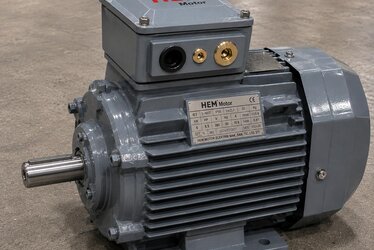
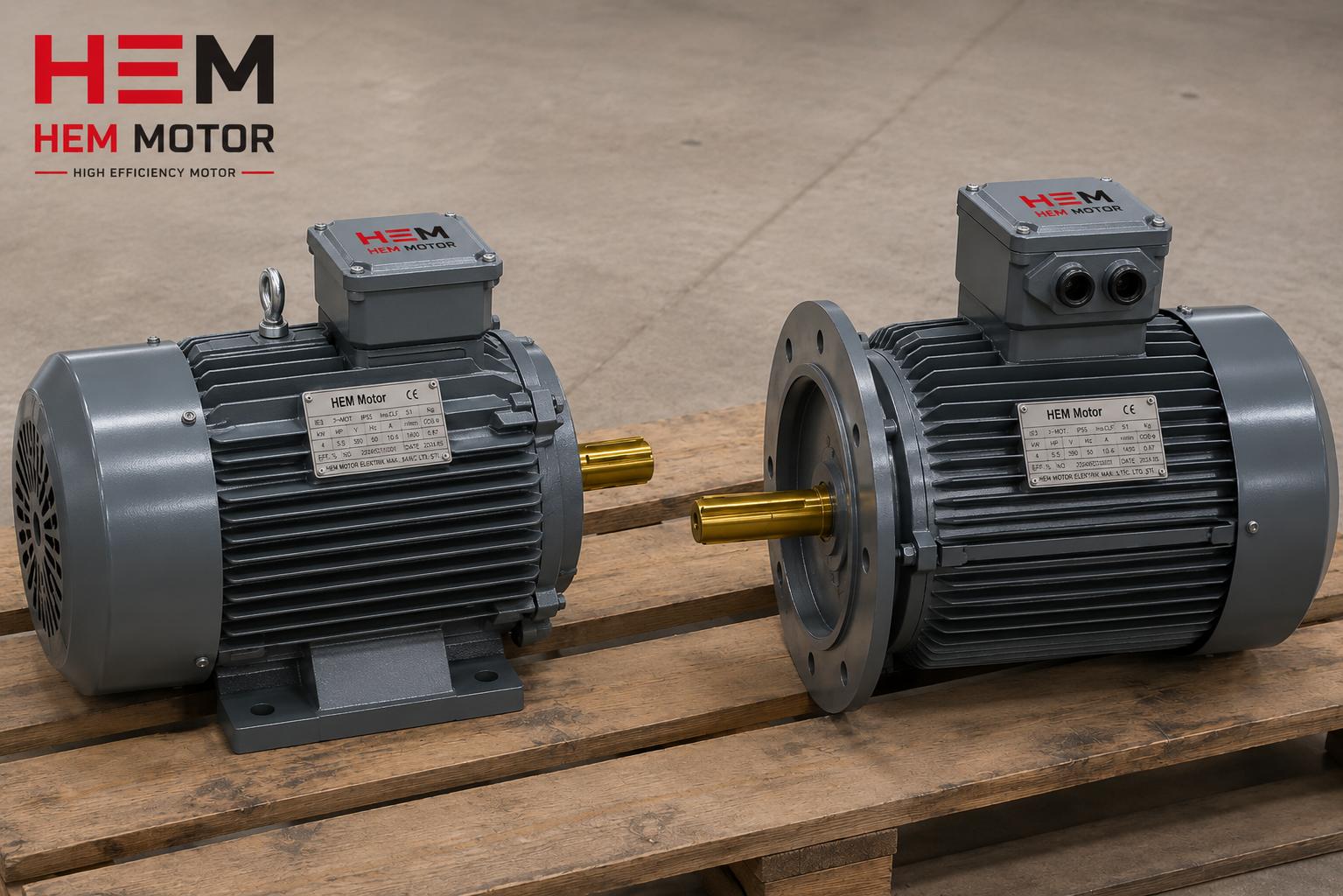
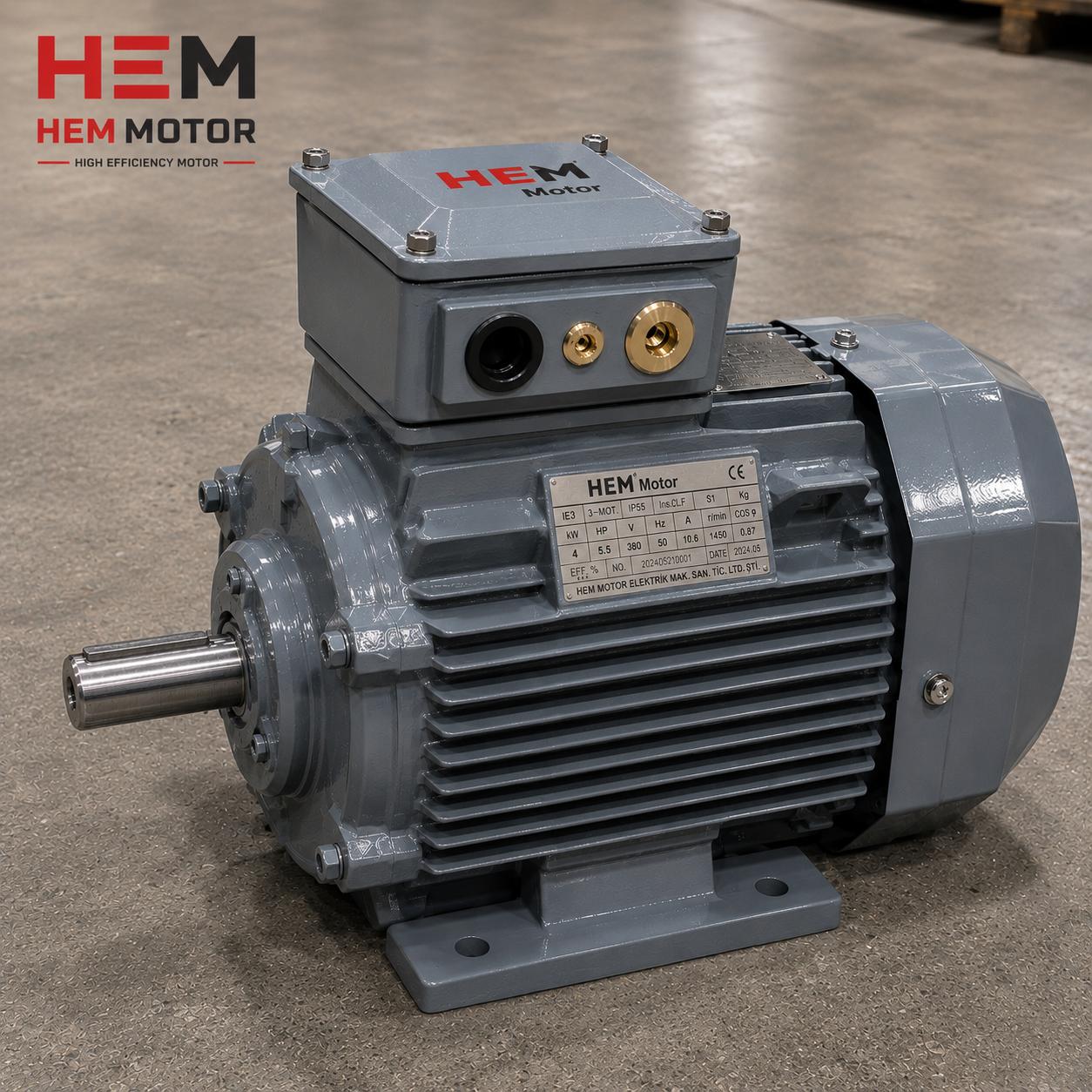
The first step in understanding whether a motor truly delivers the performance you expect is to read its nameplate correctly. When purchasing an IE5 synchronous reluctance motor, expect the following information on the nameplate to be consistent and complete:
- Efficiency class marking: The nameplate should clearly bear the "IE5" designation and, where possible, the relevant standard reference (IEC 60034-30-2).
- Rated point: The efficiency value is valid at a specific point of power, voltage, frequency, and speed; the rated point on the nameplate should match your operating point.
- Efficiency value (%): Some nameplates also state the full-load efficiency percentage; this value should be consistent with the IE5 threshold.
- Drive requirement: The nameplate of synchronous reluctance motors usually states that they must be operated with a drive (VFD). The nameplate value is mostly valid together with a matched drive.
- Protection class, insulation class, duty type: Information such as IP protection, class F insulation, and S1 continuous duty should also match.
The most reliable way to verify that the nameplate value is genuine is to procure the motor together with documentation based on the standard test method (test report / declaration of conformity). As a manufacturer and seller, we deliver our IE5 class motors with documents showing the efficiency class and rated values, so you can be sure that the value printed on the nameplate is backed up.
The Tolerance Applied to Declared Efficiency
The efficiency value is, by its nature, declared with a certain tolerance band. No mass-produced motor can repeatedly produce the value printed on the nameplate with zero deviation; therefore standards define an acceptable lower tolerance for declared efficiency. That is, the measured efficiency of a motor in the field must not fall below a certain lower limit of the declared value on the nameplate. For the buyer, this means:
- The efficiency value on the nameplate is a value declared within a tolerance framework, reflecting the motor's guaranteed minimum performance.
- Small deviations in the measurement of a single motor are normal; what matters is that the measured value stays within the tolerance band allowed by the standard.
- With motors offered very cheaply as "IE5" but without documentation, there is a risk that the declared efficiency is not actually achieved, which means the expected savings do not materialize.
For this reason, in IE5 procurement, documentation and manufacturer assurance are as important as the figure on the nameplate. A buyer who consciously evaluates the tolerance both sets the right expectations and selects the supplier with the right questions.
Why Does a Synchronous Reluctance Motor Require a Drive?
The reason synchronous reluctance motors are almost always sold with a drive (variable frequency drive / VFD) in practice lies in their operating principle. These motors run at synchronous speed and do not have the self-starting capability (as in an induction motor) needed to start directly from the line. The drive manages the motor's starting, aligns the magnetic flux correctly, and rotates the motor stably at synchronous speed. Therefore:
- An IE5 synchronous reluctance motor is generally supplied as a motor + drive package.
- The efficiency declared on the nameplate is mostly valid together with this matched drive.
- The drive also offers variable-speed capability, providing additional energy savings in pump and fan applications.
- An incorrectly matched drive can reduce both performance and efficiency; this is why a matched package is important.
Rather than buying the motor and drive from separate sources without checking their compatibility, the safest path is to choose a matched package whose efficiency class is backed up. To learn about our high-efficiency motor range and matched solutions, you can review the high-efficiency electric motors product range page.
Suitable Applications and the Savings Logic
The benefit of IE5 synchronous reluctance motor technology is directly proportional to how much and at what load the motor runs. The most sensible areas of use are applications running in continuous (S1) duty:
- Pumps: Both high efficiency and flow control with variable speed in continuously running centrifugal pumps.
- Fans: High savings potential in ventilation and process fans due to long operating hours.
- Compressors: The advantage of low loss and low rotor temperature in compressors running under continuous load.
- General continuous drive: In three-shift facilities, the advantage of IE5 multiplies as operating hours increase.
The savings logic is simple: the more hours the motor runs and the higher the energy cost, the faster the improvement in the efficiency tier pays back. In a motor that runs intermittently and rarely, the additional investment in IE5 returns slowly; but in a pump or fan that runs continuously throughout the year, the low loss of IE5 turns into meaningful energy savings over time. When evaluating in which application IE5 makes sense, operating hours, load profile, and energy cost should be considered together. To see the whole picture of efficiency-focused motor investment, the energy and inventory approach in high-efficiency motors content provides guidance.
Correct Procurement: Matched Package, Stock, and Manufacturer Assurance
Turning the technical potential of an IE5 class motor into reality in the field begins with the right procurement decision. As a manufacturer and seller, we summarize the points to watch when sourcing an IE5 synchronous reluctance motor as follows:
- Matched motor + drive: Procure the motor and drive that are compatible with each other and for which the efficiency class is valid, together.
- Request the efficiency class on the nameplate: At the ordering stage, ask for the "IE5" designation and the standard reference to appear on the nameplate.
- Delivery with documentation: Request a test report / declaration of conformity showing the efficiency value and rated point.
- Stock and lead time: Clarify the lead time and stock status of IE5 packages in advance; plan redundancy for critical applications.
- Manufacturer assurance: Choose a supplier who stands behind the declared efficiency and can provide service and equivalents in the future.
To get an accurate quotation, sharing your application's power, speed, operating hours, and operating point allows the most suitable IE5 solution to be identified quickly. To get information about current electric motor prices and IE5 matched package options, you can contact us. Procurement done with the right knowledge ensures both that you see the nameplate efficiency in the field and that your investment pays back quickly.
Frequently Asked Questions
Is an IE5 synchronous reluctance motor the same as an IE4 induction motor?
No. IE4 (Super Premium) motors are mostly advanced-design induction motors and can run directly from the line. IE5 (Ultra Premium) is the highest step of the efficiency ladder, and this class is usually reached with synchronous reluctance motors whose rotor contains no current-carrying conductor. IE5 conceptually targets roughly 20% lower losses than IE4; in addition, a synchronous reluctance motor almost always runs with a matched drive.
Can an IE5 synchronous reluctance motor run without a drive?
In practice, no. Synchronous reluctance motors run at synchronous speed and cannot self-start from the line; therefore a variable frequency drive (VFD) is needed to manage the motor and rotate it stably at synchronous speed. These motors are generally supplied as a matched motor + drive package, and the efficiency value on the nameplate is mostly valid together with this matched drive.
How do I verify the efficiency class on the nameplate, and what does IEC 60034-30-2 cover?
IEC 60034-30-2 defines efficiency classes from IE1 to IE5, including variable-speed / drive-fed motors, and complements IEC 60034-30-1. To verify the nameplate, check that the "IE5" designation, the standard reference, and the rated point (power, voltage, frequency, speed) are consistent; confirm the reality of the efficiency with a test report / declaration of conformity based on the standard test method. A motor delivered with these documents shows that the value printed on the nameplate is guaranteed within the tolerance framework.