English
 Türkçe

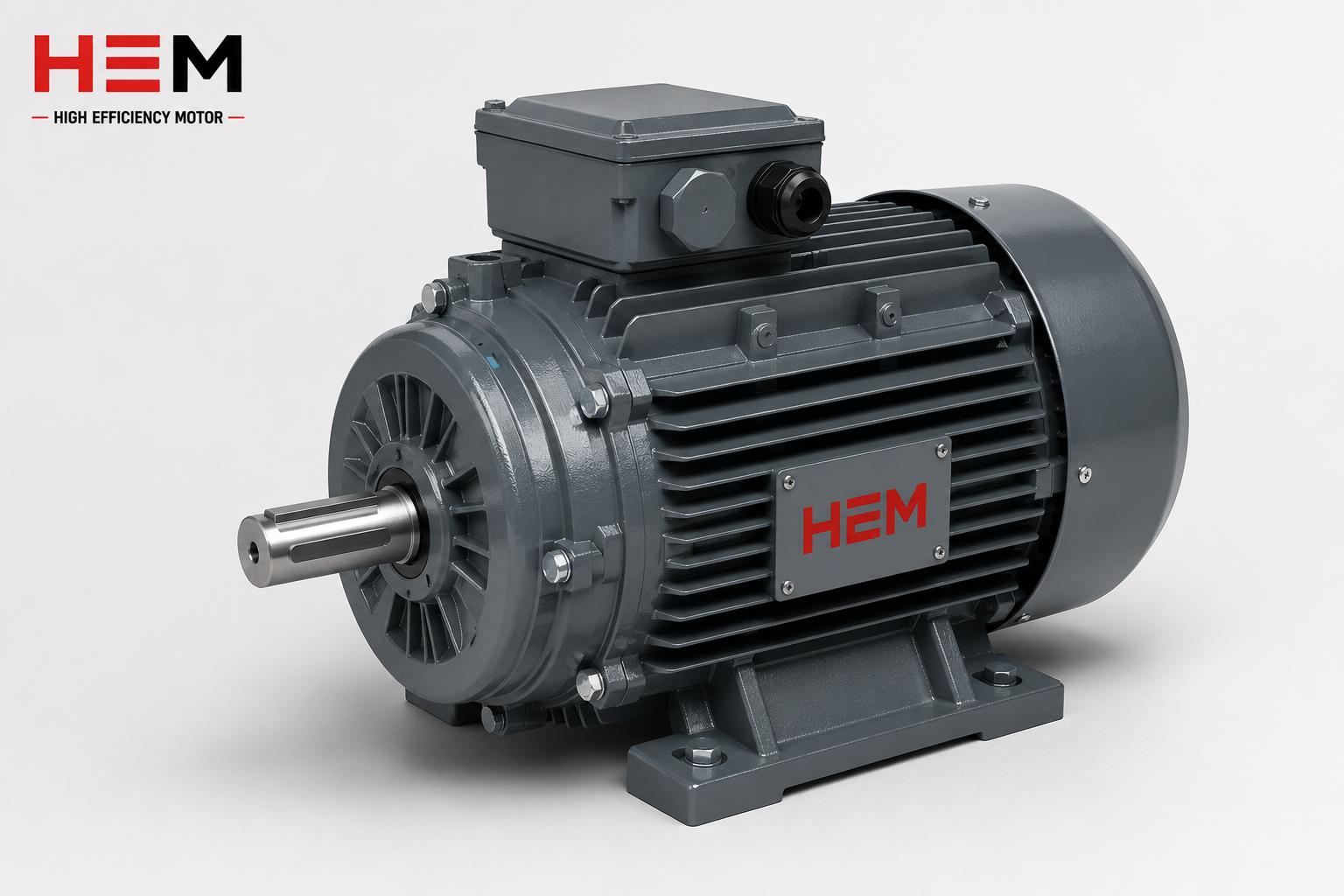

When a high-inertia load must be stopped within seconds, or when a crane hook descending under gravity must be held back safely, the motor is no longer a power-consuming device but an energy-producing source. With IE5 class senkron relüktans (synchronous reluctance, SynRM) motors this situation arises far more often, because their Super/Ultra Premium efficiency and magnet-free rotor make them a popular choice in dynamic applications. Yet one critical point must never be forgotten: IE5 synchronous reluctance motors never run without a drive; they are always engineered together with a VFD. It is within this drive-based architecture that the need for fast stopping introduces a key component — a correctly selected frenleme direnci (braking resistor) and chopper unit. In this article we examine, from a manufacturer's perspective, why a braking resistor is needed, which parameters govern its sizing, its alternatives and its typical applications. Our aim is not merely to provide a technical definition but to show, step by step, how the right component selection translates into process continuity, energy efficiency and total operating cost.
Why Is a Braking Resistor Needed?
When a SynRM motor driven by a VFD is decelerated, or when it restrains an overhauling load descending under its own weight, the motor begins to behave like a generator. Mechanical energy is converted into electrical energy, and this energy is pumped back onto the drive's input side — that is, onto the DC bara (DC bus). In normal operation the DC bus voltage is held within a defined range; however, the returning rejeneratif enerji (regenerative energy) charges the bus capacitors and raises the voltage. If this voltage exceeds the drive's overvoltage trip threshold, the drive faults and stops to protect itself. In the middle of a production line, such a trip causes both lost output and process safety concerns — an unacceptable outcome.
The solution is to dissipate the returning energy as heat before it accumulates on the bus. The frenleme direnci performs exactly this task: a switching element called the chopper connects the resistor across the DC bus when the bus voltage rises above a defined level, converting the excess energy into heat in the resistor. This allows the drive to stop the load quickly without an overvoltage fault. Without a braking resistor, many applications that require fast stopping are forced either to run with very slow ramps or to fight constant drive trips.
There is a concrete reason why senkron relüktans motors stand out at this point. Thanks to their magnet-free rotor, these motors deliver a high dynamic response and can accelerate and decelerate rapidly, which makes them a natural candidate for processes with frequent stop-start cycles and precise positioning. However, high dynamics also mean that the energy released during braking is equally intense. Therefore, when selecting a SynRM motor you must plan from the outset not only its driving and acceleration performance but also the stopping scenario and where the regenerated energy will go. In a poorly designed system the motor accelerates beautifully but faults the drive on every stop, halting the line — which immediately consumes the gain that IE5 efficiency was meant to provide.
System Components: DC Bus, Chopper and Resistor
To configure a braking system correctly, three components must be considered together. Their compatibility determines both the safety and the service life of the system.
- DC bus (DC bara): The capacitor-supported DC voltage link between the drive's rectifier output and inverter input. Regenerative energy accumulates here first.
- Brake chopper: A transistor-based switch that continuously monitors the DC bus voltage and rapidly connects and disconnects the braking resistor across the bus when the threshold is exceeded. Some drives have it built in; at higher powers an external chopper unit is required.
- Braking resistor: The element that converts the returning energy into heat, with a specific ohm value and thermal power rating. It must be properly ventilated, rated for its surface temperature and matched to the drive.
In drives with a built-in chopper, connecting a suitable resistor is enough; in high-power or high-braking-energy systems an external chopper plus resistor combination is built. As a manufacturer, evaluating the motor, the drive and the braking components together prevents field failures caused by mismatch.
The interdependence of these three components is often overlooked. For example, even if the drive is rated with enough power, a built-in chopper with a low current capacity cannot meet a fast braking demand, so an external chopper unit becomes necessary. Likewise, even a resistor with the correct ohm value will overheat under frequent braking if its thermal capacity is insufficient. The weakest link in the braking chain therefore determines the performance of the whole system. A correctly configured braking chain fully reflects the high dynamic capability of the IE5 motor in the field, whereas an incomplete one keeps that potential hidden.
Alternatives to a Braking Resistor
Not every application requires a braking resistor. The right engineering decision depends on the load character and the cycling frequency. The main alternatives are:
Stopping With a Slower Ramp
If inertia is low and there is enough time to stop, the drive's deceleration ramp can be extended so the returning energy stays low. In this case the rejeneratif enerji does not raise the bus voltage to a dangerous level and no braking resistor is needed. However, this approach cannot be used in processes that demand fast stopping or short cycle times.
Regenerative (Four-Quadrant) Drive
In applications that brake frequently and with large amounts of energy, returning that energy to the grid is far more efficient than burning it in a resistor. Active front-end or four-quadrant drives feed the returning energy back to the grid, saving energy and eliminating the heat load. For high-cycle crane and centrifuge applications, this solution is more economical in the long run.
Common DC Bus Sharing
In systems where several drives share a common DC bara, the energy produced by one motor while braking can be consumed at the same time by another motor that is accelerating. This common-bus architecture lets energy circulate within the system, reducing the braking energy that must be dissipated. For details, see our article IE5 senkron relüktans motorda rejeneratif frenleme ve ortak DC bara.
Correctly Sizing the Braking Resistor
Two fundamental parameters are evaluated together when selecting a braking resistor. Choosing either incorrectly can damage the resistor or the chopper.
1. Resistance Value (Ohm)
The resistor's ohm value must lie between the minimum and maximum limits the drive allows. If the value is too low, the current through the chopper exceeds the safe limit and the switching transistor is damaged. If the value is too high, the resistor cannot dissipate enough energy and the bus voltage rises again, causing an overvoltage trip. For this reason the resistance value must always stay within the permitted range stated in the drive's data sheet.
2. Power and Energy (Thermal) Rating
The resistor's thermal rating is selected to handle both the energy dissipated in each braking pulse and how often those pulses repeat (the duty cycle). An under-rated resistor overheats during frequent braking, its surface temperature rises and it degrades over time. The main drivers of sizing are:
- Load inertia — the higher it is, the more energy returns.
- Speed change — the speed difference during stopping directly affects the energy.
- Deceleration time — the shorter the time, the higher the instantaneous power.
- Cycles per hour — frequent stops mean continuous heat build-up in the resistor.
For this reason braking resistor selection is based not on numeric tables but on the real load profile of the application. The most common field mistake is selecting the resistor only for the instantaneous braking power while ignoring the repetition rate; a resistor may handle a single stop without issue, yet fail under stops repeated several times a minute because of continuous heat build-up. Both the peak power and the average power must therefore be considered together during sizing. An incorrectly sized resistor fails quickly, while a correctly sized one keeps the system running trouble-free for years. To see how efficient motor selection affects the braking side, our article verimli motorda rejeneratif enerji geri kazanımı ve dört bölge sürücü will be useful.
Which Applications Require a Braking Resistor?
The need for a braking resistor is directly related to the nature of the load and the stopping requirements. The high efficiency, magnet-free rotor and quiet, low-vibration operation of IE5 synchronous reluctance motors provide an added advantage in these applications.
- Cranes and hoists: As the load descends it drives the motor (an overhauling load); this energy must always be dissipated in a controlled way.
- Centrifuges: Fast stopping from high speed produces large amounts of regenerative energy.
- High-inertia fans: Large-diameter fans that must be stopped quickly release significant braking energy.
- Machine tools: Axis and spindle stops require precise and fast braking.
- Frequently stopping conveyors: On lines with hundreds of stops per hour, thermal capacity is critical.
In these applications it is also important to assess how starting frequency relates to thermal limits; for details see our article IE5 senkron relüktans yol verme sıklığı ve termal sınır. For readers who wish to examine the drive-side overvoltage behaviour more deeply, our article elektrik motorunda rejeneratif frenleme, fren direnci ve DC bara aşırı gerilimi is a comprehensive resource.
Installation, Layout and Safety Considerations
Even a frenleme direnci selected with the correct ohm value and thermal capacity will not deliver the expected performance if it is installed incorrectly. Because the resistor reaches a high temperature while operating, adequate ventilation must be provided inside the cabinet, or the resistor should be mounted outside the cabinet in a position that safely removes the heat. It must be kept away from flammable materials, free of dust and dirt build-up, and surrounded by free airflow. Many industrial resistors come with an internal thermal protection contact; when this contact is wired to a drive digital input, it safely stops the system if the resistor reaches a dangerous temperature, eliminating the risk of fire.
On the wiring side, keeping the connection between the chopper and the resistor short and of suitable cross-section is important for limiting the voltage spikes and electromagnetic interference produced during switching. In high-power systems using an external chopper unit, the chopper must be connected to the DC bus with the correct polarity and the protective fuses recommended by the manufacturer must be used. When these details are neglected, even a correctly sized system can fail prematurely in the field; treating motor, drive and resistor selection as an integrated engineering decision is therefore the soundest approach.
Braking Resistor or Regenerative Drive? A Decision Guide
When deciding which solution is appropriate, the application's braking frequency, the amount of energy dissipated and the cost of energy must be evaluated together. In practice the following distinctions are a useful guide:
- Infrequent braking, low energy: The braking resistor is usually the most sensible choice because it is simple, economical and easy to maintain.
- Frequent braking, high energy: Continuously burning energy in a resistor creates both a heat load and an electricity cost; a regenerative drive pays for itself over the long run.
- Many motors on the same line: A common DC bara architecture transfers the braking motor's energy to an accelerating motor, reducing both the resistor and the grid load.
- Continuous overhauling load (crane, lift): Because regeneration is continuous, energy-recovering solutions are both efficient and thermally safe.
Getting this decision right directly affects both the initial investment and the operating cost of the system. To avoid wasting the efficiency advantage of IE5 class motors through a wrong braking strategy, this assessment should be made at the start of the project.
Correct Matching With HEM Motor Manufacturer Assurance
Braking performance is achieved not by resistor selection alone but by correctly matching the motor-drive-resistor trio. HEM Motor supplies IE5 synchronous reluctance motors as a package matched with the correct drive, and uses engineering support to assess — according to the application's load profile — whether a braking resistor or a regenerative drive is more suitable. The motor's inertia, speed and power data are documented so that resistor sizing rests on a solid foundation. Thanks to fast supply from stock, spare-part availability and manufacturer assurance, you can proceed without supply risk in your projects. You can review our wide power range of yüksek verimli elektrik motorları and, for alternative classes, our IE4 elektrik motorları options, and contact us for current elektrik motoru fiyatları.
Frequently Asked Questions
Can an IE5 synchronous reluctance motor run without a drive?
No. By design, IE5 synchronous reluctance motors always operate with a VFD/drive. The braking resistor and chopper are part of this drive architecture; without a drive there can be no braking resistor.
Is a regenerative drive always better than a braking resistor?
Not always. In applications that brake frequently and heavily, a regenerative drive is more efficient because it returns energy to the grid. In systems that brake rarely, a braking resistor is both simpler and more economical.
What happens if I choose the wrong resistance value?
If the resistance value is below the range the drive allows, excessive current flows through the chopper and the transistor is damaged. If the value is too high, the rejeneratif enerji cannot be dissipated, the DC bara voltage rises and the drive faults on overvoltage.