English
 Türkçe


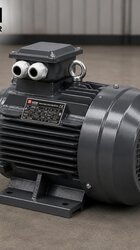
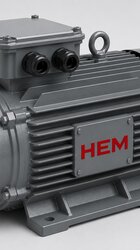


The IE4 efficiency class carries a high efficiency value on its nameplate, and this value influences the purchasing decision positively. But there is a critical fact here that most businesses overlook: the high IE4 efficiency on the nameplate belongs to the condition where the motor runs near full load. In real facilities, however, motors often run at part load, even at low load. In this case both efficiency and power factor drop noticeably, and a motor oversized "just to be safe" quietly eats the promised savings. In this guide we cover how efficiency behaves at part and low load, why oversizing consumes the savings, and how correct sizing is done.
To Which Condition Does the Nameplate Efficiency Belong?
The IE4 efficiency value written on a motor's nameplate is measured at the point where the motor runs near full load. That is, the manufacturer writes on the nameplate the highest efficiency the motor reaches while running at a load close to its rated power. This is the very peak point of the motor's efficiency curve.
But in a real facility, motors rarely run at full load. Most applications carry a variable load, and most motors are selected larger than needed. As a result, the motor runs not at that ideal efficiency point on the nameplate but in a lower region of the efficiency curve. This is exactly where the assumption "the nameplate says IE4, so it must be very efficient" becomes misleading; because the real operating condition differs from the nameplate condition.
At Part and Low Load, Efficiency and Power Factor Drop
When a motor is run below its rated power, two important parameters drop:
- Efficiency: As the motor moves away from full load, it descends from the peak point of the efficiency curve. Especially below half load, the efficiency decreases noticeably.
- Power factor: At low load the power factor also drops; this means the reactive power the motor draws from the grid increases, creating a risk of reactive penalty.
These two drops cause a motor running at low load to operate both less efficiently and more problematically from the grid's standpoint. So an IE4 motor that is oversized and runs constantly at low load operates far from the high efficiency on its nameplate. For correct sizing and efficient motor options, take a look at the electric motor prices page.
Why Does Oversizing Eat the Savings?
Many businesses select a motor larger than needed with the thought "it might be needed later" or "to be safe." This oversizing paradoxically consumes the savings even in an efficient motor. The logic works as follows:
- The oversized motor runs far below its rated power while carrying the real load.
- At this low load ratio, the motor's efficiency and power factor drop.
- As a result, the high efficiency advantage promised by the IE4 class is lost in the field.
So the business invests in a more expensive IE4 motor but, due to wrong sizing, cannot reap the return of this investment. Oversizing harms in two ways: extra investment cost and efficiency lost at low load. That is why the right decision must be made by the question "which power best suits the application's real load?" not "how big can I buy?"
How Is Correct Sizing Done?
To truly achieve the efficiency advantage in the field, the motor must be correctly sized to the application's real load. The steps of correct sizing:
- Determine the real load: Calculate the power the application requires, without exaggerated safety margins.
- Evaluate the load profile: Is the load constant or variable? At what load ratio will the motor spend most of its time?
- Target the good region of the efficiency curve: Select the motor so it spends most of its running time in the high region of the efficiency curve.
- Consider a VFD for variable load: If the load is highly variable, a correctly sized motor plus a frequency drive may be more efficient than a fixed large motor.
When these steps are applied, the high efficiency on the IE4 motor's nameplate turns into reality in the field too. Correct sizing is the fundamental condition for reaping the return of an efficiency investment.
Correctly Sized Efficiency With Manufacturer Assurance
The high efficiency of an IE4 motor gains meaning in the field only when correctly sized. An oversized motor loses the savings even in the most efficient class. HEM Motor offers IE4 efficient motors across a wide power range with strong stock and manufacturer assurance; it helps you select the power that best suits the application's real load. A correctly sized IE4 motor provides the real return of your efficiency investment. For a solution and quote suited to your application, review the electric motor prices page.
Frequently Asked Questions
Is the nameplate IE4 efficiency valid under all conditions?
No. The high nameplate IE4 efficiency belongs to the condition where the motor runs near full load. In real facilities motors often run at part load, and in this case both efficiency and power factor drop.
Why does oversizing eat the savings?
An oversized motor runs far below its rated power while carrying the real load. Because efficiency and power factor drop at this low load ratio, the high efficiency advantage promised by the IE4 class is lost in the field. This causes two-way harm: extra investment and lost efficiency.
How is correct sizing done?
Calculate the application's real load without exaggerated safety margins, evaluate the load profile, and select the motor so it spends most of its running time in the high region of the efficiency curve. If the load is highly variable, a correctly sized motor plus a VFD can be considered.