English
 Türkçe


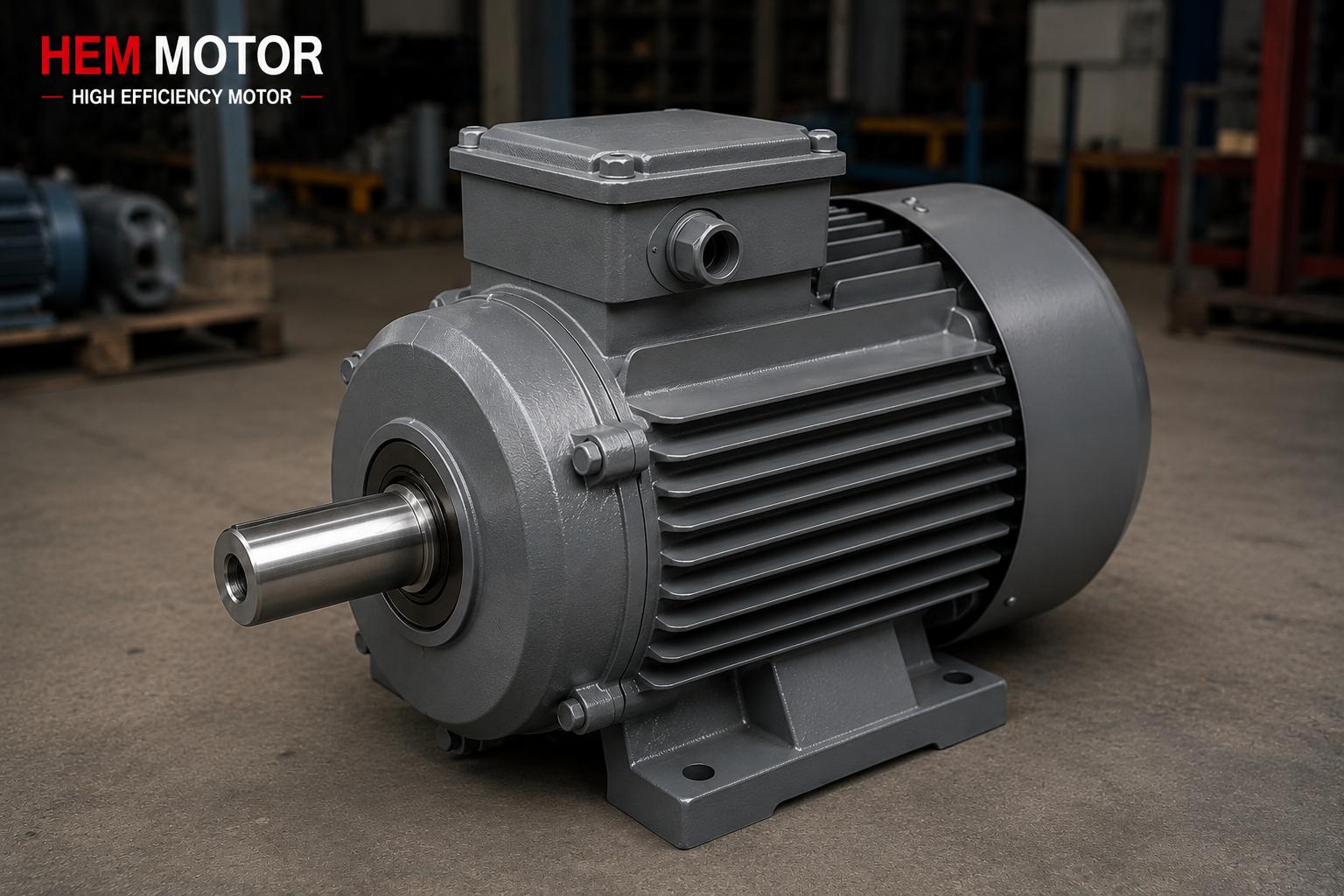

An electric motor's efficiency shows how much of the electrical power supplied to it is converted into useful mechanical power. The remaining part inevitably turns into losses, that is, into heat. Behind the fact that an IE4 super premium efficiency-class motor is more efficient than an IE3 lies not an abstract miracle but very concrete engineering: the reduction of each individual type of loss in the motor, one by one. In this guide we examine step by step which groups the losses in an induction motor fall into, where and why each one occurs, and how IE4 motors lower these losses. Understanding where the losses occur makes concrete why you invest in a higher efficiency class.
Our goal is not just to tell you "IE4 is better," but to show which physical losses' reduction this superiority comes from. So that when supplying an IE4 electric motor, you clearly know what you are paying for and what you gain in the long run.
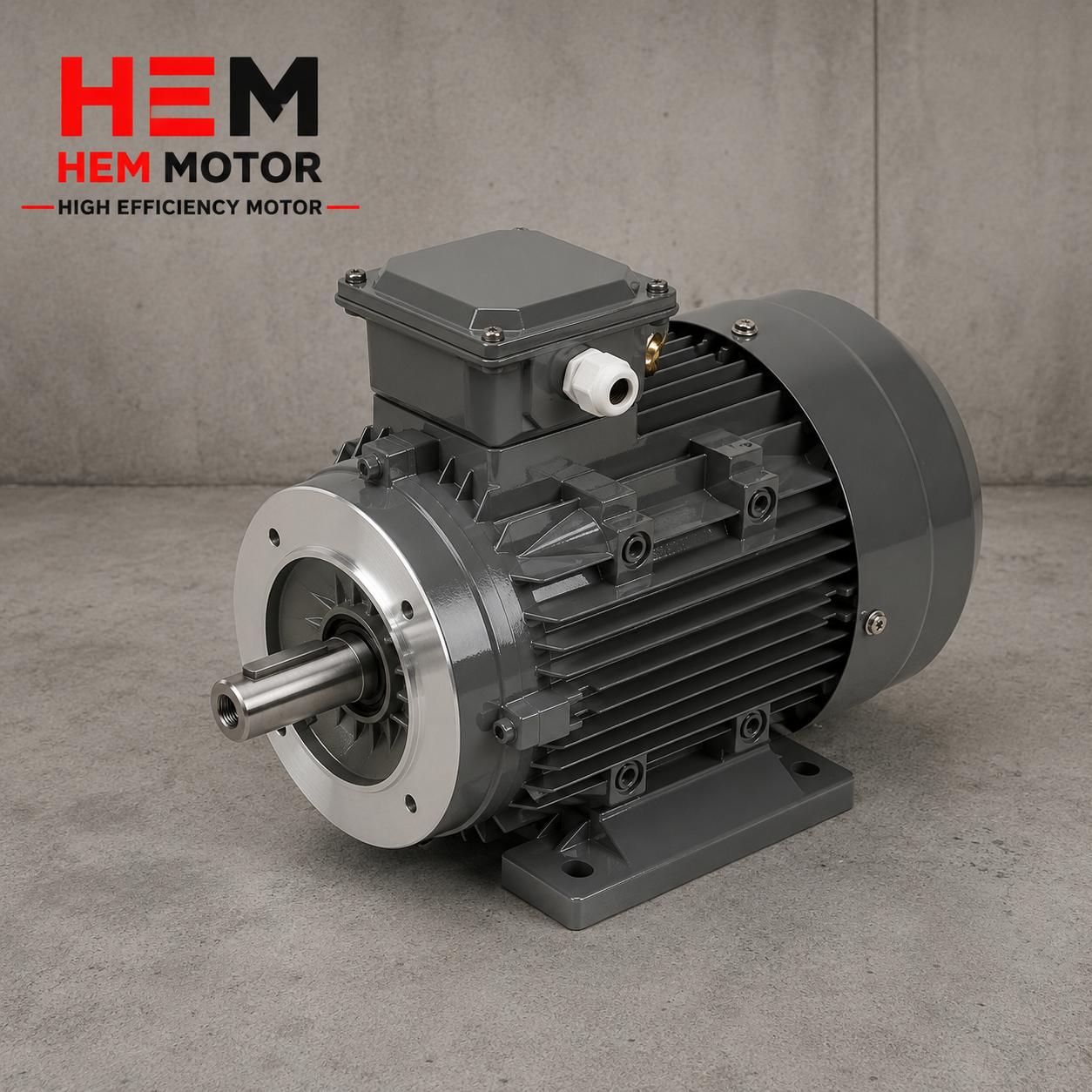
Losses in an Induction Motor Fall Into Four Groups
All losses occurring in an induction motor are classified into four core groups according to their source. Without evaluating these four groups together, it is impossible to truly understand a motor's efficiency.
1. Iron (Core) Losses
Iron losses occur in the motor's magnetic core, that is, in the stator and rotor laminations. The alternating magnetic field causes two separate losses in the core material:
- Hysteresis loss: The loss arising from the magnetisation and demagnetisation of the lamination material as the magnetic field changes direction. The lower the material's magnetic quality, the greater this loss.
- Eddy current loss: The heat created by the circulating currents the alternating magnetic field induces in the core. To reduce this loss, the core is built from thin, insulated laminations.
Iron losses remain almost constant as long as the motor is energised, whether loaded or unloaded. They are therefore very important in continuously running motors.
2. Copper (Winding) Losses
Copper losses arise from the current turning into heat due to the conductor's resistance as it passes through the stator and rotor windings. Physically they are expressed by the I²R formula: directly proportional to the square of the current and to the winding resistance. As load increases, the current drawn increases, so copper losses rise rapidly too. For this reason copper losses are the largest component of "load losses."
Using aluminium instead of copper in the winding, or reducing the copper cross-section, increases resistance and raises the copper loss. Using more and higher-quality conductor in high-efficiency motors is aimed precisely at reducing this loss.
3. Mechanical (Friction and Windage) Losses
Mechanical losses come from two main sources: friction in the bearings and the power the cooling fan spends moving air (windage). These losses depend on the motor's speed and are generally independent of load. An optimised fan design and low-friction bearings noticeably reduce these losses.
4. Load (Stray) Losses
Load losses are additional losses that do not fully fall into the three groups above, arising from the stray components of the magnetic field and from high-frequency currents. They are the hardest loss group to measure but can be reduced with a good electromagnetic design.
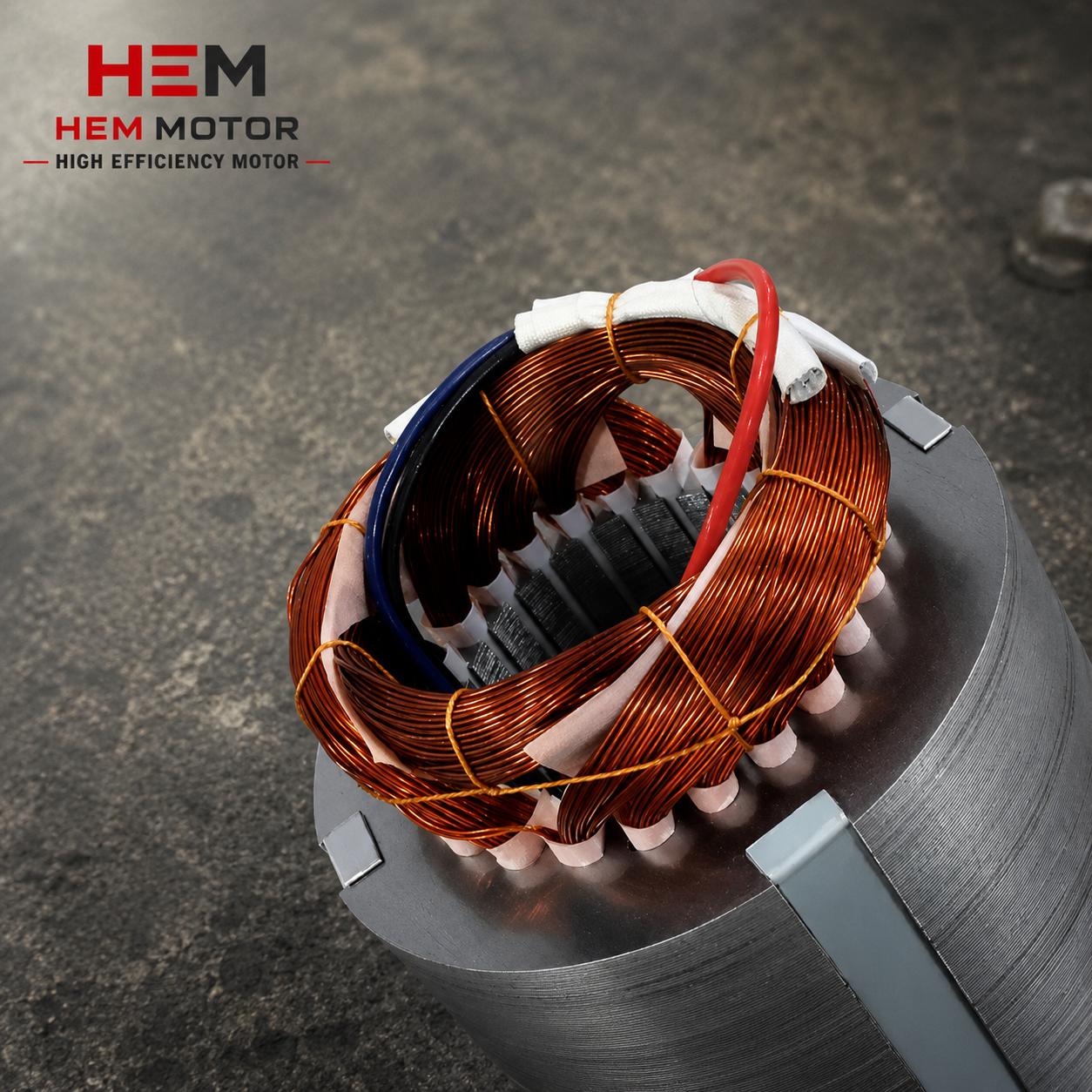
How Does an IE4 Motor Reduce These Losses?
IE4 being more efficient than IE3 comes not from a magic formula but from design improvements that target each loss type separately. High efficiency is the sum of these small improvements.
- Higher-quality laminations (low-loss silicon steel): Thinner laminations with higher magnetic quality reduce iron loss by lowering both hysteresis and eddy current loss.
- More copper: Using larger cross-section and more copper in the winding lowers winding resistance, which reduces copper loss (I²R).
- Optimised fan and bearings: A more efficient cooling fan and low-friction bearings reduce mechanical losses.
- Improved electromagnetic design: More precise slot and air-gap geometry lowers stray losses.
When these improvements come together, the IE4 motor does the same job while producing less heat. Lower loss means both a lower energy bill and a lower operating temperature, which indirectly extends insulation and bearing life.
Why Does Understanding Losses Clarify the Investment Decision?
A motor's efficiency class is actually a measure of how low the total loss in that motor is. When you select an IE4 motor, you buy the sum of the small savings achieved in each of the iron, copper and mechanical losses. In a continuously running application, these small differences turn into serious energy savings over the years.
In terms of stock and supply, determining the right efficiency class before the project begins lowers both energy cost and the motor's operating temperature. For up-to-date electric motor prices and the stock availability of IE4 motors, the healthiest approach is to clarify your technical specifications and request a quote. For a wider product range you may also evaluate the IE3 high-efficiency motor and three-phase electric motor options.
Information to Send to Your Supplier
For a motor in the correct efficiency class, you should provide your supplier with: rated power (kW), target efficiency class (IE3/IE4), speed/pole count, annual operating hours and load factor, voltage and frequency, mounting type and frequency converter requirement. A request with this clarity guarantees that the right product arrives and speeds up the supply process.
How Do Losses Change with Load?
A motor's efficiency varies according to the load point at which it operates. The reason is that the four loss groups respond to load differently. Iron losses and mechanical losses are almost independent of load; they remain constant as long as the motor is energised and rotating. Copper losses and load losses, on the other hand, rise rapidly as load increases, because they depend on the current drawn.
This behaviour shapes the motor's efficiency curve. At very low load, the constant iron and mechanical losses make up a large proportion of the total; this is why an oversized motor running continuously at low load is inefficient. The motor reaches its highest efficiency between roughly three-quarters of rated load and full load. Therefore, to fully use the advantage of an IE4 motor, the motor must be selected at the correct power, that is, to operate in the best region of the efficiency curve.
The Effect of Correct Power Selection on Efficiency
A high efficiency class alone is not enough; the motor must be selected at the correct power for the application. Running a much-too-large IE4 motor continuously at low load increases the proportional weight of the constant losses, destroying part of the efficiency advantage. By contrast, a correctly sized IE4 motor combines both low total losses and operation at the optimum load point, delivering the highest real efficiency. For this reason, correct power selection determines energy cost as much as the efficiency class.
Comparison of Efficiency Classes: IE2, IE3 and IE4
The International Efficiency (IE) classes categorise the energy performance of motors on a standard scale. These classes provide a common language showing how low a motor's total losses are.
- IE2 (High Efficiency): Offers above-standard efficiency but today falls below the minimum limit in many applications.
- IE3 (Premium Efficiency): The mandatory minimum limit in many countries and applications; iron and copper losses are noticeably reduced.
- IE4 (Super Premium Efficiency): Offers the lowest loss level; with higher-quality laminations, more copper and an optimised mechanical design, it lowers each loss group even further.
As the class rises, the total loss the motor produces decreases. In a continuously and long-running application, even the small efficiency difference gained in moving from IE3 to IE4 turns into serious energy savings over the years. Therefore, choosing the efficiency class is not just a technical preference but a long-term cost decision.
Efficiency Is Verified by the Nameplate Values
A motor's efficiency class and nominal efficiency value are clearly stated on its nameplate. Checking these values during supply is the most reliable way to be sure you are getting the right product. The efficiency value on the nameplate reflects the motor's performance at rated load; the saving you will obtain in real application depends, alongside this value, on the motor being selected at the correct power.
Frequently Asked Questions
What is the basic difference between iron loss and copper loss?
Iron losses remain almost constant as long as the motor is energised and are independent of load; they occur in the magnetic core. Copper losses, on the other hand, increase as load rises, because they are proportional to the square of the current (I²R) and occur in the windings. So in a lightly loaded motor iron losses stand out, while in a heavily loaded motor copper losses dominate.
What does the lower operating temperature of an IE4 motor gain me?
Less loss means less heat. A low operating temperature slows the ageing of the insulation material and bearings, which extends motor life and reduces failure frequency. So alongside energy savings, you also gain an indirect durability benefit.
How does a frequency converter affect losses?
In applications operating under variable load, a frequency converter eliminates unnecessary energy consumption by letting the motor run at the required speed and power at every moment. Used correctly, it provides system-wide energy savings; however, it should not be forgotten that the drive itself produces a small loss and that the motor must be selected as drive-compatible.