English
 Türkçe

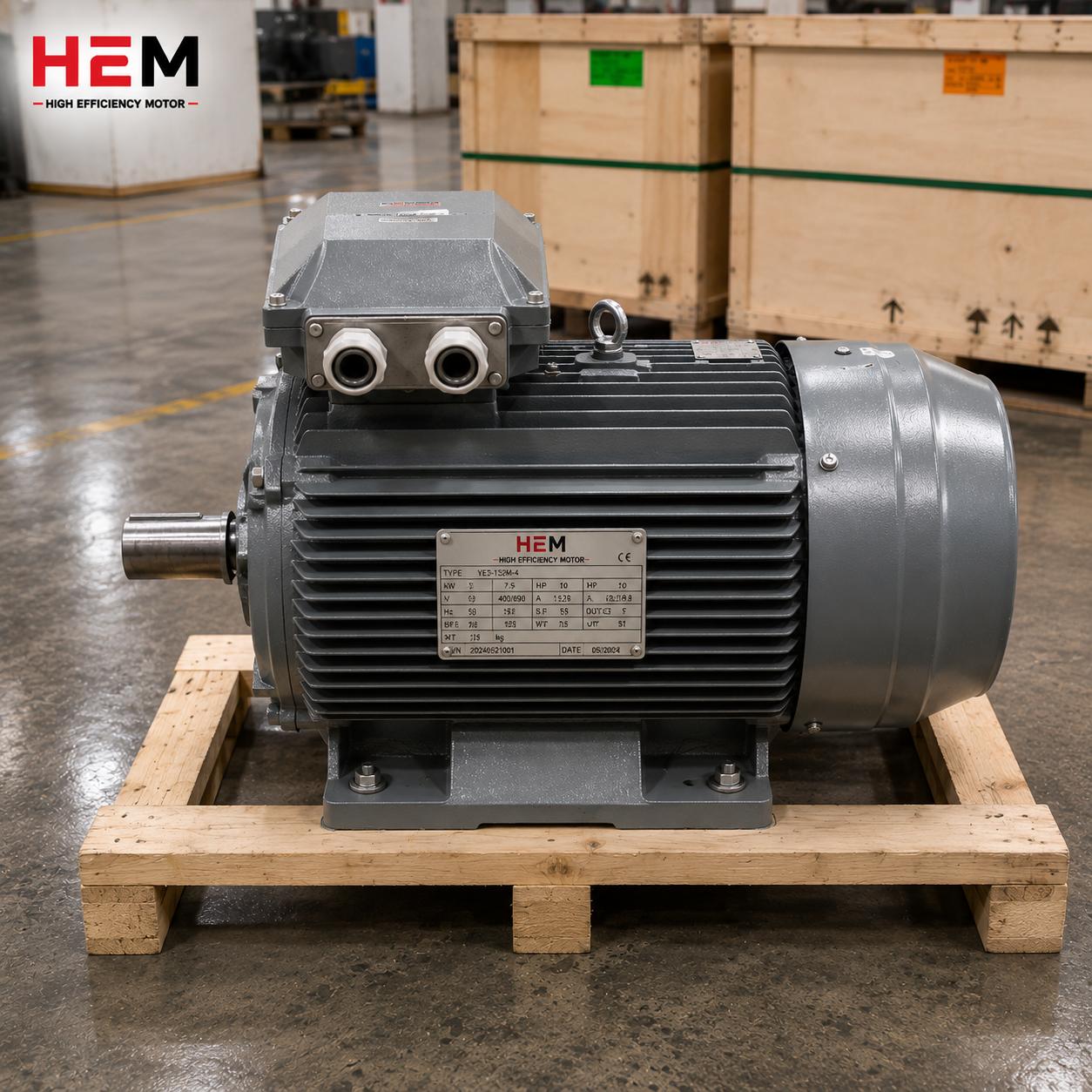

In large-power industrial drives, the correct motor selection affects much more than the investment cost; in a continuously running machine, every efficiency point translates into a significant energy expense or saving that continues for years. When large powers such as 250 kW and 315 kW in the IE4 Super Premium class are involved, the speed/pole selection, load curve, frame and mounting compatibility, and the equally important stock and lead time together determine the correct procurement decision. In this article we examine in detail the technical features of 250 kW and 315 kW IE4 motors, in which applications they are preferred, why efficiency is so critical at large power, and how you can supply these motors from stock or with short lead times under manufacturer assurance.
The Place of 250 kW and 315 kW IE4 Motors
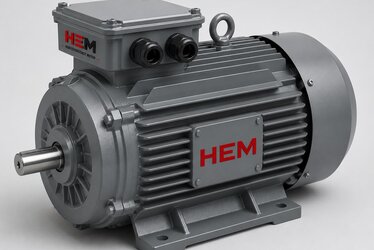
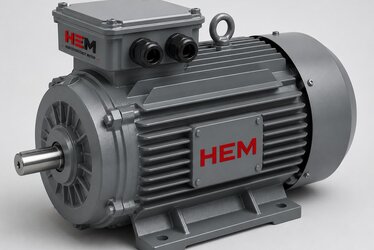
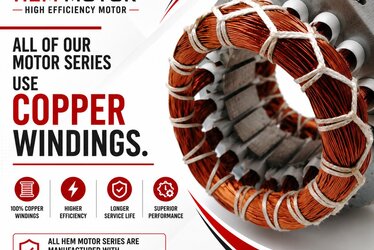
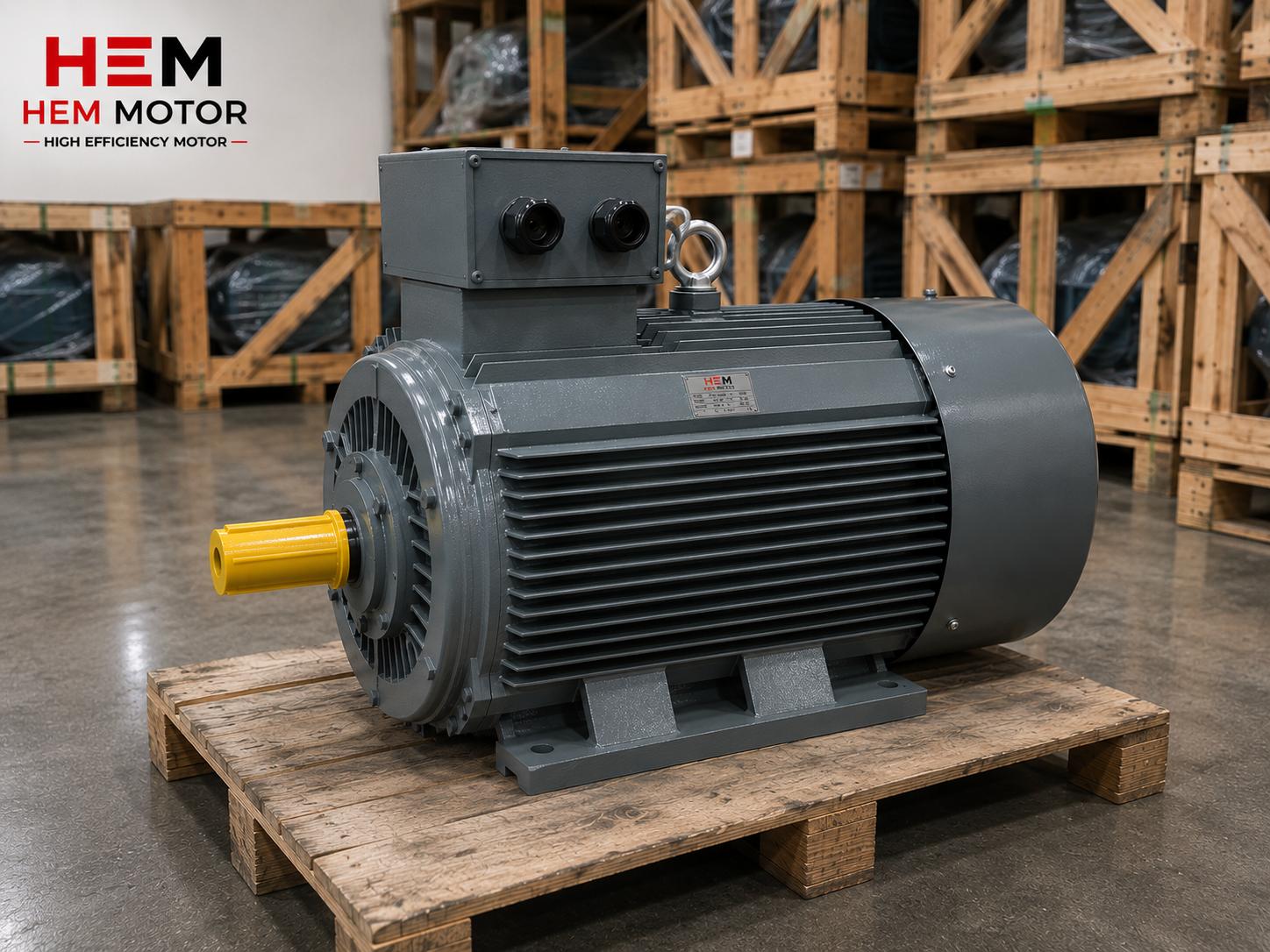
HEM Motor's IE4 Super Premium range covers a wide span from 0.25 kW up to 355 kW. At the upper end of this range, the 250 kW and 315 kW motors are the backbone of heavy industrial drives. Since this power class is usually at the heart of project-based investments, both the technical and procurement dimensions must be carefully evaluated in its selection. These motors offer reliable performance under continuous heavy load with a cast iron frame, IP55 protection, F class insulation, 100% copper winding, quality bearings and the S1 continuous duty type.
As with lower power steps, the correct class selection is important at large power too; the efficiency gain from the transition from IE3 to IE4 translates into a much larger absolute saving at large power. To see the approach in the neighboring power steps, our article on IE3 200 and 250 kW large-power motor supply offers a useful comparison.
Speed and Pole Selection: 3000, 1500 and 1000 rpm
In 250 kW and 315 kW motors, speed is determined by the number of poles and selected according to the torque-speed characteristic required by the application:
- 2 poles (3000 rpm): High speed, low torque. Preferred for large compressors and high-speed blowers. At this power, 2-pole motors require special design in terms of high mechanical stress and noise.
- 4 poles (1500 rpm): The most common choice. Offers balanced torque-speed for main pumps, fans, conveyor drives and general-purpose applications.
- 6 poles (1000 rpm): Low speed, high torque. Ideal for mills, large mixers and high-inertia loads.
The correct pole selection is critical for both the motor's life and the system efficiency. A wrong speed selection leads to unnecessary losses and wear in the gearbox or belt-pulley system. Therefore, clearly determining the application's real speed requirement is the first step in selecting the correct motor.
Frame, Mounting and Shaft: 315 and 355 Frame Details
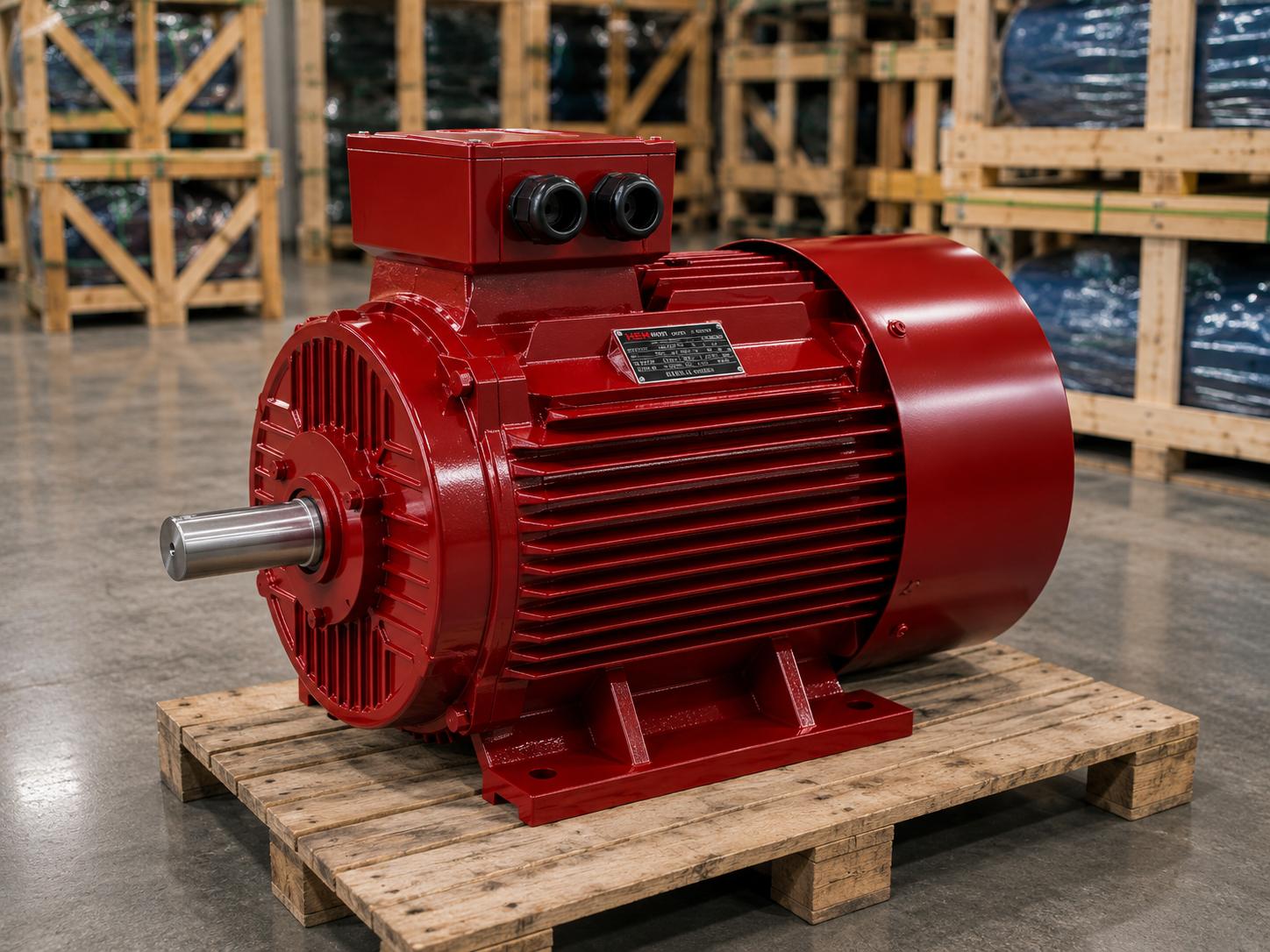
In the 250 kW and 315 kW power class, the typical IEC frame sizes are 315 and 355 frames. These large frames are designed to withstand heavy mechanical loads and high torque. The most common mounting type is B3 foot mounting; however, depending on the application, B35 combined (both foot and flange) mounting may also be preferred.
- Shaft diameter: At these powers the shaft diameter is typically in the Ø 80-100 mm range; sized to suit the high torque transmitted.
- Mounting compatibility: To ensure compatibility with an existing machine, the frame, foot hole spacing, shaft end and mounting type must be checked.
- Mechanical strength: The cast iron frame provides long life by damping the vibration and mechanical loads that arise at large power.
At large power, mounting and frame compatibility are among the most frequently overlooked yet most critical issues for the motor to fit smoothly in the field. When the frame, mounting code, shaft diameter and key information are clearly shared at the quote stage, the risk of incompatibility in the field is eliminated.
Efficiency and Load Curve at Large Power
In large-power motors efficiency is already high; in 250 kW and 315 kW IE4 motors the nominal efficiency is usually above 95%. The critical point here is this: even a small increase in the efficiency percentage translates into a very large kWh saving because the absolute power is large. For example, in a 315 kW motor running thousands of hours a year, even a half-point efficiency difference affects a considerable energy expense.
Another important advantage of IE4 motors is that they maintain high efficiency at partial load as well. Many industrial applications do not always run the motor at full load; the load frequently varies in pumps and fans. Thanks to the flat efficiency curve of IE4 Super Premium motors in the partial-load region, they provide more savings than expected under real operating conditions. On the effect of correct sizing on partial-load efficiency, our article on IE4 motor part-load efficiency and correct sizing provides detailed information. Since selecting the motor larger than necessary can negatively affect both cost and power factor, correct analysis of the load curve is even more important at large power.
Typical Applications: Continuously Running Large Machines
250 kW and 315 kW IE4 motors are used in heavy machines that run for most of the day or continuously. This continuous operation is the scenario where the efficiency advantage returns fastest:
- Large fans and blowers: Industrial ventilation, flue gas, process air systems.
- Main pumps: Water supply, circulation, high-flow process pumps.
- Compressors: Large compressed-air and refrigeration compressors.
- Conveyor drives: Mining, cement and heavy industry transport lines.
- Mills and crushers: Drives requiring high torque and high inertia.
The common feature of these applications is that the motor runs at high load for long hours; this is the condition where the IE4 efficiency advantage is felt most clearly.
Starting: Soft Starter and VFD
In large-power motors, direct-on-line starting causes high inrush current and mechanical shocks on the grid. In 250 kW and 315 kW motors, therefore, soft starting with a soft starter or a variable frequency drive (VFD) is preferred. While the soft starter protects both the grid and the mechanical system by limiting the inrush current, the VFD additionally provides speed control and energy saving at partial load. For motors to be driven with a VFD, aspects such as bearing, insulation and, when necessary, forced cooling should also be evaluated at the selection stage.
Stock, Lead Time and Correct Procurement
The procurement of large-power motors requires different planning from small powers. 250 kW and 315 kW motors are mostly project-based investments; therefore, correctly managing the lead time, mounting compatibility and quote process is critical. With manufacturer assurance, HEM Motor offers motors in this power class in certain configurations with fast delivery from stock; special speed, frame and mounting requirements are planned and produced with short lead times.
Supply from stock is an invaluable advantage, especially in an unplanned breakdown or an accelerated project schedule. On which powers can be supplied from stock in the IE4 range, our article on IE4 motor stock range and supply from stock will guide your procurement planning. For a general overview of lead times and stock management, you can review our content on IE4 premium motor supply stock and lead time.
For the correct procurement decision, when you share with us the power (250 kW or 315 kW), speed/pole, frame, mounting type and VFD/soft starter usage information, we prepare a quote including the most suitable IE4 motor for your application and the exact delivery time. For current electric motor prices and large-power stock status, you can contact us.
Frequently Asked Questions
In which frame are 250 kW and 315 kW IE4 motors produced?
In this power class the typical IEC frame sizes are 315 and 355 frames. While the most common mounting is B3 foot, B35 combined mounting can also be offered depending on the application. The shaft diameter is typically in the Ø 80-100 mm range. To ensure compatibility with your existing machine, it is important to share the frame, mounting code and shaft dimensions at the quote stage.
Is the advantage of IE4 over IE3 really felt at large power?
Yes. Although efficiency percentages are already high at large power, because the absolute power is large, even a half-point efficiency difference translates into a considerable kWh saving over years in a continuously running machine. IE4 Super Premium motors also maintain their efficiency at partial load, so the advantage becomes even more pronounced in variable-load pump and fan applications.
Can I supply a 315 kW IE4 motor quickly from stock?
Some standard configurations can be offered with fast delivery from stock under manufacturer assurance; special speed, frame and mounting requirements are planned and produced with short lead times. When you share your power, speed/pole, frame and mounting information, we prepare a quote including the exact delivery time and availability.