English
 Türkçe




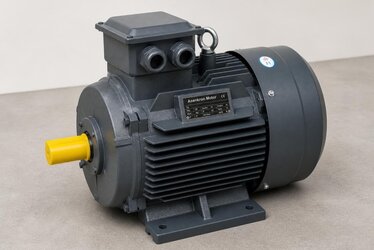
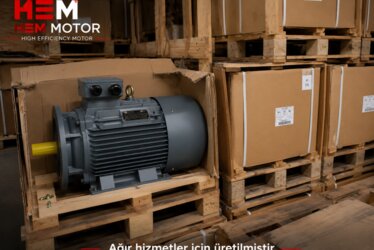
The IE4 efficiency class represents one of the highest practical efficiency levels industry can reach with electric motors, and it sits on the agenda of every facility that wants to cut energy costs, comply with regulation and shrink its carbon footprint. Yet the fact that IE4 super premium efficiency motors can be produced anywhere from small ratings like 0.25 kW up to heavy-industry ratings such as 355 kW does not mean every power and every speed is available equally fast. On the ground, the most critical question is often logistical rather than purely technical: which kW and which speed combinations ship quickly from stock, and which ones require a production or lead-time wait?
In this article we take a realistic look at the IE4 motor stock range, covering the fastest-shipping power band, the speed-to-pole relationship, frame standards and the ways to avoid lead-time surprises. Our goal is to help you choose the right motor the first time when planning your project, so that you protect your commissioning schedule and take delivery fast.
A Wide Production Range Is Not the Same as a Fast Stock Band
A motor manufacturer's technical catalog usually spans a very wide power range. IE4 high-efficiency electric motors can likewise be defined within that scope from 0.25 kW up to 355 kW. However, there is a clear difference between a product existing in the catalog and that product waiting ready on a warehouse shelf. Manufacturers and suppliers stock the ratings with the highest demand density, which therefore turn over fastest; ratings at the sparse-demand extremes are produced to order or supplied in limited quantities.
For IE4 specifically, the band shipped fastest from stock is between 0.75 kW and 200 kW. This range is no coincidence: the vast majority of common drive applications such as pumps, fans, compressors, conveyors and mixers fall right inside this power band. It is also the zone where energy-efficiency regulation effectively mandates or strongly encourages the IE4 class. Because demand is intense, it is economical for suppliers to hold a deep and continuously replenished stock for this band.
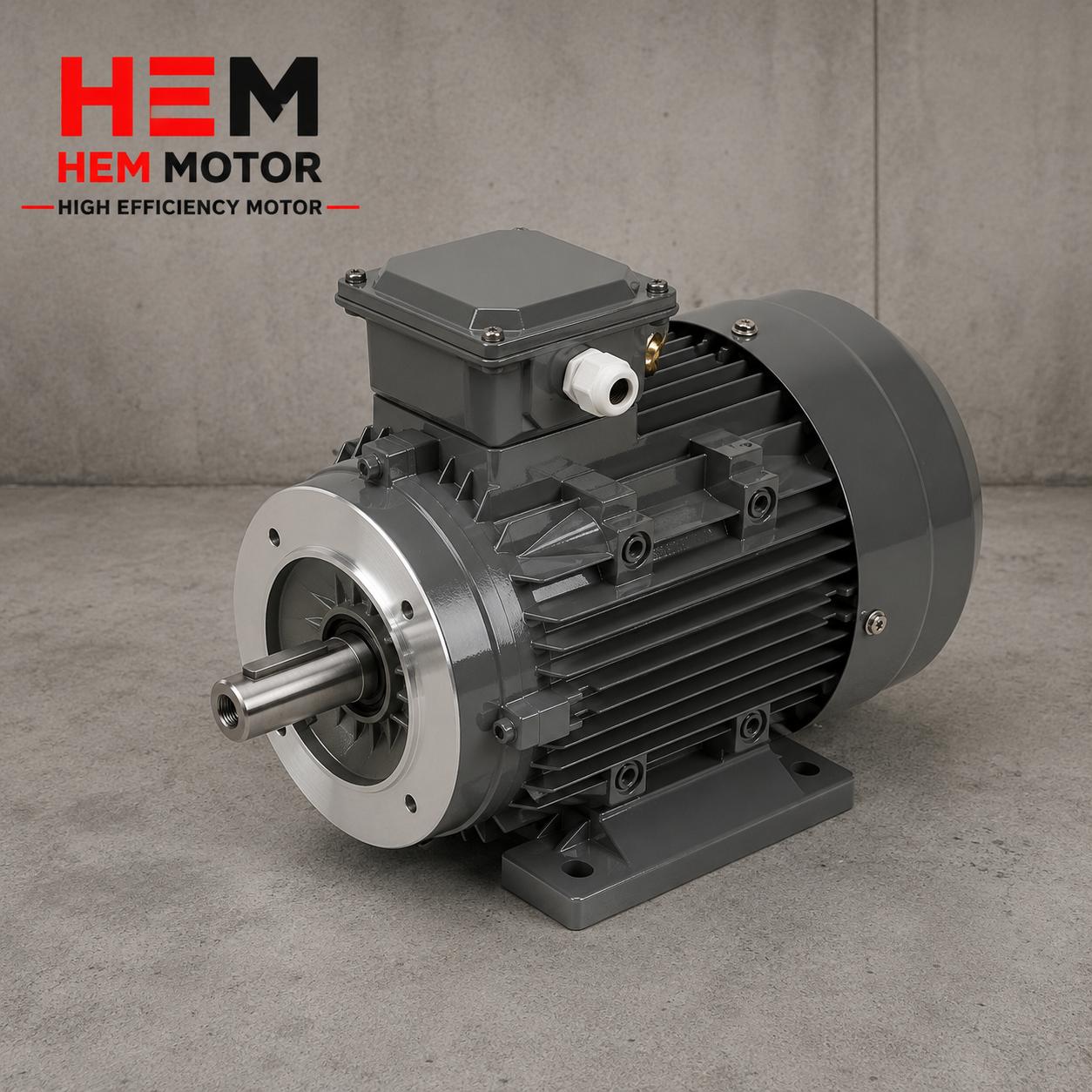
At the two ends of the band, the situation changes. Below 0.75 kW the application variety is large, but the IE4 obligation is not equally strict everywhere, so stock is kept more selectively. Above 200 kW, each motor is a significant investment item, so manufacturers usually produce these to project-specific order. This does not mean large ratings always require a long wait; however, planning early and clarifying the lead-time process up front becomes critical here.
Why the 0.75-200 kW Band Is the Heart of Industry
Most electric motors in industrial facilities operate in the medium power range. Think of a water pump, a centrifugal fan, a screw compressor or a belt conveyor; the overwhelming majority of these consume between a few kilowatts and a few hundred kilowatts. That is why the 0.75-200 kW band forms the heart of industry in terms of both unit count and total energy consumption.
- Pump applications: Clean water, wastewater, circulation and process pumps mostly concentrate between 1.5 and 160 kW. Because they run continuously, the efficiency difference flows directly into the energy bill.
- Fans and ventilation: Exhausters, fresh-air fans and cooling-tower fans operate across a wide range, mostly within the 2.2-200 kW band.
- Compressors: The drive motors of screw and piston compressors are typically in the 7.5-160 kW range and, due to high annual running hours, are the applications where efficiency pays off the most.
- Conveying and material handling: Belt, screw and chain conveyors and elevating systems generally operate at low-to-medium power, in the 0.75-90 kW band.
Because all of these applications run for high hours throughout the year, even a small improvement in efficiency class creates noticeable savings in annual energy consumption. For this reason, motor selection must weigh not only the nominal power but also the efficiency class and the real duty profile together. If you are curious about what the gap between IE3 and IE4 means from an investment standpoint, our IE3 vs IE4 electric motor investment comparison offers a clear framework.
Speed and Pole Count: The Second Factor Driving Stock Speed
Power alone does not determine fast delivery from stock; the motor's pole count and the resulting synchronous speed are at least as important. In asynchronous motors the pole count directly defines the nominal speed, and selecting the speed suited to the application directly affects efficiency when no drive is used.
- 2 poles (about 3000 rpm): Common in pump and compressor applications that require high speed.
- 4 poles (about 1500 rpm): The most widely used speed in industry; it is the standard for fans, pumps, conveyors and general drive. Stock depth is usually highest at this speed.
- 6 poles (about 1000 rpm): Preferred for low-speed mixers, crushers and certain fan applications.
- 8 poles (about 750 rpm): Used in special applications demanding very low speed; stock is more selective.
The practical rule is this: 4-pole motors generally have the widest and fastest stock band, followed by 2-pole motors. While 6- and 8-pole IE4 motors are available in stock at certain ratings, some combinations may require a short lead time. So if your application is flexible, choosing a standard pole-speed combination provides an advantage in both speed and cost. For more detail on the stock logic of standard combinations, see our IE4 premium motor supply and stock lead time guide.
Frame Size and Mounting Standards
The third pillar of fast delivery is mechanical standards. IEC frame sizes determine the motor's shaft height, mounting holes and shaft diameter. Choosing a standard IEC frame lets you fit the motor seamlessly onto the existing base, coupling or pulley arrangement and eliminates the need for special adaptation.
The mounting type also matters. Standard mounting types such as foot-mounted (B3), flange-mounted (B5, B14) and their combinations are widely available in stock. Special flange dimensions, custom shaft ends, additional protection classes or special paint/surface requirements may require build-to-order production. For this reason, when you communicate your motor requirement, stating not only the power and speed but also the frame size, mounting type, protection class and any special requests from the outset ensures the correct product is reserved the first time.
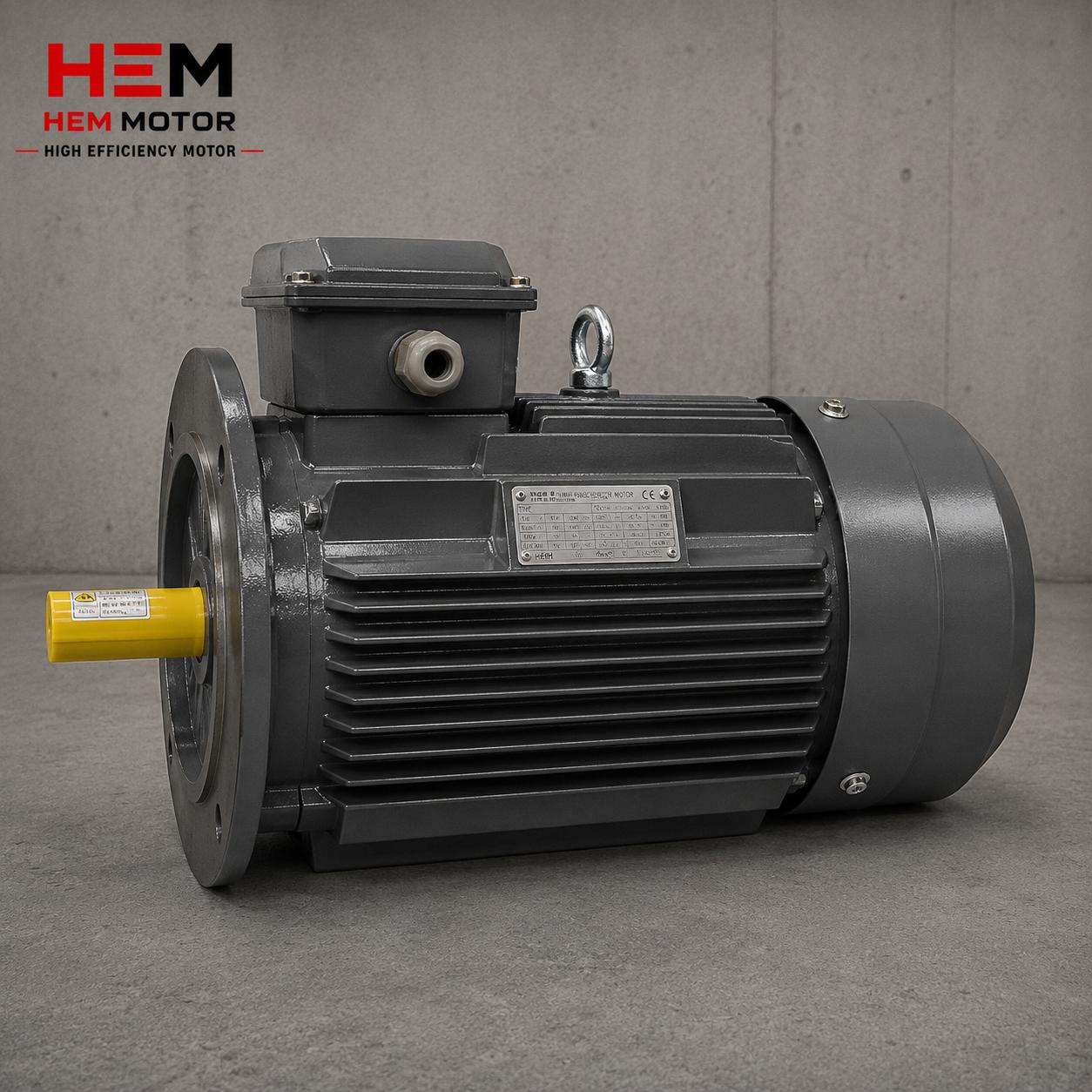
This is exactly where the power of standard combinations emerges: when a standard rating, a standard speed and a standard frame come together, both stock availability rises and the supply of spare parts, couplings and mounting accessories becomes easier. Maintaining this trio of standards also reinforces the project against future maintenance and replacement needs.
Where Does Regulation Mandate IE4?
One reason IE4 sees such intense demand in the 0.75-200 kW band is energy-efficiency regulation. In many markets the minimum efficiency thresholds have been raised in stages, and in certain power ranges IE4 has effectively become the reference level. This makes the IE4 choice stand out in new investments and old-motor replacements not only for savings but also for compliance.
To see how regulation affects your motor inventory and to set replacement priorities, carrying out an energy efficiency audit and motor inventory study is extremely useful. This study reveals which motors consume the most energy and which ones will deliver the fastest payback when replaced; that way you can start at the most impactful points with IE4 motors you can obtain quickly from stock.
Ways to Avoid Lead-Time Surprises
One of the things that most disrupts a project's commissioning schedule is unexpected motor lead times. The way to prevent this is to plan motor selection together with logistical realities. The following principles clearly increase your chances of taking fast delivery:
- Stay standard: Choose standard ratings, standard pole-speed and standard frame combinations whenever possible. Exotic combinations lengthen lead time.
- Communicate early: For large ratings (especially above 200 kW), declare the need early; entering production planning lowers lead-time risk.
- Provide full information at once: Convey power, speed, frame, mounting type, protection class and special requests completely from the start. Missing information lengthens the process with verification rounds.
- Allow flexibility: If your application permits, consider a nearby standard speed or frame alternative. Often a small flexibility brings delivery forward by days.
- Plan a spare: Define a spare-motor strategy on critical lines; having a spare on hand in continuous production prevents unexpected downtime.
When you apply these principles, you fully benefit from the deep stock advantage of IE4 motors in the 0.75-200 kW band and take fast delivery without lead-time surprises. Selecting the right motor the first time both protects the commissioning schedule and makes the total project cost predictable.
The Right Choice From a Total Cost of Ownership Perspective
In motor selection, not only delivery speed but also long-term cost is decisive. The energy a motor consumes over its lifetime reaches a sum many times its purchase price. Therefore, when evaluated from a total cost of ownership perspective, the high efficiency of the IE4 class usually pays back the difference in the initial investment in a short time. This payback period is especially short in high-running-hour pump, fan and compressor applications.
This is another reason the fast-shipping 0.75-200 kW band is so attractive: it covers both the most common applications and the ratings where the efficiency gain is felt the most. In other words, fast delivery and high savings meet at the same point in this band. For the additional savings achievable in pump and fan applications when combined with a variable frequency drive, our high-efficiency motor and VFD pump-fan savings content offers a practical road map.
When you are undecided about which power, which speed and which frame to choose, simply share your application with us. With our broad stock range and engineering support, we help you determine the most suitable IE4 motor for your need under fast-delivery conditions. To choose the right motor together, you can visit our homepage and explore our product range.
Frequently Asked Questions
Are all IE4 motors available immediately from stock?
No. Although IE4 motors are defined in the catalog across a wide range from 0.25 kW to 355 kW, the band shipped fastest from stock is between 0.75 and 200 kW. Because this band covers the most common applications such as pumps, fans, compressors and conveyors, it is held with deep, continuously replenished stock. Very small or very large ratings outside the band, along with unusual pole-speed and frame combinations, may require a short production or lead time.
Which speed choice provides the fastest delivery?
Generally, 4-pole motors (about 1500 rpm) have the widest and fastest stock band, followed by 2-pole motors (about 3000 rpm). 6- and 8-pole IE4 motors are available in stock at certain ratings, but some combinations may require a short lead time. If your application allows flexibility, choosing a standard pole-speed combination speeds up delivery.
How can I avoid lead-time surprises?
The most effective method is to prefer standard rating-speed-frame combinations and to declare the need early, especially for large ratings. When you communicate your requirement, sharing power, speed, frame size, mounting type, protection class and any special requests completely at once ensures the correct product is reserved and delivered quickly the first time. Whenever you are undecided, simply share your application with us; we will determine the most suitable IE4 motor together.