English
 Türkçe

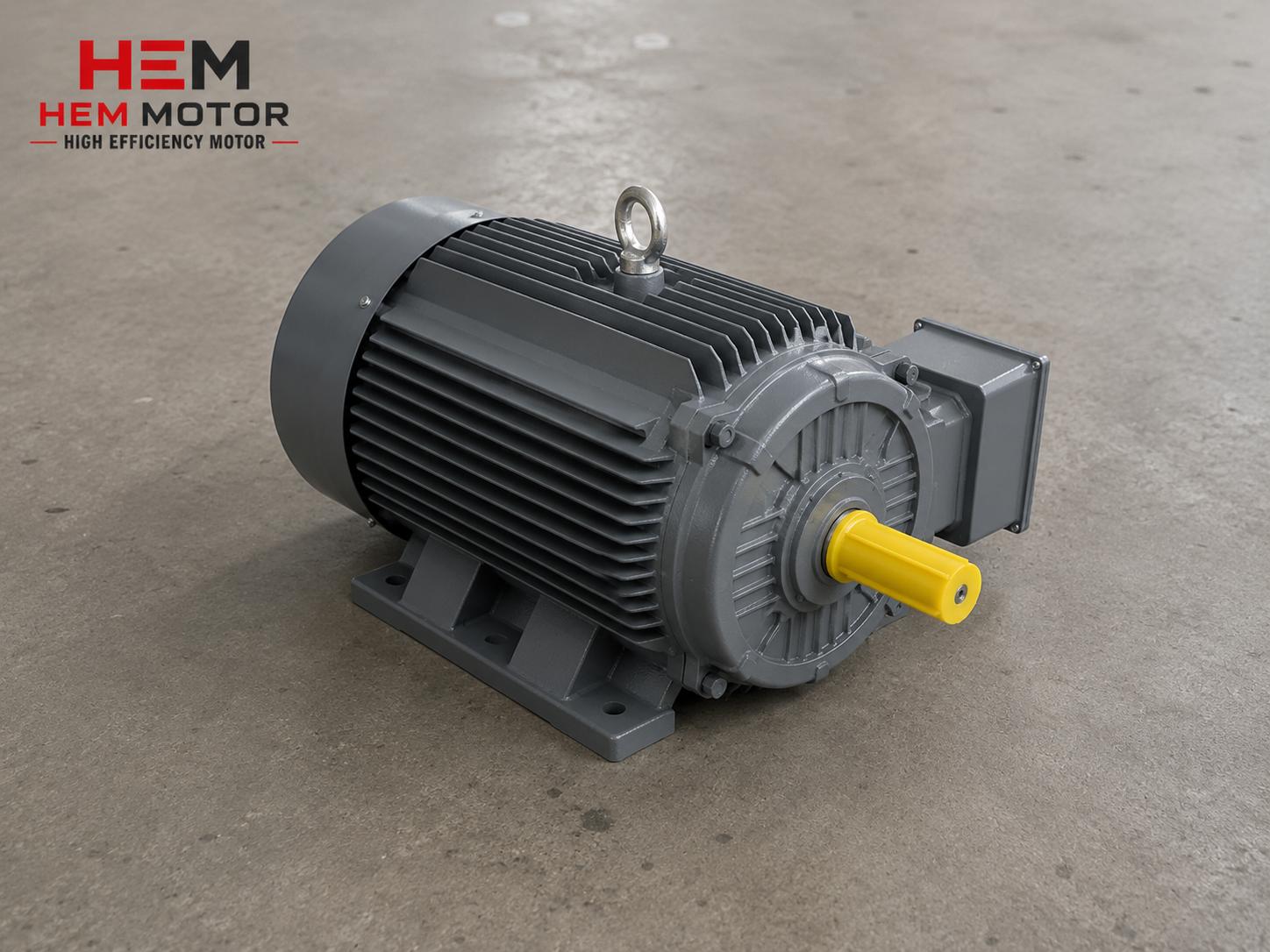

For an IE3 motor operating in a high-humidity environment, the most insidious threat is not load or excessive temperature, as most businesses assume. The real enemy is the condensation moisture that quietly accumulates on the winding surface when the motor comes to a stop. While the motor runs, the windings warm up and the air inside dries out; but when the motor stops and the ambient temperature falls, the humid air inside the winding and housing reaches its dew point and water droplets settle onto the insulation surface. In this article we examine how tropicalization (extra varnish and impregnation) and the space heater (anti-condensation heating element) work, in which environments they become mandatory, and what must be specified at the ordering stage, with a technical and application-oriented perspective.
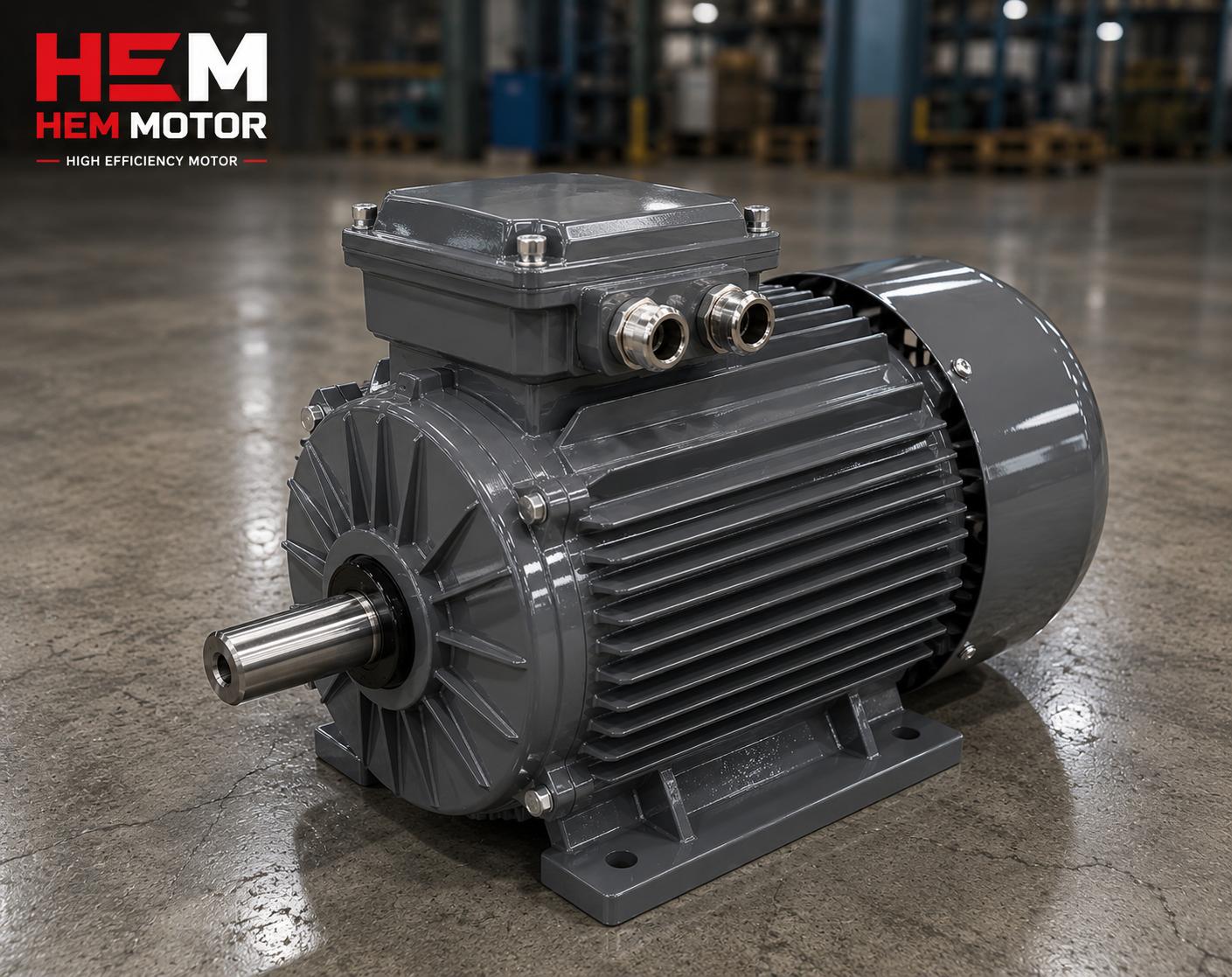
Why Is Condensation the Greatest Enemy of the IE3 Motor?
The winding of an electric motor consists of copper conductors insulated with a thin enamel varnish layer. The health of this insulation depends on the insulation resistance between the winding and the housing. In a dry winding this resistance is high, in the order of megohms; but when moisture condenses on the surface, the resistance drops rapidly. A fall in insulation resistance sets the stage for leakage currents, partial discharge and ultimately winding failure. The most critical point is this: the failure usually appears not while the motor is under load, but at the moment of first start after a long idle period.
This situation is particularly pronounced in motors that run seasonally or intermittently. An irrigation pump waiting outside the harvest season, a drainage pump that comes online during rainy months, or a process fan that sits idle over the weekend accumulates moisture precisely during these idle periods. When the motor is restarted, the wet winding is exposed to high leakage current in the first instant, and if the insulation has weakened, a flashover occurs. In other words, the problem is not operation but idle time.
The Relationship Between Dew Point and Temperature Swing
Condensation occurs when water vapor in the air drops below its dew point temperature and turns into liquid. In an environment that warms during the day and cools at night, the motor housing changes temperature more slowly than the air because of its metal mass. Toward morning, when the ambient air begins to warm, the still-cold winding and housing surface remains below the dew point and water droplets form on it. This mechanism is far more intense in coastal regions, greenhouse agriculture, cold storage, wastewater facilities and tropical climate conditions.
This is exactly why humidity protection is a selection criterion as important as the motor's rated values. Choosing the correct power and efficiency class while skipping humidity protection means leaving a sound motor exposed to an invisible risk.
Tropicalization: Strengthening the Winding from Within
Tropicalization refers to the protective varnish and impregnation layers applied in addition to the standard impregnation of the winding. It takes its name from the high humidity and fungal risk of tropical climates. Whereas a standard motor's winding is impregnated once, in a tropicalized motor the winding is coated multiple times with additional varnish dipping or vacuum-pressure impregnation. This thickens the insulation film over the conductors, fills micro-voids and makes it harder for moisture to penetrate the insulation.
The main advantages tropicalization provides are:
- Increased moisture resistance: The additional varnish layer coats the winding surface with a hydrophobic barrier that delays condensed water reaching the conductor.
- Fungal and mold protection: Additive varnishes are used against microorganisms that can develop on the insulation surface in tropical conditions.
- Mechanical strength: Thicker, more homogeneous impregnation reduces loosening and friction of conductors under vibration.
- Chemical resistance: In environments with corrosive vapors the insulation surface lasts longer.
Tropicalization is a feature applied during manufacture that cannot be added to the motor afterward. For this reason, when ordering a motor destined for a humid environment, this option must be specified from the outset. Interventions made externally afterward will never be as homogeneous and reliable as factory impregnation.
Which Environments Require Tropicalization?
- Coastal and port facilities where relative humidity is consistently high
- Humid agricultural environments such as greenhouses, mushroom production and livestock facilities
- Wastewater treatment, water storage and drainage stations
- Cold storage and food processing lines
- Equipment exported to tropical or subtropical climate regions
Space Heater: Keeping the Winding Warm at Idle
While tropicalization strengthens the insulation, the space heater (anti-condensation heating element) solves the problem at its source: it prevents the winding from falling below the dew point. The space heater is a small heating element placed inside the motor housing. It activates when the motor stops and keeps the winding and housing temperature a few degrees above the ambient temperature. As long as the surface temperature stays above the dew point, condensation physically cannot occur.
The operating logic is simple but effective: while the motor runs, the winding is already warm, so the heater is off. When the motor stops, the control system switches on the space heater, which provides continuous low-power heat throughout the idle period. Thus, even if a temperature swing occurs toward morning, the winding surface never cools enough for moisture to condense.
Points to Watch in Space Heater Selection
- Supply voltage: The heating element is usually fed from a separate voltage; the voltage the facility can provide should be specified at the ordering stage.
- Automation integration: Suitable interlock logic must be set up in the control panel so the space heater activates automatically when the motor stops. The heater must not run while the motor is running.
- Power level: The heater's power is selected according to the motor frame size and ambient conditions; the goal is not to scorch the winding but to keep it a few degrees above the dew point.
- Terminal access: Having the space heater connection terminals separate and labeled in the terminal box eases field installation.
Tropicalization and the space heater are not alternatives but complements. Tropicalization reduces the effect of moisture by strengthening the insulation, while the space heater ensures moisture never forms at all. In critical and continuously humid environments, applying both together is the safest solution. For a correctly configured motor, it is enough to share your environmental conditions within the scope of our electric motor solutions.
What to Consider at the Ordering Stage?
Humidity protection is a feature that is difficult and costly to add after the motor is delivered. The most correct approach is therefore to clarify the need at the ordering stage. Information to share with the supplier includes the environment's relative humidity range, temperature swing, the motor's operating regime (continuous or intermittent), mounting position (indoor, outdoor, exposed) and any exposure to corrosive vapor or salt air. In light of this information, the right insulation, the right IP protection class and the right humidity measures are selected together.
For deeper information on insulation and thermal behavior you can review our insulation class and temperature rise content, for protection in dusty and wet environments you can look at our IP65/IP66 protection upgrade article, and to read nameplate information correctly you can make use of our nameplate reading guide.
It must be remembered that humidity protection is not a luxury but a reliability investment for IE3 motors operating in humid environments. Provided by just a few components, this protection guards against a cost far beyond that of an unexpected winding failure and the production downtime it causes.
Frequently Asked Questions
Can tropicalization be applied to an existing motor afterward?
Tropicalization is done by coating the winding at the factory with additional varnish dipping or vacuum-pressure impregnation. Surface treatments applied externally in the field cannot reach the homogeneity and penetration of factory impregnation. For motors destined for humid environments, requesting tropicalization at the ordering stage is therefore the most correct and reliable method.
Does a space heater significantly increase the motor's electricity consumption?
No. The space heater runs only when the motor is stopped and at low power; its sole purpose is to keep the winding a few degrees above the dew point. The energy it consumes is negligible next to the cost of a winding failure and production downtime it can prevent. With correct interlock logic the heater is already disabled while the motor runs.
Are both tropicalization and a space heater necessary?
This depends on the severity of the environment. In moderate humidity one may be sufficient, while in critical applications where continuous high humidity, frequent stops and outdoor conditions come together, using both together is recommended. Tropicalization strengthens the insulation while the space heater ensures moisture never forms; applied together they deliver the highest reliability.