English
 Türkçe

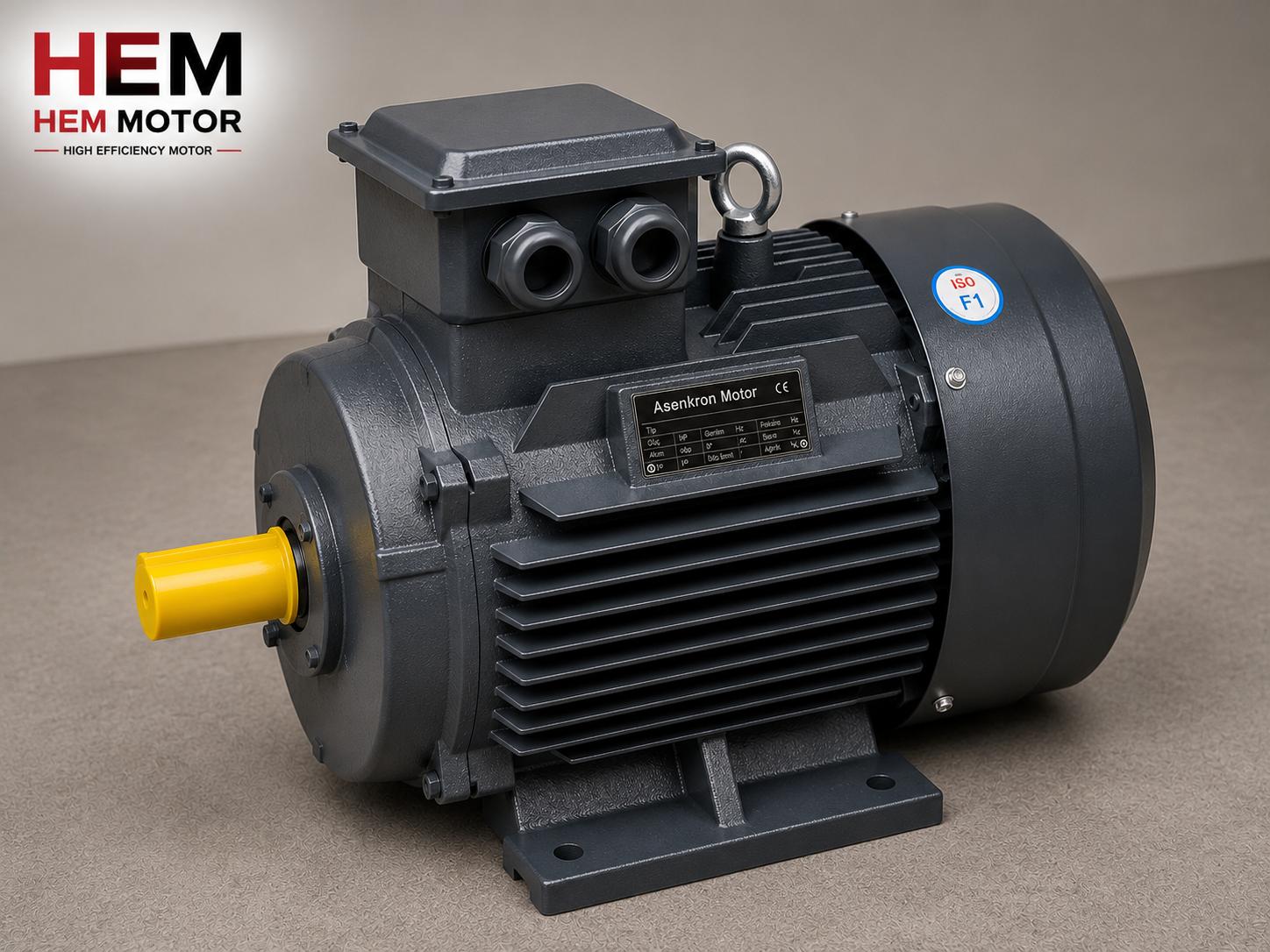

Before an electric motor leaves the factory, it passes through a series of checks that prove it will safely meet the expected performance. The documented form of these checks is the most concrete quality assurance in the hands of the buyer: the routine test and inspection certificate. Especially in IE3 motors subject to efficiency regulations, this document, which shows that the values written on the nameplate are real, that the winding insulation is sound and that the motor will operate safely, is of critical importance both for legal compliance and operational safety. In this guide, as an electric motor manufacturer and supplier, we examine in detail what the routine test and inspection certificate for IE3 motors contains, why which tests are performed, the difference between type test and routine test, and the role of this document in the purchasing process.
What Is a Routine Test and Why Is It Performed?
A routine test is a set of tests applied to each motor or a specific batch in series production, verifying the basic electrical and mechanical integrity of the motor. The aim is to catch defects such as winding faults, insulation weakness, connection errors or mechanical imbalance that may occur during the production process before the motor goes into the field. Routine tests take relatively short time and allow the motor to be checked non-destructively. The results are recorded in a test report or certificate; this document is proof that the motor was produced to the expected quality.
The aim of the routine test is not to re-measure the theoretical performance of the motor but to verify production quality. That is, the routine test does not prove the motor's design values; the type test does that. The routine test guarantees that this particular motor was produced in accordance with the design and free of defects. This distinction is important for setting the correct expectation in the purchasing decision.
The Difference Between Type Test and Routine Test
A type test comprehensively verifies all performance values of a motor design (efficiency, power factor, temperature rise, torque curve, noise) and is usually performed once on a sample representing a design. Comprehensive tests such as efficiency measurement fall within the scope of the type test and require special test setups. The routine test, on the other hand, consists of shorter tests applied to each motor or batch, verifying production quality. In motors with a stated efficiency class such as IE3, the efficiency value on the nameplate is documented by the type test; the routine test guarantees that this motor was produced soundly in accordance with this design. To see in detail how efficiency is measured and documented, our guide on efficiency measurement and the IEC 60034-2-1 test method in IE3 motors offers comprehensive information.
Main Tests Included in the Routine Test Certificate
The routine test certificate of an IE3 motor typically includes the following tests and measurements. Each verifies a different dimension of the motor's integrity:
- Insulation resistance (megger) measurement: By measuring the insulation resistance between the winding and the housing, it is verified that the winding's insulation to earth is sound. A low value indicates moisture or insulation damage.
- High-voltage (hipot) test: By applying a test voltage above the rated voltage to the winding, it is proven that the insulation withstands a certain voltage.
- Winding resistance measurement: By measuring the resistance of each phase, inter-phase imbalance and possible winding faults are checked.
- No-load test: By running the motor unloaded, the no-load current and the smoothness of mechanical rotation are checked; abnormal current indicates a winding or bearing problem.
- Direction-of-rotation check: It is confirmed that the direction of rotation is correct according to the phase sequence.
- Mechanical checks: Vibration and noise observation, bearing sound and general mechanical integrity are evaluated.
The Importance of Insulation Resistance and High-Voltage Tests
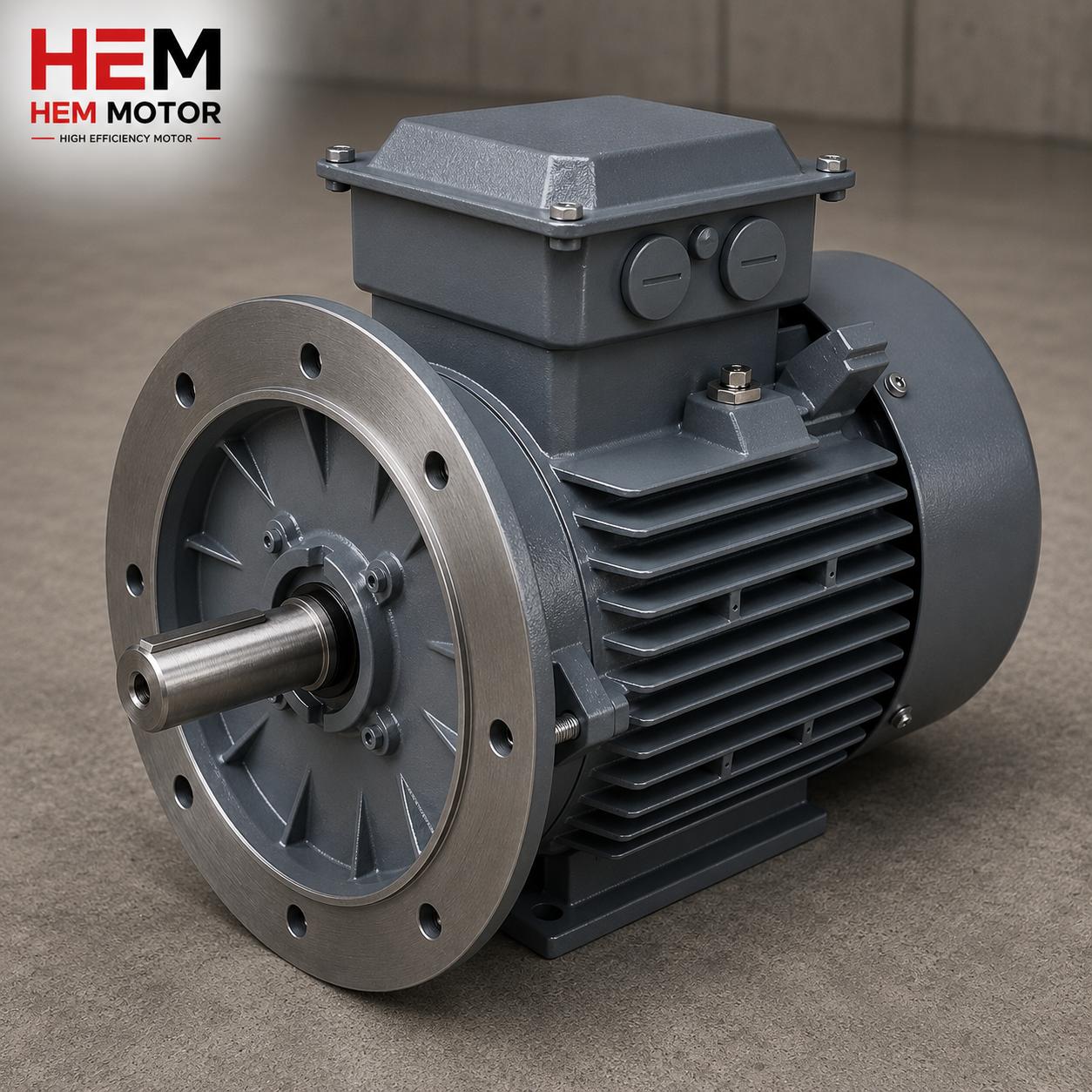
The winding insulation is the most critical and most expensive component of the motor; insulation failure usually results in the motor burning out. Therefore the insulation resistance (megger) and high-voltage tests form the heart of the routine test. The megger measurement gives the quality of the winding's insulation to earth numerically; a low value indicates moisture absorption, contamination or insulation damage in production. The high-voltage test, on the other hand, proves that the insulation withstands a value above the rated voltage. These two tests are the most basic guarantee that the motor will operate safely in the field. To see the effect of the winding's insulation class (F/H) on service life, our content on winding and insulation class in IE3 motors is a complementary resource.
The Meaning of Winding Resistance and No-Load Tests
The winding resistance measurement checks the inter-phase balance by measuring the resistance of each of the motor's three phases. The resistance of the three phases should be close to each other; a marked difference between phases can indicate a partial short circuit in the winding, a connection error or a defect arising from production. This simple but powerful measurement catches invisible winding problems before the motor goes into the field. The resistance values are also evaluated together with temperature correction, because the resistance of copper changes with temperature; therefore the measurement temperature is stated in the certificate.
The no-load test, on the other hand, evaluates both the electrical and mechanical behaviour together by running the motor unloaded. The no-load current value shows that the winding and magnetic circuit are healthy; a higher-than-expected no-load current can indicate a winding problem or a defect in the magnetic circuit. During the same test the motor's mechanical rotation is observed: abnormal vibration, bearing noise or irregular rotation is an early sign of a mechanical problem. Thus the no-load test verifies both the electrical and mechanical integrity of the motor in a single step. All these tests together are proof that the motor left the factory flawless; however, it must be remembered that the tests reflect the motor's condition at a particular moment, so correct transport, storage and installation remain essential.
The Role of the Certificate in Purchasing and Stock Intake
When a motor is purchased, the routine test certificate is the most reliable quality document in the buyer's hands. This document shows that the values written on the motor's nameplate are not arbitrary but have passed certain checks. In large plants and public projects, this certificate is usually requested in the motor's delivery and acceptance inspection. Accepting the motor together with its certificate at stock intake also creates a valuable reference in possible future warranty and dispute processes.
Instead of relying solely on the certificate at stock intake, repeating some simple checks when the motor is received is also good practice: measuring the insulation resistance, checking the direction of rotation and mechanical integrity, and comparing the nameplate values with the order. This acceptance inspection catches damage that may occur during transport and possible mix-ups early. To see in detail how the delivery and acceptance inspection is done in the field, our guide on electric motor delivery and acceptance inspection provides step-by-step guidance.
Consistency of Nameplate Values with the Certificate
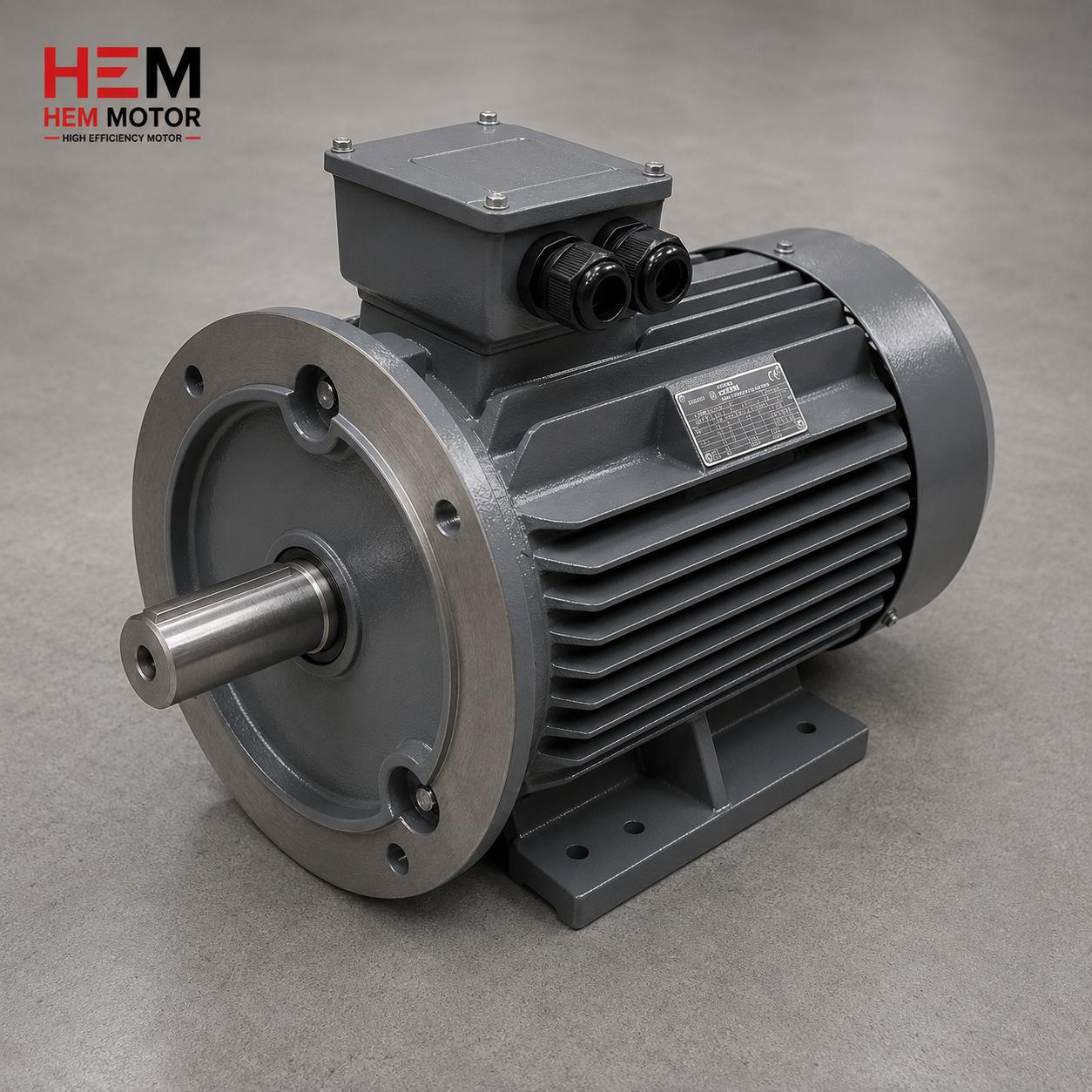
The information carried by the certificate must be consistent with the motor's nameplate. Values such as power, speed, current, power factor, efficiency class (IE3) and protection class on the nameplate must match the measurements in the certificate. This consistency is an indication that the motor was produced in accordance with the declared characteristics. Reading the nameplate values correctly ensures error-free matching at both the ordering and acceptance stages; on nameplate reading, our guide on reading the IE3 motor nameplate: kW, speed, cosφ and efficiency is a practical resource.
Efficiency Class, Regulation and Certification
IE3 motors represent an efficiency class made mandatory in certain power ranges under current efficiency regulations. Therefore, documents proving that the motor is really in the IE3 class are important not only for quality but also for legal compliance. The efficiency value is documented by the type test; the routine test guarantees that this motor was produced in accordance with this documented design. When replacing a motor in a plant, the efficiency class of the new motor must comply with regulations, and this must be supported by documents.
Certification is also important for plants that export or are subject to multinational standards. Different markets may have different document and conformity requirements; therefore, the standards according to which the motor was tested and the documents it has should be clarified before ordering. The ability of the manufacturer to present these documents completely and correctly is a basic indicator of a reliable supply relationship.
Manufacturer Assurance in Certified Motor Supply
The routine test and inspection certificate is a reflection of the production discipline and quality-control process behind a motor. When sourcing certified motors, the points you should evaluate on the manufacturer and supplier side are:
- Completeness of documents: Routine test results must be presented consistently and legibly with the nameplate values.
- Efficiency-class proof: The IE3 class must be documented by the type test, and this information should be available on request.
- Traceability: Matching the motor's serial number with the certificate is critical in warranty processes.
- Fast supply from stock: Keeping certified and tested motors in stock saves time in project and failure processes.
- Warranty coverage: A warranty supported by a test document guarantees field performance.
For current quotation and stock information on IE3 motors delivered with a certificate and test document, you can contact us via our elektrik motoru fiyatları page. Correct certification ensures both legal compliance and long-term operational confidence.
Frequently Asked Questions
What is the difference between a routine test and a type test?
A type test comprehensively verifies all performance values of a motor design (efficiency, temperature rise, torque curve, noise) and is usually performed once on a sample representing the design. A routine test consists of shorter tests applied to each motor or batch in series production, verifying production quality. That is, the type test guarantees the correctness of the design, while the routine test guarantees that this particular motor was produced in accordance with the design and free of defects.
Is the IE3 motor's efficiency value measured in the routine test?
No, comprehensive efficiency measurement falls within the scope of the type test and requires special test setups; the IE3 efficiency value on the nameplate is documented by this type test. The routine test verifies that this motor was produced soundly in accordance with this documented design. That is, the routine test is performed not to re-measure the efficiency value but to guarantee production quality.
What should be checked besides the certificate at stock intake?
Besides relying on the certificate, repeating some simple checks when the motor is received is good practice. Measuring the insulation resistance, checking the direction of rotation and mechanical integrity, and comparing the nameplate values with the order are among these checks. This acceptance inspection prevents future problems by catching damage that may occur during transport and possible mix-ups early.