English
 Türkçe

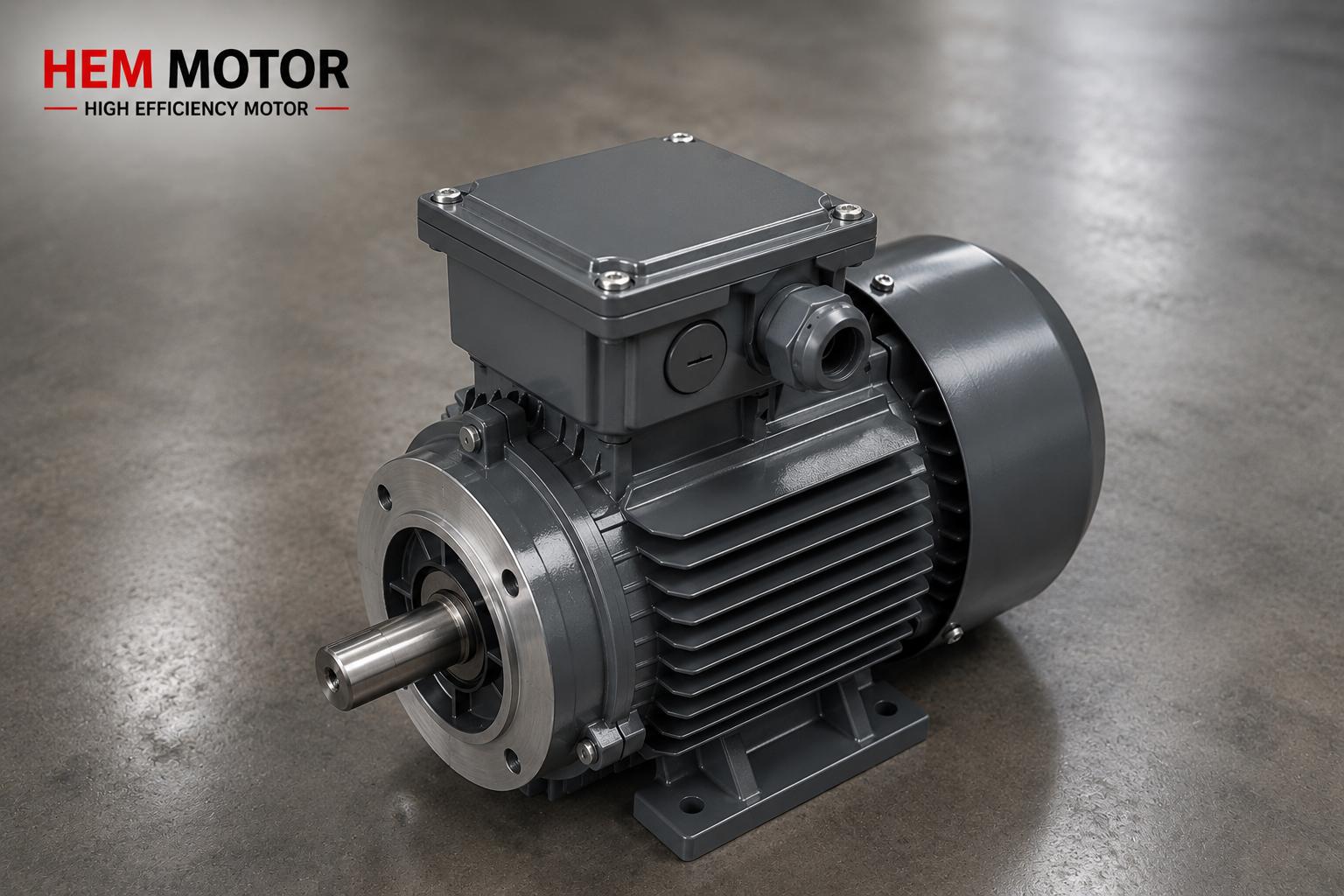

Choosing a motor for a single factory, a single grid and a single country is relatively easy. But if your machines are exported, or you operate plants in different countries, the equation changes. The same motor is expected to run trouble-free on both 50 Hz and 60 Hz grids, and at different voltage levels as well. On an IE3 efficiency class motor, if this multi-compatibility is not engineered correctly, the motor runs at the wrong speed, fails to deliver the expected power and torque, and even risks failure in the field. In this article we examine how to choose the right IE3 motor for multi-country and export-oriented plants.
The core message is this: choosing an IE3 motor that supports multiple voltages and a wide frequency range removes the obligation to stock a separate motor for each country, simplifies spare-part management, and guarantees the same performance in every market your machines reach. To achieve this, correctly reading and interpreting the voltage-frequency information on the nameplate is critically important.
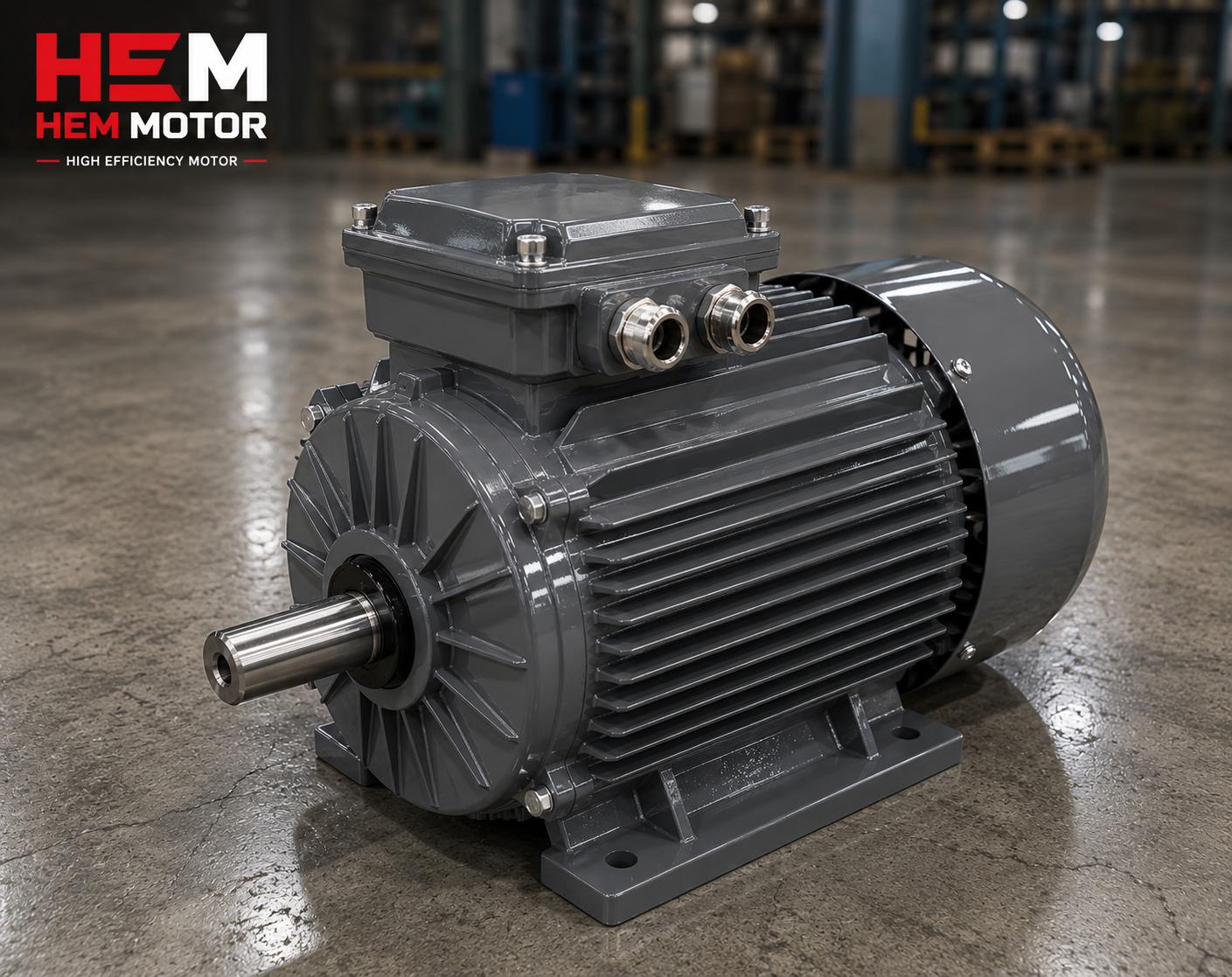
Why Does the Difference Between 50 Hz and 60 Hz Matter?
The synchronous speed of an asynchronous motor is determined by the grid frequency and the motor's pole count. The same motor runs roughly twenty percent faster at 60 Hz than at 50 Hz. While this may look like a small detail at first, it directly changes the behavior of the machine it drives. When frequency changes, speed changes; when speed changes, pump flow, fan airflow, conveyor speed and gear-reducer output speed all change as well.
The practical consequences of this difference are:
- Speed (rpm): The motor runs at a higher speed at 60 Hz and a lower one at 50 Hz.
- Power: On loads such as pumps and fans where power demand rises cubically with speed, the higher speed at 60 Hz can demand far more power from the motor.
- Torque characteristic: If the voltage/frequency ratio is not maintained, the motor's magnetic flux changes, which affects torque capacity and heating.
- Voltage compatibility: 60 Hz grids generally use different voltage levels; the motor must run at the correct flux level at those voltages too.
This is why a "it'll run if we plug it in" approach is inadequate for an export machine. The motor must be chosen so that it runs at the target speed, power and torque at both frequencies.
The Advantage of a Multi-Voltage, Wide-Frequency IE3 Motor
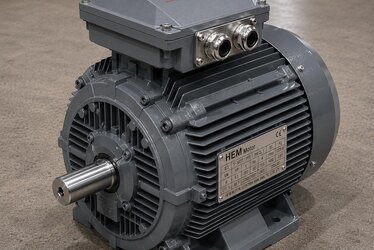
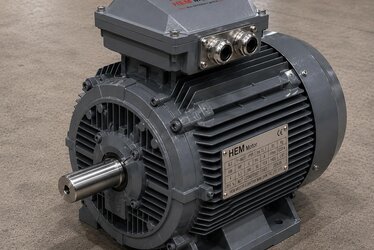
Multi-voltage, wide-frequency IE3 motors declare more than one voltage and frequency combination together on their nameplate. A typical nameplate lists separate power, speed, current and voltage values for both 50 Hz and 60 Hz. These motors are manufactured with winding designs and connection flexibility that let them adapt to different grids.
The advantages this approach brings to operations are clear:
- Single stock type: Instead of holding a separate motor for each country, a single motor type that suits most markets is stocked.
- Simpler spare-part management: Service and spare-motor inventory is streamlined, reducing the risk of error.
- Fast supply: Because the same motor can be used wherever the machine ships, the supply process shortens.
- Consistent performance: Wherever the customer installs the machine, they get the expected behavior, easing warranty and service processes.
For a machine builder or a multi-site operation, a single-type, multi-market motor strategy lowers both cost and operational complexity. To identify which motors are critical and set up an appropriate spare plan, you can draw on our approach to the critical spare motor list and stock planning.
Reading the Nameplate Correctly: The Importance of the Voltage-Frequency Range
The most critical step in multi-compatibility is reading the voltage and frequency information on the motor nameplate correctly. If the nameplate is misinterpreted, the motor runs at a different speed than intended; the pump fails to deliver the desired flow, the fan cannot reach the target airflow, and the conveyor runs at the wrong speed. Worse, in the wrong voltage-frequency combination the motor can overheat due to excessive flux, shortening its life.
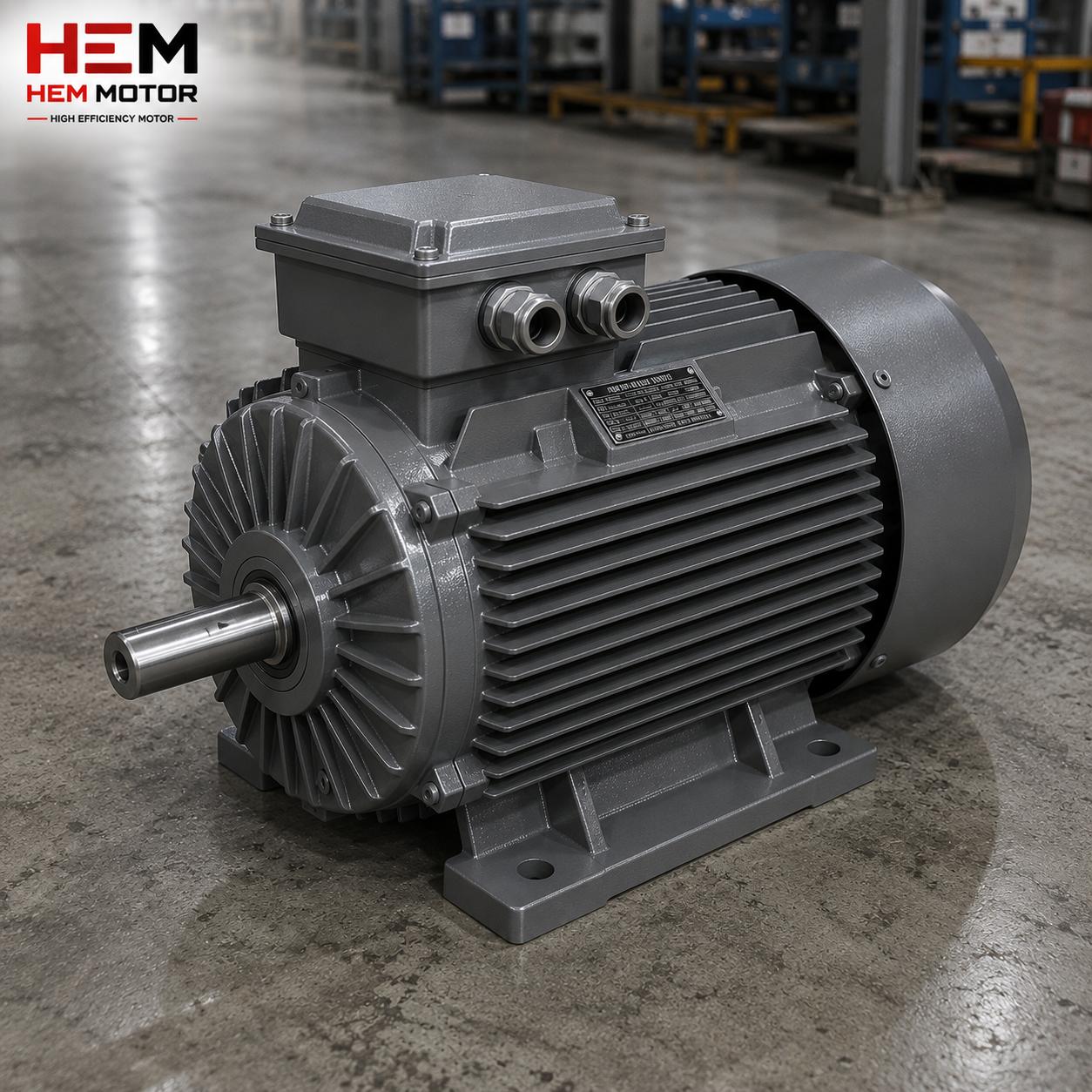
The main points to watch when reading the nameplate:
- Frequency range: Are both 50 and 60 Hz declared on the nameplate, or only one?
- Separate values per frequency: Are separate power, speed and current values given for the two frequencies?
- Voltage levels: At which voltages it can run via star/delta connection, and the connection arrangement.
- Voltage tolerance: The declared tolerance band against grid fluctuations.
Voltage tolerance is a critical parameter, especially for motors that will run on the variable grid quality of different countries. Exposing the motor to a voltage outside its declared tolerance band adversely affects both performance and life. To assess this topic in depth, our guide on IE3 motor voltage tolerance and grid fluctuation provides direction. And for reading rated values correctly, our resource on reading IE3 motor nameplate ratings is a fundamental reference.
Steps to Follow When Selecting the Right IE3 Motor
When selecting the right IE3 motor for export and multi-country plants, following a practical road map minimizes the margin for error:
- Define the target markets: Which countries will the machine ship to, and what are the grid frequency and voltage in those countries?
- Fix the speed target: Will the driven machine run within an acceptable speed range at both frequencies, or is speed critical?
- Check the power margin: Does the increased power demand at the higher 60 Hz speed exceed the motor's power?
- Clarify voltage and connection: Has it been determined, for correct field wiring, at which voltages the motor will run via star/delta connection?
- Foresee a drive if needed: If speed is critical, fixing the speed with a variable frequency drive can eliminate the multi-frequency problem entirely.
In applications with high speed sensitivity, running the motor with a variable frequency drive solves the multi-country compatibility problem at its root, because the drive turns the motor at the desired speed independently of the grid frequency. To evaluate this approach, our guide on using a VFD frequency drive with an asynchronous motor is useful.
Our expert team stands beside you for the selection and fast supply of IE3 motors with the right frequency and voltage compatibility. For motor solutions that suit every market your machines reach, can be stocked as a single type, and run the moment they are fitted in the field, you can visit our homepage and let us help you identify the most suitable IE3 motor for your needs.
Assessing the Frequency Effect According to the Driven Machine
In multi-frequency compatibility, not every application carries the same sensitivity. Some machines are quite tolerant of the speed difference between 50 and 60 Hz; in others speed is a critical parameter and even a small deviation degrades product quality or process efficiency. That is why, before selecting a motor, you need to understand the driven machine's sensitivity to frequency.
- Pumps: As speed rises, flow increases linearly, pressure with the square, and power demand with the cube. At 60 Hz a pump delivers noticeably more flow and demands far more power from the motor. In these applications the power margin is critical.
- Fans and blowers: Similar to pumps, airflow and power demand change rapidly with speed. Selection must be made carefully to avoid excessive airflow and motor overstress at 60 Hz.
- Conveyors: The speed difference changes the transport speed. On some lines this is acceptable, while on lines requiring synchronization the speed must be kept fixed.
- Geared drives: The reducer output speed depends directly on motor speed; a frequency change affects the entire mechanical chain.
- Processes requiring constant speed: On speed-sensitive processes such as extrusion, filling and cutting, using a variable frequency drive is the safest solution.
As you can see, the type of machine directly determines the motor selection criteria. In pump- and fan-heavy plants, priority should go to the power margin; on lines with high speed sensitivity, to drive use. The right assessment eliminates wrong-speed and wrong-power surprises in the field from the outset.
The Operational Gain a Single Stock Type Brings to Operations
Perhaps the most concrete benefit of choosing a multi-voltage, wide-frequency IE3 motor is the simplification in stock and service management. Instead of holding a separate motor for each country, stocking a single motor type that suits most markets lowers both cost and operational complexity.
The practical reflections of this simplification are:
- Fewer stock items: Instead of dozens of different motor variants, a limited number of versatile motors are held; warehouse space and tied-up capital decrease.
- Fast spare coverage: When a motor fails, the same spare motor can be used regardless of which country the plant is in; waiting time shortens.
- Fewer errors: The risk of fitting the wrong variant in the field decreases; because the installation team works with a single motor type, the operation speeds up.
- Easy service and warranty: A single motor type standardizes service procedures and the spare-part supply process.
For the sake of keeping production running, this gain is very valuable, because in a motor failure the real cost is not the motor itself but the stoppage of production. With a single-type, multi-market stock strategy, you can ensure your machines restart quickly wherever in the world they are. When balancing stock delivery against a production order, our comparison of from-stock delivery vs production order helps you make the right supply decision.
Frequently Asked Questions
Can the same IE3 motor run on both 50 and 60 Hz grids?
An IE3 motor designed for multi-frequency operation can run on both 50 and 60 Hz grids if its nameplate declares separate values for both frequencies. However, the speed, power and current values differ between the two frequencies. What matters is that the motor is selected to meet the speed and power demand of the driven machine at both frequencies. If only a single frequency is declared on the nameplate, using it at the other frequency may adversely affect performance and life.
Why can a motor draw more power when switched to 60 Hz?
At 60 Hz the motor runs about twenty percent faster. On loads such as pumps and fans, power demand rises rapidly — often cubically — with speed. As a result, a motor that is adequate at 50 Hz can be overstressed beyond its power when driving the same machine at 60 Hz. In multi-country selection, the power demand at 60 Hz must always be checked and an appropriate power margin left where necessary.
How do I avoid stocking a separate motor per country for multiple voltages?
The solution is to choose an IE3 motor that supports both multiple voltages and a wide frequency range. Thanks to connection flexibility, these motors adapt to different voltages and frequencies, so you don't need to hold a separate motor for each market. A single-type, multi-market stock strategy simplifies spare-part management and shortens lead time. To identify which motor offers the multi-compatibility best suited to your markets, simply share the grid information of your target countries with us.