English
 Türkçe

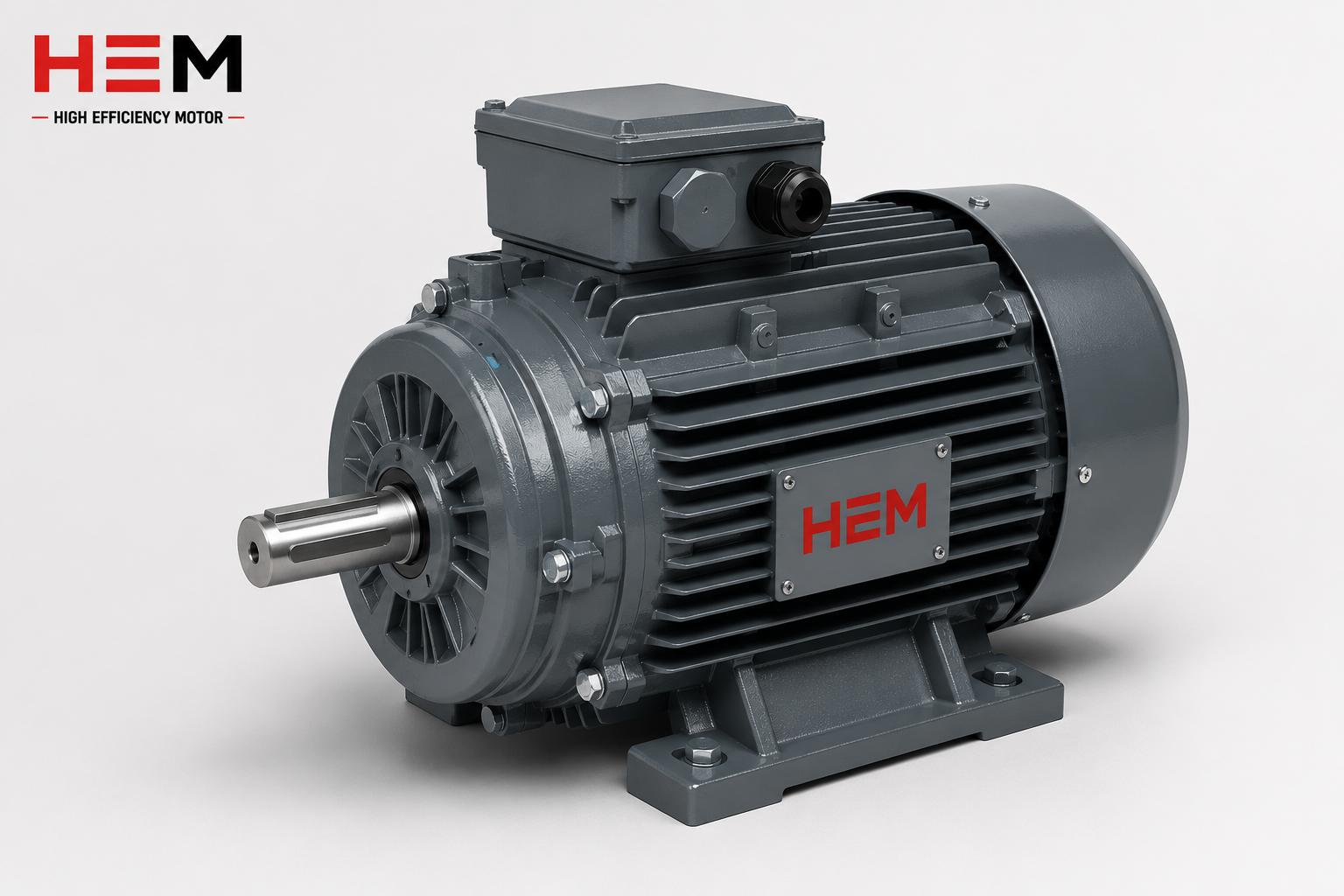

One of the most critical and highest-value pieces of equipment in any plant is the main drive motor. 315 kW and 355 kW ultra-large-power electric motors appear in cement mills, large crushers, main process pumps, big fans and blowers, compressor stations and heavy industrial lines. At this power class a wrong choice means not just energy loss, but months of lead-time delay, commissioning problems and major production downtime. In this guide we cover IE3 efficiency 315 kW and 355 kW motors across speed, pole, frame, starting method and stock/supply, helping you plan a correct purchase from start to finish.
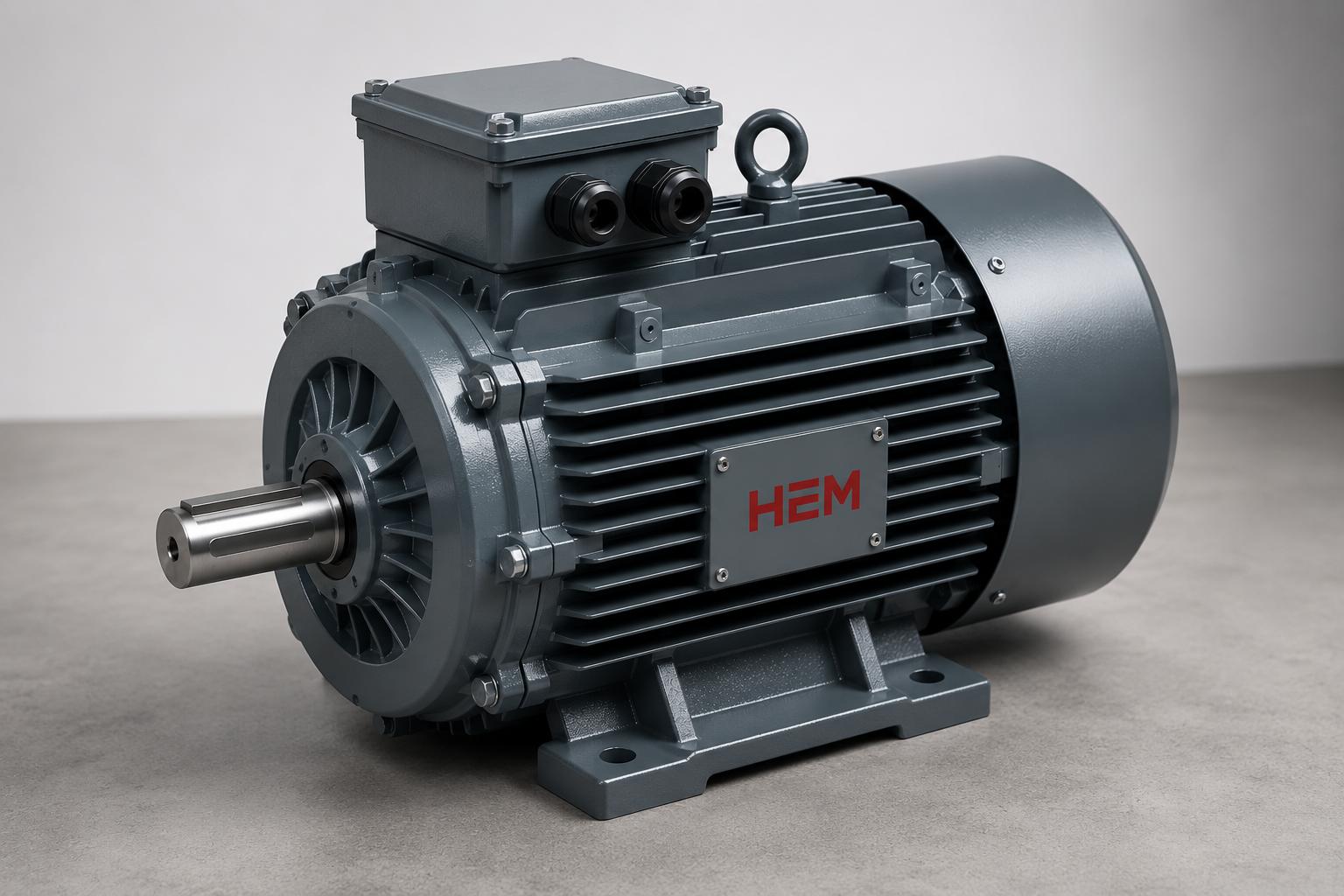
Buying a motor of this size from a manufacturer-backed supplier is not simply purchasing a product; it is managing a project. An IE3 355 frame motor must match your panel, transformer, cable and foundation. At HEM Motor our IE3 and IE4 range spans from 0.55 kW up to 355 kW, meaning 355 kW sits at the very top of the range, and every motor in this class is built with a cast-iron body, 100% copper windings, class F insulation and IP55 protection. Below we explain what to select and why.
Why 315 kW and 355 kW Need Separate Engineering
The ultra-large-power class demands a completely different approach from medium motors. Many solutions that are standard at 90-200 kW must be re-evaluated at 315 kW and 355 kW. Motors at this power are typically built on the 355 frame family (355M/355L), weigh tons, and in the Turkish market the 355 frame with roughly Ø100 mm shaft diameter has become the common standard at 1500 rpm (4-pole). That is why coupling, pulley and foundation calculations must be correct from the start.
The key headings to watch at this class are:
- Speed and pole selection: the choice between 2-pole (~3000 rpm) and 4-pole (~1500 rpm) determines torque, starting behaviour and frame size.
- Starting method: direct-on-line (DOL) starting is not accepted on most grids at this power; reduced-voltage starting is mandatory.
- Thermal protection: winding temperature must be monitored with PTC thermistors or PT100; running without protection is risky at this size.
- Mechanical infrastructure: crane lifting, a solid foundation, alignment and vibration control are part of the project.
- Electrical infrastructure: transformer power, feeder cable cross-section and protection devices must be sized to the motor.
2-Pole or 4-Pole? The Consequences of Speed
Choosing 2-pole on a 355 kW motor means a very high mechanical power density at around 3000 rpm. These motors are typically used in high-pressure pumps, large centrifugal compressors and some high-speed fan applications. In 2-pole 355 kW motors the starting current is very high and the kinetic energy of the rotating mass is large, so the starting method and bearing selection become critical. Vibration and balance tolerances are also tighter on large 2-pole machines.
4-pole (around 1500 rpm) is the most common speed in the 315 kW and 355 kW class. Most conveyor drives, mills, crushers, mixers and general heavy-industry applications run on 4-pole motors. At this speed torque is higher, mechanical stress is more balanced, and frame-shaft standards are well established in the market. If your application reduces speed with a gearbox or belt-pulley, a 4-pole motor is almost always the right starting point.
Low-speed options such as 6-pole (~1000 rpm) and 8-pole (~750 rpm) are also possible at this power, preferred where direct-drive applications need low speed and high torque. To clarify which speed suits your load, see our 315 kW motor selection with 2/4 pole and project-based supply guide.
355 Frame, Weight and Mechanical Mounting
In this power class the frame is practically the 355 frame family (355M and 355L). The common mounting types are B3 (foot) and B35 (foot + large flange); pure flanged (B5) mounting at this size is rare and requires special engineering. Since a 355L frame motor can reach tons in weight, the handling and mounting plan must be made at the ordering stage:
- Lifting eyebolts: the lifting points on the motor body and the crane capacity must be verified in advance.
- Foundation and base: a reinforced-concrete foundation that carries vibration and correct bolting are mandatory at this power.
- Alignment: laser alignment for coupled drives, and belt tension and axis control for belt-pulley drives.
- Shaft and key: roughly Ø100 mm shaft is common for the 355 frame in the Turkish market; couplings and pulleys are chosen accordingly.
Ultra-large-power motors commissioned without correct mechanical infrastructure often suffer early bearing- and vibration-related failures. We therefore recommend requesting the dimension and weight documents of the motor at the quotation stage.
Starting: Why DOL Is Not Enough
On 315 kW and 355 kW motors, direct-on-line (DOL) starting causes a very large voltage dip on the grid, and utilities generally do not allow DOL at this power. The starting method at this class must therefore be reduced-voltage:
- Soft starter: the most common solution for pumps, fans and low-inertia loads; it limits inrush current and reduces mechanical shock.
- Star-delta: economical at this power, but starting torque drops, so it may fall short when starting under high load.
- Variable frequency drive (VFD): provides both starting and speed control in applications that need speed regulation and energy saving.
- Liquid resistance starter (LRS) and slip-ring motor: preferred for soft, controlled starting on very high-inertia loads such as crushers and mills.
If your load inertia is very high (for example a large crusher or mill), a slip-ring rotor with an LRS solution may be needed instead of a standard squirrel-cage motor. Our content on liquid resistance starters and slip-ring motors in large crushers explains in detail how soft starting is achieved at high inertia. Soft starter or VFD selection should be planned together during the motor supply stage.
Electrical Infrastructure: Transformer, Cable and Protection
Before buying a 355 kW motor, you must check whether the plant's electrical infrastructure can carry this load. Transformer power, rated current and short-circuit withstand should be evaluated against the motor rating. The feeder cable cross-section must be chosen considering voltage drop and starting current; an undersized cable at this power causes heating and efficiency loss.
On the protection side, a motor protection circuit breaker (MPCB) or a contactor + thermal relay combination must be set to the motor's rated current. IP55 protection is sufficient as standard; however, additional protection can be requested for dusty, humid or outdoor applications. To monitor winding temperature, we recommend ordering PTC thermistors or PT100 sensors as standard; at ultra-large-power, thermal protection is not a luxury but a necessity.
IE3 Efficiency and Regulatory Compliance
Under current regulations, the IE3 efficiency class is mandatory across a wide power range. Choosing IE3 at 315 kW and 355 kW is the correct decision both for compliance and for energy cost; at this power, even a small difference in efficiency turns into a large difference on the annual energy bill. Although high-efficiency motors require a slightly higher initial investment, the payback period is short on continuously running heavy-industry lines.
For our IE3 range and technical specifications, see our IE3 efficient electric motors product category. If you will purchase at a lower power class, our IE3 200 and 250 kW motor speed, pole, frame and stock supply guide will also help you compare correctly.
Stock, Lead Time and Supply: Why It Is Different at This Power
Small and medium-power motors can mostly be delivered quickly from shelf stock. At 315 kW and 355 kW the situation is different: these are high-value, large-volume products usually built in an application-specific configuration. Therefore stock management runs on a project basis, and a correct supply plan is critical for your project to be commissioned on time.
- Lead-time plan: once speed, pole, mounting type and options are confirmed, a clear lead time is given.
- Shipping: transport and unloading of multi-ton motors is planned; crane and forklift capacity is discussed in advance.
- Commissioning support: a healthy start is ensured with insulation measurement, rotation direction and vibration checks.
- Manufacturer assurance: technical documentation, warranty and spare-part access are part of the supply.
To clarify your project-specific 355 kW motor need and obtain a lead time, you can contact us and request a quote for current electric motor prices and stock status. A quotation prepared with the right power, the right speed and the right starting method protects your investment and makes commissioning smooth.
Checklist for a Correct Purchase
- Has the load type (pump, fan, compressor, crusher, conveyor) and inertia condition been determined?
- Has the required pole and speed (2/4/6-pole) been selected?
- Have the 355 frame weight, shaft diameter and mounting type (B3/B35) been confirmed?
- Has the starting method (soft starter, VFD, LRS) been planned according to the load?
- Have the transformer, cable cross-section and protection devices been sized to the motor?
- Has PTC/PT100 thermal protection been added to the order?
- Have the lead time and shipping plan been finalised?
315 kW and 355 kW Motor Use by Application
Ultra-large-power motors take on the main drive role across very different sectors. Because each application has its own load character, inertia condition and duty type, the right motor and the right starting method combination changes with the application. Below are the use areas we encounter most often and the selection notes for each.
Cement and Mining Plants
Cement mills, ball mills and large crushers are where this power class is used most intensively. In these loads inertia is very high and starting takes a long time, so 355 kW motors are often fed with a slip-ring rotor and a liquid resistance starter (LRS). Continuous heavy duty (S1 duty type), high dust and vibration make a cast-iron body and reinforced bearing structure mandatory in these applications.
Large Pump and Fan Stations
City water booster stations, main wastewater pumps, large flue-gas fans and blowers typically run on 315 kW and 355 kW motors. Because these loads have a quadratic torque character, the starting inertia is relatively low, so a soft starter or a variable frequency drive is often sufficient. In pump and fan applications, speed control with a VFD provides serious energy saving under continuous load.
Compressor and Process Lines
Large centrifugal and screw compressors and continuous process lines require high-speed, continuously running motors. Here 2-pole selection is common, and starting current and thermal management come to the fore. In these applications, PTC/PT100 thermal protection and the correct supply infrastructure directly determine motor life.
Total Cost of Ownership and Payback
The purchase price of a 355 kW motor is small compared with the energy it consumes over its lifetime. On a continuously running heavy-industry line, the motor's annual energy consumption rises far above the purchase price. That is why, when deciding at this power class, you should look not only at the initial investment but at the total cost of ownership. The IE3 efficiency class provides a clear saving on the annual energy bill compared with older, lower-efficiency motors, and the payback period is quite short on continuously running lines.
Other items to consider alongside energy cost are:
- Downtime cost: a failure of the main drive motor stops the whole line, so a reliable motor and fast spare-part access are critically important.
- Maintenance ease: a re-greasable bearing structure and an accessible terminal box reduce maintenance time and cost.
- Commissioning: a first start done with correct alignment and vibration control prevents early failures and extends motor life.
- Resale value: a motor in a standard frame and mounting type can later be reused on a different line.
All these items are managed through the right supplier choice. A 315 kW or 355 kW motor purchased with manufacturer assurance comes with technical documentation, warranty and spare-part support. This way your investment is protected not only on the first day but throughout its life.
Frequently Asked Questions
Can 315 kW and 355 kW motors be delivered immediately from stock?
Because these ultra-large-power motors are high-value and usually application-specific, stock works on a project basis rather than as shelf delivery. Once speed, pole and mounting type are confirmed, a clear lead time is given; for some common configurations faster supply is possible. We recommend sharing your need upfront for correct planning.
Can I use direct-on-line (DOL) starting on a 355 kW motor?
In practice, no. At this power DOL causes a large voltage dip on the grid and is generally not permitted. On 355 kW motors reduced-voltage starting methods such as a soft starter, a variable frequency drive, or a liquid resistance starter (LRS) for high inertia are used. The method is chosen according to your load inertia.
Should I buy 2-pole or 4-pole?
It depends on your application. High-speed pumps and compressors may require 2-pole (~3000 rpm); however, for mills, crushers, conveyors and general heavy industry, 4-pole (~1500 rpm) is the most common and balanced choice. If you reduce speed with a gearbox or pulley, 4-pole is usually the right starting point.