English
 Türkçe

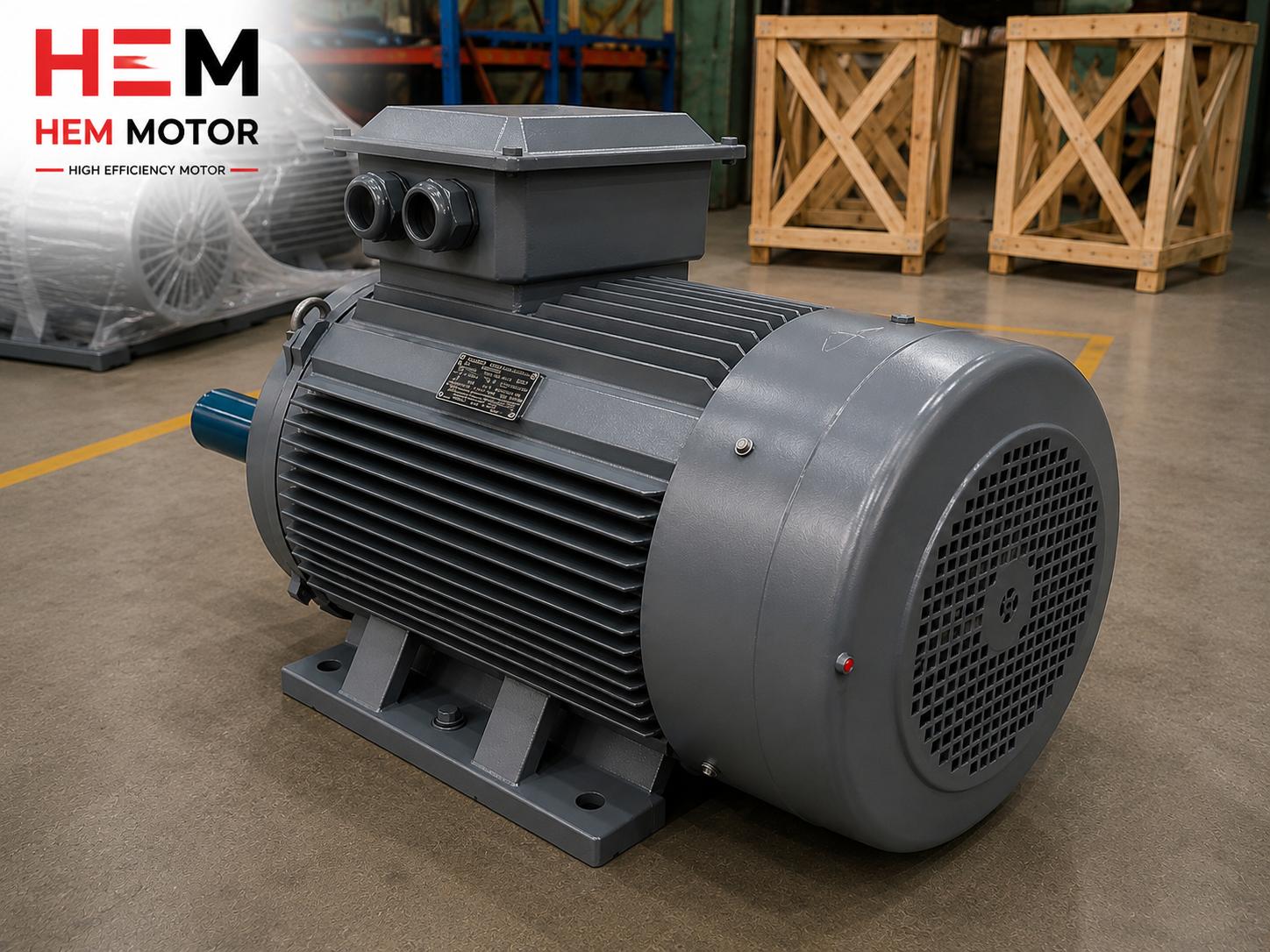

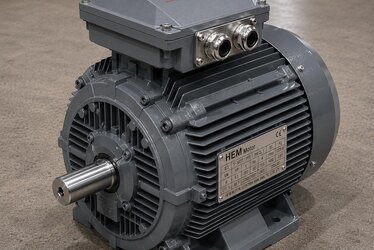
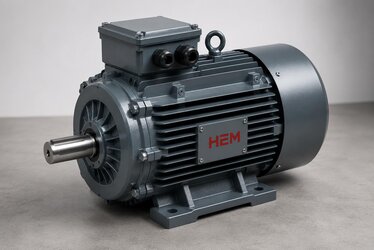
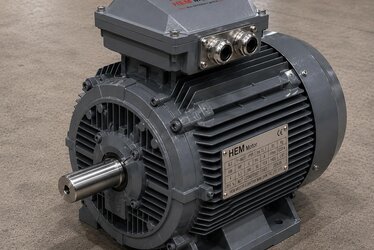
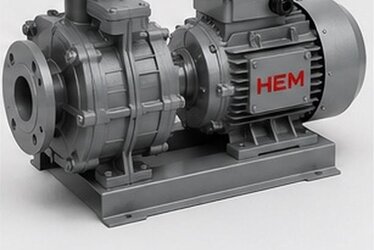
1.5 kW and 2.2 kW are the most sought-after small power values in the IE3 efficiency class. A wide range of applications — from small pumps to fans, from conveyor drives to machine integrations — clusters precisely in these two power classes. Their very popularity makes the correct selection equally important, because the wrong pole, the wrong frame, or an unavailable configuration will delay your project. When making an IE3 1.5 and 2.2 kW motor selection, speed, pole, frame size and stock availability must be evaluated together.
We manufacture these powers in the IE3 premium-efficiency class on our own production line and continuously hold the standard configurations in stock. In this article we explain what you need to know to select 1.5 and 2.2 kW motors correctly, and once you have defined the suitable configuration we encourage you to quickly request a quotation.
Why Are 1.5 and 2.2 kW So Common?
These two power values cover the power band needed in the vast majority of small and medium machines. While 1.5 kW is sufficient for lightly loaded pumps, small fans and simple conveyors, 2.2 kW is preferred for slightly heavier loads, medium-pressure pumps and machines requiring a stronger drive. Machine builders also use these powers in most of their standard designs. This prevalence brings these powers to the fore both in spare-part supply and in fast-delivery needs.
Being common also means that many different configurations circulate on the market. Therefore, simply saying "2.2 kW motor" is not enough; the speed, frame and mounting type must also be clear.
The Importance of the IE3 Efficiency Class
IE3 denotes the premium-efficiency class and delivers energy savings even at these small powers. 1.5 and 2.2 kW motors typically run all day, often without interruption. Although the saving of a single motor seems small, if a facility has dozens of such motors the total energy gain becomes considerable. IE3 premium-efficiency motors heat up less, last longer and lower the electricity bill thanks to low-loss windings, quality lamination stacks and optimized rotor cages.
Pole and Speed Selection
1.5 and 2.2 kW motors are selected as 2, 4 or 6 pole according to the application:
2 Pole (~2850 rpm)
For small centrifugal pumps and blowers requiring high speed. High speed means low torque at the same power.
4 Pole (~1420 rpm)
The most preferred configuration with the broadest stock variety. It offers an ideal speed-torque balance for general-purpose pumps, fans, conveyors and machine drives.
6 Pole (~930 rpm)
For applications requiring low speed and high torque. Preferred in machines with heavy starting or low speed.
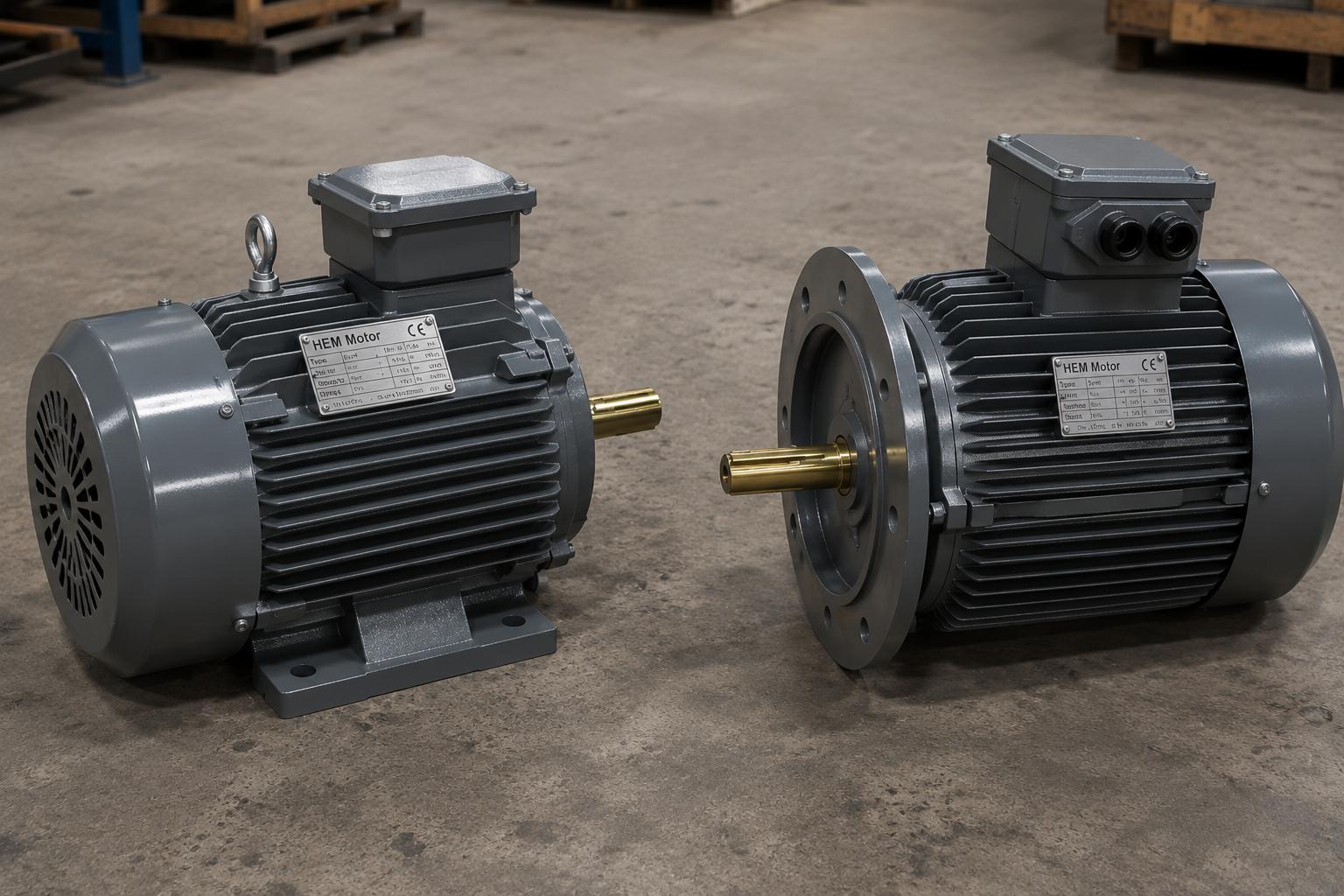
Frame Size and Mounting Type
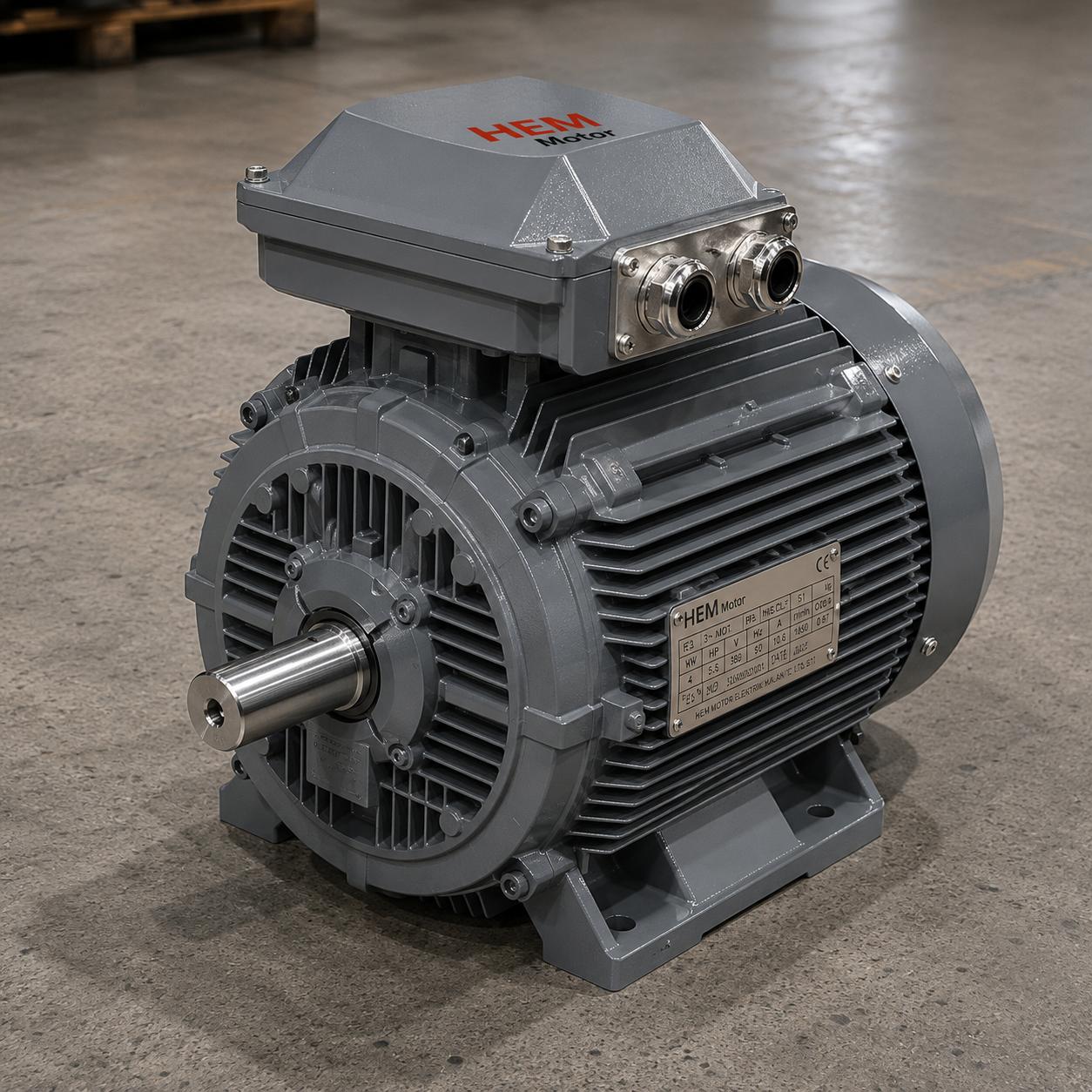
1.5 kW motors are typically built in the 90 frame class, while 2.2 kW motors are produced in the 90 or 100 frame class. If you are replacing an existing motor, correctly identifying the frame code (e.g. 90L, 100L), shaft height and mounting type is very important.
- B3 (foot): Classic mounting bolted to a base.
- B5 (flange): Direct flange connection to a pump or machine.
- B14 (small flange): A tapped face flange common in small machine integrations.
- B35 (foot + flange): For applications requiring combined support.
Choosing the wrong mounting type means you cannot attach the motor to the machine; therefore, in a replacement, it is advisable to send us the existing motor's nameplate and flange type.
Stock Availability and Fast Delivery
For high-demand powers such as 1.5 and 2.2 kW, we continuously hold the standard configurations — especially 4-pole — in stock. This lets us deliver directly from stock without waiting for production. Urgent needs are frequent at these small powers; when a machine's motor fails, production stops and fast supply becomes critical. Keeping standard configurations in stock enables us to offer a quick solution in such cases. For requests requiring special speed, frame or winding, we provide a short lead time according to our production plan.
Checklist for Correct Buying
- Is the application's true power demand 1.5 or 2.2 kW?
- Has 2, 4 or 6 pole been determined according to the required speed?
- Has the frame code and mounting type (B3/B5/B14/B35) been read correctly?
- Has the IE3 efficiency class been chosen?
- Has the stock availability of the chosen configuration been asked?
After completing these steps, if a need for higher power arises you may review our 2.2 and 3 kW power-speed page, for very small powers the IE3 0.18 and 0.25 kW micro-power motor options, and for correct power selection our efficient motor and oversizing guide.
Frequently Asked Questions
Should I buy 2.2 kW instead of 1.5 kW?
If your real load demand is 1.5 kW, buying 2.2 kW creates unnecessary cost and efficiency loss at low load. The correct approach is to calculate the application's true demand and select the matching power. If the load will grow over time, a measured margin can be considered; we can evaluate this together.
Is an IE3 motor more expensive, and is it worth it?
The initial cost of an IE3 motor may be slightly higher than a standard motor; however, in applications that run a lot, the energy saving it provides covers that difference quickly and yields net gain thereafter. If your running hours are high, IE3 is always more economical.
How fast can I receive delivery from stock?
Because we continuously keep standard 4-pole 1.5 and 2.2 kW motors in stock, we deliver quickly in these configurations. For special requests we share a clear lead time according to the production plan. When you tell us your need, we present the suitable stock option. For more information you may visit our homepage.