English
 Türkçe


Buying a high-efficiency motor is only the beginning of the saving. The IE3 or IE4 efficiency value printed on the nameplate belongs to the new motor leaving the factory. Yet as the motor runs for years in the field, a series of physical processes quietly erode its efficiency. In this article we examine the mechanisms of high-efficiency motor ageing, the causes of efficiency degradation, and the ways to preserve lifetime efficiency.
Efficiency degradation is not sudden but gradual; this is why it often goes unnoticed. Because the motor "keeps running," everything appears fine, yet the energy it draws slowly rises. Over the years this rise can erode the saving promise on which the original purchase decision was based. This is precisely why understanding ageing is as important as choosing the right motor.
Our aim is to clearly present to the maintenance team and operations manager why efficiency drops, with which indicators it is tracked, and when the renewal decision should be made.
The Three Basic Mechanisms of Ageing
The ageing processes that lower a motor's efficiency fall under three main headings: insulation degradation, mechanical friction rise and thermal fatigue. These are not independent; one accelerates another, and together they drag efficiency down.
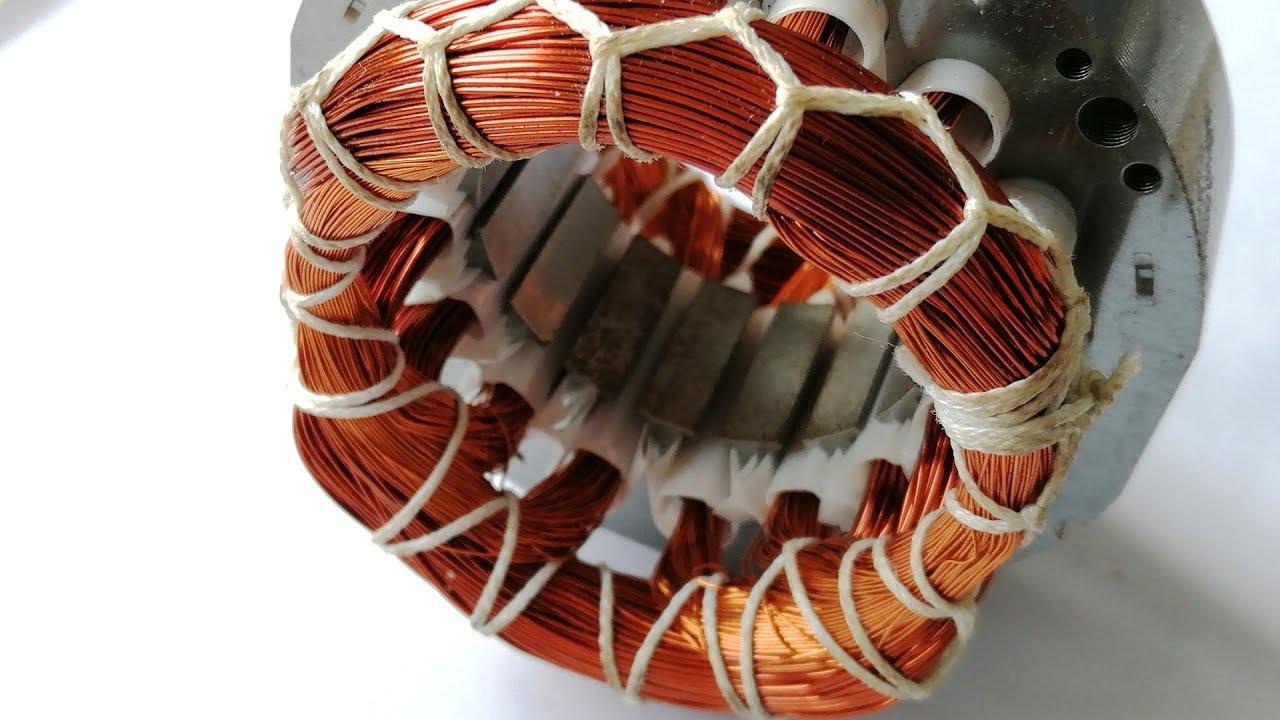
Insulation degradation: Winding insulation chemically degrades over time under heat, moisture, vibration and electrical stress. As the insulation weakens, small leakage currents between windings and between winding and frame increase. This both creates direct loss and, by triggering local heating, increases the risk of a short circuit.
Mechanical friction rise: Bearings wear over time; grease degrades and clearance and friction increase in the bearings. The increased friction both lowers efficiency as direct mechanical loss and produces extra heat that stresses the insulation. Misalignment and unbalance accelerate this process.
Thermal fatigue: Each time the motor heats and cools, different materials expand at different rates. These repeated cycles create micro-cracks in the insulation, loosening in winding bonds and stress in the magnetic circuit. This fatigue is one of the basic reasons a motor gradually loses efficiency over the years.
Why Is the Temperature History Decisive?
The motor's lifetime temperature history is the most critical factor determining its efficiency life. The life of insulation materials is extremely sensitive to temperature. By the generally accepted rule, every 10 °C permanent rise in winding temperature roughly halves the expected life of the insulation. This is known as the "10-degree rule" and explains why thermal management is so important.
If a motor runs continuously near the upper temperature its insulation class allows, its insulation ages far faster. Overload, insufficient ventilation, high ambient temperature, blocked cooling channels and unbalanced supply voltage are the main factors that raise the winding temperature. When these factors are kept under control, the motor insulation lasts close to its design life and efficiency is preserved longer.
- Overload: Continuous operation above rated accelerates winding temperature and ageing.
- Insufficient ventilation: Blocked fins and a dirty fan reduce cooling.
- High ambient temperature: A hot environment reduces the motor's heat-rejection capacity.
- Voltage unbalance: Phase unbalance creates extra heat and vibration.
The Rewind Trap: Permanent Efficiency Loss
When a motor fails, a rewind often looks like an economical solution. However, a careless rewind can cause a permanent loss of efficiency. The basic reason is the high-temperature burn-off process frequently applied to strip the old winding. If this process damages the insulation coating of the magnetic laminations, the iron losses increase permanently.
Typically, a poorly done rewind can lower the motor's efficiency by about 1-3 points. This drop effectively pushes the motor down one efficiency class; for example, an IE3 motor may behave at the IE2 level after rewinding. This loss shows up in the energy bill every operating hour, and the "cheap" rewind can cost more over the years than a new motor.
A correctly performed rewind — with controlled-temperature stripping, faithful to the original winding data and using quality conductors — can largely preserve efficiency. When deciding, it is essential to account for the lifetime energy cost of efficiency loss together with the rewind cost.
Tracking Efficiency Degradation: Periodic Measurement
Efficiency degradation is not visible; it must be measured. Regular predictive-maintenance measurements are the only reliable way to catch the silent erosion of efficiency early. The basic indicators to monitor are:
- Current measurement: A rise over time in the current drawn at the same load is the first sign of efficiency degradation.
- Temperature tracking: A rise in frame and winding temperature indicates increased losses and approaching risk.
- Insulation resistance (megger): A drop in insulation resistance is direct evidence of winding ageing.
- Vibration analysis: Increasing vibration catches bearing wear and misalignment early.
These measurements become meaningful when compared with a baseline value (when the motor is new or freshly maintained). Trend tracking is far more valuable than a one-off measurement, because what matters is not the absolute value but the change over time. A motor whose current is slowly climbing, whose temperature is rising and whose megger value is falling indicates efficiency loss and requires intervention.
Ways to Preserve Efficiency
You cannot stop ageing entirely, but you can slow it greatly. The basic practices to preserve motor efficiency are as follows. First, keep the temperature reasonable: do not overload the motor, keep the ventilation fins and fan clean, and check the ambient temperature and supply balance. Temperature control is the most powerful lever for slowing ageing.
Correct greasing is the second critical element. The grease type, quantity and interval recommended by the manufacturer must be followed; too much grease is as harmful as too little. Alignment must also be checked regularly; coupling or belt misalignment fatigues both the bearings and the shaft, increasing friction and vibration.
Finally, make the renewal decision on time when payback is favourable. Continuing to run a heavily aged motor that has been rewound several times and lost efficiency is often more expensive than buying a new high-efficiency motor. It is best to make the renewal decision by measuring the motor's actual energy draw and comparing it with the saving a new motor would provide.
For maintenance strategies and measurement methods you can review our electric motor maintenance guides and, for class comparisons, our efficiency-class content. For renewal, request a quote for current electric motor prices and stock availability.
Frequently Asked Questions
How does temperature affect efficiency life?
Temperature is the strongest determinant of insulation ageing. By the generally accepted "10-degree rule," every 10 °C permanent rise in winding temperature roughly halves the expected insulation life. For this reason, avoiding overload, insufficient ventilation and high ambient temperature is the most powerful way to preserve efficiency over the motor's life.
Does rewinding lower a motor's efficiency?
A careless rewind can. If the high-temperature burn-off used to strip the old winding damages the insulation of the magnetic laminations, iron losses rise permanently. This can lower efficiency by about 1-3 points, effectively dropping the motor a class. A quality rewind at controlled temperature, however, largely preserves efficiency.
How do I track efficiency degradation?
Efficiency degradation is not visible; it must be measured. A rise in current at the same load, increasing frame/winding temperature, a falling insulation resistance (megger) and rising vibration are the basic indicators. Comparing these values with a baseline and tracking the trend is the only reliable way to catch silent efficiency erosion early.