English
 Türkçe

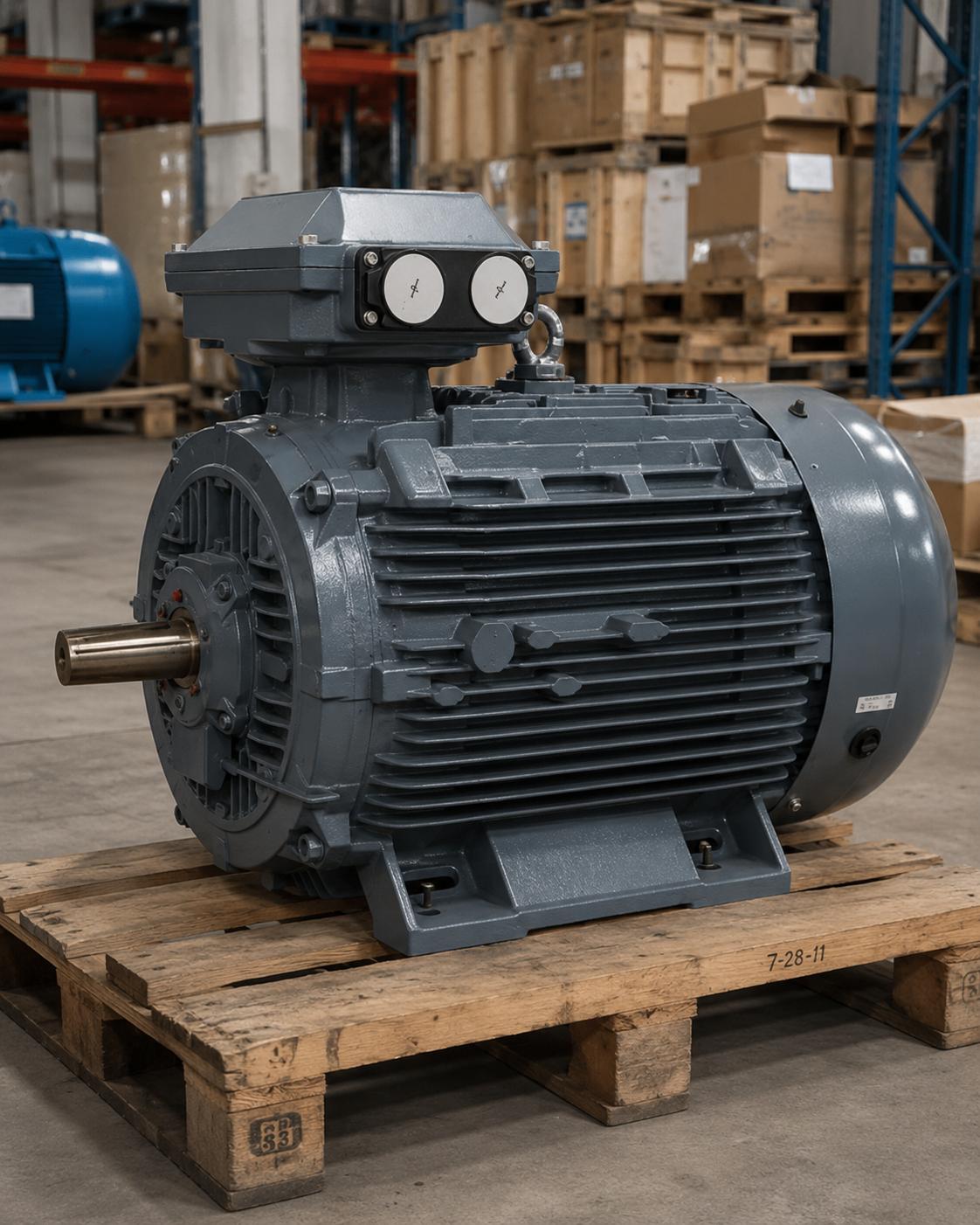

When a plant manager evaluates replacing an old motor with a high-efficiency IE4 or IE5 motor, they usually look at a single question: "In how many years will this investment pay for itself?" This calculation is most often based only on the saving in the electricity bill. Yet more and more businesses are adding another item to this calculation: the shadow carbon price (internal carbon price). The shadow carbon price is a hypothetical cost, considered in corporate decisions, of the CO2 that each unit of energy you consume releases into the atmosphere. When you include this cost in the investment calculation, the payback period of the efficient motor shortens and the renewal decision becomes far easier to justify. In this guide we cover, step by step, how to make an investment decision with a shadow carbon price for efficient motors, how to factor the CO2 cost into the payback calculation, and how to make the motor renewal decision with this holistic view.
At HEM Motor, a trend we increasingly encounter in efficient-motor sales is customers deciding by looking not only at energy savings but also at carbon and sustainability goals. The shadow carbon price is a powerful tool that combines these two views into a single number and clarifies the decision. Especially on high-power, continuously running motors, factoring in the carbon cost can move the renewal decision from "maybe" to "definitely", because the value of avoided carbon accumulates rapidly with high operating hours.
What Is the Shadow (Internal) Carbon Price?
The shadow carbon price is a hypothetical cost that a business voluntarily assigns to each unit of CO2 emission when evaluating its own investment decisions. It is not a real tax paid to the government; it is an analysis tool used at the decision-making stage to answer the question "if carbon had a price, how would this investment look?" Using the amount of CO2 each unit of energy corresponds to and the internal cost it assigns to that CO2, the business sees the real "societal" cost of energy-consuming equipment. Efficient-equipment investments are thus evaluated not only by the energy bill but also by the avoided carbon cost.
Why Is It Used?
- Investment prioritization: Efficiency investments stand out in competition once the carbon cost is added, and are prioritized in the budget.
- Future readiness: As carbon regulations and border taxes spread, businesses that decide with an internal price today are prepared.
- Sustainability goals: Corporate carbon-reduction commitments turn into concrete investment decisions.
- Risk management: More resilient decisions are made against future energy and carbon cost uncertainty.
Where Does the CO2 Come From in Motor Renewal?
An electric motor produces no direct flue gas; however, the electricity it consumes carries a carbon footprint that, in most grids, comes from fossil-fuelled power plants. So a motor's "indirect" CO2 emission is proportional to the energy it consumes and the carbon intensity of the grid that energy is produced on. Because an old, low-efficiency motor draws more energy to do the same work, it causes more indirect CO2. Moving to an efficient motor reduces both the energy bill and this indirect carbon footprint. Even if the grid's carbon intensity falls over time with renewable sources, energy avoided with an efficient motor is always a gain, because energy not consumed need not be produced from any source. So efficiency is the most fundamental and reliable step of carbon reduction. We address the logic of reducing a motor's carbon footprint in our article on reducing the carbon footprint with high-efficiency motors.

Factoring the Shadow Carbon Price into the Payback Calculation
The classic payback calculation works like this: the investment cost is divided by the annual energy saving to find the payback period. The shadow carbon price enters this calculation as an additional saving item. The logic is: the value of energy avoided with the efficient motor is not only the electricity cost but also the carbon cost of that energy. The steps are:
- Determine the energy saving: From the efficiency difference between the old and new motor, calculate the avoided energy per year based on annual running hours.
- Find the CO2 equivalent: Multiply the avoided energy by the grid's carbon intensity to find the avoided CO2.
- Apply the internal carbon cost: Multiply the avoided CO2 by your business's chosen shadow carbon price.
- Sum the total annual benefit: Add the energy saving and the carbon benefit to find the real annual gain.
- Recalculate payback: Divide the investment by this enlarged annual benefit; the payback period shortens.
This approach can clearly turn a "borderline" energy-only investment profitable once the carbon cost is added. You can find the basis of the payback calculation and the real consumption comparison in detail in our article on the payback of replacing an old motor with IE4.
Operating Hours and Load Profile: The Two Variables That Drive the Calculation
The two most decisive variables in a motor's shadow carbon calculation are the annual operating hours and the load profile. On a motor running a few hundred hours a year, the payback of moving to the highest-efficiency motor can be long; but on a motor running thousands of hours, even continuously, the same efficiency difference means a much larger annual saving and avoided carbon. So instead of renewing all motors at once, the smartest strategy is to start with the most-running, lowest-efficiency motors. We address the scalable saving approach that starts from a single motor and spreads to the fleet in our article on saving from a single motor to a fleet. The load profile matters equally; oversized motors running at low load operate in the region where the efficiency curve is not best and produce unnecessary carbon. Sizing the motor correctly during renewal also increases the shadow carbon benefit, as shown in our article on motor load ratio and correct sizing.
Relying on Real Data for Correct Savings
The accuracy of the shadow carbon calculation depends on the accuracy of the input data. The most common mistake here is using nameplate efficiency as if it were field efficiency. A motor's real saving depends on its operating load point, running hours and the existing motor's real efficiency. So measuring the existing motor's real consumption before starting the calculation is far healthier than assumption. To understand the difference between nameplate and field efficiency, our article on the difference between nameplate and field efficiency guides you in calculating real savings correctly. To decide which motors to renew first by measuring the load profile, our article on motor load profile and data logging offers an applicable method.
Measuring and Documenting the Savings
To see that the renewal decision you made with the shadow carbon calculation truly delivers the expected result, you need to measure and document the savings after renewal. Measuring the real active power the new motor draws with a power analyzer reveals whether the expected saving materializes in the field. This measurement both proves the return on the investment and concretely documents the avoided carbon, feeding sustainability reporting. For the method of verifying field efficiency, our article on verifying field efficiency with a power analyzer, and for measuring and documenting annual savings our article on measuring and documenting annual energy savings offer applicable steps.
Carbon Border Regulations and Exporting Facilities
The shadow carbon price is not only an internal decision tool but also preparation for future real costs. For exporting facilities, carbon border regulations (such as CBAM) are becoming an increasingly concrete cost item. The carbon intensity of a product can directly affect its competitiveness in export markets. So moving to an efficient motor is a strategic investment not only for energy savings but also for export competitiveness. To explore this in depth, see our article on the carbon border (CBAM) with high-efficiency motors.
Integration with an Energy Management System
The shadow carbon price shows its real power when integrated into a plant-wide energy management system rather than into one-off motor decisions. Energy management systems such as ISO 50001 enable systematic monitoring of the plant's energy consumption and prioritization of improvement opportunities. When motor renewal investments are evaluated within this system, which motor is renewed when and why is supported by data. The internal carbon price acts as a weight that brings efficiency investments forward in this prioritization. To prioritize plant investments with energy management, our article on ISO 50001 energy management and motor efficiency offers a holistic framework. Another way to finance the investment is energy performance contracts, where the investment is repaid through the savings achieved; see our article on the energy performance contract (EPC/ESCO).
Combining Renewable Energy and the Carbon Benefit
When a facility is fed by renewable sources such as self-consumption solar (PV), the efficient motor's carbon benefit gains another dimension. Because the efficient motor draws less energy, a larger share of the green energy produced can be allocated to other critical loads; the same PV capacity covers more work. This both raises the self-consumption ratio and lowers the facility's total carbon footprint. The shadow carbon price makes this combined benefit visible and reveals the holistic value of the investment. We address the gain that efficient motors and solar create together in our article on high-efficiency motors and solar energy.
Making the Renewal Decision Holistically
The shadow carbon price is a component that strengthens the motor renewal decision but is not sufficient on its own. The right decision is made by evaluating energy savings, carbon benefit, maintenance cost, downtime risk and the motor's remaining life together. Total cost of ownership (TCO) gathers these components into a single framework. A motor's purchase price is usually a small item next to the energy it consumes over its life; so looking only at the initial price often means making the most expensive decision. The shadow carbon price makes this reality even clearer: the cheapest-looking low-efficiency motor can create the highest total lifetime cost through both energy and carbon. To learn the TCO calculation, our article on TCO calculation in high-efficiency motors, and to scenario the investment by operating hours and load profile our article on investment payback scenarios for efficient motors guides you.
To evaluate the old motors in your facility with a shadow carbon price and a real savings calculation and renew them with the right IE4 or IE5 equivalent, with fast delivery from stock and for current electric motor prices, get in touch with us. For our efficient-motor range see our high-efficiency electric motors page, and for the IE4 range our IE4 electric motors page.
Frequently Asked Questions
Is the shadow carbon price a real tax?
No. The shadow (internal) carbon price is not a real tax paid to the government but a hypothetical cost that a business voluntarily uses to evaluate its own investment decisions. Its purpose is to see efficient-equipment investments at their real value by factoring the carbon cost into the decision calculation, and to be prepared for possible future carbon regulations.
How does adding the carbon cost affect the payback period?
The carbon equivalent of the avoided energy is added to the efficient motor's annual benefit. This enlarges the total annual gain and shortens the investment's payback period. A renewal investment that looks borderline on energy savings alone can become clearly profitable once the carbon cost is added; this also makes the renewal decision easier. On high-operating-hour motors the effect is so pronounced that the payback period often shortens noticeably and the investment is easily justified financially too.
What data do I need for the calculation?
You need the existing motor's real efficiency and load point, annual operating hours, the new motor's efficiency, the grid's carbon intensity and your business's chosen shadow carbon price. For the healthiest result, measuring the existing motor's real consumption rather than trusting nameplate efficiency is recommended; this keeps the calculation close to reality and puts the decision on solid ground.