English
 Türkçe

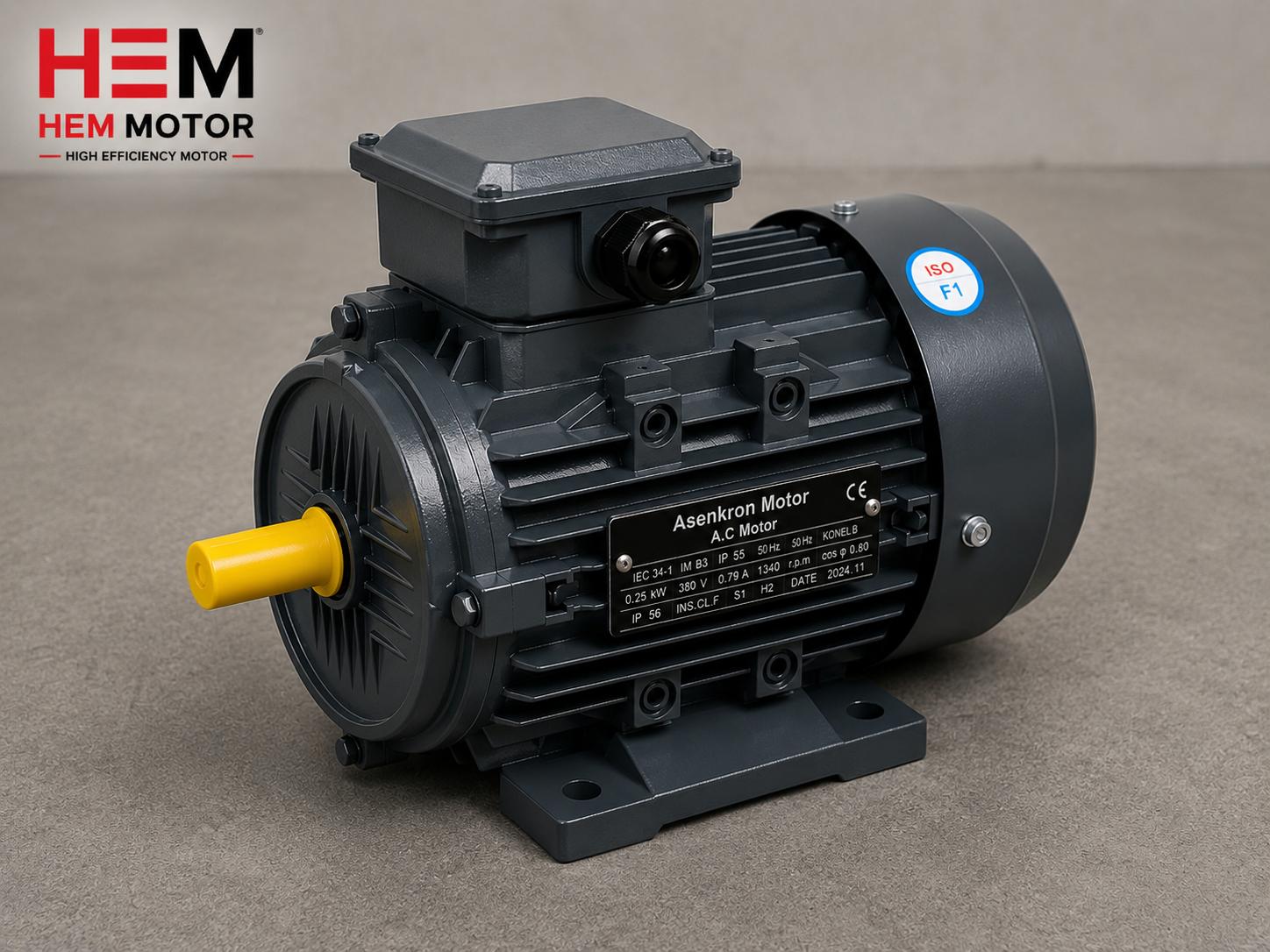

One of the most common surprises a facility manager faces is this: an energy efficiency project is completed, old motors are removed and replaced with yüksek verimli elektrik motorları, monthly kWh consumption visibly drops; yet the electricity bill that arrives at month end does not fall as expected, and sometimes even rises. When the bill is examined in detail, the culprit is usually the same: a demand cezası arising from the talep (puant) güç line item. In this article we explain step by step why efficient motors save energy but do not by themselves lower the talep (puant) güç peak, how the eşzamanlı yol verme trap inflates the demand bill, and how correct motor selection plus the right starting method protect that bill. At HEM Motor our goal is both to supply the right efficiency-class motor from stock and to share, transparently, the technical knowledge that keeps a facility within its güç sınırı.
What Is Demand (Peak) Power and How Does It Differ from Energy?
The electricity bill of commercial and industrial subscribers in Turkey is not a single line item. It is best split into two major components. The first is the energy component: the total active energy consumed over the month, measured in kilowatt-hours (kWh). The second is the talep (puant) güç component: the measure of the highest average power drawn during the month, typically billed in kW or kVA. Here lies the most critical distinction: energy shows how much you consumed, while demand shows how fast, that is, how intensely, you drew it.
Distribution utilities calculate demand not from an instantaneous reading but by taking an average over genellikle 15 dakikalık ortalama (typically a 15-minute window). The meter records the average power drawn in each 15-minute window throughout the billing period and takes the largest of these averages as the month's demand. Many industrial tariffs agree a sözleşme gücü (contracted power) with the utility. When the measured peak demand exceeds this contracted limit, an overrun charge known as the demand cezası applies. This penalty can be levied for the whole month because of just a few minutes of peak, since billing references that single highest 15-minute window.
Why Do Just a Few Minutes Matter So Much?
While a facility's average load may stay reasonable all month, a short-lived power spike occurring at a single moment can push that one 15-minute window to its ceiling. The meter keeps this highest window in memory and the bill is issued on that value. Therefore, even when your facility shows excellent energy performance, a poorly planned starting moment can leave you paying a heavy demand cezası. For this reason güç sınırı management is a discipline independent of, and often more critical than, energy management.

The Trap of Efficient Motors: Energy Falls but the Peak Does Not
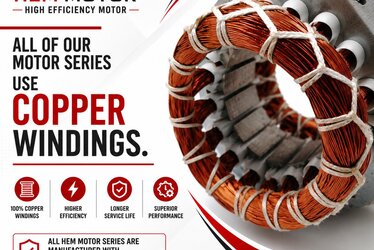
IE4 and IE5 class yüksek verimli elektrik motorları genuinely reduce running active power draw, and therefore monthly kWh consumption, by doing the same work with fewer losses. As the efficiency class rises, copper and iron losses in stator and rotor decrease; thanks to 100% copper winding and a quality core stack, the motor heats less and spends less energy at its rated operating point. So far everything is ideal, and the kWh line of the energy bill happily moves down.
But here lies a vital misconception: a motor's efficiency class does not by itself reduce its starting (inrush) current. An asynchronous motor started direct-on-line draws locked-rotor current (LRA) in the first instants because the rotor is not yet turning; this current is a short-lived surge typically on the order of 6 to 8 times the rated current. Being IE4 or IE5 does not materially change this starting surge. In other words, the efficient motor saves in steady state but, at the moment of starting, produces a high current surge just like the old motor it replaced.
This Is Why the Energy Bill Can Be Good but the Demand Bill Bad
Placing these two facts side by side makes the trap clear. Thanks to efficient motors your facility runs all month at low kWh; your energy line is excellent. But what determines your peak demand is not the average, it is the busiest 15-minute window. A large starting surge or overlapping running loads landing in that window can carry the measured demand above your contracted power. The result: a low energy bill but a high demand cezası. The return on the efficiency investment can be largely erased by poor start coordination.
Simultaneous Starting: The Most Insidious Cause of Demand Overrun
eşzamanlı yol verme (simultaneous starting) is the situation where several motors energize at the same instant, and it is the most common hidden cause of talep (puant) güç overrun. The classic scenario is power returning after an outage. After the cut, all contactors close at once and every motor tries to start together in a single moment. When each motor's individual 6-8 times locked-rotor current overlaps within the same 15-minute window, a short-lived but enormous power spike, far above the facility's normal load, emerges.
- Mass restart after an outage: Everything beginning to run in the same second when power returns is the most frequent demand trigger.
- Shift start: All lines being switched on manually at the same time at the start of a shift creates a similar simultaneous surge.
- Automation fault: A PLC program starting multiple motors in the same step creates an unplanned peak.
- Coinciding running loads: Even without a starting surge, large loads meeting at full load in the same window can carry demand above the limit.
Even if this surge lasts only a few seconds, the meter records enough energy to raise that 15-minute average. Even though the facility spent the whole month at low load, it exceeds its contracted power because of one bad starting moment and meets a demand cezası.
How to Avoid Demand Overrun? A Practical Roadmap
The good news is that staying within the güç sınırı does not require large investments; most of the time, planning starts properly and choosing the right starting method is enough. The headings below are the most effective ways to protect the demand bill.
1) Stagger and Sequence Your Starts
The most effective measure is to prevent motors from starting within the same 15-minute window. With staggered (sequential) starting, motors are brought online one by one, seconds or minutes apart. This is easily achieved with a soft starter, VFD or PLC-based start sequence. Especially on restart after an outage, time-delayed staggered closing of contactors dramatically lowers the demand peak.
2) Reduce Per-Motor Starting Current
yıldız-üçgen / soft starter and VFD solutions flatten the starting current surge of a single motor. Star-delta starting reduces starting current to roughly one third; a soft starter softens current with an adjustable ramp; a VFD makes starting almost surge-free by raising frequency from zero. To study the origin and reduction of starting current in asynchronous motors in more depth, see our articles asenkron motorda kalkış (yol verme) akımı ve inrush and asenkron motorda kalkış akımı (LRA) düşürme.
3) Use VFDs on Large Loads
On high-power pumps, fans and compressors, a VFD (frequency inverter) provides both a soft ramp and the ability to limit/shed load at the moment of peak. Thus the motor draws only the power it needs and the formation of a demand peak is prevented from the start.
4) Shift Large Loads Off the Peak Window
Moving large, non-critical loads off the peak (puant) hour window through load management brings advantages for both demand and time-of-use tariff. To evaluate night tariff and load management strategies together, our article verimli motorla gece tarifesi ve talep yönetimi, puant saatten kaçınma is a comprehensive starting point.
5) Size Correctly
Oversized motors draw more locked-rotor current than needed and produce an unnecessary starting surge. Sizing the motor correctly to the load keeps both energy and the demand peak under control. HEM Motor provides documented rated current and LRA data so you can select the power that fits your load.
6) Correct the Reactive Power
If your bill is issued on a kVA basis, power factor correction (reactive compensation) lowers apparent power and therefore demand in kVA. For the motor-side details of this subject, see our article yüksek verimli motorlarda güç faktörü ve reaktif ceza.
A Demand Penalty Is Not the Same as a Reactive (cos φ) Penalty
Two separate line items on the bill are often confused. The demand cezası arises when the measured active/apparent demand exceeds the contracted power; it is entirely about the magnitude and timing of power. The reactive penalty, on the other hand, comes from the power factor (cos φ) falling below a set threshold, that is, the reactive energy drawn from the grid exceeding its limit. Both inflate the bill but their origins differ: one is solved by start coordination and correct starting, the other by compensation equipment. A healthy facility must manage both items separately.
The HEM Motor Approach: Right Motor, Right Starting, Protected Bill
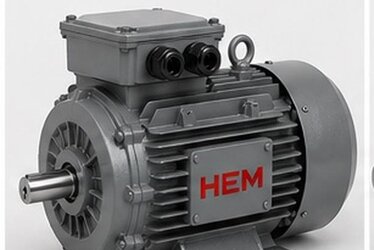
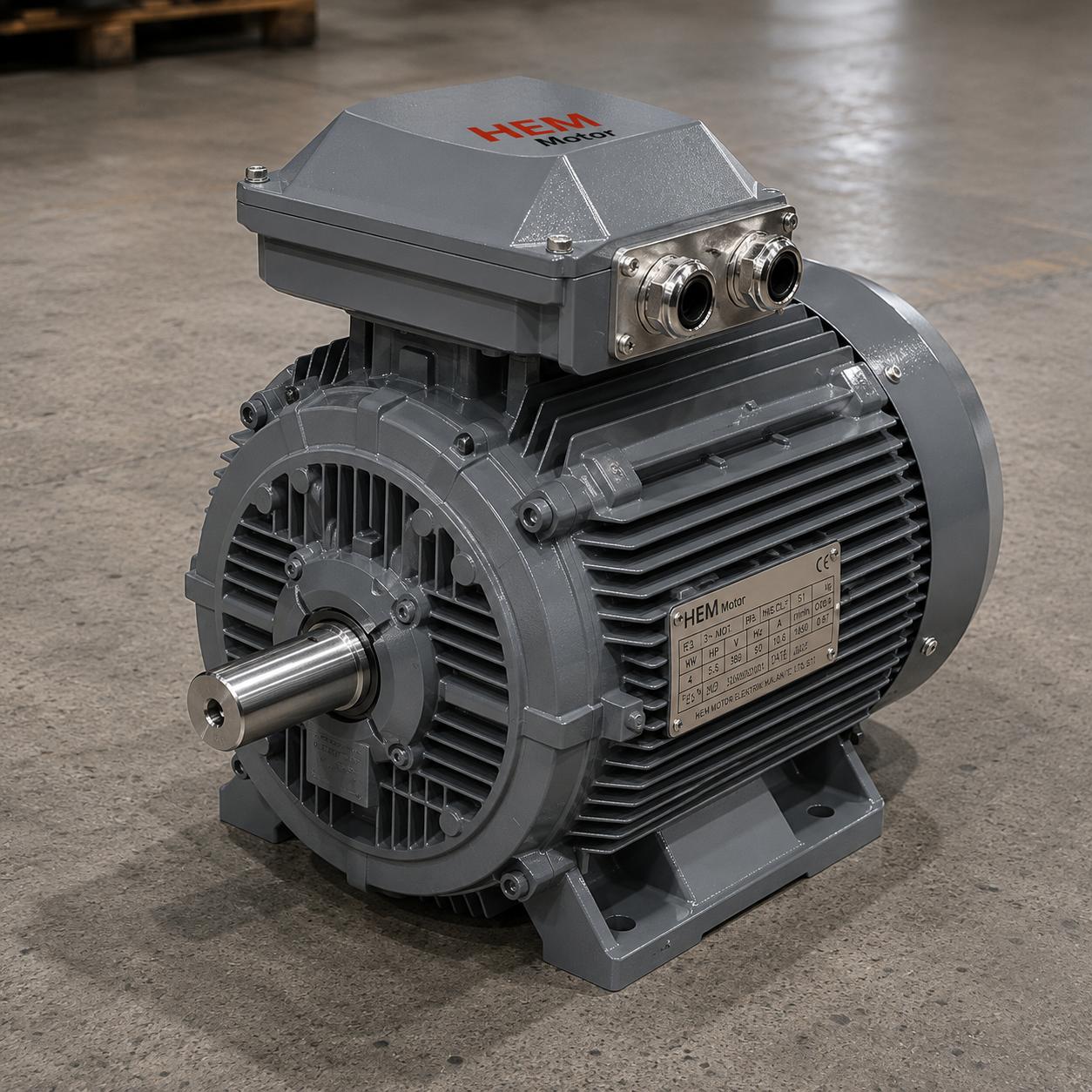
The path to protecting a facility's demand bill runs through handling the energy-lowering motor together with the start-managing method. HEM Motor supplies, from stock, yüksek verimli elektrik motorları in IE3, IE4 and IE5 efficiency classes, with 100% copper winding and cast iron housing, across a wide power range. These motors are fully compatible with soft starter, VFD and star-delta starting methods, so you can easily set up both staggered and soft-start scenarios.
- Right size: A motor selected to the load prevents unnecessary starting surge and excessive demand peaks from the start.
- Documented data: Rated current and LRA values are documented, so you can plan your sequential start correctly.
- Starting compatibility: Motor design that works seamlessly with soft starter, VFD and star-delta.
- Manufacturer assurance and fast supply: Spare motor and fast supply keep production running.
To review efficiency classes and suitable models, see our pages yüksek verimli elektrik motorları, IE4 elektrik motorları and IE4 yüksek verimli elektrik motorları; for current models and elektrik motoru fiyatları you can contact us and request a quote. When the right motor selection meets the right starting method, both your kWh and your demand bill are protected at the same time.
Frequently Asked Questions
I switched to efficient motors but my bill did not drop, what could be the reason?
Most likely your energy (kWh) line dropped but the increase comes from the talep (puant) güç line. Efficient motors reduce energy consumption but do not by themselves lower the starting current surge. If motors start simultaneously, the resulting peak can exceed your contracted power and create a demand cezası. Staggering starts and reviewing the starting method usually solves the problem.
Is demand power really calculated from a 15-minute average?
In many industrial tariffs in Turkey, demand is measured over genellikle 15 dakikalık ortalama (typically a 15-minute window) and the highest window in the month is taken as billed demand. However, the measurement method and duration may vary by tariff and distribution company; for an exact value it is recommended to confirm your own tariff and meter setting.
What is the fastest measure to prevent a demand penalty?
The fastest and lowest-cost measure is sequencing starts so as to eliminate eşzamanlı yol verme. Adding a time delay to contactors after an outage, or setting up staggered starting with a soft starter or PLC, in most cases pulls the demand peak below the contracted power. On large loads, a soft ramp via VFD provides a permanent solution.