English
 Türkçe


A facility equipped with efficient motors can take one more step beyond reducing energy consumption: it can certify that the electricity it consumes comes from renewable sources. This is where the I-REC (International REC Standard) green energy certificate comes in. I-REC proves, through an internationally recognized traceability mechanism, that a certain amount of consumed electricity was generated from renewable sources. In this article we cover what an I-REC green energy certificate means in an efficient-motor plant, its relationship with Scope 2 emissions, and its effect on the investment decision.
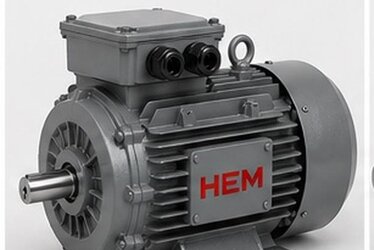
At HEM Motor, as both manufacturer and seller, we see that the transition to efficient motors affects not only the energy bill but also the facility's carbon and sustainability reporting. The efficient motor + green energy certificate combination both reduces consumption and certifies the remaining consumption as renewable. For efficient motor options and current electric motor prices, review our product pages.
What Is the I-REC Green Energy Certificate?
I-REC is a certificate system that documents, in a traceable way, that consumed electricity comes from renewable sources. A renewable generation facility (solar, wind, hydro, etc.) can issue a certificate for each unit of energy it generates. A consumer facility acquires and "cancels" these certificates against the electricity it consumes, thereby declaring that that amount of electricity was supplied from renewable sources.
This mechanism does not change the physical flow of electricity coming from the grid; however, on the accounting and reporting plane, it proves that consumption is renewable in origin under an internationally recognized standard. This documentability is becoming increasingly important in terms of sustainability reporting and customer demands.
Why Are Efficient Motors and Green Energy Mentioned Together?
A green energy certificate documents the source of the energy you consume; an efficient motor reduces the amount of energy you consume. The two are not alternatives but complements:
- First reduce: By switching to an efficient motor (IE4/IE5) you do the same work with less electricity. This lowers both cost and the consumption to be certified.
- Then certify: By certifying the remaining consumption as renewable with I-REC, you improve your carbon profile.
This order matters, because reducing consumption first both creates a need for fewer certificates and provides a real efficiency gain. Our article on carbon footprint and CO2 reduction in efficient motors explains step by step how carbon footprint and CO2 reduction are calculated with efficient motors.
Scope 2 Emissions and the I-REC Relationship
In corporate carbon reporting, emissions are handled in three scopes. Scope 2 refers to the indirect emissions arising from the generation of purchased electricity. The electricity a facility draws from the grid to run its motors is the main item of Scope 2 emissions.
The I-REC certificate is used in the "market-based" method of Scope 2 reporting: renewable certificates canceled against consumed electricity lower the emission factor of the relevant electricity. That is, efficient motors reduce the consumption at the base of Scope 2, while the remaining consumption can be reported as renewable with I-REC.
Two Levers Together
- Consumption reduction (efficient motor): Shrinks the physical base of Scope 2.
- Green certificate (I-REC): Lowers the emission factor of the remaining consumption in market-based reporting.
Compiling the facility's motor inventory and identifying the efficiency classes is the starting point of this reporting. On this topic, our article on preparing for an energy efficiency audit: facility motor inventory is a good start for accurately establishing the current state.
Certifying Without Measuring Falls Short
To certify with I-REC, the facility's actual consumption must be measured reliably. Without per-motor or per-line measurement, reporting based only on estimated values remains weak. Submetering reveals how much each motor consumes and bases both the efficiency gain and the certification on solid data.
Our article on ISO 50001 energy management and submetering in efficient motors, which explains proving savings by measuring with submetering, guides the setup of the measurement infrastructure. For consumption measurement at the motor level with current transformers and submeters, our article on consumption measurement with current transformer (CT) and submeter explains the energy monitoring that verifies real savings.
Effect on the Investment Decision
Evaluating an efficient motor investment only by the savings on the energy bill is seeing half the picture. For facilities with sustainability targets, that export, or that receive green supply demands from their customers, the efficient motor + green energy certification combination produces additional value:
- Reportable carbon profile: A documentable consumption profile that responds to customer and stakeholder demands.
- Export advantage: Competitiveness in markets where carbon-border and sustainability expectations are rising.
- Holistic approach: First reduce with efficiency, then certify with a green certificate; the lowest-cost and most provable path.
To relate motor renewal to financing instruments such as green bonds and EU taxonomy alignment by documenting it, our article on green bonds and EU taxonomy alignment in efficient motors completes the financing side.
Step-by-Step Roadmap
- Compile the facility motor inventory and identify the efficiency classes.
- Prioritize high-consumption, old and low-efficiency motors.
- Reduce consumption by replacing these motors with IE4/IE5 efficient motors.
- Set up submetering to measure actual consumption and verify savings.
- Certify the remaining consumption as renewable with I-REC certificates.
- Update your Scope 2 reporting with the market-based method.
This roadmap both lowers cost and makes the facility's carbon profile provable. At HEM Motor, in the first and most concrete step of this process, efficient motor supply, we provide motors of the correct power and efficiency class from stock or to lead time.
The Direct Effect of the Efficiency Class on Consumption
A motor's efficiency class determines how much extra electricity it draws from the grid while doing the same mechanical work. Efficiency shows how much of the electrical energy the motor takes in is converted into useful mechanical energy; the rest is lost as heat. A low-efficiency motor draws more electricity to do the same job, and this excess is reflected directly in the bill and in Scope 2 emissions.
IE4 super premium and IE5 ultra premium motors run with significantly fewer losses than old IE1/IE2 class motors. Especially on a motor that runs thousands of hours per year, the savings provided by a class upgrade accumulate over the years to reach a large amount. Because this saving also reduces the consumption to be certified with I-REC, it provides a two-way gain: less energy is drawn and fewer certificates are needed.
- Efficiency shows how much of the electricity is converted into useful work; the rest becomes heat.
- A low-efficiency motor draws more electricity for the same job; the bill and emissions rise.
- The transition to IE4/IE5 provides a large accumulation of savings over the years on long-running motors.
The Difference Between I-REC and Other Green Energy Methods
The ways to document and use renewable energy are not limited to a single method. A facility can contribute to its green profile with different levers, and I-REC is only one of them:
- I-REC certificate: Documents that consumed electricity is renewable in origin; the physical source does not change but it provides traceable evidence in reporting.
- Self-consumption renewable generation: Systems such as rooftop solar installed by the facility itself both physically meet consumption and reduce it directly.
- Renewable-sourced supply contract: Long-term electricity purchase from a specific renewable generator.
These methods are not mutually exclusive; most facilities use them together. What matters is that the common basis of all of them is reducing consumption with efficient motors. A facility with low consumption needs fewer resources whichever green energy method it chooses and reaches the target at a lower cost. Our article on efficient motors and solar energy: savings in a self-consumption facility addresses in detail how an efficient motor multiplies savings in a self-consumption solar facility.
Which Motors Should You Start With?
A facility may have dozens or hundreds of motors; it is not necessary, and often not possible, to replace them all at once. The correct approach is to start with the motors that will provide the highest gain. The following criteria are decisive when prioritizing:
- Operating hours: Motors that run the most hours per year benefit the most from an efficiency gain.
- Power: On high-power motors, even a small efficiency increase means a large saving in absolute terms.
- Current efficiency class: Old, low-efficiency motors (IE1/IE2 or below) create the largest difference in the transition to IE4/IE5.
- Load profile: Motors running continuously at high load pay back faster than those running for short periods.
A priority list compiled according to these criteria both directs the investment to the most efficient point and reduces the consumption to be certified with I-REC most quickly. Renewing a few high-consumption motors often creates a greater impact than replacing dozens of small motors.
The Continuity of Certification
Green energy certification is not a one-time operation but an ongoing process. Consumption must be measured each period, certificates must be acquired and canceled regularly against consumption, and reporting must be kept current. The savings provided by efficient motors must also be verified over time, because a motor's efficiency can decline over time due to lack of maintenance, rewinding or incorrect loading.
For this reason, submetering is valuable not only for the initial certification but also for ongoing verification. Regular measurement both proves that the savings continue and gives an early warning when efficiency loss begins on a motor. A sustainable green energy profile is possible when the right motor, the right measurement and regular certification proceed together.
Frequently Asked Questions
Does an I-REC certificate reduce my motor's consumption?
No. I-REC certifies the source of the electricity you consume as renewable; it does not change the amount of consumption. To reduce consumption, you need to switch to an efficient motor (IE4/IE5). The correct approach is to first reduce consumption with efficiency, then certify the remaining consumption with I-REC.
Is buying only a green certificate, without efficient motors, enough?
A green certificate alone carries reporting value but does not provide a real efficiency gain. Without efficient motors, you simply certify the excess energy you consume as "green." The lowest-cost and most sustainable path is to first reduce consumption with an efficient motor, then certify it with a green certificate.
How should I measure consumption for certification?
For reliable certification, consumption measurement at the facility or line level, and at the motor level where possible, is needed. Monitoring with current transformers and submeters reveals how much each motor consumes. This data places both the efficiency gain and the green energy reporting on a solid foundation.
In an efficient-motor plant, the I-REC green energy certificate is the bridge between reducing consumption and certifying it. First reducing consumption with an efficient motor (IE4/IE5), then certifying the remaining consumption as renewable with I-REC, is both the lowest-cost and the most provable path. At HEM Motor, as both manufacturer and seller, we provide the right solution in efficient motor supply, the first step of this path.