English
 Türkçe

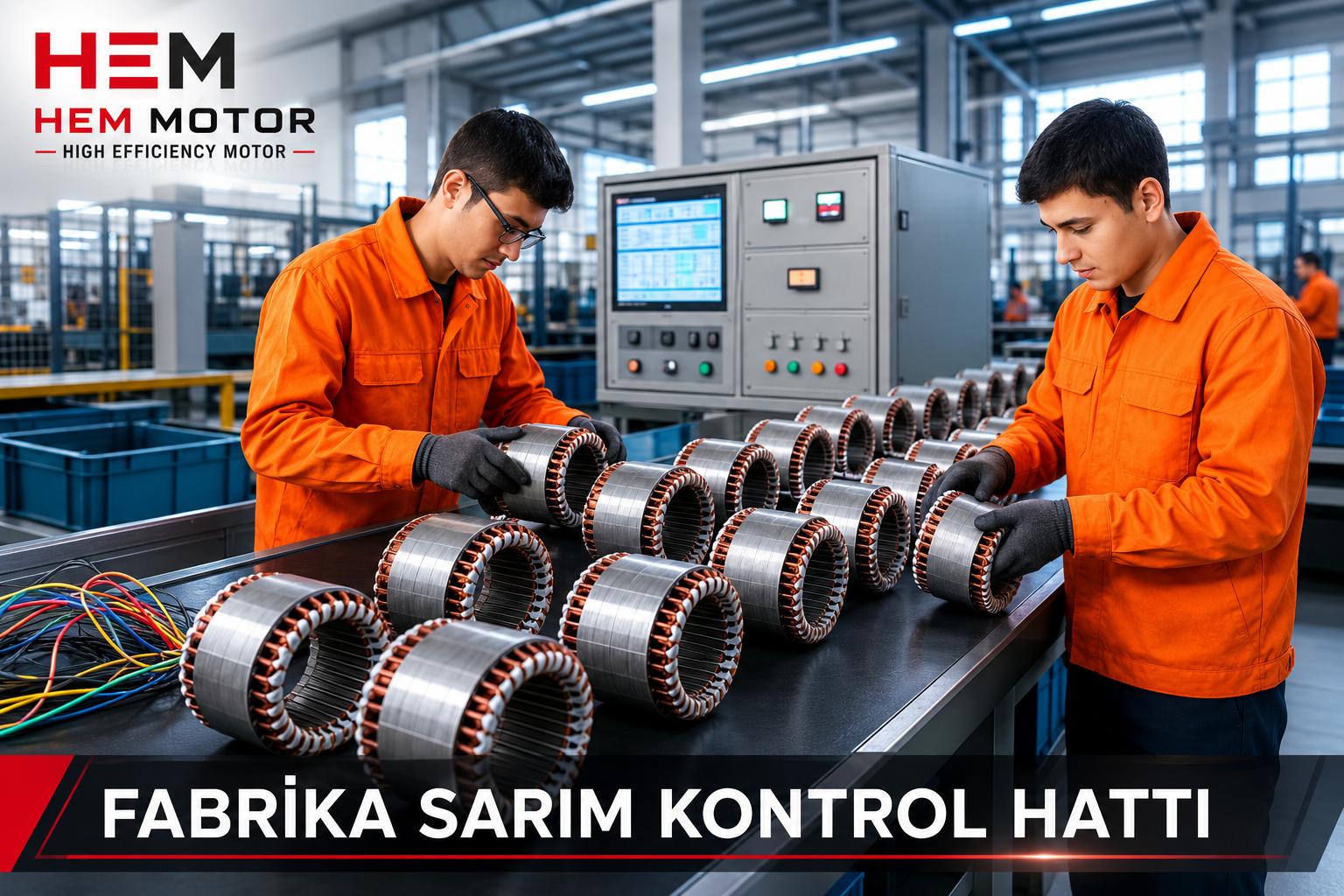

In an industrial facility, the largest share of electricity consumption comes from electric motors that run day and night. The efficiency of these motors now affects not only the energy bill but also the company's access to finance, its sustainability scorecard and its position in international supply chains. High-efficiency motor investments have become projects that banks and investors actively support with preferential terms. Behind this lies the growth of the green bond market and the way the EU Taxonomy classification has begun to count energy efficiency investments among "environmentally sustainable" activities.
In this article we explain how to document a transition to IE4 and IE5 class motors with sustainable finance, which eligibility criteria are expected, how the measurement and verification (M&V) process is built, and which documents you should request from the manufacturer so that your motor upgrade project becomes financeable. Our goal is to turn technical knowledge into a practical buying guide: choose the right motor, purchase it with the right documentation, and convert that investment into a verifiable savings story on paper.
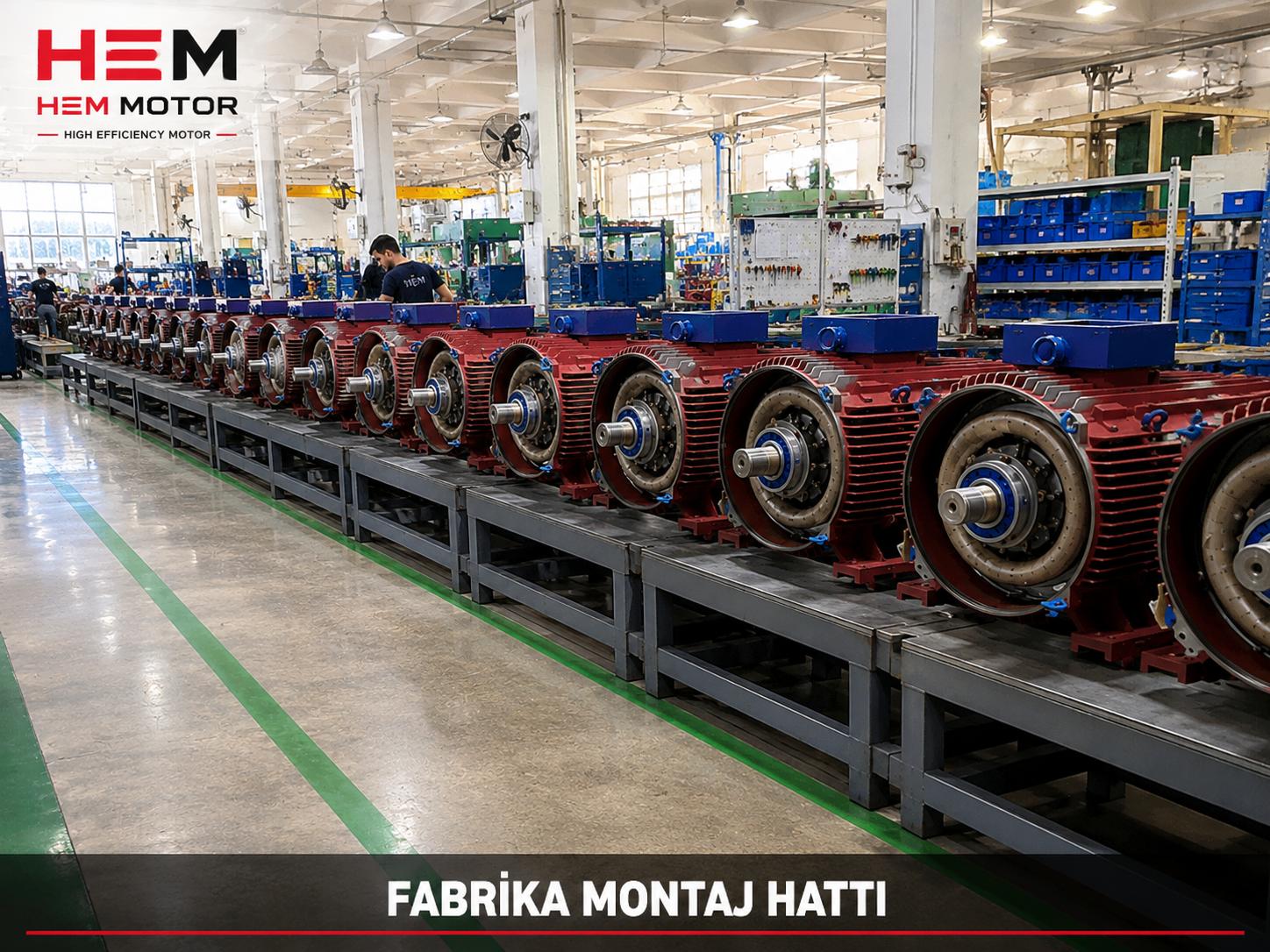
Green Bonds and Sustainable Finance: Why Does It Concern Motor Investment?
A green bond is a debt instrument whose proceeds are allocated exclusively to projects that deliver environmental benefit. A company or bank issues this bond and channels the raised funds into renewable energy, clean transport, water management and especially energy efficiency projects. In industry, one of the most concrete and measurable items of energy efficiency is motor systems. Since roughly two thirds of a plant's electrical energy is consumed by motors, replacing old, low-efficiency units with a high-efficiency motor is one of the most attractive projects to place in green bond portfolios.
The world of sustainable finance is not limited to green bonds. Sustainability-linked loans, green loans and climate funds work on a similar logic: when the borrower meets specific environmental performance targets, it obtains more favorable interest or repayment conditions. Because a motor upgrade project produces measurable kWh savings and CO2 reductions, it contributes directly to these targets. A well-documented motor upgrade program therefore becomes a lever that not only saves energy but also lowers the cost of financing.
Why Are Motor Systems a Financier's Favorite?
- Measurability: Because motor efficiency (IE class) is standardized, the savings calculation is transparent and auditable.
- Fast return: In high-running-hour motors, quick payback lowers the financier's risk perception.
- Documentable supply: The efficiency test report and CE declaration from the manufacturer provide concrete records proving project eligibility.
- Repeatability: Since the same method applies to dozens of motors, economies of scale and standard reporting become possible.
EU Taxonomy Alignment: Which Criteria Must an Efficiency Investment Meet?
The EU Taxonomy is a common classification system that determines whether an economic activity may be considered environmentally sustainable. For an investment to be regarded as taxonomy "aligned", three conditions are essentially required: the activity must make a substantial contribution to at least one of the six environmental objectives, must do no significant harm to the others (the DNSH principle), and must comply with minimum social safeguards. Energy efficiency investments hold a strong position in this framework because they contribute directly to the climate change mitigation objective.
From a motor upgrade perspective, replacing an old IE1 or IE2 motor with an IE4/IE5 class unit means performing the same mechanical work while consuming less electricity. This is a direct contribution to reducing greenhouse gas emissions. However, for taxonomy alignment it is not enough for the investor to simply say "I bought an efficient motor"; the savings must occur in a measurable, documentable way that does not violate the do-no-harm principle. This is precisely where the technical documents obtained from the manufacturer and a properly structured measurement plan come into play.
Core Evidence Required for Eligibility
- Efficiency class certificate: A test report referencing the IEC 60034-30-1 standard showing the motor is in IE4 or IE5 class.
- CE declaration of conformity: A document showing the motor was placed on the market in compliance with EU directives (including Ecodesign).
- Nameplate and technical datasheet: Documents including rated power, speed, efficiency curve and efficiency at various load points.
- Basis for the savings calculation: An engineering report comparing the measured consumption of the old motor with the expected consumption of the new one.
Requesting these documents at the procurement stage prevents delays and gaps when the financing application is later submitted. Asking for the efficiency test report and the declaration of conformity when buying a motor is a precondition for entering a green bond or green loan pool later on.
Measurement and Verification (M&V): How Do You Document the Savings?
At the heart of sustainable finance lies the ability to show that the promised environmental benefit was actually achieved. For this, the Measurement and Verification (M&V) methodology is used. Internationally accepted protocols such as the IPMVP define how energy savings should be calculated and verified. The basic logic is simple: you establish pre-upgrade consumption (the baseline), measure post-upgrade consumption, and reveal the real savings by normalizing the difference with adjustment factors (production volume, operating hours, temperature).
In motor systems, M&V is generally carried out with two approaches. The first is direct field measurement: the motor's input power is measured with a power analyzer, operating hours are recorded and the real load profile is derived. The second is an engineering calculation based on motor nameplate data and typical load-point efficiencies, used where measurement opportunities are limited. Whichever method is chosen, obtaining the motor's efficiency curve and load-point efficiencies as documented data from the manufacturer determines the reliability of the calculation.
Practices That Strengthen the M&V Process
- Take at least a few weeks of baseline measurement before the upgrade to capture seasonal and operational fluctuations.
- Keep an inventory for each motor including brand, model, IE class, rated power and serial number.
- Use the manufacturer's declared load-point efficiencies (full, 3/4, 1/2 load) in the savings calculation.
- For motors running with a variable frequency drive, separately consider part-load efficiency.
A well-structured M&V file creates a common language for both internal audit and an external (third-party) verifier. This file is the source of the figures to be used in the project's ESG reporting and sustainability scorecard.
ESG and Sustainability Reporting: Where Motor Upgrades Fit on the Scorecard
ESG (Environmental, Social, Governance) reporting requires companies to disclose their environmental performance transparently to stakeholders. In Europe, regulations such as the CSRD are making this reporting mandatory for an increasing number of companies. Because a large part of a facility's Scope 2 emissions (purchased electricity) comes from motors, motor upgrade projects are one of the most direct ways to improve the ESG scorecard.
The critical point here is that the reported savings must be documentable. An ESG report is an auditable document; behind statements like "we saved this many kWh and cut this many tons of CO2" there must be measurement records, the efficiency certificate obtained from the manufacturer and M&V calculations. Companies that document their move to efficient motors through this chain gain both investor confidence and an advantage in accessing green finance pools.
To better understand how the difference between IE classes affects the investment decision, we recommend reviewing our analysis on the total cost of ownership comparison of IE5, IE4 and IE3 motors. Those who want to calculate the payback period of the savings can benefit from our article on the payback period of replacing an old motor with IE4.
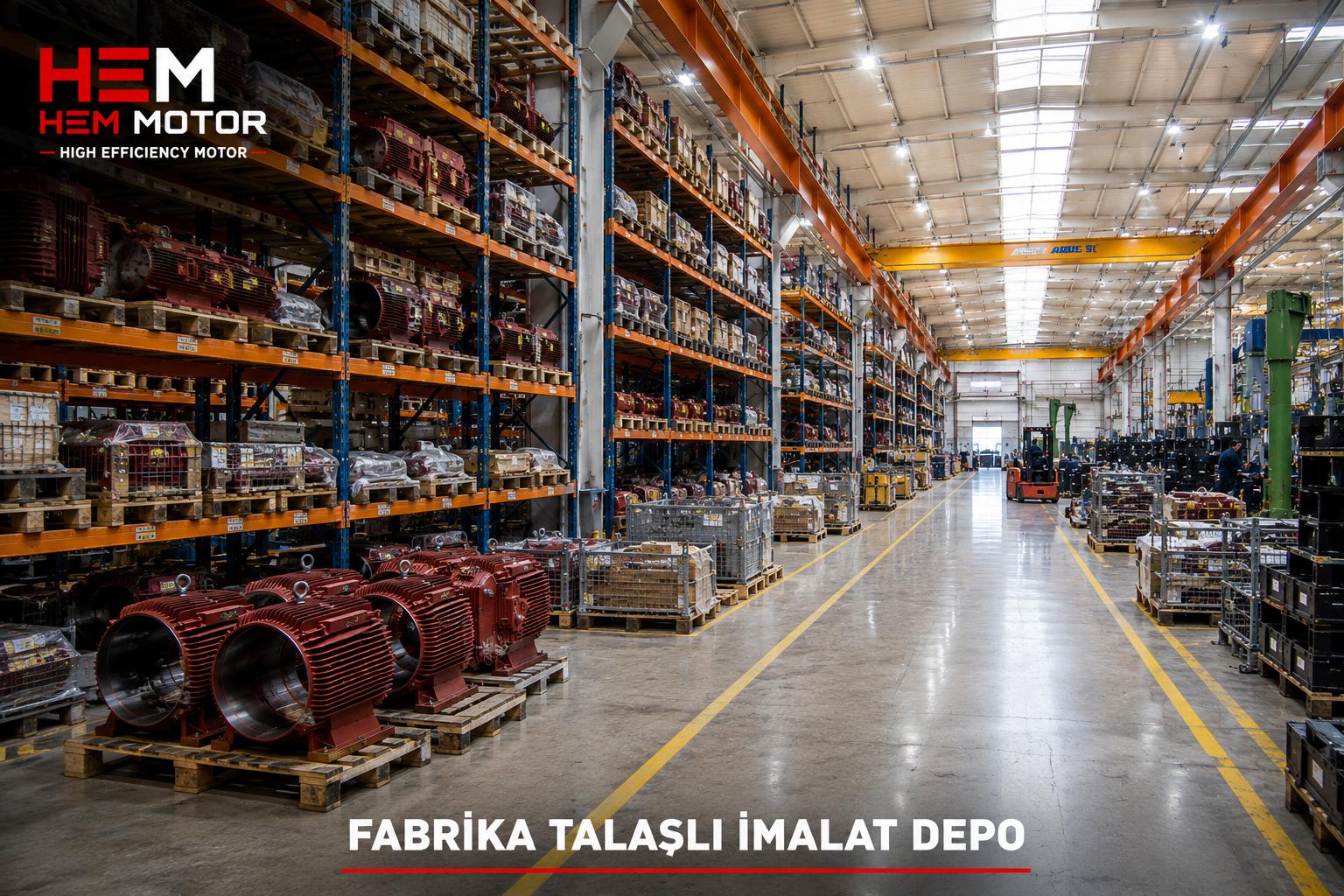
Choosing the Right Efficient Motor: A Purchasing Checklist
In a project to be supported by sustainable finance, motor selection does not end with matching power and speed. The chosen motor must both meet the technical requirement and provide the documents needed for financing. Using the checklist below when sourcing a high-efficiency motor secures both the engineering and the financing sides together.
- Correct IE class: Choose IE4 or, where possible, IE5 according to the regulation and project goal; make sure the existing motor is upgraded to the targeted class.
- Correct sizing: Oversizing reduces efficiency; determine rated power that matches the real load profile.
- Efficiency test report: Request a report with efficiency values measured according to the IEC 60034-2-1 test standard.
- CE and declaration of conformity: Obtain documents proving compliance with Ecodesign regulations together with the supply.
- Drive compatibility: If it will run with a frequency inverter, verify the motor is suitable in terms of variable-speed efficiency and insulation class.
- Stock and lead time: Clarify the supplier's stock status and dispatch time so the project schedule is not at risk.
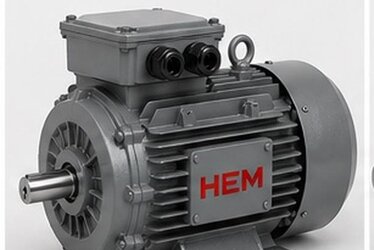
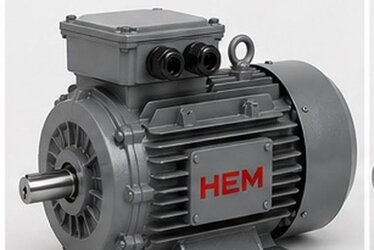
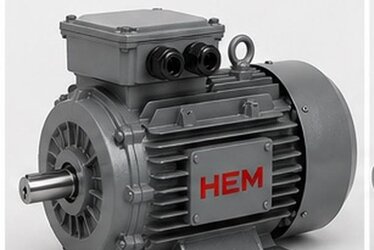
Working with a supplier who meets this list lets you assemble the document file requested in the financing application completely from the start. The efficient electric motors options in the HEM Motor range come with their IE class certificate, efficiency test report and declaration of conformity; so the motor you buy also becomes part of your green finance file.
Do Not Overlook the Regulatory Dimension
Energy efficiency investments are often not merely a voluntary choice but also a legal obligation. The gradual raising of minimum efficiency classes is accelerating the withdrawal of old motors from the market. To understand this framework, our content on the IE3 and IE4 efficiency mandate and regulation is a good starting point. For a broader view, you may also review our high-efficiency motors guide.
Obtaining a Conformity Certificate from the Manufacturer: Building a Financeable File
The most critical component of a motor upgrade project that will enter a green bond or green loan pool is a solid document file. This file is built starting from the moment of purchase. The core documents to request from the manufacturer are the efficiency test report, the CE declaration of conformity, the technical datasheet, the IE class certificate and, if needed, origin/production information. These documents support both EU Taxonomy alignment and the inputs of the M&V calculation.
As a manufacturer and seller, HEM Motor can supply the high-efficiency motors it provides together with these documents. The purchasing process thus becomes not just an equipment acquisition but also the cornerstone of a financeable sustainability project. A motor bought with the right documentation can be used in the ESG report, the taxonomy declaration and the green bond allocation table.
Those who want to know the market in order to evaluate the investment cost and the return of different options can compare the product family and efficiency classes starting from our current electric motor prices page. Choosing the right motor with the right documentation makes both energy savings and financing advantage possible at the same time.
Frequently Asked Questions
Why is my motor upgrade project considered eligible for a green bond?
Because replacing an old motor with a high-efficiency motor delivers measurable energy efficiency and emission reduction. This directly meets the environmental benefit criterion a green bond requires. Documenting the savings through measurement and verification, together with the manufacturer's efficiency test report, makes the project financeable.
Which documents should I request from the manufacturer for EU Taxonomy alignment?
First request the efficiency test report showing the motor's IE4/IE5 class, the CE declaration of conformity and the technical datasheet. These are the core evidence to document that the "substantial contribution" and "do no significant harm" principles within the EU Taxonomy framework are met, and they form the basis for your M&V calculation.
Can I document the savings without taking measurements?
While an engineering calculation is accepted in limited cases, the most reliable method is measurement-based M&V. Measuring baseline consumption before the upgrade and monitoring it afterward keeps your file audit-proof both in ESG reporting and in a sustainable finance application.