English
 Türkçe

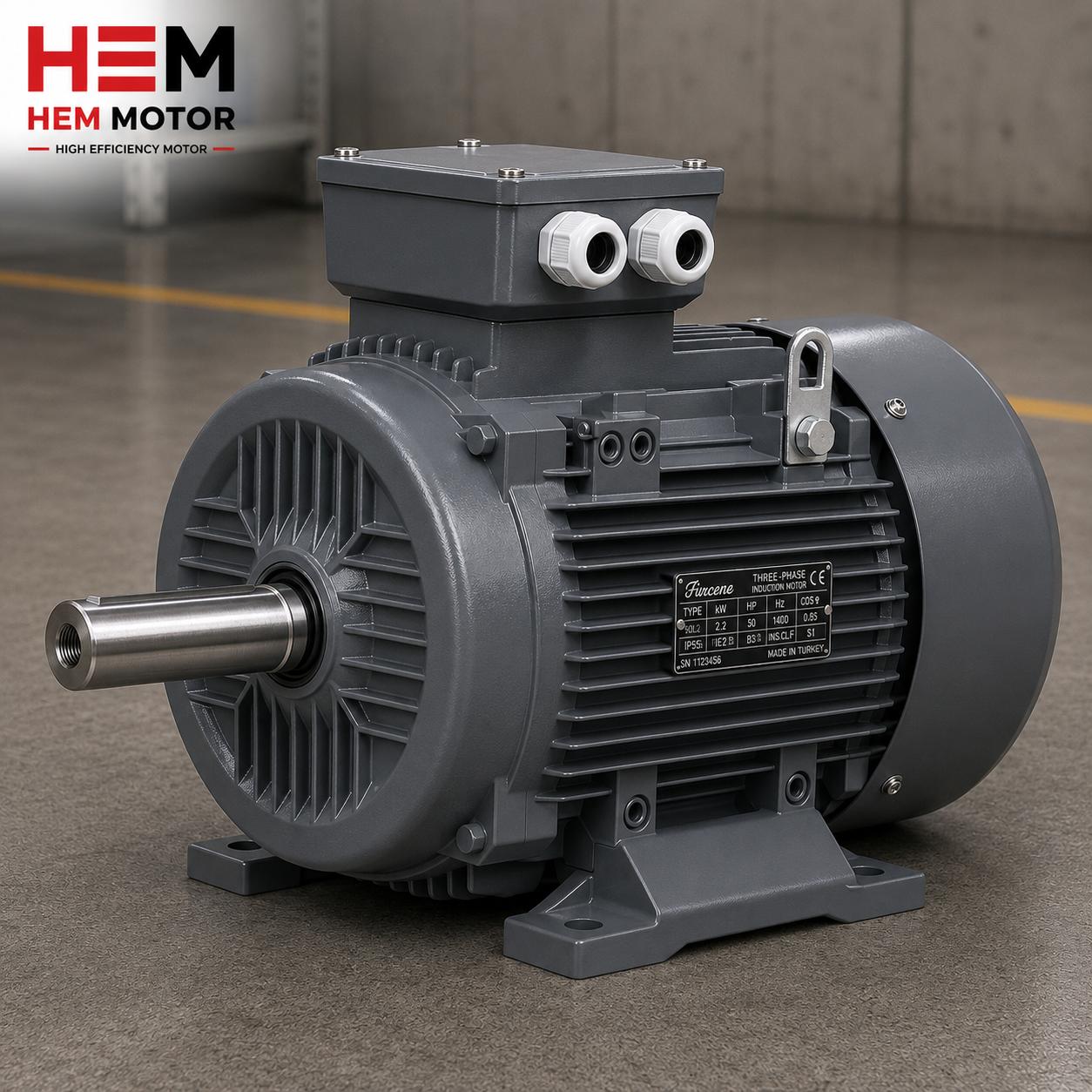

Investing in a high-efficiency motor is only the first chapter of the savings story. The efficiency figure printed on the nameplate is a laboratory result, obtained under controlled conditions, at full load and at defined reference points. In the field, however, motors rarely run at full load; partial loading, harmonic distortion, voltage imbalance and mechanical transmission losses shape the real consumption. For this reason, the only reliable way to know whether an IE4 Super Premium motor truly delivers the expected savings is to measure the energy it draws directly. Not estimation, but measurement.
This is precisely where current transformer (CT) and submeter technology comes into play. While the main meter shows the total consumption of the entire facility, submeters monitor individual lines, panels or motors. Seeing a motor's real kWh consumption on an hourly, daily or shift basis; revealing the gap between nameplate efficiency and field efficiency; and verifying the payback of a motor replacement with concrete data are only possible this way. In this article, we explain in technical detail how CT and submeter measurement is set up on IE4 motors, what each data point tells you, and how to strengthen your procurement decisions with these measurements.
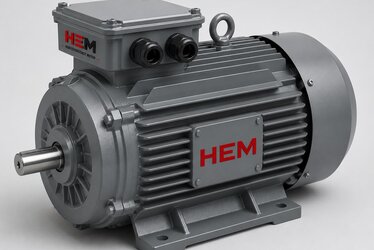
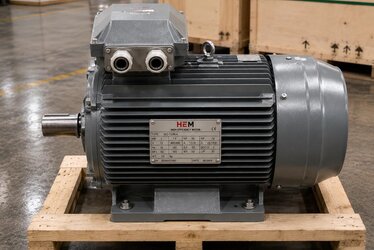
The IE4 Super Premium motors we manufacture at HEM Motor cover a 0.25–355 kW power range, with 100% copper windings, cast iron frames and IP55 protection, delivering long service life and predictable performance in the field. But translating that performance into numbers depends on a correctly built measurement infrastructure. The sections below will help you bridge the gap between the purchasing decision and field verification.

What Is a Current Transformer (CT) and Why Is It Essential in Motor Measurement?
A current transformer is a magnetic converter that scales high currents down into measurable, low-level signals. It is typically designed to output 5 A or 1 A from its secondary winding (for example, a 200/5 ratio converts a 200 A primary current into a 5 A secondary current). Instead of wiring the motor supply cable directly into a measuring instrument, you pass the cable through the CT's aperture and connect the instrument to the CT's secondary output. This way you measure current safely without breaking into the high-power line.
The reason CTs are indispensable in motor measurement is straightforward: medium and high-power IE4 motors draw tens, sometimes hundreds, of amps. Connecting that current directly to a meter or analyzer is neither safe nor practical. The CT scales this large current down to a standard ratio and keeps the measuring device operating within its safe range. A CT of the correct class also determines the accuracy of the measurement.
CT Classes and Accuracy
Current transformers are categorized by accuracy class. For billing and precise kWh measurement, class 0.5 or 0.5S CTs are preferred; for protection applications, classes 5P or 10P are used. If you are performing energy monitoring and savings verification, a metering-class CT is mandatory. Otherwise, an error of a few percent can completely distort your annual savings calculation.
- Primary current selection: The CT ratio should be chosen slightly above the motor's rated current. An oversized CT (for example, 600/5 on a 30 A motor) reduces accuracy at low loads.
- Burden compatibility: The total impedance on the CT's secondary circuit must not exceed the nameplate VA value; otherwise saturation and error occur.
- Solid-core vs split-core: Solid-core is suitable for new installations, while split-core (clamp-on) CTs are practical for retrofitting existing lines without disconnection.
- Polarity and phase order: Incorrect polarity causes negative power readings; in three-phase systems the P1-P2 direction and phase matching must be checked carefully.
Motor-Level Monitoring with Submeters
The main energy meter measures total consumption at the facility boundary and is the basis for billing with the utility. However, this single point does not tell you where the energy goes inside the plant. A submeter is a secondary measuring device placed inside the panel, on the supply of a motor group or a single critical motor. It takes the current signal from the CTs and a voltage reference; then it computes active power (kW), reactive power (kVAr), power factor and cumulative kWh values.
The value of motor-level submetering is that it makes the invisible visible. When you monitor the individual energy fingerprint of a press, a compressor or a pump, you can clearly see which equipment carries savings potential, which one shows signs of a fault, and the real return of a motor replacement. To put the difference between nameplate efficiency and field efficiency in concrete terms, we recommend reviewing how the gap between nameplate and field efficiency affects real savings.
Key Quantities Read from a Submeter
- Active power (kW): The real working power the motor draws at that instant; shows load changes in real time.
- Cumulative kWh: Total energy consumed over a given period; the cornerstone of any savings calculation.
- Power factor (cosφ): How much of the drawn power converts into useful work; a low cosφ means extra losses.
- Load ratio: The ratio of instantaneous power to rated power; the most important indicator of correct sizing.
- THD (current harmonic distortion): Affects efficiency and measurement accuracy in drive-fed systems.
Nameplate Efficiency or Field Efficiency? Seeing the Difference Through Measurement
Nameplate efficiency is the motor's efficiency at the rated point (usually 75–100% load) and is measured in the laboratory according to the IEC 60034-2-1 standard. This value is a comparable reference for the purchasing decision. However, field efficiency is the efficiency the motor actually produces under real operating conditions and is affected by partial-load operation, voltage imbalance, harmonics, belt-pulley losses, bearing friction and temperature.
While an IE4 motor may be rated at 96% efficiency on its nameplate, if it is continuously run at 35% load its field efficiency measurably drops; this is because asynchronous motors typically reach the peak of their efficiency curve around 75% load. This is exactly where CTs and submeters come in: by comparing the electrical power drawn (kW) with the mechanical power taken from the shaft, or at least by comparing cumulative kWh consumption against a reference period, you reveal the motor's real field behavior in numbers.
This comparison sometimes produces surprising results: when an oversized motor is replaced with a smaller, correctly selected IE4, savings arise not only because the efficiency class is higher but because the load ratio is shifted into the optimum zone. To plan the return of replacing an old motor with numbers, be sure to evaluate the payback period of replacing an old motor with an IE4.
Detailed Savings Verification with a Power Analyzer
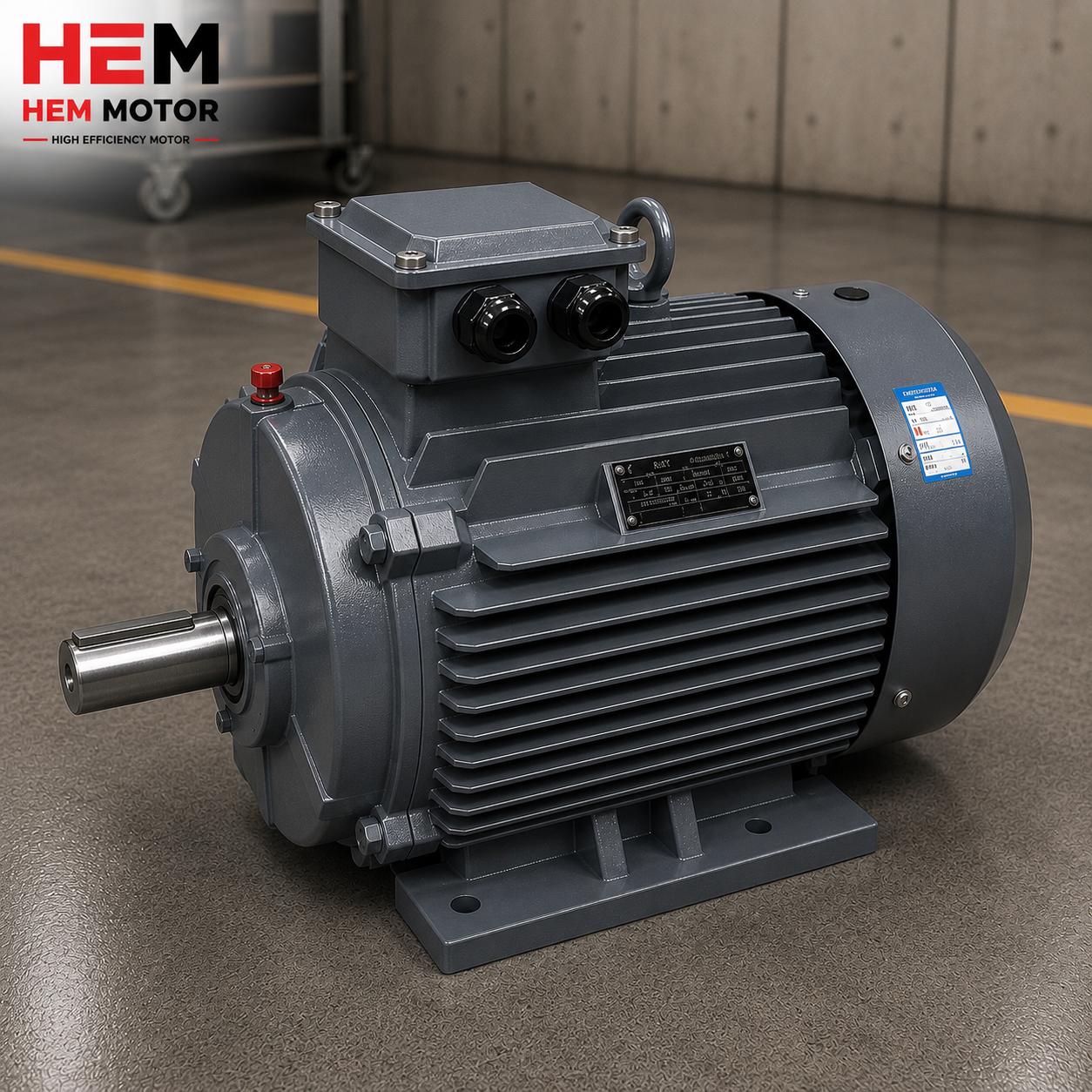
A submeter is ideal for continuous monitoring; a power analyzer is used for in-depth diagnostics at a specific point. A portable power analyzer records the voltage and current waveforms of all three phases simultaneously; it delivers true power, apparent power, power factor, harmonic spectrum and imbalance values at high resolution. By measuring under the same load before and after a motor replacement, you obtain a comparison that directly proves the savings.
The Measurement & Verification (M&V) Approach
In professional energy projects, savings are proven not by "we estimate" but by a Measurement & Verification (M&V) protocol. The basic logic is this: a baseline consumption is measured before the change, the change is made, then the new consumption is measured under the same operating conditions and the difference is normalized to calculate the real savings. CTs, submeters and power analyzers form the measurement leg of this protocol.
Normalization is important because production volume, ambient temperature and number of shifts can vary from period to period. For example, if consumption is converted into a unit performance indicator such as kWh per ton of production, the comparison becomes fair. For the process of documenting and reporting annual savings, our guide on measuring annual savings of a high-efficiency motor provides step-by-step guidance.
Steps to Build an Energy Monitoring System
Setting up systematic energy monitoring across a motor fleet is far more valuable than scattered, one-off measurements. Approached with the logic of an ISO 50001 energy management system, measurement becomes part of a continuous improvement cycle. The steps below offer a practical setup roadmap:
- Build an inventory: Record the power, efficiency class, operating hours and load profile of every motor.
- Select critical consumers: Fit submeters first to the motors with the highest kWh consumption and longest running hours.
- Size the CTs correctly: Choose a metering-class CT matched to each line's rated current.
- Centralize the data: Collect data into a SCADA or energy software via Modbus/RS-485 or pulse output.
- Establish a baseline: Collect at least a few weeks of baseline data before improvement.
- Define targets and alarms: Set threshold alarms for unexpected consumption increases.
For a systematic start, a facility-wide energy efficiency audit and motor inventory clarifies which motors to prioritize and helps you achieve the highest return on your measurement investment.
The Value of Measurement from a Procurement Perspective
Measurement is not only an engineering matter; it is also a purchasing decision tool. An IE4 motor may carry a higher initial cost than its IE3 counterpart; however, the bulk of the life cycle cost (LCC) is not the purchase but the energy consumed over the years. In a high running-hour application, energy can account for more than 90% of total cost. The real savings verified with CTs and submeters prove to the finance department that this investment is justified.
On the procurement side, measurement offers three concrete benefits. First, correct sizing: load ratio data prevents you from selecting a new motor with more power than necessary and improves both the initial investment and field efficiency. Second, verification of supplier performance: the promised efficiency is confirmed by field measurement. Third, a realistic payback calculation: a calculation based on measured rather than estimated kWh speeds up budget approval.
HEM Motor's IE4 Super Premium series, with 100% copper windings and Class F insulation, delivers low winding temperature and stable efficiency even at high load ratios, which makes it easier to obtain consistent results in your measurements. To review the product family and technical options, you can visit the IE4 electric motor category, and we can determine the power and mounting type suited to your application together. Simply contact us for current electric motor prices and supply terms.
Common Measurement Mistakes and How to Avoid Them
When the measurement infrastructure is set up incorrectly, the conclusions drawn from the data become misleading as well. The most common mistakes include connecting CT polarity in reverse, taking the voltage reference from the wrong phase, entering the CT ratio incorrectly into the device, and using a protection-class CT instead of a metering-class one. These mistakes sometimes cause deviations of tens of percent and completely invalidate the savings calculation.
Another important point is the consistency of measurement periods. If you measure during the summer shift before the change and during the winter shift after the change, the comparison will be unreliable because production and ambient conditions differ. That is why normalizing variables and, where possible, measuring under the same load profile is essential in an M&V protocol. A continuously monitoring submeter is far more reliable than a one-off measurement here, because the long-term average naturally balances out seasonal fluctuation.
Frequently Asked Questions
Can I not measure consumption on an IE4 motor without a current transformer?
On low-power motors (usually below a few amps), some meters can measure directly. However, because medium and high-power IE4 motors draw tens or hundreds of amps, direct connection is neither safe nor accurate. A current transformer scales the high current down to a safe, standard ratio and makes precise kWh measurement possible. For accurate consumption verification, using a metering-class CT is recommended.
What is the difference between a submeter and a power analyzer?
A submeter is a device permanently mounted in the panel that continuously monitors kWh, power and power factor; it is ideal for long-term energy tracking. A power analyzer is usually a portable diagnostic device that records details such as harmonics, waveforms and imbalance at high resolution at a specific point. The ideal approach is to use a submeter for continuous monitoring and a power analyzer for periodic deep analysis.
Why does field efficiency differ from nameplate efficiency?
Nameplate efficiency is measured in the laboratory at rated load with an ideal supply. Field efficiency, on the other hand, is affected by partial load, voltage imbalance, harmonics and mechanical losses. Especially on oversized motors, a low load ratio pulls field efficiency below the nameplate value. Measurement with CTs and submeters makes this difference visible and lets you achieve real savings with a correctly sized IE4 motor.