English
 Türkçe

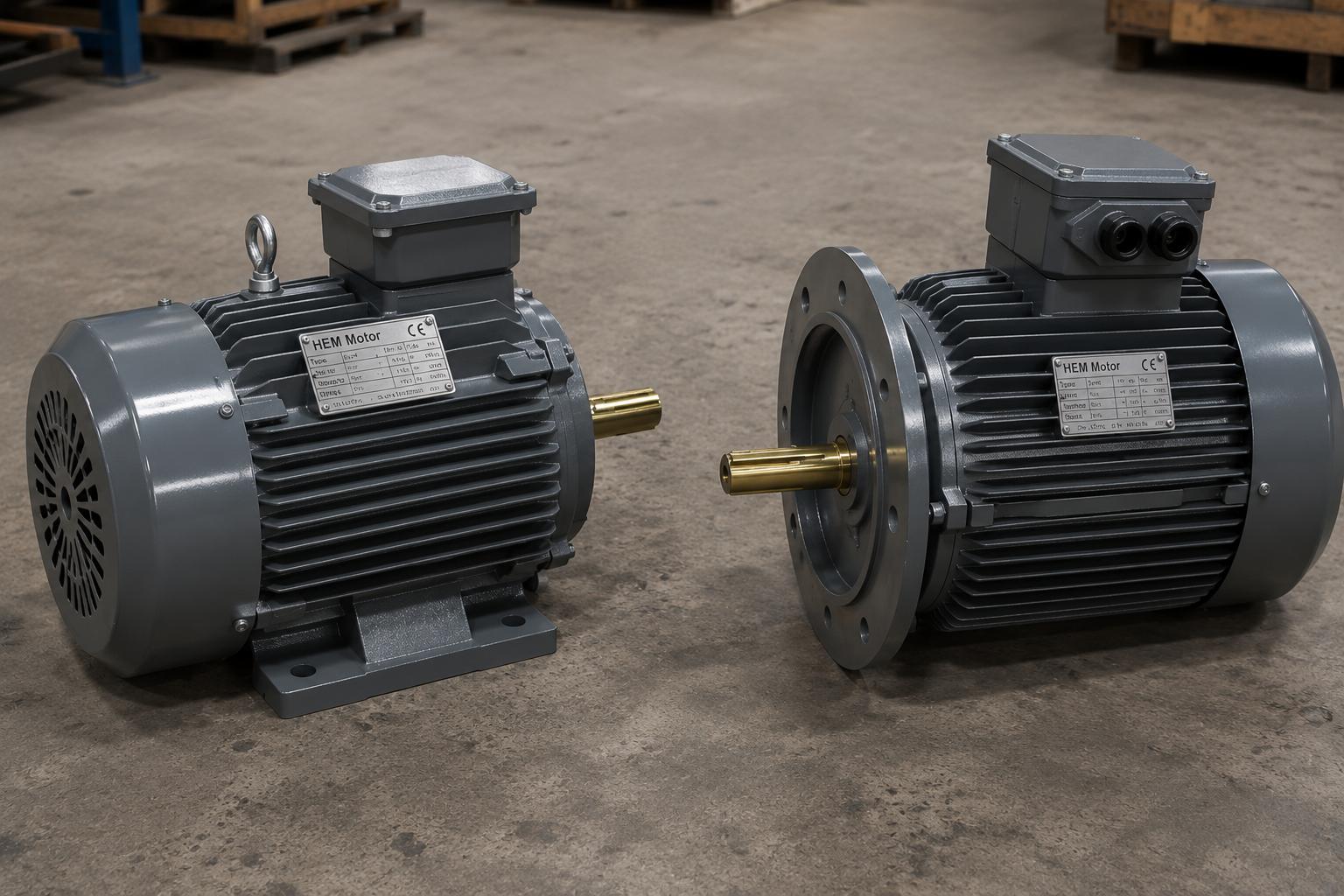

In industrial plants, a significant share of total electricity consumption comes from electric motors. Pumps, fans, compressors, conveyors and machine-tool drives run around the clock, quietly determining the largest part of a facility's energy bill. To manage this consumption you must first measure it, then report what you measure, and continuously improve. This is exactly where the ISO 50001 energy management system and submetering work together. In this article we take a technical look at how efficient electric motors contribute to ISO 50001, what data the submeters installed on motor circuits collect, and how that data justifies replacing old, inefficient motors with IE4 and IE5 class motors.
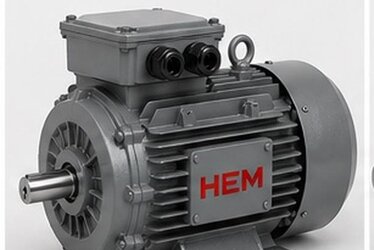
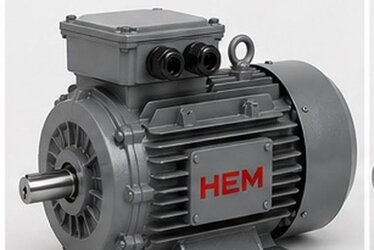
As HEM Motor, a manufacturer and seller that supplies the high-efficiency motors an ISO 50001 program targets from stock and on short lead times, we care not only about the motor but about the information infrastructure that makes the return on investment measurable. Because energy management succeeds not with a motor whose label was never read, but with a motor whose consumption is metered and whose performance is proven.
What Is ISO 50001 and How Does It Relate to Electric Motors?
ISO 50001 is an international energy management system standard that lets organizations manage their energy performance systematically. The standard is built on identifying where, how much and at what efficiency energy is used; setting numerical targets; taking action to reach those targets; and continuously improving by measuring results. Because electric motors are the single largest energy consumer in most industrial plants, they are a natural priority focus under ISO 50001.
As long as old, low-efficiency motors keep running in a facility, the energy management system stays on paper. The standard, through the concept of Significant Energy Use (SEU), requires identifying and prioritizing the equipment that consumes the most energy. The motor fleet is almost always at the top of that list.
Energy Baseline (EnB) and Energy Performance Indicators (EnPI)
ISO 50001 has two fundamental concepts:
- Energy baseline (EnB): The reference point of consumption in the current state. The pre-improvement consumption profile is the starting line against which future savings are measured.
- Energy performance indicator (EnPI): The numerical indicator by which performance is tracked; for example kWh per unit of production, or the energy consumed per cubic meter pumped.
When you replace a motor with a more efficient one, you must have actually measured consumption to prove the EnPI value improved. That measurement is made possible by submetering.
Submetering: Seeing Each Motor One by One
Most plants have a single main meter that shows the energy consumed by the entire factory in aggregate. This does not reveal which motor consumes how much, which one runs inefficiently, or which idles. Submetering makes the consumption of each motor or motor group individually visible by placing separate power analyzers and current transformers on motor circuits or motor control centers (MCC).
Submetering provides the data granularity ISO 50001 requires. Instead of a single total bill, the energy fingerprint of each significant motor emerges. Improvement decisions then rest on measured data rather than guesswork.
What Data Should Be Measured with a Submeter?
- Active energy (kWh): The real energy a motor consumes in a given period; the basic input of any savings calculation.
- Power factor (cosφ): An indicator of reactive load and compensation need; a low power factor creates extra cost.
- Load profile: The time curve showing whether the motor runs at full load, part load or idle through the day.
- Current and voltage: Early detection of imbalance, overload and fault trends.
- Operating hours: Annual running hours, an indispensable parameter of the payback calculation.
The combination of this data shows which motor is truly worth replacing. Often most consumption comes from a small number of large, old motors; prioritizing these critical motors rather than replacing the entire fleet delivers the fastest return on investment.
Identifying Inefficient Motors and Replacing Them with IE4/IE5
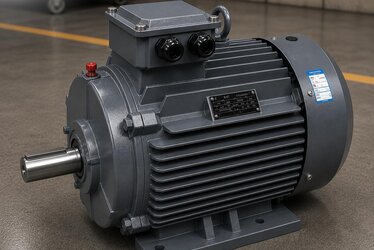
Submeter data exposes the real cost of old motors. A motor that has run for decades, perhaps an IE1 or one with an unknown efficiency class, may look small on its nameplate but turns into a serious loss of energy and money when multiplied by annual running hours. Motors with a load profile near full load and long operating hours deliver the highest savings when replaced with IE4 high-efficiency electric motors or IE5 synchronous reluctance motors.
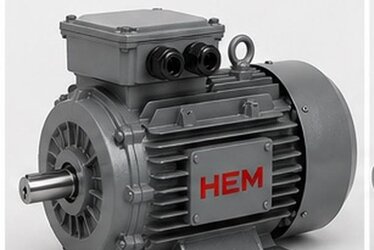
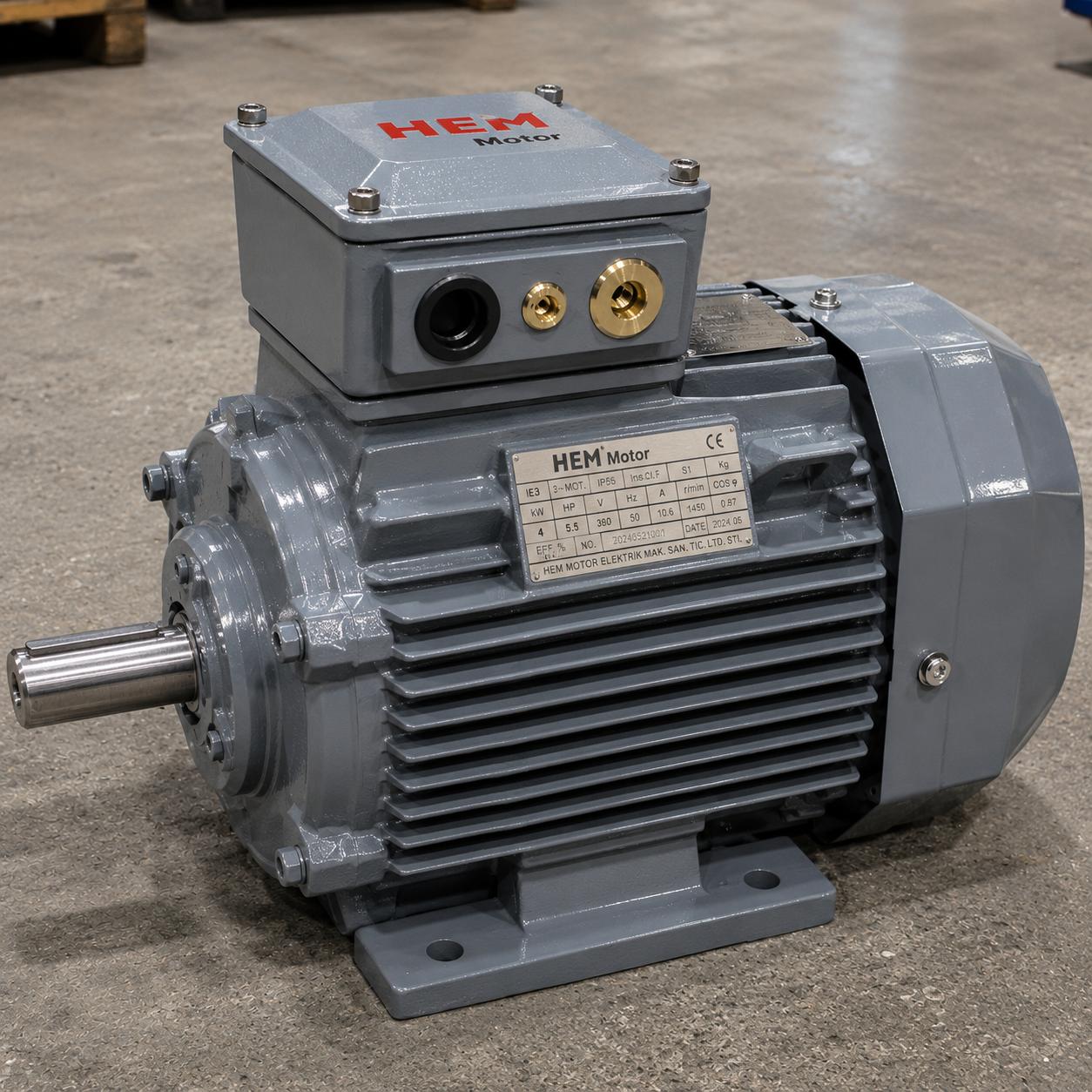
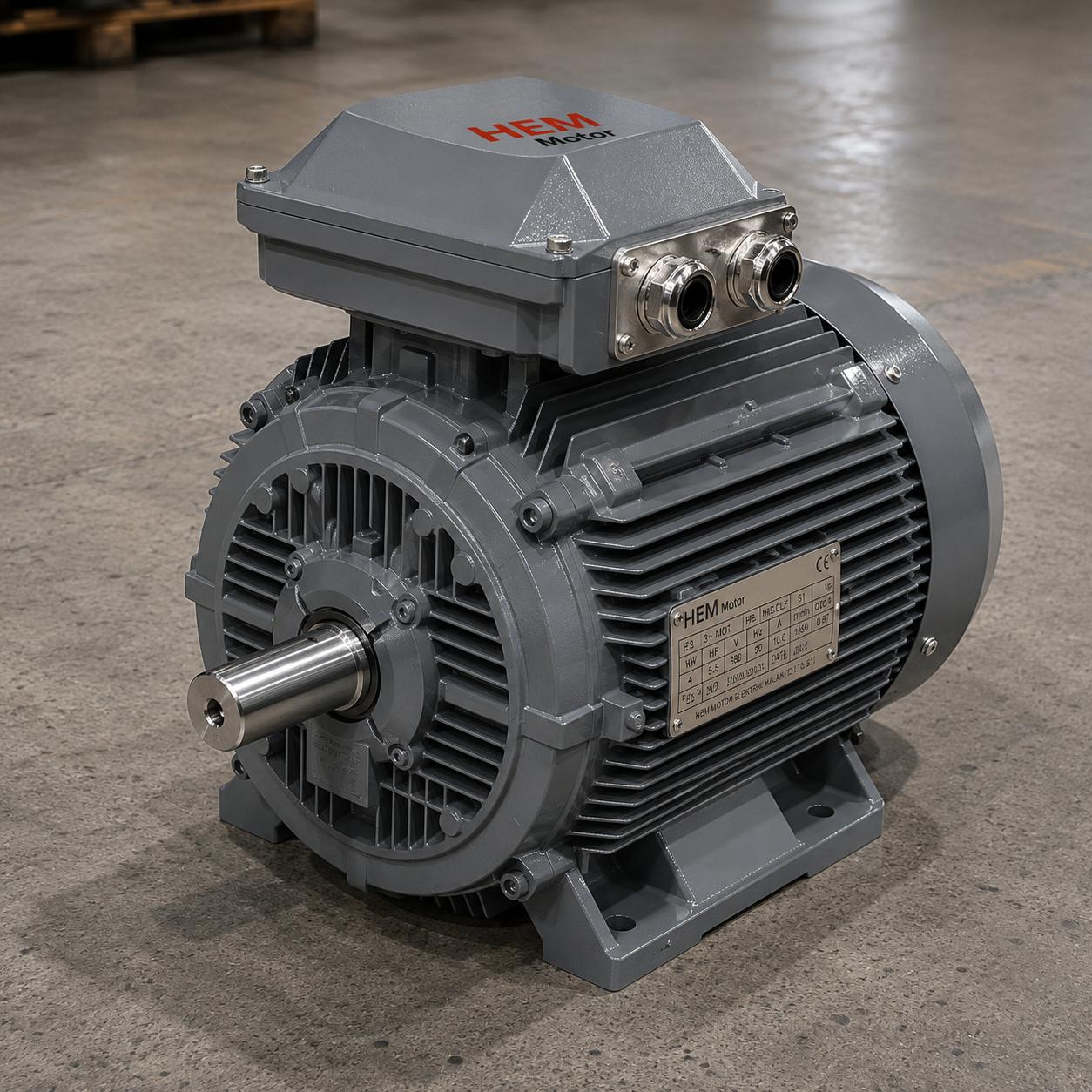
The high-efficiency motor range offered by HEM Motor is well suited to meet exactly this ISO 50001 objective:
- IE4 Super Premium motors, in the 0.25 kW – 355 kW range, with cast iron housing and IP55 protection, are suitable for continuous duty.
- IE5 class motors keep the peak of the efficiency curve especially in part-load and variable-speed applications.
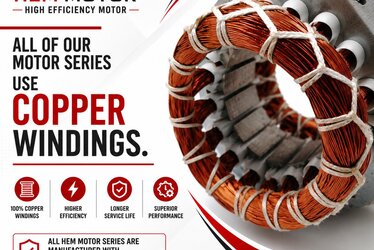
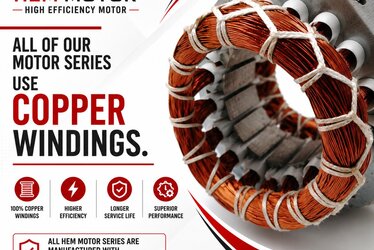
- 100% copper winding and class F insulation support both efficiency and long life, which lowers maintenance and replacement cost.
Proving the Replacement Decision with Data
ISO 50001 requires not only replacing the motor but proving the result of the change. The submeter, by measuring under the same conditions before and after the motor replacement, concretely demonstrates the EnPI improvement. Savings then become not an assumption but a reportable fact. This evidence both justifies the investment to management and shows auditors that the system works.
The PDCA Cycle: Continuous Improvement
ISO 50001 is built on the classic Plan–Do–Check–Act (PDCA) cycle. For the motor fleet this cycle works as follows:
- Plan: Use submeter data to identify the highest-consuming motors and target savings.
- Do: Replace priority motors with IE4/IE5 efficient motors, adding a drive if needed.
- Check: Measure new consumption with the same meter and verify the EnPI improvement.
- Act: Report results, prioritize the next motor group, and repeat the cycle.
This cycle is not a one-off project but a lasting efficiency culture. The right motor selection and reliable supply make that culture sustainable.
ISO 50001 Compliant Supply with HEM Motor
The success of an energy management program depends on the right motor arriving on site at the right time. As HEM Motor, we offer IE3, IE4 and IE5 efficient motors across a wide power and frame range, with the assurance of stock and short lead times. Manufacturer assurance comes together with the right efficiency class, the right mounting type and a speed option suited to the application. To upgrade the efficiency class of the motors in your project and to get current electric motor prices and lead-time information, get in touch with us.
For your efficiency-focused investments you can review our high-efficiency electric motors family, for super premium solutions our IE4 electric motors range, and to evaluate the efficiency class of the future our IE5 synchronous reluctance motors content. To see the difference between efficiency classes more closely, our IE4 electric motors guide articles will be a helpful starting point.
Frequently Asked Questions
Can ISO 50001 motor improvement not be done without a submeter?
In theory you can make a start with estimated calculations; however, the spirit of ISO 50001 rests on measurable data. Without submetering the motor's real load profile, power factor and operating hours cannot be known, so which motor to replace and how much will be saved cannot be proven. The meter moves the decision from guesswork to data.
Which motors should I replace first?
Large motors with a load profile near full load, long operating hours and a low efficiency class are the priority. Because these motors consume the highest annual kWh, they have the shortest payback when replaced with IE4 or IE5. Submeter data clarifies this prioritization.
Can HEM Motor supply motors suitable for my ISO 50001 program?
Yes. HEM Motor supplies IE3, IE4 and IE5 class high-efficiency motors across a wide power and frame range with the assurance of stock and short lead times. We determine together the motor that will support your energy management goals with the right efficiency class, mounting type and speed selection.